Category: Drifting Through Two Worlds

Montana skies, Australian roots, and a quiet sense of loss.

I’m writing this from the porch of a cabin in Montana. It’s been nearly a month on the rivers – long days of dry-fly fishing, laughter, late-night debriefs, and coffee-fuelled mornings that come around faster than you’d like. The Missouri, the Madison, the Yellowstone… these names have become part of our rhythm.

I’ve been making this journey for years now. Not as a guide or operator – the local professionals here do an outstanding job of that, and besides, I’d rather not get myself deported – but as a fellow traveller. I organise the logistics and share the experience with a small group of like-minded anglers, most of whom have become good friends over the years.

It’s become a winter tradition – our winter, their summer. A seasonal rhythm that offers both great fishing and, strangely enough, a chance to think more clearly about home.

And no matter how far you travel, a part of you stays back there.

Australia on My Mind

Maybe it’s the altitude. Maybe it’s the distance. But I often find that it’s here, halfway around the world, that I reflect most deeply on where Australia is heading – and what we may be leaving behind.

Like many others, I was raised in a version of Australia that felt… quieter. Fairer. Cohesive, even when imperfect. People worked hard, looked out for one another, and had faith that the country was broadly on the right track.

These days, I’m not so sure.

It’s not just one issue. It’s everything, all at once. Cost of living. Housing. Political distrust. A creeping sense that too many of our leaders are asleep at the wheel—or worse.

Over decades of guiding I’ve spent thousands of hours in drift boats and dusty utes, in honest conversation with Australians from all walks of life—doctors, sparkies, farmers, barristers, and soldiers. Lately, a common theme has emerged:

“It doesn’t feel like the country I grew up in.”

That’s not nostalgia talking. It’s concern. Quiet, thoughtful concern – for the future.

The Drift Boat and the Current

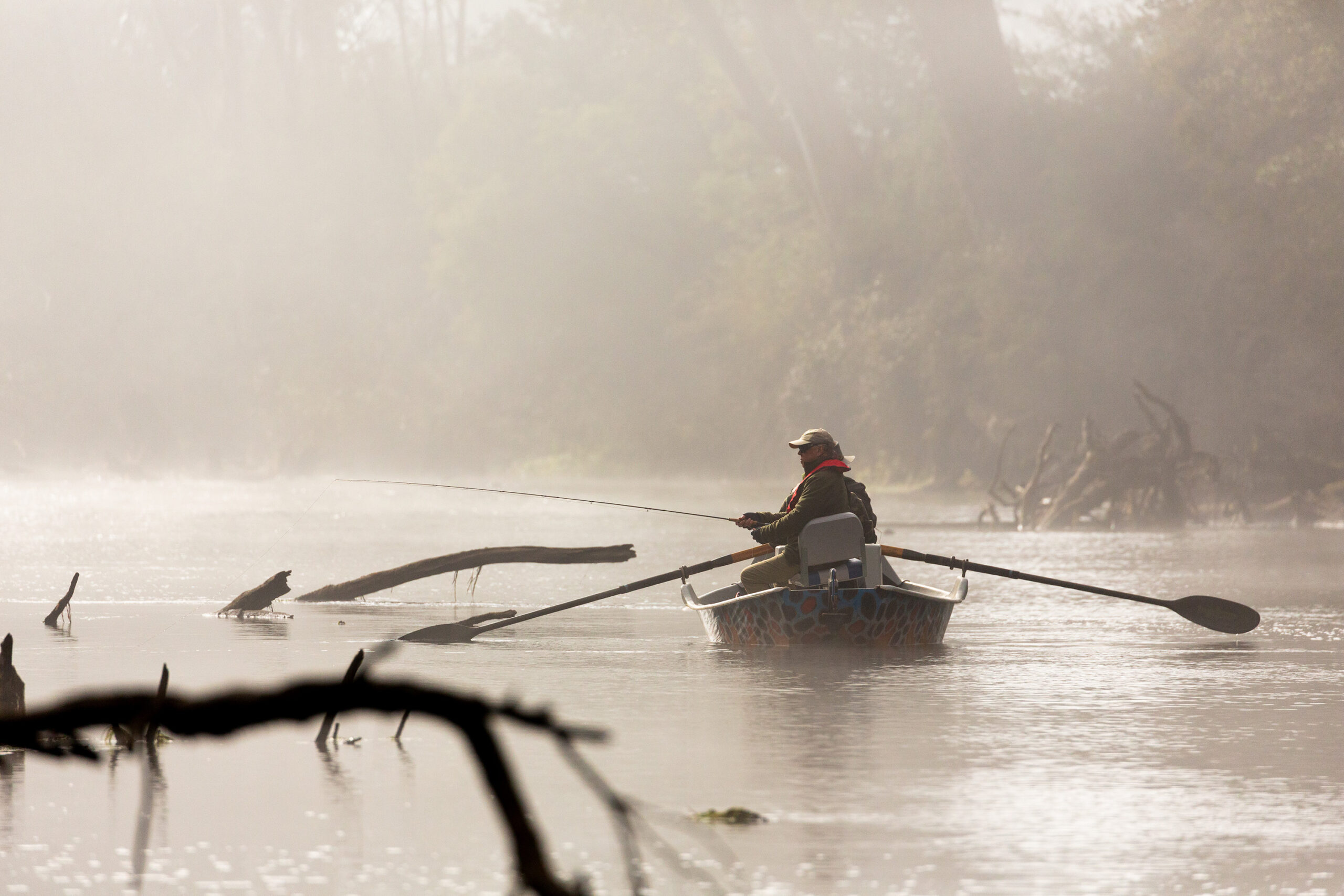
Back in the ’90s, when I first began guiding on the Goulburn, drift boats were almost unheard of here. We were the first to use them in Victoria. Not because it was trendy – but because it made sense.

You see the river differently from water level. You move with it. You learn to read its shifts. You feel the current and adjust. You don’t fight it – you flow with it.

That simple act – drifting – taught me something lasting.

Australia feels like it’s caught in fast water right now. There’s turbulence, conflicting pulls, and no clear signpost to a safe eddy. And while I don’t pretend to have the answers – no one really does – I do believe we need to pay closer attention to the current.

Where is it actually taking us? And is that where we want to go?

If we don’t pause and read the water, we risk drifting right past the takeout… into waters unmapped, and not entirely by choice.


Between Casts

This blog – Between Casts – was born out of reflections like these. A space between the action, where we can stop and think.

Some posts will be about fishing. Others will explore the deeper currents: philosophy, politics, history, and the stories we tell ourselves about who we are.

I don’t claim to speak for anyone but myself. What I write is simply the product of three decades spent in quiet conversation with people on rivers and roads across Australia. These are the thoughts of one man who still believes in the value of honest discussion and considered words—spoken with respect for all, regardless of creed or conviction.

If that sounds like a conversation worth having, I’m glad you’re here.


Author Bio:

Anthony Boliancu is the owner of Goulburn Valley Fly Fishing Centre. A full-time guide since the mid-1990s, he helped to pioneer drift boat fishing in Victoria and has led thousands of trips both locally and abroad. When he’s not rowing, teaching, or being a father, he’s reflecting on the state of the river – and the world around it.

*******************************************

Read on for a basic month by month guide of what to expect when fly fishing the Goulburn River over the course of a season.


SPRING

SEPTEMBER:

Unless the lake is completely full, the Goulburn River will be running at a very low level with a minimum riparian flow of 400 ML/D (Megalitres a day with a megalitre being a million litres; the equivalent of one Olympic swimming pool of water). This is so that Goulburn Murray Water (GMW) can capture as much water as possible to sell to farmers when things are dry and hot throughout the summer. Lake Eildon is the source of much of central Victoria’s irrigation water, and the plan is to let it fill from May to November and then use this stored water once the spring rains cease and the demand from farmers for irrigation water increases. Typically, most of our rain comes in August, September, and October.

Heavy spring rains falling onto a soaked catchment can see up to 100,000 ML/D coming into the lake from its feeder streams, such as the Big, Upper Goulburn, Jamieson, Delatite, and Howqua Rivers. Many people mistakenly believe that snowmelt plays a major role in the amount of runoff and the level of the lake each spring. This is incorrect. Heavy spring rain, at weekly or fortnightly intervals, is the key to seeing the lake fill. It is at this time of year that releases of water into the Goulburn River below Lake Eildon are all but stopped.

The fishing in this month is a mixture of streamer/nymph and dry fly, about 75:25 subsurface to surface. The Goulburn is often the only fishable river in the state as the natural flowing rivers are in flood and either too discoloured or too cold. The minimum flows of the Goulburn River ensure good fishable conditions, and water releases from deep in Lake Eildon ensure clear/warmer water for the river when compared with naturally flowing streams in the region.

Clear water can almost be guaranteed between Eildon and Thornton, but as you move further downstream, more gullies and gutters enter the Goulburn and cause some discoloration as they join the river. Also, as we move downstream of the Rubicon confluence, the water is much colder and therefore less likely to offer up good hatches or very active fish in September.

The fish can be very wary in the low, clear flows of early spring. A lot of the browns will line the inside of river bends, feeding in shallow water and sitting still, waiting to ambush prey in these exposed spots. This is demanding fishing that requires great stealth and precision. As a result, blind fishing with nymphs in the faster runs is a more productive option, as is stalking the flat pools armed with long leaders of 12-15 feet and tiny imitative dry flies, mostly midges and small mayflies.

Evening rises are usually slow at first, but they build in intensity from week to week. There is an observable improvement from day to day at times. Despite the emphasis on tiny dry flies, there will be a smattering of larger duns popping off most nights, even on opening day. Most years, we see hatches of quite large duns as early as August 20. I cannot recall a trout opening where these large, pale duns haven’t made an appearance. As the month progresses, the hatches will dramatically increase in intensity, with caddis showing up in greater numbers and numerous other mayflies also appearing in larger concentrations as we near the end of the month.

Low water conditions in September


OCTOBER:

If the weather is cool and we are getting regular rain, i.e., normal conditions, the river can remain at 400 ML/D for the entire month of October. Seasonal weather of weekly rain events and cooler temperatures will ensure that there is little or no demand for irrigation, and if the farmers are not buying it, the river will stay low. In a warmer year like a La Nina, drying conditions combined with the need to sustain optimal growth in agriculture along the river can see water levels rise as high as 3,000 ML/D. Generally speaking, you can expect to find the river between 400 and 2,000 ML/D.

By now, water temps have increased, and the first significant hatches have begun. My diaries show it happening most often sometime between October 1 and 7. Huge hatches of caddis will persist throughout the day, and duns will make an appearance in the evenings. The fishing throughout the day on caddis pupa patterns can be ridiculously good. Cricket score fish days are relatively common, and the river is often in perfect condition, easily wadeable with fish actively feeding from the surface all day.

As the month progresses, we start to see larger insects and more of them. Grannoms begin to appear in great numbers, crash landing on the water’s surface as they make their way upstream. Caenids begin to hatch in huge clouds, and this will continue for several months. These hatches are by far the biggest emergence on the Goulburn, rivalling anything we’ve encountered worldwide. By 8 or 9 am, there are literally millions of them in the air and on the surface of the water drifting.

Again, stealth and presentation are key, so long fine leaders and tiny flies are in order. Catching these fish is more about presentation than imitation. Getting in sync with the fish and putting your fly across the fish’s nose at the exact right moment is key. The best days occur on a river running <1500 MLD after a cold, clear sky night. You can expect some world-class dry fly fishing when this hatch is happening.

By month’s end, the fishing is one notch off as good as it gets. First light caenids, caddis all day with overlapping hatches of multiple species of mayfly duns, caddis, and spent spinners as well, with a sprinkling of flying ants. Just glorious dry fly fishing!

bwo_02_L


NOVEMBER:

At this point in the season, we usually have slightly higher water levels as the demand for irrigation increases. This is a welcomed change as the fish have had six months of lower water levels, and they are beginning to develop psychological issues – just kidding. Levels of between 1,000 and 3,000 ML/D bring on some of the best fishing of the season. The terrific fishing is not hindered by even much higher water levels should they occur. There is just so much insect activity, and conditions are perfect.

The intensity of the hatches is building to a crescendo that will occur somewhere between late November and Christmas. Absolutely everything is hatching. Caenids at first light for a few hours. Then caddis will pop through the day, as will several species of mayfly. Beetles are starting to become important, and evenings will be a smorgasbord of duns, spinners, caddis, stoneflies, grannoms in every size shape and colour. Even the cicadas are out. Being prepared for all eventualities is advisable!

On thundery and/or humid afternoons, termites hatch in great numbers in the farmland and wooded areas adjacent to the river. Many of them will end up in the Goulburn, not only getting the attention of the trout but completely mesmerising them. A good imitation is worth its weight in gold when this happens, and you will be able to sell an effective fly to frustrated anglers you encounter for 20 bucks a pop. Some great fish are caught during this hatch each season.

Termites make November memorable

Some nights the Kossie Duns will hatch out, and the fish can be a bit ‘Meh. They can also be a bit, ‘this is my last meal on death row’. Either way, this is the iconic Australian hatch so revered by so many. The biggest mayfly that we have here in Australia. Make no mistake; this is one of the highlights of the year.

Very big duns appear at last light with little indication/warning, and the fish go nuts for about twenty minutes as the light fades. This is a must-experience event with #8-10 mayflies drifting down in the last of the light, and the silhouetted profiles of the fish’s heads, snouts, and backs being the last thing you’ll see before you retreat to the car. These nights have given me some of my fondest memories of evening rise fishing, as well as taught me many lessons about how fish behave versus how our logical brains tell us they should. My advice is to stay late and pick a pool that has a decent westerly aspect to it. There is nothing quite like fishing to Kossie feeders as the light fades in the western sky.

Caenids in flight. google trico hatches for more info on patterns and techniques
Fish love termites and decent falls of this insect bring masses of trout to the surface to feed
Size 22-26 caenid patterns are needed when this hatch is coming off

SUMMER


DECEMBER:

As a fishing guide on the Goulburn river, I can tell you that summer is here and the river flow can range from 2,000 to 5,000 ML/D, with higher levels during drought years. Fishing along the river edges is becoming more productive as fish seek shelter from the strong currents and look for food in slower water. The bigger fish usually occupy the best spots, less than a foot off the bank. This helps us decide where to fish and what to discard, but there are always exceptions.

In December, the biggest insects of the year start hatching, and the fishing can be fantastic if you time it right. The first days of the cicada hatch are my favorite because the fish seem to be in a feeding frenzy. Small hoppers and beetles also start falling into the water, and green is the preferred color for hopper imitations tied on hook sizes 12-14. Terrestrial insects become the main target during the day, and fishing along the edges is crucial to success.

As the month progresses, the hoppers get bigger, and the flies should match their size. However, there are also good hatches of Caenids and rusty duns that can be epic if you’re willing to get up early. Caddisflies are also important, but they can be hard to spot in larger volumes of water. If the river flows are on the lower end of the spectrum, the numbers of mayfly and caddis will be intense.

Willow grubs usually start in December


Willow grubs become the most important source of protein for our trout around this time of year. The larva of the Sawfly is a game-changer for the fish of the Goulburn as it appears in high-summer when the hatches of aquatic insects are decreasing in intensity. This gives the trout the most abundant and easy-to-capture food source of the year, which they wouldn’t normally find on the surface as often.

The grubs fall from trees all day long, and the fish will rise for hours at a time, reacting to each and every plop on the water. It’s not uncommon to fish for rising fish from 9am to 9pm. The fish go crazy for these grubs, knowing that an easy meal has just arrived and is unable to escape. By the end of the month, we notice more and more large fish occupying the prime spots, and all fish are putting on substantial amounts of weight.

The fishing becomes so easy (most of the time!) that I usually only take a camera and telephoto lens out and leave the rod at home.

A sequence of a solid Goulburn brown eating willow grubs beneath the trees


JANUARY:

January is one of our favorite months as fishing on the Goulburn river is amazing, and all the natural streams (undammed rivers) are at perfect levels, offering an abundance of fishing options with dry flies. As the weather gets warmer and drier, water demand increases from farmers downriver of Lake Eildon, resulting in increased water flows between 4,000 and 8,000 ML/D. Backwater fishing becomes crucial, with brilliant hatches when water levels are low and backwaters being the only real option when levels are high.

The willow grub remains the most important food source for Goulburn fish, and January is often the best month to fish them. Fish rise all day and put on a tremendous amount of weight quickly. Hopper fishing with larger flies averaging around a #10 is now the way to go, and cicadas are often the fly of choice. Beetles and small soft hackle wets are deadly in the backwaters, and parachute duns can take a fussy fish that refuses the beetle or hopper.

Trophy browns can be found in close, and the best backwaters are nearly always occupied by a hefty fish. On most days, careful edge fishing can yield at least a dozen sighted and often rising fish. Evenings are not a dead loss as the best backwaters are worth fishing just on last light. Long flat pools offer excellent spent spinner falls in the last two hours of the day for those on a drift boat.

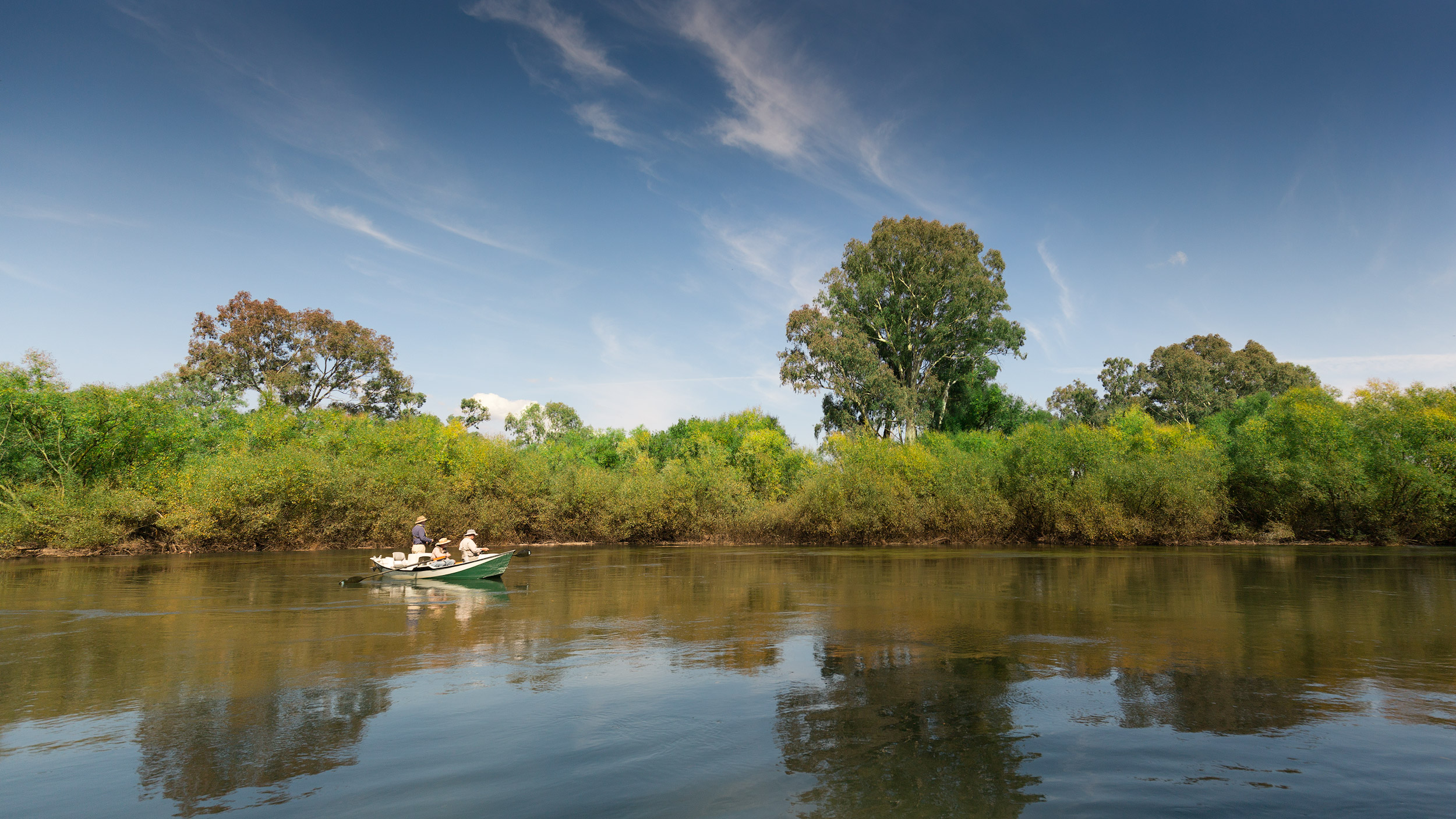
My drift boat......perfect for fishing the Goulburn River

Having a drift boat with a skilled guide on the oars opens up the entire river.


FEBRUARY:

In February, the unique nature of the Goulburn river as a bottom release tailwater river is most evident. While other rivers around it are running low and warm, the Goulburn runs high and cold, which is great for the trout as daytime temperatures can reach up to 40 degrees Celsius.

River levels severely hinder hatches of aquatic insects, with releases between 6,000 and 10,000 MLD resulting in considerably fewer hatches. The focus is now on backwaters and large areas inundated off the river proper, such as billabongs and lagoons. These areas can extend back a mile into adjoining farmland, and fish cruise these areas silently and slowly. Most of these fish go unmolested for the entire summer, and the section from Alexandra downstream is particularly good for this type of fishing.

Willow grubbing is peaking, but populations may vary depending on the amount of rain and temperatures, both daytime and nighttime. European Wasps also start to show up in large numbers at this time, and they have had a huge impact on the willow grub population in recent years. Some years see all the willows denuded of vegetation and grub numbers thinning out, while other years have prime conditions with willows covered in grubs throughout the month. Great fishing can be expected, and some very large fish can be caught.

Big hoppers and attractors like the stimulator and chernobyl ant work well as the fish have become accustomed to everything from cicadas to grasshoppers to beetles to spiders going into the river. Many larger fish will be visibily eating grasshopperss all day. If you get a refusal of your hopper, don’t be reluctant to tie on a tiny dry fly of sizes 18 – 20. The water will be very clear and downsizing can be very effective.

Sunken grasshopper patterns seent to be very effective as February rolls on.


AUTUMN

MARCH:

March is not considered autumn in the Goulburn Valley as stable high-pressure systems bring blue skies with a few scorchers thrown in for good measure. Hot weather often persists until early April, and although river levels come down quite a bit, we still regularly see 3,500 to 5,000 ML/D being released. March does, however, bring a glimpse of M.I.A. hatches that were so blunted by the large releases of water experienced during high-summer. Gradually the number of duns and caddis increases, and offers a slither of what can be expected as the water levels further reduce next month.

Backwaters are still fishing very well, with good fish in every one of them. After many months of sustained higher water levels, they are content to work these softer currents. Continually putting on condition as they feed in the easy flows along the edges. Hoppers and beetles are still working, although smaller duns and caddis will catch a fair percentage of the fish on offer. Cicadas, crickets, and the humble soldier beetle shouldn’t be discounted as they can be crucial at this time of year.

Perhaps more than any other month, attractor patterns hold sway. There is such a mix of insects, both aquatic and those originating from land, that taking a more liberal approach to fly selection is often rewarded with the best trout.

Willow grubs will begin to taper off at some stage this month, but don’t bet on it. In recent years the grubs have been hanging in there until after Anzac Day. Our initial observations were that the first frosts were their undoing. But as with most first appraisals, this appears to be incorrect. So, while we may indeed experience a decline in their numbers this month, pockets of them will not only hold on, but get stronger until almost the arrival of May.

Willow grubbers are voracious and you often catch the same fish immediately after dropping it. The second fly in this one was from a break-off the previous day.


 As the river levels fall away, fish once again take up positions in the main current seams, runs, and bubble lines adjacent to willow trees along the outside corners and the tailouts of pools. Regular blind searching techniques will bring good results, but as the month progresses, water levels and air temperatures will decrease, triggering stronger hatches and the resurgence of mayflies and caddisflies.


March is a month of slow transition
March is a month of slow transition; but the fishing can be very good


APRIL:

April can be one of the best months of the season, with the river often sitting somewhere between 1,000 and 3,000 ML/D and terrestrial fishing hanging in there as the return of the aquatic insects becomes evident. While April once was dominated by the maylies and caddises, the lower flows of recent summers has seen more aquatic insects hatching right through the summer, so there isn’t a huge backlog effect during April. What is noticeable is just how important terrestrial fishing has become. I would go so far as to say that April is the best month of the season

While it’s true the aquatic insects are getting smaller in size, there are still lots of hoppers, ants, beetles and crickets. The fish are very familiar with larger insects and willing to eat them. So, April is a month for the both the technical match the hatch addict, as well as the run and gun fisher of rubber leg patterns.

Of course, the fish are biologically programmed to feed heavily at this time of year in anticipation of spawning in the coming months. As the day’s get shorter and the night’s cooler, this survival imperative to consume as many calories as possible only increases in intensity. Hatches are usually met with solid rises from the trout. Small parachute duns, especially in rust, grey, or olive, will work very well. Emergers in dark browns and even black will also draw a favourable reaction from the fish.

Of course, as with all things in the natural world, there is a catch. Nature’s curveball coming in the form of tremendous kossie hatches on last light most evenings, which may only last 10 minutes but will attract bigger browns that rise to them. Spinner falls of this mayfly will occur any time from 5 pm onwards, and large rusty spinners should be carried for just such an event. When this hatch comes off, you can throw away most of what I’ve said about small imitative flies.

By the end of April, the river will start to drop in level, and the days will get much shorter. Overnight frosts or early morning fogs may occur, but generally these happen a few weeks from now.

Either way you look at it, autumn proper has arrived and it won’t long until things really change drastically.

goulburn river fly fishing
April heralds the return of the kossies

MAY:

Every year, from about the third week in April until mid-late May, there is a glorious period that lasts for three to five weeks. It is the most pleasant time of the year and brings about some of the most enjoyable fishing experiences on the Goulburn. Cool, crisp mornings give way to the bluest skies imaginable, and days of little or no wind and rising fish. The river is usually running low between 1000 – 1,500 ML/D and stays this way throughout the winter/early spring period as rainfall is captured in Lake Eildon for the following summer’s irrigation releases.

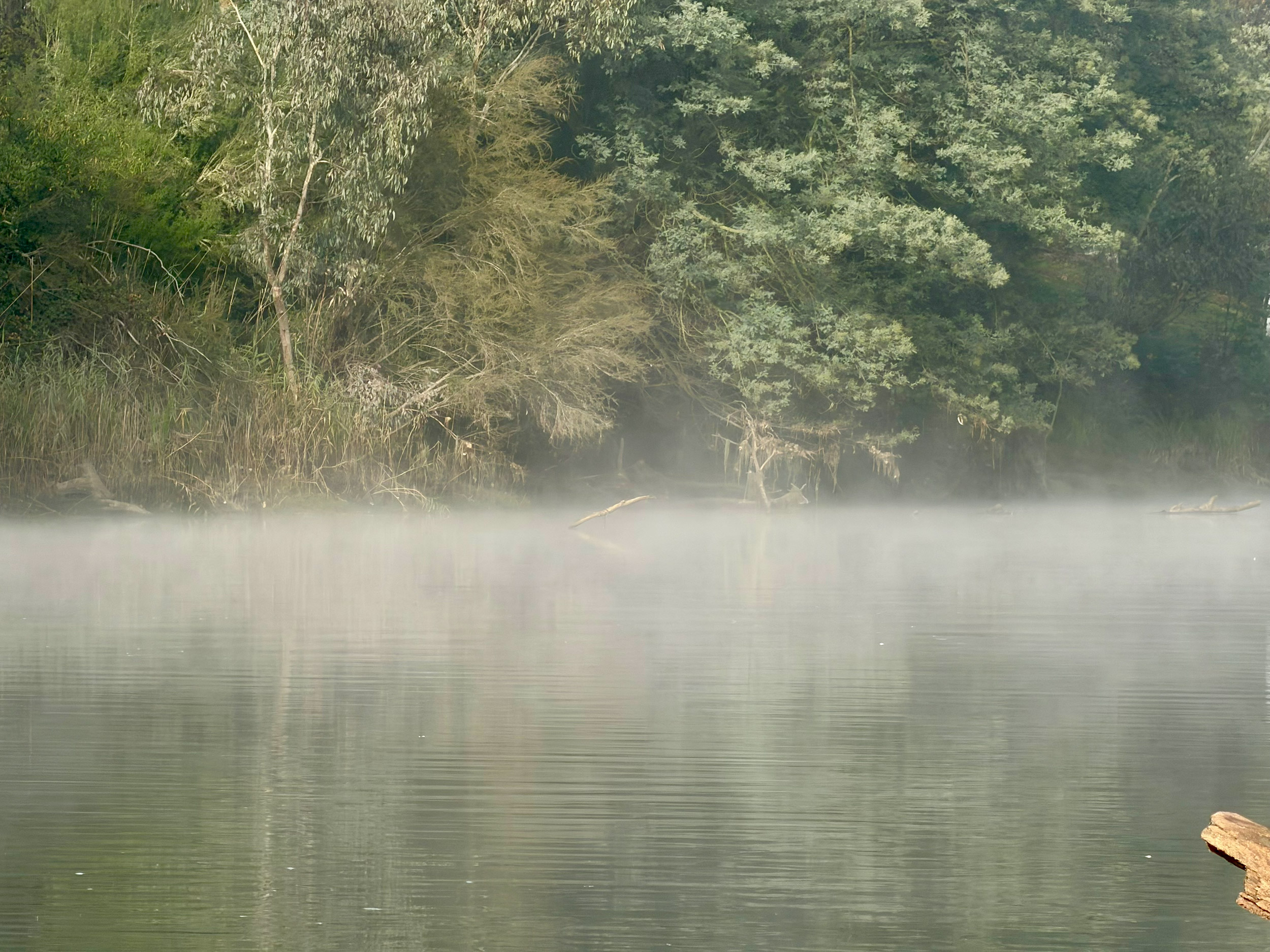
This is the time of midges, blue wing olives, and light gear. It is also requires careful wading and approaches to feeding fish so as to not send them scurrying for cover as your entrance to the water is noticed. Fish will often rise from about 8:30 am throughout the day. On foggy mornings, the start is just a bit later at around 11 am. Regardless of the start time, the good fishing endures. The most pleasant memories of fishing on the Goulburn are during this time period with the weather as close to perfect as it gets.

Sometime later in the month or in June, the weather changes significantly, although often the first major rain events are not until at least mid-June. The days are shorter, and the hatch and rise occur in the middle of the day with less emphasis on the last hour or so.

About the end of the month, the first browns start to spawn and should be left alone as catching these fish requires little to no skill and is not sporting. Please leave fish that are in spawn mode to their efforts. There are plenty of (not yet spawning) fish still actively feeding, with only the early run fish involved at this time of the season. This usually occurs in the last 7 – 10 days of May.

The one surprise that we sometimes encounter is that kossies continue to hatch on last light right throughout this month and into June. In May-June 2013, we saw Kossies hatching most nights on dusk, long after we would have expected them to have stopped. This is worth keeping in the memory bank as most of us are not expecting to be fishing # 8 dry flies at the end of May.

Anomalies aside, this is a month for stealth and precision. Careful observation and stalking are mandatory, but the rewards of catching fish in prime condition on such picture-perfect days, make our endeavours worth the efforts.

goulburn river fly fishing
May = great weather and low water levels


WINTER


JUNE – AUGUST:

The end of the trout fishing season is heralded by the Queen’s birthday weekend in mid June. This three-month period of closure allows the trout of our rivers to spawn unmolested, keeping within the sporting ethic of fly fishing. This is the perfect time to tie flies, plan trips, head to Idaho/Montana with us. The adventure never ends.


LAST WORD

I hope this overview gives you a better understanding of what goes on here on the Goulburn River. While this write-up is comprehensive, there’s a lot I didn’t cover, including some things that change from season to season like our stonefly hatches, black ant falls, and other significant events that most people won’t encounter.

If you need flies for an upcoming visit, feel free to order a fly pack from our online shop or stop by the shop for some flies, a mud map, and up-to-the-minute advice from our staff of guides.

Don’t hesitate to reach out if you have any questions. You can contact us in the shop anytime at 03 5773 2513 or on my mobile at 0418 995 611. Of course, we’re available for guiding, tuition, and drift boat trips every single day of the season.

Cheers,
Antony

A crowded start on the Missouri River below Holter Dam. 

Escaping crowds on the Goulburn River has become a common challenge faced by all fly fishers this season, and never is it as bad as during periods of low flows. Fortunately, there are several strategies that can be employed to avoid the crowds and still enjoy a successful fishing experience.

One effective strategy is to explore lesser-known areas. The Goulburn River has  multiple access points, and some of these are less popular than others. By doing some research and scouting out these less-frequented areas, fly fishers can increase their chances of finding solitude and unpressured fish. HINT – Study the section of river that lies between Breakaway and Molesworth. There are many off the beaten path places you can fish in this area where angling pressure is minimal.

Another strategy is to fish during off-peak times. Tailwater fisheries can become particularly crowded during peak fishing times, such as weekends and holidays, especially when the weather is good. By fishing during weekdays or early mornings and evenings, or even on rainy days, fly fishers can avoid most crowds and have a more peaceful experience on the water.

Using smaller flies and lighter tippets, while not directly dealing with the crowd situation, can be effective tools in escaping the effects of wary fish in busy sections of river. These tactics require a bit more finesse, but they can be highly effective in catching wary fish that have been pressured by other anglers casting all manner of metal and plastic at them.

Lastly, fly fishers can consider hiring a guide to take them to less-frequented areas, or to drift through the many sections of river that wading anglers just can’t reach. Guides can be invaluable resources for finding solitude on crowded tailwater fisheries like the Goulburn. HINT – If in doubt, phone us for advice.

Overall, escaping the crowds requires a bit of creativity and strategy, but it is certainly possible. By exploring lesser-known areas, fishing during off-peak times, using smaller flies/lighter tippets, and utilising the expertise of guides, fly fishers can enjoy a peaceful and successful fishing experience on the Goulburn this autumn.


Keep up to date with the latest photos on our Facebook Page


Late season fishing can be a challenge for even the most experienced anglers. The weather can become unpredictable, the water levels are low, and the fish are often more selective in their feeding habits. However, with the right tactics and techniques, it is still possible to have a successful day on the water.

One of the biggest challenges of late season fishing is dealing with low water levels. As the water levels drop, fish become more concentrated in the remaining pools and runs. This can make them easier to locate, but also means that they are more likely to be spooked by approaching anglers. To avoid this, it is important to advance slowly and quietly, and to use stealthy casting techniques that minimise disturbance.

Another challenge of late season fishing is dealing with the changing weather conditions. As temperatures drop and precipitation increases, fish may become less active and more selective in their feeding habits. This means that anglers need to be prepared to adapt their tactics and techniques to suit the conditions. For example, if fish are feeding on tiny mayflies, it may be necessary to switch to more imitative flies, longer leaders, and lighter tippets to avoid spooking them.

One of the most effective ways to overcome the challenges of late season fishing is to focus on accurately imitating the natural insect life in the water. This requires a thorough understanding of the local insect species and their life cycles, as well as the ability to match your fly patterns as closely as possible. This is where a good understanding of stream entomology comes in handy.

By studying the behaviour and appearance of aquatic insects, fly anglers can gain valuable insights into how fish are likely to respond to the different hatches that occur as autumn plays out. For example, if you notice that fish are feeding on emerging caddis, you may want to try using a soft hackle fly that imitates the movement and appearance of these insects. Similarly, if you notice that fish are feeding on drifting mayfly nymphs, you may want to try using an unweighted nymph pattern that sits just below the surface film.

Another key factor to consider when fishing late season is the time of day. As water temperatures cool down, fish may become more active and feed more aggressively in the late morning through to mid-afternoon. This means that it can be a good idea to focus your fishing efforts during these times, avoiding the coldest times of the day when fish feeding activity is more likely to be restrained.

Overall, fishing late season can be a challenging but rewarding experience. By focusing on stealthy approaches, adapting your tactics to suit changing conditions, and imitating the smaller mayflies that dominate our autumn hatches, you can increase your chances of success and enjoy some great fishing even as the season draws to a close.

Anthony


Keep up to date with the latest photos on our Facebook Page


When it comes to fly fishing, having a well-stocked fly box is essential for success on the water. With countless fly patterns to choose from, it can be overwhelming to determine which ones are indispensable. Over the course of these five articles, we will present the top 50 trout flies that will cover you for every occasion, each with its own unique origin, as well as information on why it works and how to fish it.

At the end of this series we will get our staff together and produce a ‘Guide’s best dozen’ list. We will also get you to vote on your favourite 12 to create a list of our readers favourite patterns.

So enjoy the read, and hope we can introduce you to a few gems along the way. Welcome to our list of top 50 trout flies.


Top Flies Every Fly Angler Should Have – Numbers 1-10 of 50


The Royal Wulff - makes our list of top 50 trout flies.

  1. The Royal Wulff: A Classic Attractor Fly


    Originator: The Royal Wulff is a cherished legacy from the prolific fly tyer, Lee Wulff, who worked in the Catskill Mountains of New York. His ingenuity brought forth a pattern that has won the hearts of anglers around the globe. The Royal Wulff is an enchanting blend of form and function, incorporating elements of traditional patterns with ingenious design considerations to make a true masterpiece.


    Why it Works:

    The genius of the Royal Wulff lies in its versatility and visibility, hallmarks that make it an effective attractor pattern. It doesn’t specifically imitate one insect but rather, it vaguely suggests a variety of them. Key attributes include:

    • Attractor Design: The Royal Wulff’s alluring design hints at a plethora of aquatic and terrestrial food sources, sparking curiosity in the fish and enticing them to strike.
    • High Visibility: The large, white wings, typically tied with calf tail or synthetic materials, contrast well against the water, making the Royal Wulff easy for both the angler and the fish to spot.
    • Buoyancy: The fly’s structure and material selection ensure that it stays afloat, even in the roughest of waters, making it a reliable choice for varying conditions.


    How to Fish it:
    The Royal Wulff can be fished successfully in various conditions, thanks to its appealing design and buoyant nature. Here are some tips to maximise its potential:

    • Searching Strategy: The Royal Wulff is a fantastic searching fly when fish are not visibly rising. Cast it upstream and let it drift down naturally, mimicking the behaviour of insects on the water. Scale up in size and fish a beadhead nymph beneath it, or scale down when fish are sipping.
    • Varied Conditions: Whether you’re fishing a slow stream or a rushing river, the Royal Wulff can handle it all. Its buoyant design enables it to stay afloat, making it a versatile choice no matter what sort of river you are fishing.
    • Seasonal Success: It can be a particularly successful fly during summer months when terrestrial insects become more abundant. However, it’s versatility makes it effective year-round.


    Other Interesting Notes:

    • The Royal Wulff is considered a ‘royal’ pattern due to its peacock herl body section, a characteristic it shares with other ‘royal’ flies. It also draws its name from its originator, Lee Wulff.
    • It comes in a variety of sizes, making it adaptable to many situations and types of fish. From small brook trout to larger river species, the Royal Wulff can be an angler’s trusty companion.
    • Despite its origins in the Catskill Mountains, the Royal Wulff has become a favourite among Australian and kiwi anglers for its reliability and universal appeal.

    In conclusion, the Royal Wulff, with its versatile design and exceptional visibility, is a timeless fly that continually proves its worth. Whether you’re a beginner or an experienced angler, this is one fly that should always have a place in your fly box and is definitely one of our top 50 trout flies.


    The Beadhead Flashback Pheasant Tail - makes our list of top 50 trout flies.

  2. The Beadhead Flashback Pheasant Tail Nymph: A Detailed Overview


    Originator:
    Frank Sawyer, a river keeper from England, originally designed the Pheasant Tail Nymph. His intention was to mimic a variety of mayfly nymphs, and his design has indeed proved versatile and effective over the years. The Beadhead Flashback variation adds a modern touch to this classic design, contributing a shiny attraction factor and additional weight for deeper fishing.


    Why it works:

    • Versatile Imitation: The Beadhead Flashback Pheasant Tail Nymph is a near-perfect imitation of a wide range of mayfly species. Its pheasant tail fibres mimic the nymph’s segmented body, capturing the insects’ natural colour and look.
    • Attractor Factor: The shiny beadhead and flashback create an irresistible allure, catching the eye of fish from some distance away. They offer a tempting visual stimulus that can turn a curious fish into a sure catch.
    • Weight and Depth: The beadhead adds extra weight, allowing the fly to sink faster and reach greater depths. This is crucial when fishing in deeper pools or faster currents where mayfly nymphs often reside.


    How to fish it:

    1. Dead Drift: Cast the nymph upstream and allow it to drift naturally with the current, just like a real nymph would do.
    2. Indicator Nymphing: Use an indicator to track the nymph’s progress underwater, setting the hook when you see the indicator dip or pause.
    3. Tandem Rig: Pair the Beadhead Flashback Pheasant Tail Nymph with a dry fly on a tandem rig. The nymph serves as a dropper beneath the dry fly, appealing to fish at various depths.


    Other interesting notes:

    • It’s always a good idea to carry different sizes of this nymph to match the mayfly nymphs in your local waters.
    • While it’s known for its ability to mimic mayflies, the Pheasant Tail Nymph can also resemble other aquatic insects, increasing its versatility.
    • The Beadhead Flashback Pheasant Tail Nymph isn’t just for cloudy days or discerning fish. It’s a solid all-around nymph that belongs in every fly angler’s box.

    The Beadhead Flashback Pheasant Tail Nymph is a testament to how a well-designed fly, rooted in an understanding of the natural world, can stand the test of time. It’s proof that sometimes, the simplest designs are the most effective ones. A must have for anyone’s collection of top 50 trout flies.


    The Chernobyl Ant - makes our list of top 50 trout flies.

  3. The Chernobyl Ant: A Detailed Overview


    Originator:

    The Chernobyl Ant is the brainchild of American fly-fishing enthusiasts. It first made its appearance in the early 1990s and quickly gained popularity for its unique design and notable success, particularly in the trout-rich rivers of the Western United States. Versions of this fly would be in most guide’s list of top 50 trout flies.


    Why it works:

    • Striking Appearance: The Chernobyl Ant is not a subtle or understated fly. Its bold, foam-based design and strong, contrasting colours ensure that it stands out on the water. It attracts attention, triggers curiosity, and provokes eats from all trout species.
    • Versatile Imitation: While its name might suggest an ant, the Chernobyl Ant is a superb general attractor pattern. It can imitate a variety of larger terrestrial insects such as grasshoppers, beetles, and even cicadas.
    • Durability and Buoyancy: Crafted primarily from foam, this fly is highly buoyant and durable. It can float in turbulent waters and withstand repeated strikes without losing its effectiveness.

    How to fish it:

    1. Surface Fishing: Thanks to its buoyancy, the Chernobyl Ant is an excellent choice for surface fishing. Cast it near likely hiding spots and let it drift naturally.
    2. Hopper Dropper Rig: Use the Chernobyl Ant as the dry fly in a hopper dropper rig. Its buoyancy can support a weighted nymph beneath it, covering multiple water columns simultaneously.
    3. Twitch and pause: The Chernobyl Ant is the perfect fly to throw into cover and twitch back out. Cast it into undercut banks, deep into shade under trees, or across glides, then work it back out with pops of the rod tip and regular pauses.


    Other interesting notes:

    • Variations of the Chernobyl Ant have been developed to imitate specific terrestrial insects more accurately. For instance, the ‘Chubby Chernobyl’ has added features to mimic a grasshopper or a stonefly.
    • Despite its original success with trout, don’t limit the Chernobyl Ant to only these species. It has proven to be a successful fly for a variety of warmwater species as well, including bass.
    • The Chernobyl Ant is an excellent fly choice for windy conditions. Its size and weight allow for more accurate casting when lighter flies might prove challenging.

    The Chernobyl Ant, with its bold design and versatile capabilities, is not just a fly—it’s an entire fishing strategy. Add it to your fly box and witness the revolutionary results it can yield on the water. Remember, sometimes the key to great fly fishing is not to mimic nature perfectly, but to trigger the predatory instincts of the fish.


    The Parachute Adams - makes our list of top 50 trout flies.

  4. Parachute Adams: A Fly Fishing Staple


    Originator:

    The Parachute Adams is a creation of American fly tyer Leonard Halladay, who designed the original Adams fly in the early 1920s. The ‘Parachute’ variation, featuring a distinct horizontal hackle wrapped around a wing post, emerged later and swiftly gained popularity for its enhanced visibility, floatation, and ability to always land right way up.


    Why it works:

    • Versatile Imitation: The Parachute Adams doesn’t pinpoint a specific species, but rather mimics a broad spectrum of mayflies, making it incredibly versatile. Its grey body and grizzly hackle mimic the colours of many mayflies.
    • Superior Visibility: The distinctive white or brightly coloured parachute post at the top of this fly is easy to spot, even at a distance or in low-light conditions. This enhanced visibility allows anglers to track their fly efficiently.
    • Effective Floatation: The horizontal hackle of the Parachute Adams creates a broader footprint on the water, enabling it to float effectively, even in rough water.


    How to fish it:

    1. Dry Fly Fishing: The Parachute Adams is perfect for dry fly fishing techniques. Cast it upstream and let it drift downstream naturally, mimicking an insect floating on the surface.
    2. Match the Hatch: Use the Parachute Adams during a mayfly hatch. Its design and colours are versatile enough to fit any hatch situation.


    Other interesting notes:

    • The Parachute Adams is available in a variety of sizes to meet the needs of different fishing situations. Smaller sizes (18-24) can be used to match small mayflies, while larger ones (10-16) work well for bigger mayflies.
    • Despite being a dry fly, the Parachute Adams can also work wonders in slightly sub-surface fishing due to its unique design, mimicking an emerging or drowned mayfly.
    • Over time, anglers have added a variety of twists to the original Parachute Adams, using different colours and materials, but the classic grey body and grizzly hackle remain the favourite. A bight orange or pink wingpost can be a lifesaver on a dull, rainy day.

    The Parachute Adams is a classic, versatile, and dependable fly that should be a staple in any angler’s fly box. Whether you’re a seasoned angler or a novice fly fisher, you can trust the Parachute Adams to deliver results when other flies fall short. After all, its time-tested design and consistent performance have earned it a place among the greatest fly fishing patterns of all time, and so it makes our list of top 50 trout flies.


    The Bubbleback Pupa - makes our list of top 50 trout flies.

  5. Bubbleback Pupa: A Must-Have for Your Fly Box


    Originator:

    The Bubbleback Pupa is a brainchild of the legendary Rene Harrop, a revered fly tier and fly fishing guide who has been integral to the evolution of the sport. Known for his sophisticated, detailed, and effective creations, designed for use on the legendary Ranch section of the Henry’s Fork, Harrop’s flies have brought a nuanced understanding to the art of fly fishing and no list of top 50 trout flies would be complete without one or two his creations being included.


    Why it works:

    • Unmistakable Imitation: The Bubbleback Pupa is designed to imitate a specific stage in an insect’s lifecycle, the pupal stage, just as the insect is about to emerge. The glossy “bubble” at the back of the fly successfully mimics the gas bubble that forms on the pupa during this stage.
    • Highly Visible: The unique bubbleback design of this fly makes it extremely visible under water, drawing the attention of the fish and increasing your chances of an eat.
    • Strategic Colour Scheme: Harrop’s design often uses an olive or brown body, effectively imitating the natural colours of various caddis pupae, a favourite food of many trout species.

    How to fish it:

    1. Nymph Fishing: The Bubbleback Pupa is best suited for nymph fishing techniques. It’s typically fished subsurface and can be presented alone or as part of a nymphing rig.
    2. Emergence Mimicry: Try casting it upstream and letting it drift down naturally to fish eating caddis emergers stuck below the surface. This technique mimics a pupa rising to the surface to hatch, often triggering an aggressive response from feeding trout.


    Other interesting notes:

    • The Bubbleback Pupa can be tied in various sizes to match different species of caddisflies. You can adapt to the hatch you’re experiencing by simply adjusting the size and colour of the Bubbleback Pupa you’re using.
    • Rene Harrop’s designs, including the Bubbleback Pupa, are recognised for their attention to detail and biologically accurate imitations. This level of realism often makes the difference when trout are particularly selective.
    • The Bubbleback Pupa’s design is a great example of how understanding insect life cycles can translate into more effective fly designs. It embodies Harrop’s philosophy of observing nature closely and replicating its processes as faithfully as possible.

    In the realm of fly fishing, the Bubbleback Pupa has earned its stripes as a trusted and effective fly. Its thoughtful design and keen imitation of nature make it a strong contender when you’re trying to match the hatch and convince a wary trout to eat. Add the Bubbleback Pupa to your fly box, and experience the genius of Rene Harrop on your next fly fishing adventure. Another lock in our list of top 50 trout flies.


    The Beadhead Copper John - makes our list of top 50 trout flies.

  6. Beadhead Copper John: A Shining Star in the Nymph Category


    Originator:

    The Beadhead Copper John is a masterstroke from John Barr, a renowned Colorado fly tier. His designs are guided by a deep understanding of entomology and a dash of innovation, bringing to life lures that truly capture the attention of fish.


    Why it works:

    • Unique Design: The Beadhead Copper John stands out with its heavily weighted copper wire body, which gives it a unique look and attractive shine underwater. This feature, combined with the bead head, ensures the fly sinks quickly into the feeding zone of the fish.
    • Versatility: The Copper John is a highly versatile fly that effectively mimics a wide range of nymphs, particularly mayflies and stoneflies, making it a reliable choice regardless of the hatch.
    • High Visibility: The bead head and bright coloured thorax (often red or green) contribute to the fly’s visibility, enhancing its attractiveness to fish.


    How to fish it:

    1. Nymphing Techniques: Given its weight and design, the Beadhead Copper John is ideally suited for nymphing techniques. Whether you’re tight line nymphing or using an indicator, this fly gets down to depth quickly.
    2. Dropper Rig: The Beadhead Copper John is an excellent choice for the point fly in a dropper rig because of its ability to sink rapidly.


    Other interesting notes:

    • The Beadhead Copper John can be tied in a range of sizes and colours, allowing for imitation of various types of nymphs.
    • It is one of the most popular nymph patterns worldwide due to its versatility and effectiveness, making it a must-have in any fly box.
    • Its durability is another plus point; the heavy wire body stands up to catching numerous fish.The Beadhead Copper John’s success lies in its ability to grab the attention of fish and keep it, thanks to its unique design and striking visibility. By including it in your fly box, you’ll equip yourself with a versatile and dependable fly that’s ready to deliver, irrespective of the fishing conditions or targeted species. Definitely one of our top 50 trout flies.


    The Klinkhammer - makes our list of top 50 trout flies.

  7. Klinkhammer: The King of Emergers


    Originator:

    The Klinkhammer, a remarkable emerger pattern, was first tied by Dutch angler Hans van Klinken in the early 1980s. His aim was to design a fly that excelled in imitating the vulnerable stage of an insect’s life – when it is transitioning from a nymph to a flying insect, otherwise known as the emerger stage. This fly is would be in anyone’s top 10 patterns, much less a lost of top 50 trout flies.


    Why it works:

    • Innovative Design: The Klinkhammer is crafted with a unique parachute post design on a curved hook that makes two-thirds of the fly hang below the surface, thus effectively imitating an emerging insect. The abdomen of the Klinkhammer sinks into the water, while the thorax and wing post remain above, creating a perfect illusion of an emerging insect.
    • Versatility: The Klinkhammer is versatile and can represent various aquatic insects, particularly midges, mayflies, and caddisflies. This wide range of imitation makes it a go-to fly in many situations.
    • Visibility: Its high-visibility parachute post not only aids in flotation but also allows anglers to keep track of the fly even in choppy water or poor light conditions.


    How to fish it:

    • Use During Hatch: The Klinkhammer is most effective when fished during a hatch when fish are feeding on emergers.
    • Dead Drift Technique: Like most dry flies, the Klinkhammer is best fished using the dead drift technique, which simulates the natural drift of an insect on the water’s surface.


    Other interesting notes:

    • The Klinkhammer can be tied in a variety of sizes and colours to match the prevalent hatch. Traditional versions often have a grey body and wing post, but other popular variations include olive, brown, and black bodies.
    • While the Klinkhammer is primarily used in freshwater streams and rivers, it can also be effective in still water environments where midges and caddis are emerging.

    In the realm of fly fishing, the Klinkhammer has carved out a place of honour for its ability to skillfully imitate the vulnerable emerger stage of insects. Its unique design and high versatility make it an invaluable addition to any fly angler’s collection. So, gear up with Klinkhammer, and you’re sure to see your success rate soar.


    The Parachute Caddis - makes our list of top 50 trout flies.

  8. Parachute Caddis: The Classic Surface Specialist


    Originator:
    The origin of the Parachute Caddis is not explicitly attributed to a specific tier, but this versatile and highly effective pattern has been a staple in fly boxes for decades, representing a universal adaptation of the caddis fly, a favourite meal for many fish species.


    Why it works:

    • Insect Imitation: The Parachute Caddis, as the name suggests, is designed to closely mimic caddis flies, one of the most common forms of aquatic insect life and a vital food source for trout. This makes it a highly productive fly in many fishing scenarios.
    • Visibility and Presentation: The parachute design allows for a more delicate and realistic landing on the water surface, akin to a natural caddis settling on the water. The unique hackle wrapping around the upright post provides excellent visibility to the angler while maintaining a low, natural profile to the fish.
    • Versatility: The Parachute Caddis can be tied in different sizes and colours to match various species of caddis flies, enhancing its effectiveness and appeal to a broad range of fish.


    How to fish it:

    • Dry Fly Presentation: Fish the Parachute Caddis as you would any dry fly. Cast upstream and allow it to drift naturally with the current over likely holding areas.
    • Caddis Hatch: This pattern excels during a caddis hatch. However, its high visibility and resemblance to a universal food source can make it effective even when caddis aren’t actively hatching.


    Other interesting notes:

    • Consider carrying a variety of Parachute Caddis flies in different colours and sizes in your fly box. Popular variations include tan, olive, black, and brown bodies to match different types of caddis flies. It is also popular in the same grey as a Parachute Adams.
    • Although the Parachute Caddis is a dry fly, it can occasionally be used as an emerger pattern during a caddis hatch. Applying floatant to the body but allowing the hackle to become waterlogged can give the illusion of a caddis in the process of emerging.

    Unassuming yet highly effective, the Parachute Caddis has earned its reputation as a must-have fly for any angler. Its combination of visibility, realistic presentation, and versatility make it a tried-and-true performer on streams and rivers worldwide. Equip yourself with the Parachute Caddis, and watch as the magic unfolds on the water.


    The Royal Stimulator- makes our list of top 50 trout flies.

  9. Royal Stimulator: The Throne Holder of Attractor Flies


    Originator:

    The Royal Stimulator, a variant of the classic Stimulator pattern, was developed by Randall Kaufmann. This enticing fly ingeniously combines the vibrant appeal of the Royal Coachman with the irresistible design of the Stimulator. It was conceived to provoke aggressive strikes from fish even in the absence of a hatch. This one would make every guide’s top 50 trout flies.


    Why it works:

    • Versatile Imitation: The Royal Stimulator doesn’t replicate a specific insect but instead exhibits the characteristics of several potential prey, including caddisflies and stoneflies. Its shape, movement, and buoyancy attract fish that are opportunistically feeding.
    • Visibility: The Royal Stimulator features a bushy hackle and a buoyant design, allowing it to float high on the water. Its bright colours and conspicuous silhouette make it highly visible to both fish and anglers, even in low-light conditions.
    • Stimulation: This fly lives up to its name, stimulating predatory instincts in fish. The Royal Stimulator’s flashy colour scheme and irresistible silhouette make it an effective attractor fly, inciting aggressive strikes.


    How to fish it:

    • Dry Fly Tactics: The Royal Stimulator is typically fished on the surface as a dry fly. Casting it upstream and allowing it to drift naturally downstream over feeding lanes is a conventional approach.
    • Skating: You can also use the Royal Stimulator to “skate” across the surface of the water, imitating a hatching or egg-laying caddisfly. This technique involves casting across the current and using the rod tip to guide the fly in a twitching, skittering action across the surface.
    • Dry Dropper: The Royal Stimulator sits among the very best of flies under which to suspend a nymph. It is especially effective in fast, broken water – and is perhaps the first choice when fishing heavy pocket water or high-country small streams.


    Other interesting notes:

    • Size Variation: The Royal Stimulator can be tied in a variety of sizes to represent different food items. Larger versions effectively imitate stoneflies, while smaller ones can mimic caddisflies.
    • Multifunctional: Due to its high visibility, the Royal Stimulator is often used as an indicator fly in a dry-dropper rig, providing the dual functions of attracting fish and indicating strikes on the subsurface nymph.

    The Royal Stimulator is a dynamic, versatile fly that doesn’t rely on a specific hatch to be effective. Instead, it capitalises on the opportunistic nature of fish, leading to exciting strikes and unforgettable fly fishing experiences. It’s a true standout in the world of attractor flies – a jewel on the water that proves irresistible to fish.


    The Busjy's Emerger - makes our list of top 50 trout flies.

  10. Bushy’s Emerger: A Masterful Interpretation by a Fly Fishing Legend


    Originator:

    The Bushy’s Emerger was created by Kaj ‘Bushy’ Busch, a highly regarded Australian angler known for his fishing acumen and innovative fly designs. Rather than being a true emerger pattern, this fly is more of an ingenious reinterpretation of the classic Parachute Adams. Its subtle modifications make it a compelling choice during discerning mayfly hatches.


    Why it works:

    • Realistic Appearance: Bushy’s Emerger bears an uncanny resemblance to the newly emerged mayfly dun. Its dull, dappled wing provides a lifelike impression that is often irresistible to trout, especially during a hatch.
    • Versatile Presentation: Similar to the Parachute Adams, Bushy’s Emerger can be deliberately modified to sit just below, on, or in the surface film. This makes it effective whether the mayflies are emerging, hatched, or spent.
    • Subtle Allure: The subdued colours of Bushy’s Emerger offer a more natural and less conspicuous profile compared to some other dun patterns that offer more visibility. This muted appeal can be crucial when trout are being particularly selective.


    How to fish it:

    • Drift Tactics: Just like other dry flies, the Bushy’s Emerger is typically fished on the surface with a natural drift. Cast it upstream and allow it to float downstream over likely holding spots or directly over rising trout.
    • Match the Hatch: Use Bushy’s Emerger during a mayfly hatch when trout are actively feeding on the surface. Adjust the size of your fly to match the size of the natural insects as closely as possible.

    Other interesting notes:

    • Timing is Everything: While Bushy’s Emerger can be effective throughout the year while blind fishing, it tends to be especially effective during a mayfly hatch. This is when the fly’s lifelike appearance and subtle presentation truly shine.
    • Consider the Conditions: Bushy’s Emerger can be particularly effective in clear water conditions, where its natural profile can outperform flashier flies. It is also useful in overcast conditions where its silhouette stands out against the grey sky.
    • Fine-tuning: Like all imitative flies, the effectiveness of Bushy’s Emerger can often be improved with slight adjustments. Try altering the size, presentation, or even the tippet size to entice stubborn trout.

    Bushy’s Emerger is a testament to Kaj Busch’s profound understanding of trout behaviour and his mastery of fly design. Its uncanny ability to mimic multiple life stages of mayflies and its natural presentation make it a valuable addition to any fly box and puts it as the first Australian pattern in our list of top 50 trout flies. Whether you’re new to fly fishing or a seasoned pro, Bushy’s Emerger is a fly that can make all the difference when fishing to picky trout during a mayfly hatch.


Conclusion:

With these 10 flies in your fly box, you’ll be well-prepared for almost any fly fishing occasion. From attractor dry flies to versatile nymphs, these patterns cover a wide range of imitations, ensuring you have the right fly for most situations.

Next week we will bring you flies number 11-20 in our list of top 50 fly patterns for trout fishing Australia and New Zealand.

Tight lines and happy fishing!


Discover. Connect. Respect.


GV FLY FISHING ENDORSED BRANDS

https://www.waterworks-lamson.com/