The Missouri: Learning to See the Invisible
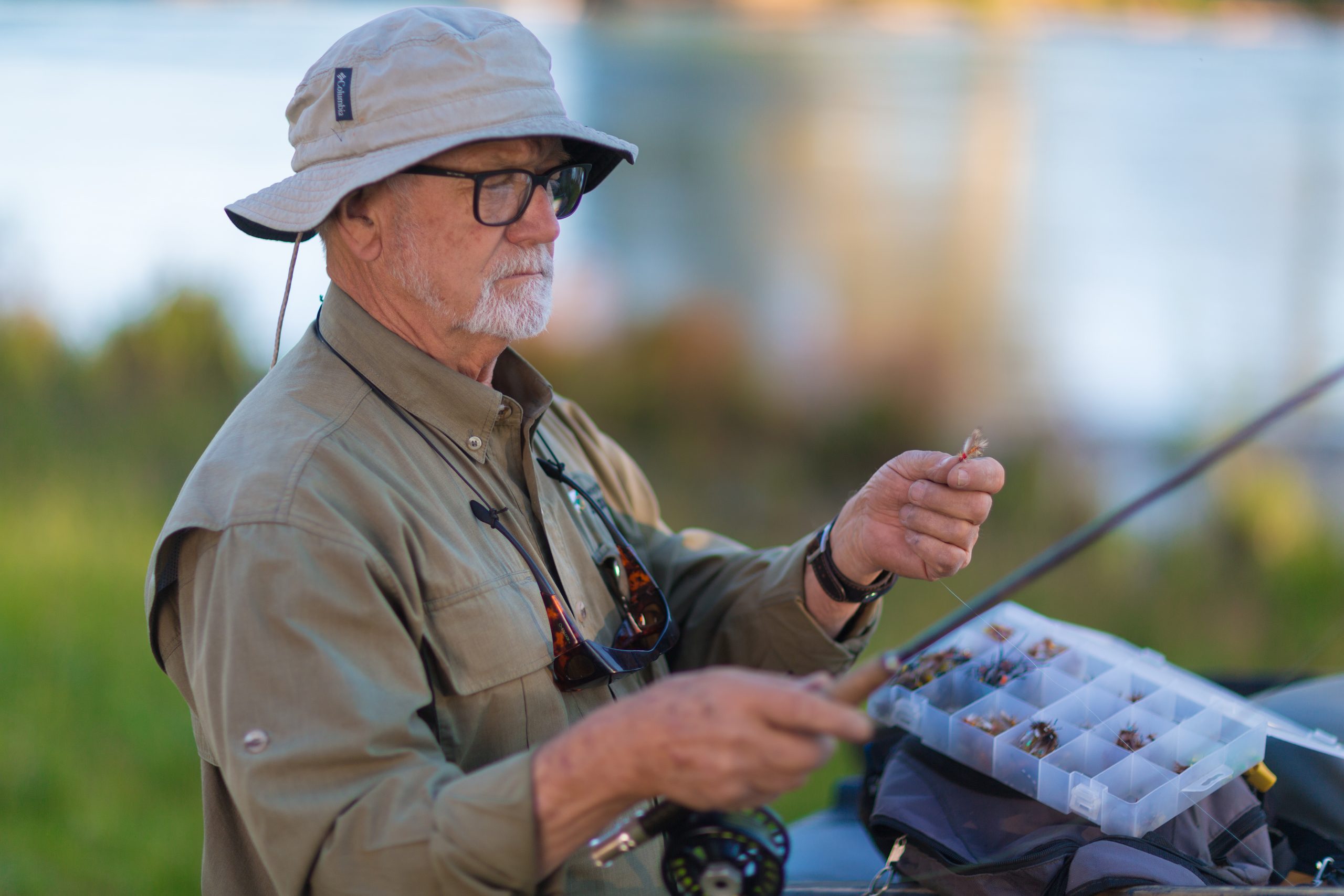
The rods are usually rigged the night before. There is no practical reason for this. The guides will almost certainly alter the leaders, change the flies and perhaps abandon the entire setup before we leave the ramp. Still, on the first evening in Craig, nobody wants to arrive unprepared. Licences are checked, rain jackets located and lunch orders completed before people drift off to their rooms carrying the restless energy of months, sometimes years, of anticipation.
The alarms are generally set for 6.30, though most people are awake well before them. Breakfast on the first morning is rarely impressive. A piece of toast, some muesli, perhaps a banana eaten while looking repeatedly at the time. Eggs and bacon can wait. Outside, the light is already spreading across the valley and somewhere downstream dozens of guides are going through the same preparations.
The drive to the fly shop is usually quiet. There is no music. No radio. People are too busy simply looking through the windows. The interstate follows the river closely in places, and every time the water appears around a bend, heads turn instinctively. Somebody comments on the level. Somebody else spots a drift boat. It does not matter that we checked the flows the night before or that very little is likely to have changed. Looking is part of the ritual.
By the time we reach Craig, the fly-shop car park appears to be in complete disorder. Clients stand holding rods and day packs while guides move quickly between trucks, boats and the shop. Coolers are loaded. Flies are collected. Shuttle arrangements are confirmed. Boat trailers rattle in and out of the gravel lot. On a busy morning there may be sixty or seventy anglers preparing to leave and thirty or forty drift boats scattered across the surrounding lots. To somebody seeing it for the first time, the obvious thought is that the river will be ruined before breakfast. It never is.
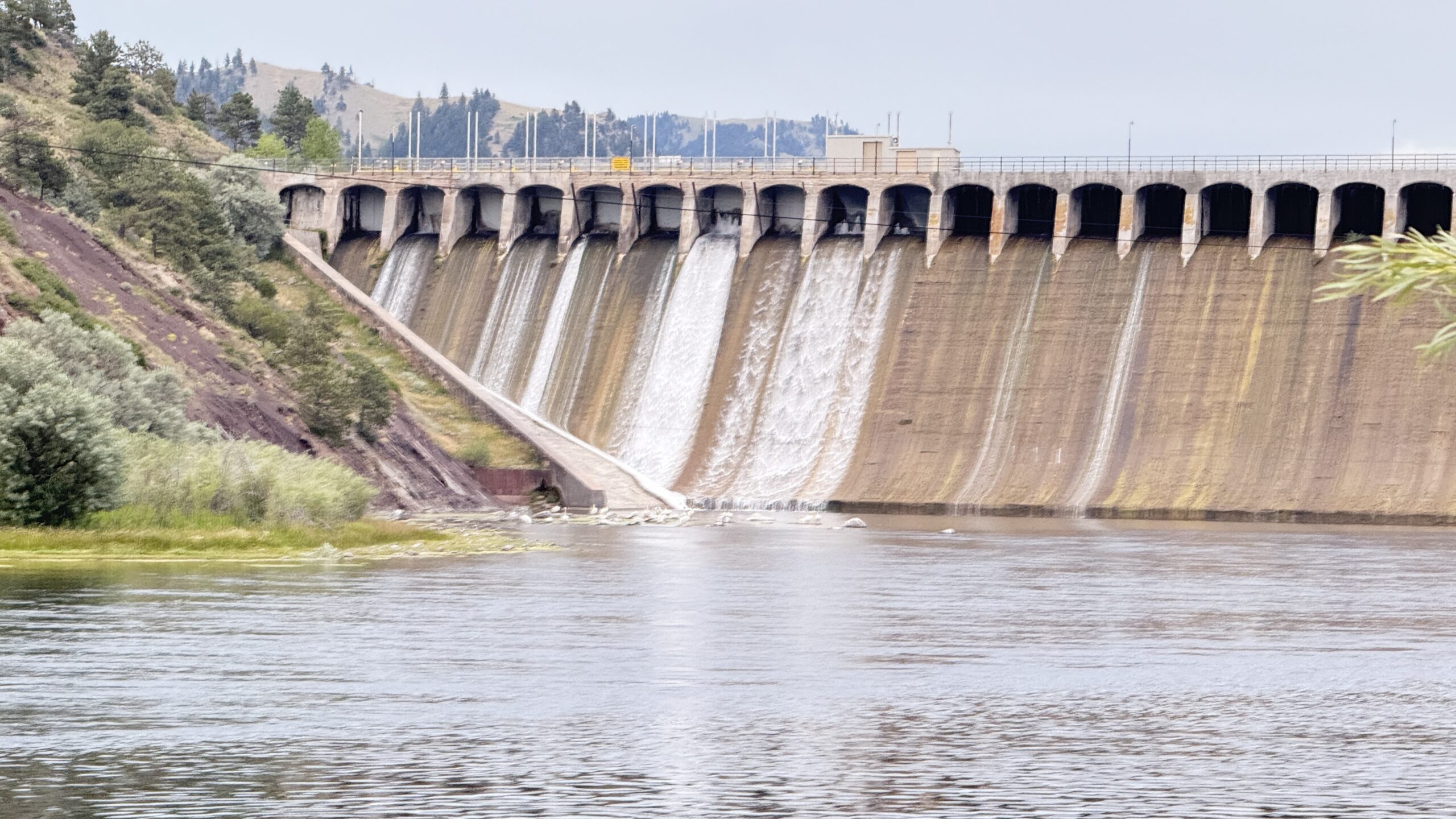 The boats begin spreading out almost as soon as they reach the water. Some guides start below the dam. Others launch from town. A few drive further downstream towards the canyon or the more pastoral sections where summer hoppers may bring fish tight to the banks. Some clients will finish early. Others will remain out until evening. By the time the first few kilometres have passed beneath the hull, the apparent chaos has dissolved into long stretches of water and the occasional distant boat. The Missouri absorbs people remarkably well.
Craig itself is barely a town in the conventional sense. A few fly shops. A bar. Places to eat. Lodging scattered along the river. Boats parked beside roads and trucks carrying rods through every intersection. The entire place seems temporarily assembled around the requirements of trout fishing.
Guides are everywhere. You recognise them before anyone makes an introduction. Hooded, long-sleeved sun shirts, trucker caps, sandals or flip-flops, and nippers hanging around their necks. The nippers are practical, of course, but they also operate as a kind of identification badge. You see the sun shirt and lanyard at a petrol station, in a supermarket or beside a boat trailer and immediately know what the person does for a living.
The outfitter we work with draws from a large group of guides, which means no two boats are quite the same. There are young men in their twenties who have fallen in love with the idea of making a life on rivers and want as much work as they can get. They follow new patterns and techniques, consume enormous amounts of fly-fishing content online and often bring an enthusiasm that lifts the mood before the boat has even left the ramp.
Then there are the career guides in their thirties and forties. Many have now lived beside the river long enough to understand how slowly a fishery of this scale gives up its patterns. Most of the guides we request each year belong somewhere in this group. They have made a conscious decision to remain, and their knowledge has accumulated one season and one drift at a time.
Then there are the older hands. Some are legendary, some slightly salty, and many quieter in the boat than the guides who came after them. I rarely miss an opportunity to fish with one. They have seen the Missouri through high water, low water, heat, smoke, changing hatches and every imaginable type of client. Much of what they know is never formally explained. You absorb it by watching where they position the boat, when they change flies and which pieces of apparently ordinary water they refuse to pass.
 A river like the Missouri cannot be learned quickly. Its scale makes that impossible. At first glance, it can look broad, smooth and strangely featureless. Australian anglers are often accustomed to reading more obvious structure. Undercut banks. Timber. Fast seams. Gravel edges. The Missouri presents many of those things too, but much of its best fishing is contained within differences so subtle that the river initially appears empty.
A faint change in current speed. A darker lane beneath glare. A soft line of foam moving several inches faster than the water beside it. A fish rising steadily in a slick that looked lifeless moments earlier. The guides see these things immediately. That is their real skill.
The first morning often begins close to the dam, where guides may row through the same productive piece of water several times. A client hooks a fish, the guide nets it, rows back upstream beneath the wall and begins again. To somebody accustomed to Australian trout fishing, the experience can feel almost indecent.
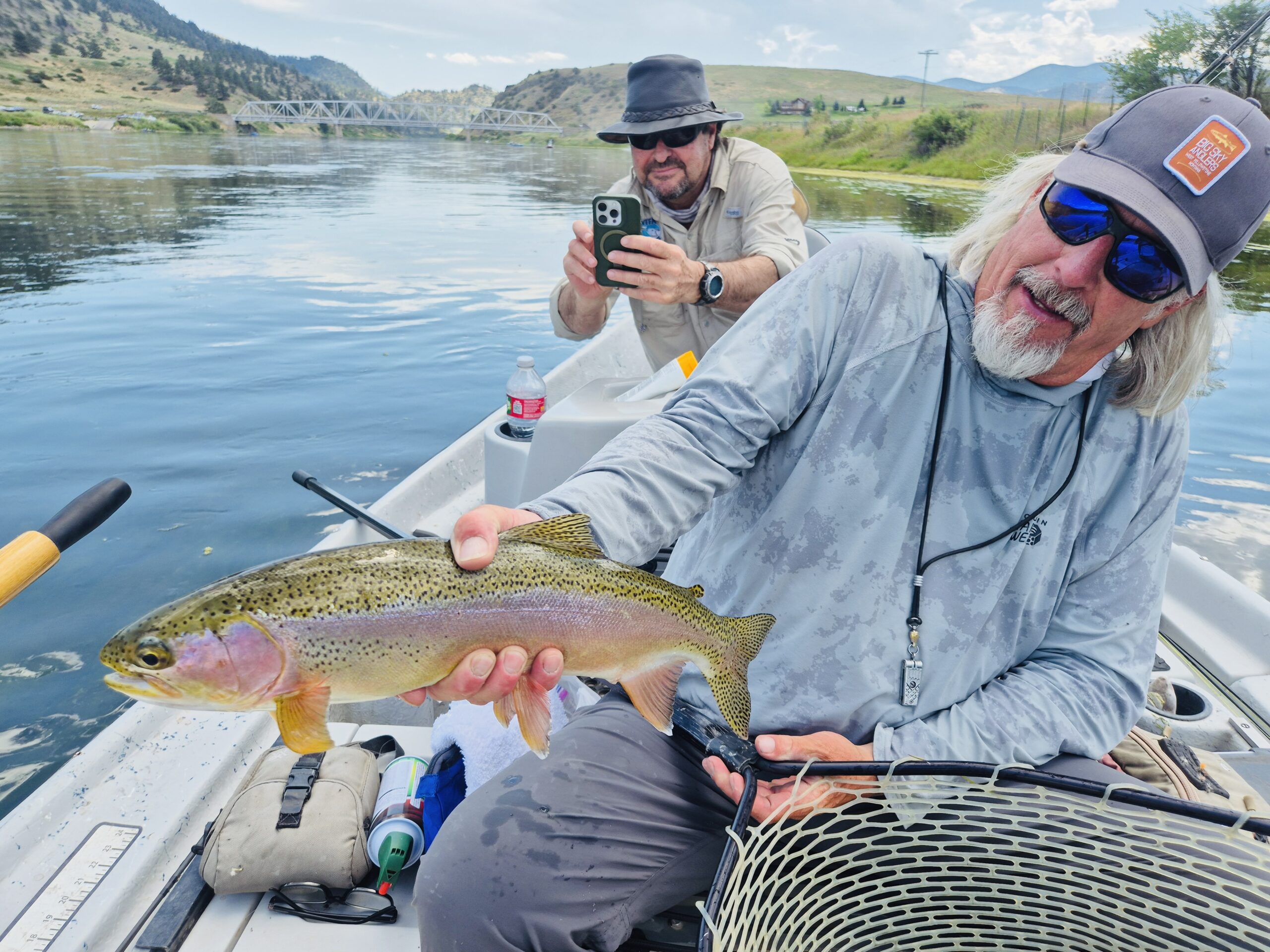
The fish are not small either. Heavy rainbows and browns in the eighteen to twenty-two-inch class sit in water that can seem impossibly productive. On some mornings, an angler may land several good fish within the first forty minutes, including one or two larger than anything they have previously caught. Guides understand that. A good fish early in the trip settles people. Casting loosens. Anxiety drops. The client begins breathing normally again.
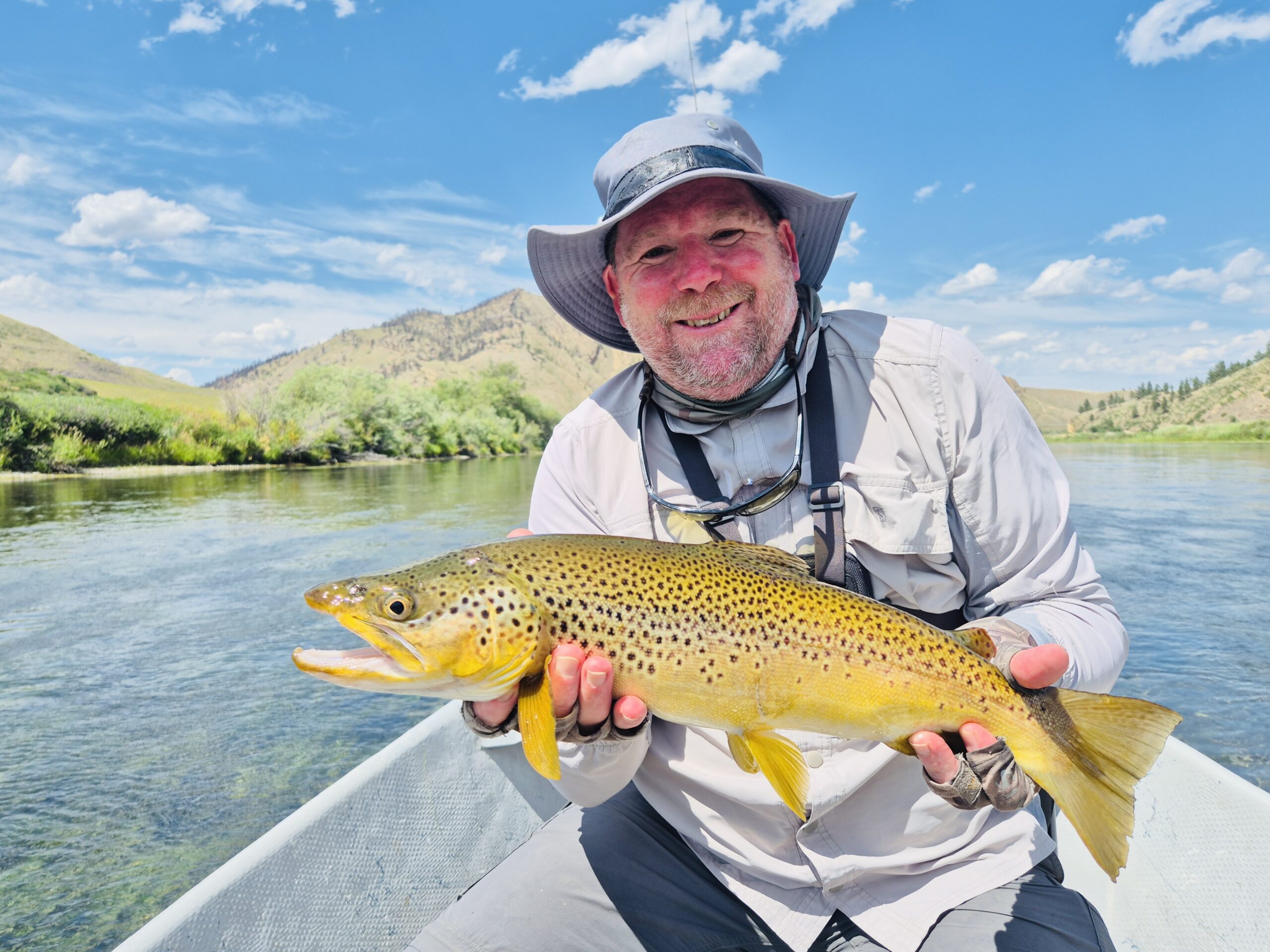
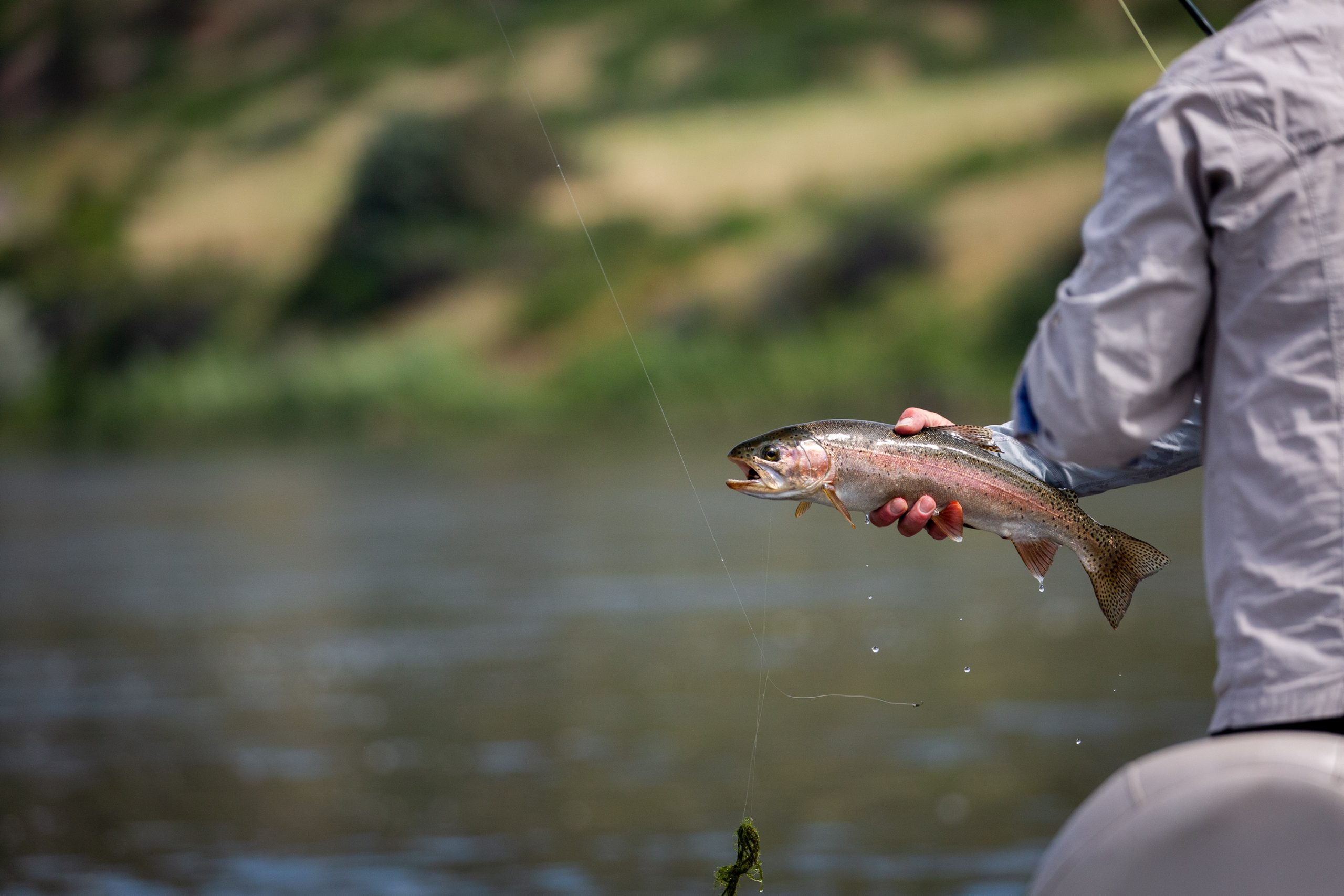 A few years ago, one experienced angler told me before the first day that he would be happy if he caught a single fish during the trip. Australian trout fishing had been difficult and he had arrived carrying the quiet assumption that Montana might prove equally demanding. By lunchtime he had landed seven. The rest of the trip continued much the same way. He caught fish on dry flies, nymphs and streamers, including several larger than anything he had experienced before. More importantly, he returned home a different angler. Not because Montana had made fishing easy, but because success had restored confidence he had gradually lost.
Few rivers do that quite like the Missouri. It is generous enough to help inexperienced anglers, yet technical enough to occupy the best fly fishers for a lifetime.
A beginner can fish a nymph beneath an indicator and catch strong trout throughout the day. An experienced angler can choose to ignore those fish entirely and spend several hours trying to fool one steady riser on a tiny dry fly. Streamers can be worked along the banks. Hoppers can be placed beneath overhanging grass. Caddis can be skated or allowed to sit quietly in the film. There are rock walls, drop-offs, riffles, slicks, backwaters and long open glides. The river does not demand a single approach. It offers choices. That is part of what makes it endlessly compelling.
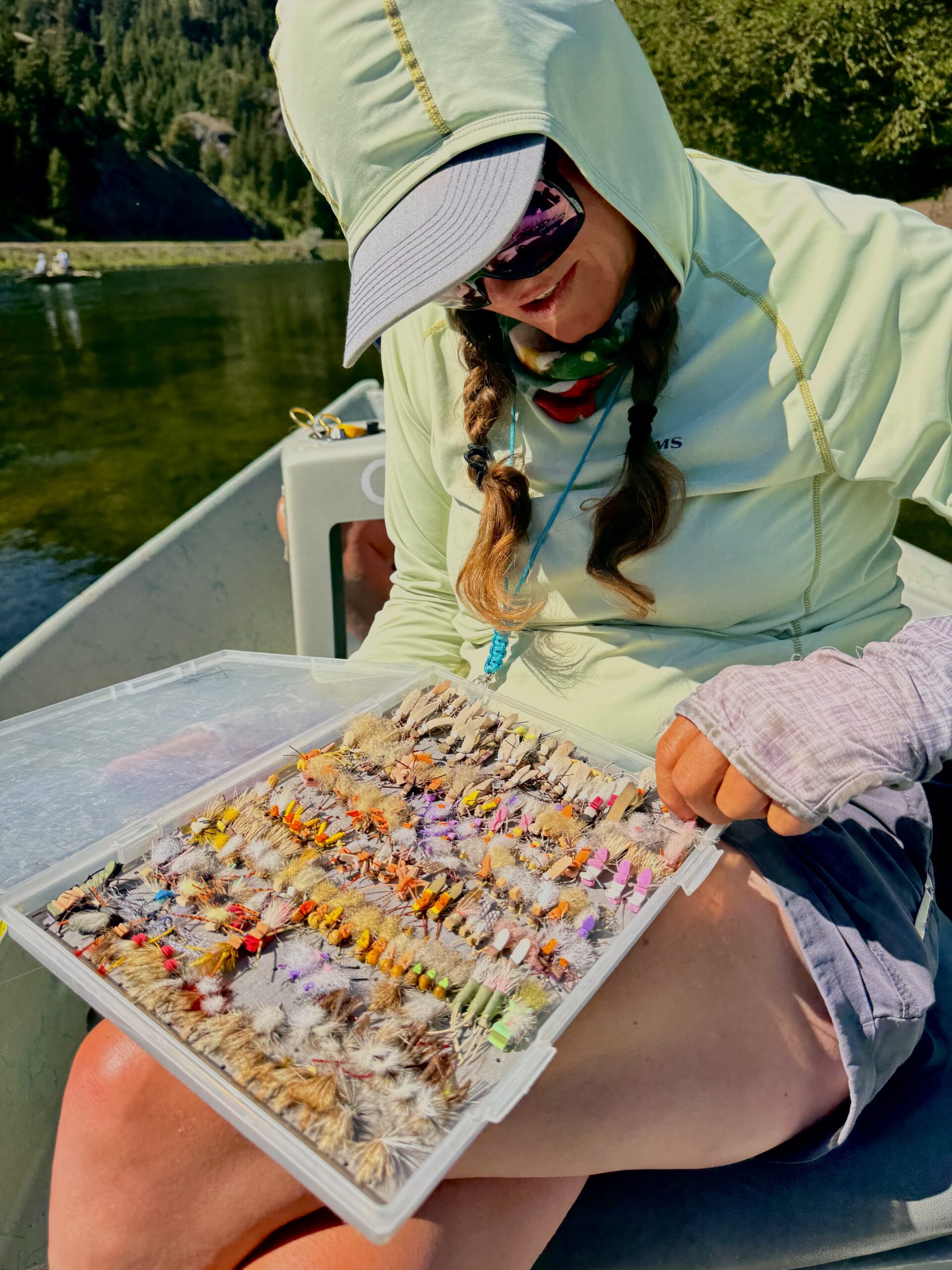
Summer on the Missouri is governed by insects. PMDs, caddis and tricos dominate much of the fishing, though terrestrials become increasingly important as the season progresses. At times the river seems less like water than a moving soup of life. The trico hatch often begins early, with tiny insects gathering over the river while the air remains cool and the wind manageable. The flies may be size 22 or 24, small enough that even experienced anglers struggle to see them. Guides sometimes pair the imitation with a slightly more visible fly, not because the trout need help locating it, but because the angler does.

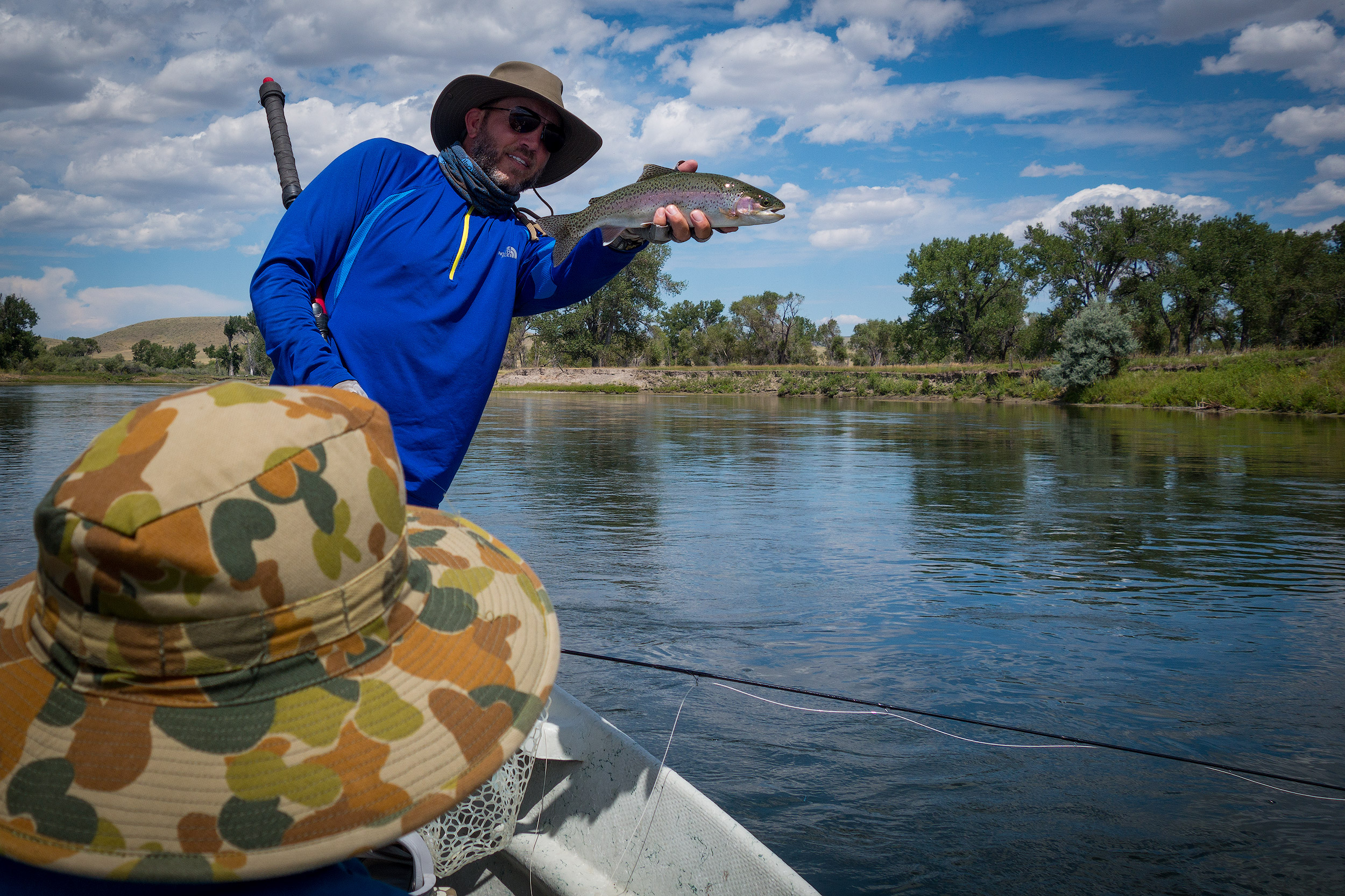 The approach is rarely random. You watch the rhythm of a fish rising, then try to place the fly so it arrives during the pause before the next rise. Too early and it passes unnoticed. Too late and the fish has already fed. The process can become maddening. Cast, wait, watch, miss. Cast again. Then, suddenly, the fly disappears exactly where it should and the line comes tight. Few things in fly fishing are more satisfying.
As the morning develops, PMDs begin appearing. Some days the hatch arrives in a defined window. On others it trickles through for hours. The difficulty lies in understanding which stage the fish are eating. Emerger, dun or spent spinner. A pattern that works beautifully for two fish may suddenly be ignored as the trout shift to something else. The caddis are less orderly. They can begin midmorning and continue until darkness, sometimes well beyond it. Fish slash at adults skittering across the surface or sip more quietly at vulnerable insects caught in the film. You may think you have solved the hatch only to discover that the next pod of fish is feeding in a completely different way. The Missouri rewards observation but never guarantees certainty.
At times the rising fish form large pods in slick water. From a distance the shape can appear almost triangular, with one or two larger trout near the head and progressively more fish feeding further downstream. Many are substantial trout, often holding in water so flat and exposed that the approach becomes as important as the fly. Methods that work at home do not always translate neatly. Sneaking up from behind may prove less effective than positioning the boat upstream and drifting the flies down on an angle. The guide controls distance and alignment while the angler tries to make a long leader settle without drag.
The first few casts may be ignored. Then comes a refusal. A nose appears beneath the fly and disappears. Another pattern is tied on. The boat is repositioned. The fish continue rising as though nothing has happened. When it finally works, the satisfaction is enormous. This is the fishing that excites me most on the Missouri. Not because it produces the greatest numbers, but because every fish requires a sequence of decisions. Position. Timing. Fly choice. Presentation. Sometimes the entire problem is solved. Sometimes it remains unsolved and the fish continues feeding long after the boat has moved on. The river allows both outcomes.

 But not every client wants to spend an hour on one fish, and they don’t have to. There are days when the sensible decision is to move, cover water and enjoy the abundance. There are other days when a single rising trout becomes the entire point. The best guides recognise the difference. They read clients almost as carefully as they read the river.
American guides are often more outwardly exuberant than Australian guides. That is a generalisation, but probably a fair one. They are more likely to lift the mood through talk, celebration and constant encouragement. Australian guides tend to be slightly more reserved. Neither approach is inherently better. Much of it is cultural. But the good ones know when to talk and when to become quiet. That applies to guides on both sides of the Pacific.
On the Missouri, there is often enough fishing happening that the deeper conversations don’t begin until the first proper break at lunch. Lunch, by the way, is ordered the night before from a form offering an almost excessive range of options, from sandwiches and hoagies to salads. Dietary requests are handled easily. Coolers are stocked with water, soft drinks and beer, along with crisps and some form of cake, muffin or brownie. It is over the top in the American way, and nobody complains.
On some rivers, guides set up fold-up chairs and tables in shallow water. On the Missouri, lunch is usually eaten in the boat. The rower’s bench or the space beside the rod racks becomes a temporary serving table. If the fish are rising, the pause may last no more than fifteen minutes. Sometimes the boat never stops drifting and everyone eats between casts.
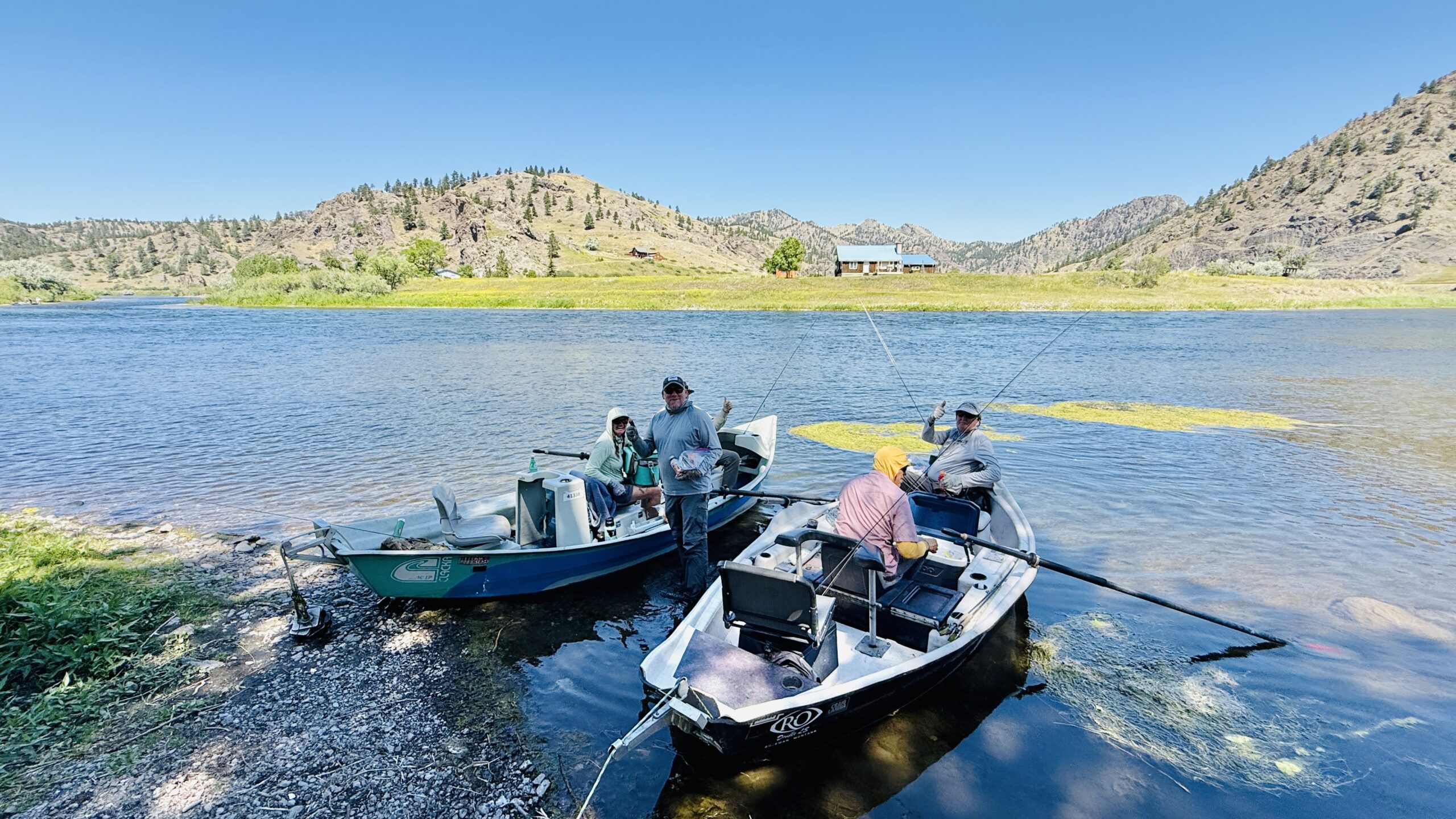
 On quieter afternoons, a guide may pull into the shade beneath a bridge or alongside cottonwoods. Truth be told, there is not much in the way of shade to be found. Sometimes people step into the river and stand waist-deep in the cool water until the heat begins to leave them. This is often when the conversation changes.
Clients begin asking guides about the rest of their lives. Do they remain in Craig through winter? Do they work in the ski fields? Do they head south for bonefish and permit? Are they married? Do they have children? How many years can someone row a drift boat before the body begins objecting?
At first, it may sound like small talk. But these conversations matter. A guide becomes more than the person holding the oars. A client becomes more than the person making the cast. By the end of the first few days, the best trips begin feeling less transactional and more like shared travel.
One thing you immediately notice is that the guides themselves rarely eat the same lunches they provide. Many carry almonds, cashews or something similarly practical. Slow energy, minimal fuss and no heavy afternoon slump. Rowing a drift boat for eight hours requires its own kind of discipline, and eating a big lunch forty to fifty days in a row does nobody any good.
The sound of the river is part of the experience, but so too are the sounds surrounding it. Boat trailers rattling along the interstate. The creak of oarlocks. Conversation drifting between boats as they pass. Fly line slicing through the air. There is a popular sticker in guide country that reads, “Drive it like you shuttled it.” Anyone who has watched an empty drift-boat trailer bounce down a Montana highway understands the joke immediately.
American guides also launch boats differently from the way I do at home. They are almost religious about keeping trailer bearings out of the water, backing only far enough for the boat to slide free. On the steep ramps of the Goulburn, mine is often submerged during every launch and retrieval, but I tend to do the same even on flatter ramps. I like being able to row directly onto the trailer at the end of the day. American guides look at that approach with the same suspicion I sometimes feel while watching them carefully keep their bearings just above the waterline. Different rivers produce different habits.
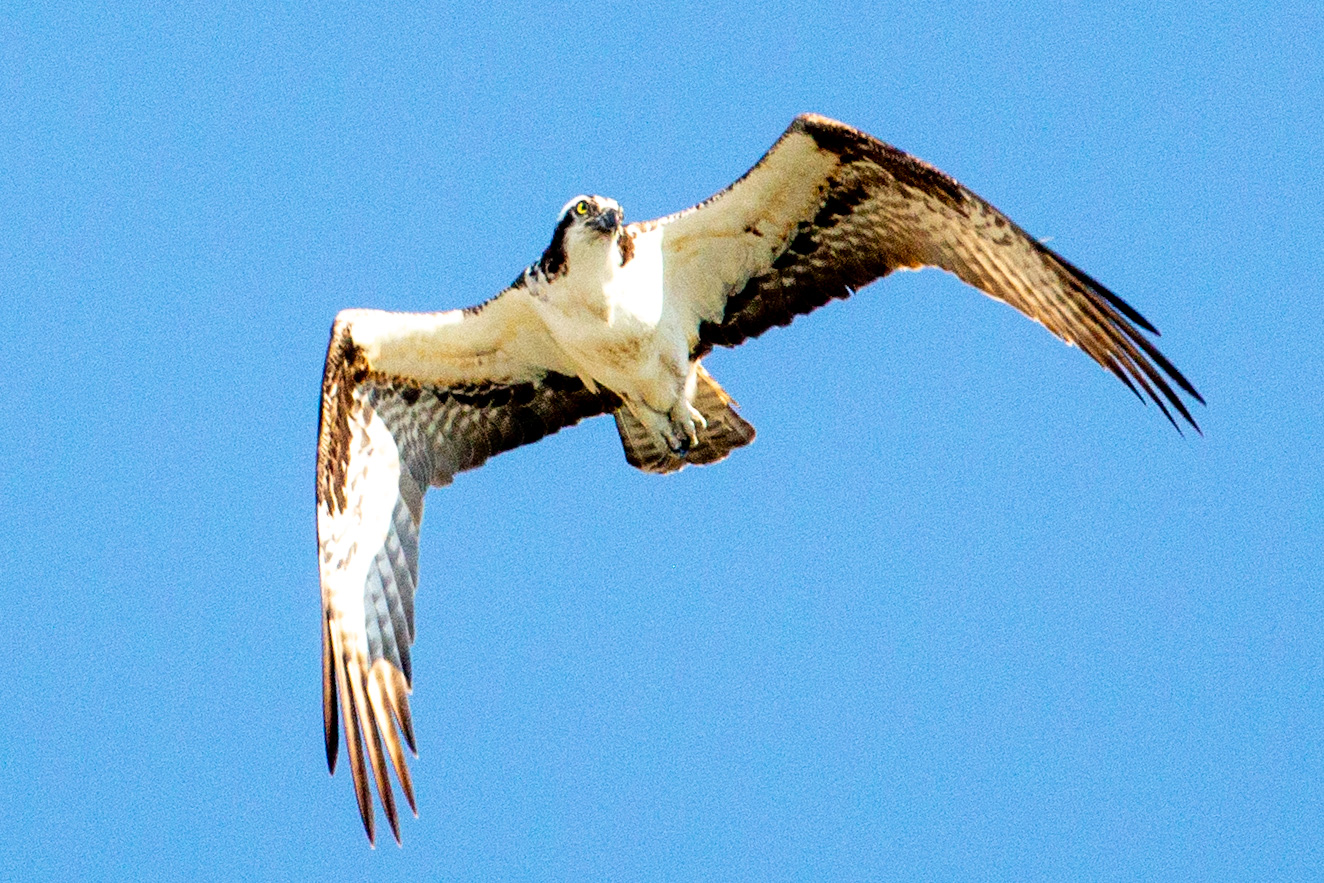
The Missouri has its own smells too. Sunscreen applied in thick layers. Coffee inside the fly shop. Timber, wet dogs and river mud. Cottonwoods and pine. Occasionally smoke drifting across the valley from fires hundreds of kilometres away. Then there are the birds. Ospreys hunt openly along the river, folding their wings and dropping towards fish with astonishing precision. Occasionally one will strike so close to the fly that everyone in the boat stops casting. Bald eagles watch from trees and canyon walls, often waiting for an easier opportunity. Golden eagles appear less often but carry a different presence entirely. For Australian anglers, these encounters become part of the fishing day as surely as the nineteen-inch brown in the net.
The day eventually ends back at the fly shop. Boats return. Guides unload gear. Clients gather with the tired satisfaction that follows a big day of floating the river. Stories are exchanged in fragments. A fish missed. A larger fish landed. A pod of risers that refused everything.
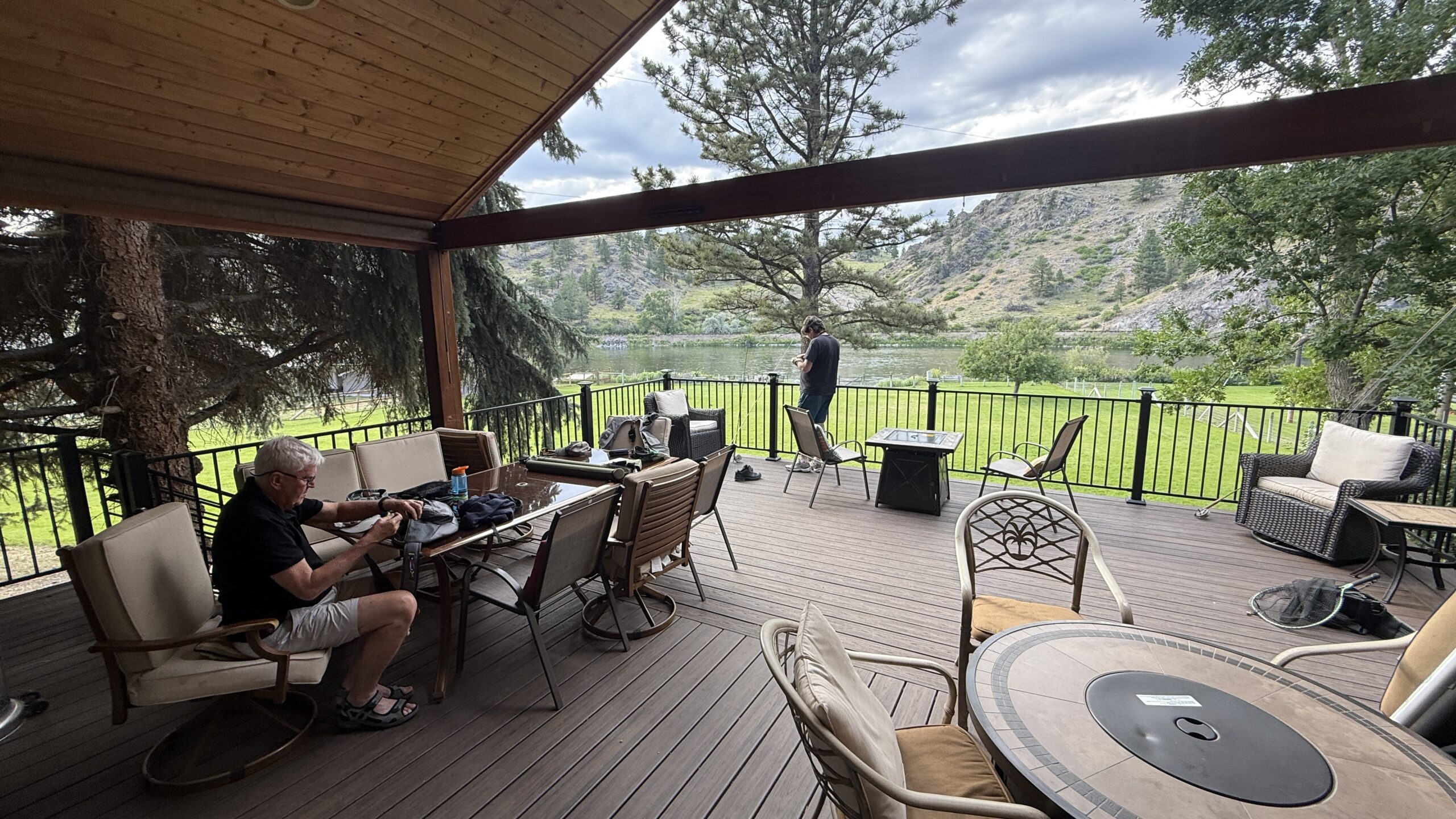
 From there we return to large houses beside the river. On an adventure such as this, the accommodation matters more than many people first realise. The homes we’ve been using for more than fifteen years are spacious, comfortable and private, often with decks overlooking the water. After a full day in a boat, people need room to separate for a while. Some make calls home. Others sit outside with a drink. Rods may be re-rigged, though by the second day they are often left exactly as they finished because the guide will probably change everything again the following morning.
Dinner is either prepared at the house or taken at one of the small hidden gems that can take time to discover. Good wine is bought in Bozeman on the first day before we drive north. Coffee is treated with equal seriousness. American filter coffee has never entirely convinced Australians, and beginning a long fishing day without decent coffee seems an unnecessary hardship.

Steak appears regularly. So do fresh vegetables, local beer and the occasional whiskey brought through duty-free. Weather is checked. River sections are discussed. Requests are sent to guides, often at around the same time they are sitting down to dinner with their own families.
By then the clients are beginning to settle. Jet lag fades. Casting improves. People stop trying to make every moment count and simply begin living within the rhythm of the trip. Breakfast becomes less rushed. The car ride becomes more relaxed. Jokes start finding their way into conversations. Personalities reveal themselves. This change is one of the things I still enjoy most after years of hosting these journeys. On the first morning, people are often cautious. By the end of the third day, they understand the routine. They know where to be, what to bring and when to let the guide take the lead. They begin seeing water they would have missed on the first day.
That may be the greatest gift the Missouri offers. It teaches people, even experienced guides like me, to look again.
The river that initially seemed broad and almost empty gradually fills with structure. A soft seam appears beside a faster one. A faint rise becomes a feeding lane stacked with fish. A glare-covered slick reveals six trout moving in rhythm. The invisible becomes visible, not because the river has changed, but because the angler has.
What keeps drawing me back is not simply the number or size of its trout, though both are extraordinary, but the breadth of possibility.
One boat may spend the day drifting tiny dry flies to individual risers. Another may throw streamers against cut banks. A third may fish hoppers beneath grassy edges. The structure is always there, but no two days ask quite the same questions.
And after several days, clients who arrived seeing only a large western river begin noticing the small things. The faint current line. The rise beneath glare. The fish at the head of the pod. The guide saying nothing but quietly moving the boat a few feet to the left.
That is when the Missouri begins to reveal itself.
Not all at once.
One drift at a time.
Anthony Boliancu
Drift Boat Guide
Every Australian winter, we host a small number of anglers on this remarkable river.
Learn more about our Hosted Montana Expeditions →