Category: All Posts


Montana skies, Australian roots, and a quiet sense of loss.

I’m writing this from the porch of a cabin in Montana. It’s been nearly a month on the rivers – long days of dry-fly fishing, laughter, late-night debriefs, and coffee-fuelled mornings that come around faster than you’d like. The Missouri, the Madison, the Yellowstone… these names have become part of our rhythm.

I’ve been making this journey for years now. Not as a guide or operator – the local professionals here do an outstanding job of that, and besides, I’d rather not get myself deported – but as a fellow traveller. I organise the logistics and share the experience with a small group of like-minded anglers, most of whom have become good friends over the years.

It’s become a winter tradition – our winter, their summer. A seasonal rhythm that offers both great fishing and, strangely enough, a chance to think more clearly about home.

And no matter how far you travel, a part of you stays back there.

Australia on My Mind

Maybe it’s the altitude. Maybe it’s the distance. But I often find that it’s here, halfway around the world, that I reflect most deeply on where Australia is heading – and what we may be leaving behind.

Like many others, I was raised in a version of Australia that felt… quieter. Fairer. Cohesive, even when imperfect. People worked hard, looked out for one another, and had faith that the country was broadly on the right track.

These days, I’m not so sure.

It’s not just one issue. It’s everything, all at once. Cost of living. Housing. Political distrust. A creeping sense that too many of our leaders are asleep at the wheel—or worse.

Over decades of guiding I’ve spent thousands of hours in drift boats and dusty utes, in honest conversation with Australians from all walks of life—doctors, sparkies, farmers, barristers, and soldiers. Lately, a common theme has emerged:

“It doesn’t feel like the country I grew up in.”

That’s not nostalgia talking. It’s concern. Quiet, thoughtful concern – for the future.

The Drift Boat and the Current

Back in the ’90s, when I first began guiding on the Goulburn, drift boats were almost unheard of here. We were the first to use them in Victoria. Not because it was trendy – but because it made sense.

You see the river differently from water level. You move with it. You learn to read its shifts. You feel the current and adjust. You don’t fight it – you flow with it.

That simple act – drifting – taught me something lasting.

Australia feels like it’s caught in fast water right now. There’s turbulence, conflicting pulls, and no clear signpost to a safe eddy. And while I don’t pretend to have the answers – no one really does – I do believe we need to pay closer attention to the current.

Where is it actually taking us? And is that where we want to go?

If we don’t pause and read the water, we risk drifting right past the takeout… into waters unmapped, and not entirely by choice.


Between Casts

This blog – Between Casts – was born out of reflections like these. A space between the action, where we can stop and think.

Some posts will be about fishing. Others will explore the deeper currents: philosophy, politics, history, and the stories we tell ourselves about who we are.

I don’t claim to speak for anyone but myself. What I write is simply the product of three decades spent in quiet conversation with people on rivers and roads across Australia. These are the thoughts of one man who still believes in the value of honest discussion and considered words—spoken with respect for all, regardless of creed or conviction.

If that sounds like a conversation worth having, I’m glad you’re here.


Author Bio:

Anthony Boliancu is the owner of Goulburn Valley Fly Fishing Centre. A full-time guide since the mid-1990s, he helped to pioneer drift boat fishing in Victoria and has led thousands of trips both locally and abroad. When he’s not rowing, teaching, or being a father, he’s reflecting on the state of the river – and the world around it.


Rivers Rarely Fish the Same Way Twice

If there is one lesson the Goulburn River teaches repeatedly, it is that no two seasons are ever truly alike.

Rivers remember floods.
They remember drought.
They remember snowmelt, heatwaves and long dry summers.

And anglers who spend enough years around them eventually learn that trying to compare one spring too closely to the last is usually a mistake.

Last season, the overwhelming memory was water.
Too much of it.

The Goulburn and many of its tributaries spent extended periods swollen and difficult to access following widespread flooding across the catchment. Favourite runs disappeared beneath heavy current. Boat ramps vanished underwater. Access tracks became boggy messes and entire sections of river changed shape almost overnight.

It was one of those seasons where nature firmly reasserted control.

This year feels very different already.

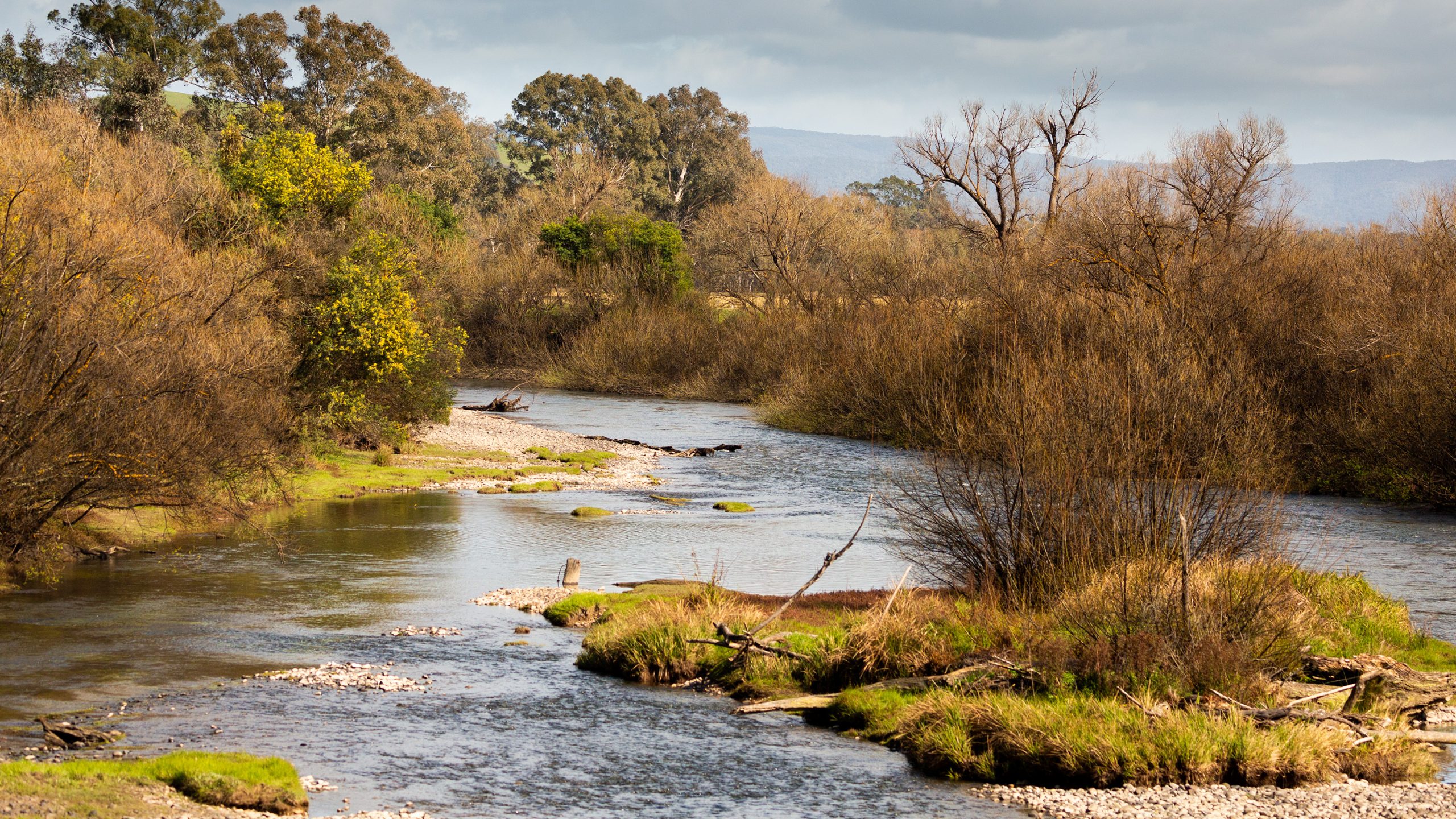
As we move into spring 2023, the river is once again changing character, but now in the opposite direction. Conditions across much of Victoria have trended warmer and drier far earlier than many anglers expected. Water clarity has remained excellent and the entire river system feels several weeks ahead of what many long-term Goulburn anglers would traditionally associate with early September.

The signs are everywhere if you spend enough time outdoors.

Trees along the river are flowering early.
Terrestrial insects are appearing sooner.
Caddis activity has already increased noticeably.
Even the overall feel of the season seems advanced.

That matters more than many people realise.

Because rivers are not isolated systems. Everything is connected:
water temperature,
insect life,
vegetation,
light,
flow,
oxygen,
fish behaviour.

When one piece shifts, the entire river gradually responds around it.


The Goulburn is Running Remarkably Clear

One of the more striking features of the river at present is just how clear it remains despite Lake Eildon sitting extremely high for this time of year.

Normally, anglers become nervous when hearing about elevated storage levels and environmental releases. Last season’s flooding remains fresh enough in people’s minds that any mention of water releases immediately triggers concern.

But so far, conditions have remained surprisingly stable.

The river currently has that beautiful soft green clarity that the Goulburn is capable of producing during good springs. Visibility is excellent. Weed growth is beginning. Insect life is building steadily. On calm afternoons you can already see trout shifting confidently into softer feeding lies.

That clarity changes everything.

It means fish become more visible.
Presentation becomes more important.
Dry fly opportunities increase significantly.

And importantly, it creates conditions where anglers can properly observe trout behaviour again rather than simply fishing blind through dirty water.

Already we are seeing increasing numbers of mayflies and caddis. If these warmer conditions continue, I suspect some of the better spring dry fly fishing may occur noticeably earlier than many people expect this year.

That possibility alone should excite anglers.


Tailwaters are Dynamic Systems

One of the biggest misconceptions newer anglers have about tailwaters is assuming they remain stable simply because dams regulate them.

In reality, rivers like the Goulburn are constantly changing.

Every release alters current seams slightly.
Every rise shifts feeding lies.
Every drop exposes structure differently.

Big trout respond quickly to these changes.

One week a fish may hold tightly beneath a cut bank.
The next week, after a slight reduction in flow, it shifts several metres into softer current nearby. The river is always reorganising itself quietly beneath the surface.

This is part of what makes tailwater fly fishing endlessly interesting.

You are never truly fishing the exact same river twice.


The Crowding Problem

Unfortunately, the Goulburn’s growing popularity continues creating challenges too.

The river now sits in a difficult position:
successful enough to attract enormous attention,
yet still intimate enough that excessive pressure changes the experience quickly.

Last season saw extraordinary numbers of visiting anglers descend on certain stretches following widespread publicity around escaped trout from inundated fish farms and heavy stocking activity. Social media amplified the situation rapidly and some sections of river became unrecognisable during peak periods.

Opening weekend in particular felt chaotic at times.

Boat ramps crowded.
Access points overflowing.
Rubbish appearing where previously there had been none.

Most anglers are respectful, of course. But it only takes a relatively small number of careless people to alter the atmosphere significantly.

This spring will likely see similar pressure around well-known access points and heavily publicised sections of river. Places like Thornton Bridge, Breakaway Bridge and Alexandra Bridge will almost certainly attract heavy traffic again, particularly early in the season.

For anglers seeking quieter experiences, flexibility becomes important.

Fish later in the day.
Avoid peak times.
Explore lesser-known water.
Walk further.
Or simply wait until the opening rush subsides.

The Goulburn is still capable of offering wonderful solitude if approached thoughtfully.


The Tributaries Matter Too

While much of the attention always falls on the main river, the tributaries remain incredibly important pieces of the broader system.

The Rubicon, Acheron and Stevenson all fish differently and respond differently to changing weather patterns. Smaller streams often warm earlier, clear faster and produce surprisingly good dry fly fishing well before most anglers begin seriously considering it.

At the moment, several of these smaller systems already feel alive.

The sort of alive that makes you start thinking about stimulators, beetles and attractor dries far earlier than the calendar normally suggests.

I suspect there will be afternoons over coming weeks where simply walking small streams with a dry fly and a light rod could prove remarkably enjoyable.

Those sessions often become the ones people remember longest anyway.


Fishing with Perspective

There is a tendency in modern fishing culture to become overly obsessed with outcomes.

Fish counts.
Photos.
Social media reports.
“Hot bites.”

But rivers operate on longer timelines than internet excitement cycles.

Some seasons are generous.
Others are difficult.
Certain years produce extraordinary hatches.
Others become lessons in patience.

Part of becoming a better angler involves learning to appreciate these seasonal shifts rather than constantly fighting them.

This spring feels early.
Potentially warm.
Potentially technical later if low flows continue.

But it also feels promising.

The river looks healthy.
The insect life is building.
The fish appear in good condition.
And after the disruptions of previous seasons, simply seeing the Goulburn flowing clear again feels reassuring.

For now, that is enough reason to be optimistic.


Final Thoughts

The Goulburn has always rewarded anglers willing to pay attention carefully.

Watch the insects.
Watch the light.
Watch how trout reposition themselves as flows change.

And perhaps most importantly:
remain adaptable.

Because rivers rarely conform neatly to expectations for very long.

That uncertainty is not a flaw in fly fishing.

It is one of the reasons we keep returning.

After all these years, the possibility that something interesting might happen around the next bend still feels reason enough to keep launching the boat each spring.


There is a moment I’ve watched countless times over the years, usually sometime after the first hour beside a river.

A child arrives full of movement and noise.

They rush ahead along the bank. They kick stones into the water. They ask how many fish they are going to catch before they’ve even assembled the rod properly. Attention flickers constantly from one thing to another, shaped by a world that increasingly demands speed, stimulation and immediate reward.

Then gradually, almost without noticing it themselves, something changes.

The river begins slowing them down.

Swap Screens for Streams

It might happen while untangling fly line for the third time. Or while watching a drifting insect disappear through a current seam. Sometimes it happens after they spot their first trout holding quietly in clear water. Sometimes it arrives much later, sitting beside a campfire after dark with tired legs and cold hands and the faint smell of river mud still clinging to their clothes.

But eventually, if they stay long enough, the pace changes.

Their eyes sharpen.
Their movements soften.
They begin paying attention properly.

And in a world increasingly built around distraction, that feels more important than ever.

Over the last thirty years I’ve taught fly fishing to hundreds of children of all ages and personalities. Some arrive already obsessed with fishing. Others have clearly been dragged along reluctantly by parents hoping to get them outdoors for a few hours. Many begin the day uncertain, impatient or slightly overwhelmed.

Yet rivers have a peculiar way of drawing people in slowly.

Not through force.
Not through entertainment.
But through attention.

Fly fishing is often misunderstood by people who have never experienced it properly. From the outside it can appear technical or even old-fashioned. Rods, lines, insects, currents, strange terminology. Yet children often understand the deeper appeal instinctively once they spend enough time outdoors.

Because rivers offer something increasingly rare:
participation in the real world.

Not passive consumption.
Not watching.
Not scrolling.

Participation.

Cold water against your legs.
Wind changing direction unexpectedly.
Rain arriving without warning.
Watching current push against a drifting line.
Learning to move carefully across slippery stones.
Noticing insects on the water for the first time.
Realising trout are feeding differently depending on light, temperature and current speed.

None of these things can be rushed.

And perhaps that is why rivers teach children so effectively.

Not through lectures.
Through consequence.

A rushed cast tangles.
A careless step sends fish fleeing.
Impatience rarely improves outcomes.

Eventually most young anglers begin adapting naturally. They slow down because the river quietly requires it.

I’ve watched children who struggle to concentrate indoors spend hours completely absorbed beside moving water. Suddenly they notice birds, insects, changing clouds and subtle shifts in current. They begin asking questions. Not because someone forced them to learn, but because curiosity emerged naturally from immersion in the environment itself.

That process feels increasingly valuable now.

Modern childhood is not easy.

Children today grow up surrounded by constant stimulation. Phones, notifications, algorithms, endless streams of entertainment competing for attention every waking moment. None of this necessarily makes young people weak or flawed — every generation inherits the world it is born into — but I do think many children are quietly hungry for experiences that feel real, grounding and unstructured.

Rivers provide exactly that.

Outdoors, things do not revolve around immediate convenience. Weather changes. Fish refuse flies. Wind knots appear. Wading becomes difficult. Sometimes nothing happens for long periods at all.

Oddly enough, those frustrations often become part of the value.

Because somewhere along the way children begin learning patience without being directly taught patience.

That distinction matters.

The best outdoor experiences rarely feel educational while they are happening. Yet years later, many of the lessons remain.

Confidence develops this way too.

Not the loud, performative confidence encouraged by modern culture, but the quieter kind that emerges through small earned successes.

Learning to tie a knot independently.
Making a difficult cast properly for the first time.
Spotting a fish without assistance.
Rowing a drift boat carefully through a shallow section of river.
Coping calmly when conditions become difficult.

These moments accumulate slowly until children begin realising they are more capable than they initially believed.

Fly fishing also introduces young people to a different relationship with time.

Most modern activities are built around urgency. Quick results. Constant progression. Immediate entertainment. Rivers operate differently. They ask people to slow their thinking. To observe before acting. To understand that worthwhile things often require patience and repetition.

Children rarely arrive at rivers naturally patient.

Very few adults do either.

But after enough hours outdoors, the pace of thought itself often changes.

I’ve seen it happen repeatedly on family trips and beginner workshops. Early excitement gives way to concentration. Then concentration gives way to stillness. Eventually children start noticing things beyond the fish entirely:
the smell of rain approaching through eucalyptus,
dragonflies hovering over slow water,
mist lifting from the river at dawn,
the sound of current against the side of a drift boat.

These details matter because they create memory.

Long after individual fish are forgotten, people remember atmosphere.

They remember the first trout they saw rise properly.
The warmth of soup beside a river in cold weather.
A father helping untangle fly line.
A daughter landing her first fish while everyone else stopped to watch.
The strange quietness that settles over valleys late in the afternoon.

Those moments become part of family history.

And perhaps that is one of the great hidden gifts of rivers: they create shared experiences difficult to replicate elsewhere.

Some of the most rewarding moments I’ve witnessed as a guide had very little to do with fishing success itself.

A grandfather watching his grandson cast confidently for the first time.
Teenagers initially reluctant to leave their phones behind later refusing to leave the river at day’s end.
Families laughing through terrible weather because everybody was fully present together.

Those experiences matter.

Particularly now.

As I get older, I increasingly believe children need places where the modern world loses some of its grip for a while. Rivers still offer that. Not because they reject modern life entirely, but because they temporarily reconnect people with older rhythms:
weather,
light,
water,
movement,
attention,
silence.

The beauty of fly fishing is that it does not require perfection.

Children do not need to become expert anglers for rivers to influence them positively. Sometimes a few hours beside moving water is enough. Sometimes the fishing itself barely matters. The real value may simply lie in the experience of being outdoors together, away from constant digital noise.

Years later, many children will not remember exact fly patterns or technical instruction.

But they may remember:
walking through mist before sunrise,
their first glimpse of a trout in clear water,
the smell of wet grass after rain,
or the feeling of drifting quietly downstream while somebody they trusted sat on the oars behind them.

Those memories stay surprisingly deep.

And perhaps that is why so many adults eventually find themselves returning to rivers later in life.

Not simply to catch fish.

But to reconnect with a slower, quieter and more attentive part of themselves that they first encountered outdoors many years earlier.

Rivers give children many things.

Patience.
Perspective.
Confidence.
Attention.
Connection to the natural world.

But perhaps most importantly, they give them experiences that feel genuinely real in an increasingly artificial age.

And that may matter now more than ever.

Swap Screens for Streams


Notes from New Zealand After the Silence

By the time we crossed the Tasman again, New Zealand had started to feel almost mythical.

Not because the rivers had changed, or the mountains had somehow become grander during the years we were locked away, but because absence has a way of sharpening memory. The last season we completed before the world closed down was 2019–2020. Back then, news reports played constantly in the background while we guided. Every few days another border tightened somewhere. Another restriction emerged. Another flight route vanished.

We finished that season with an uneasy sense that something larger was approaching.

Then suddenly the world stopped moving.

Like most people, we assumed normality would return far sooner than it did. Instead, seasons passed. Summers disappeared. Rivers we had walked for decades became unreachable. Clients postponed trips repeatedly, uncertain whether international travel would ever truly feel simple again.

For many anglers, New Zealand slowly drifted from “next season” into something resembling a memory.

So when the opportunity finally arrived to return for the 2022–2023 season, it felt significant in ways that had very little to do with fishing alone.

The timing itself was strange.

Back home, the Goulburn Valley was flooded. Water managers had allowed Lake Eildon to rise too high and the consequences flowed downstream through our local system. Familiar stretches of river disappeared beneath heavy discoloured water while roads closed and uncertainty lingered over much of the region.

At the same time, reports filtering across from the South Island spoke of stable weather and unusually warm early-season conditions.

Eventually the decision became obvious.

We loaded the gear, pointed ourselves toward New Zealand and left.

At one level it was simply a fishing trip before the main hosted season began.

But privately, I think we all understood it was something else too.

A reset.

A chance to breathe again after several strange years.

The no-name creeks in New Zealand are out of this world - New Zealand Season Review

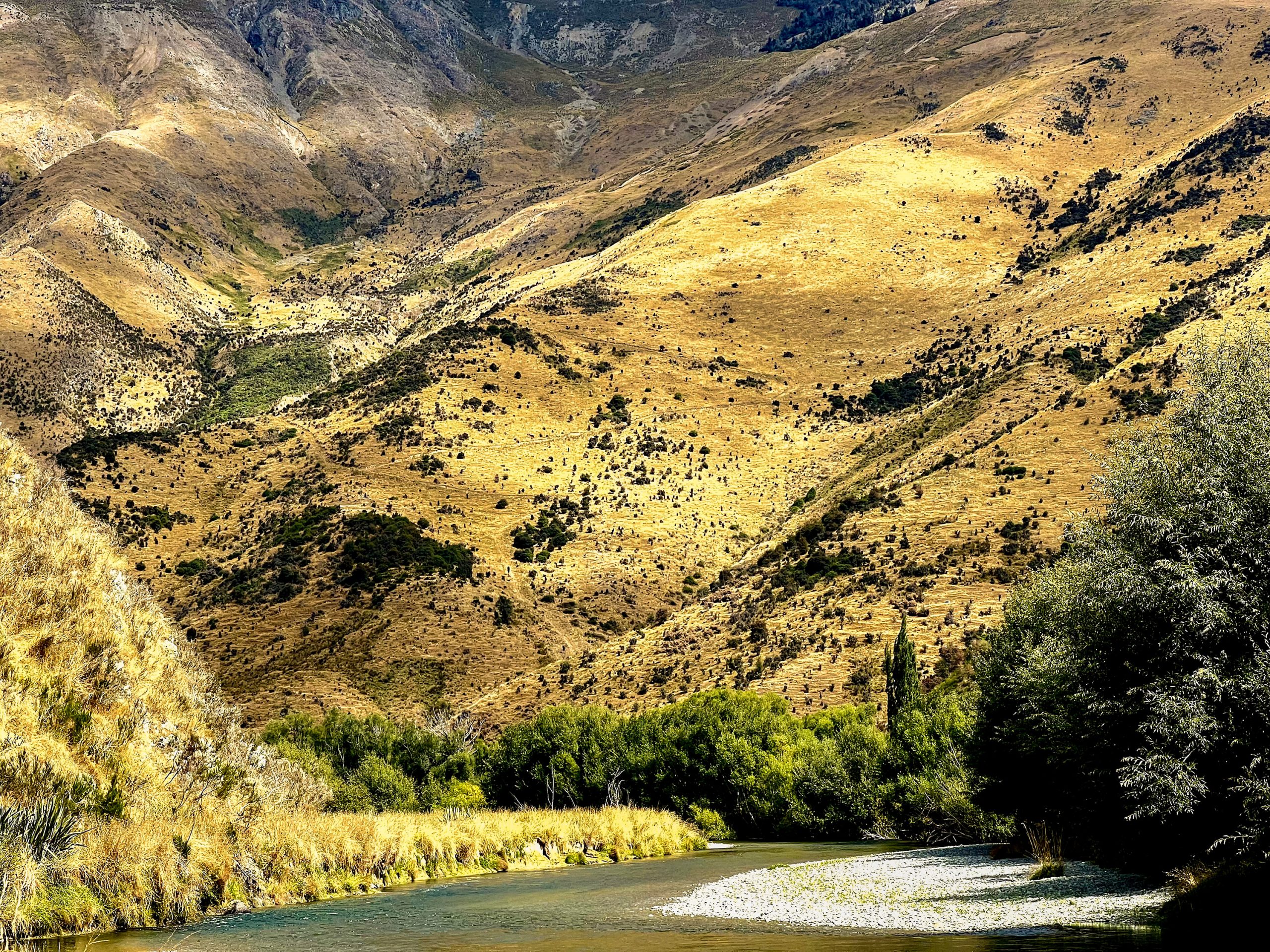
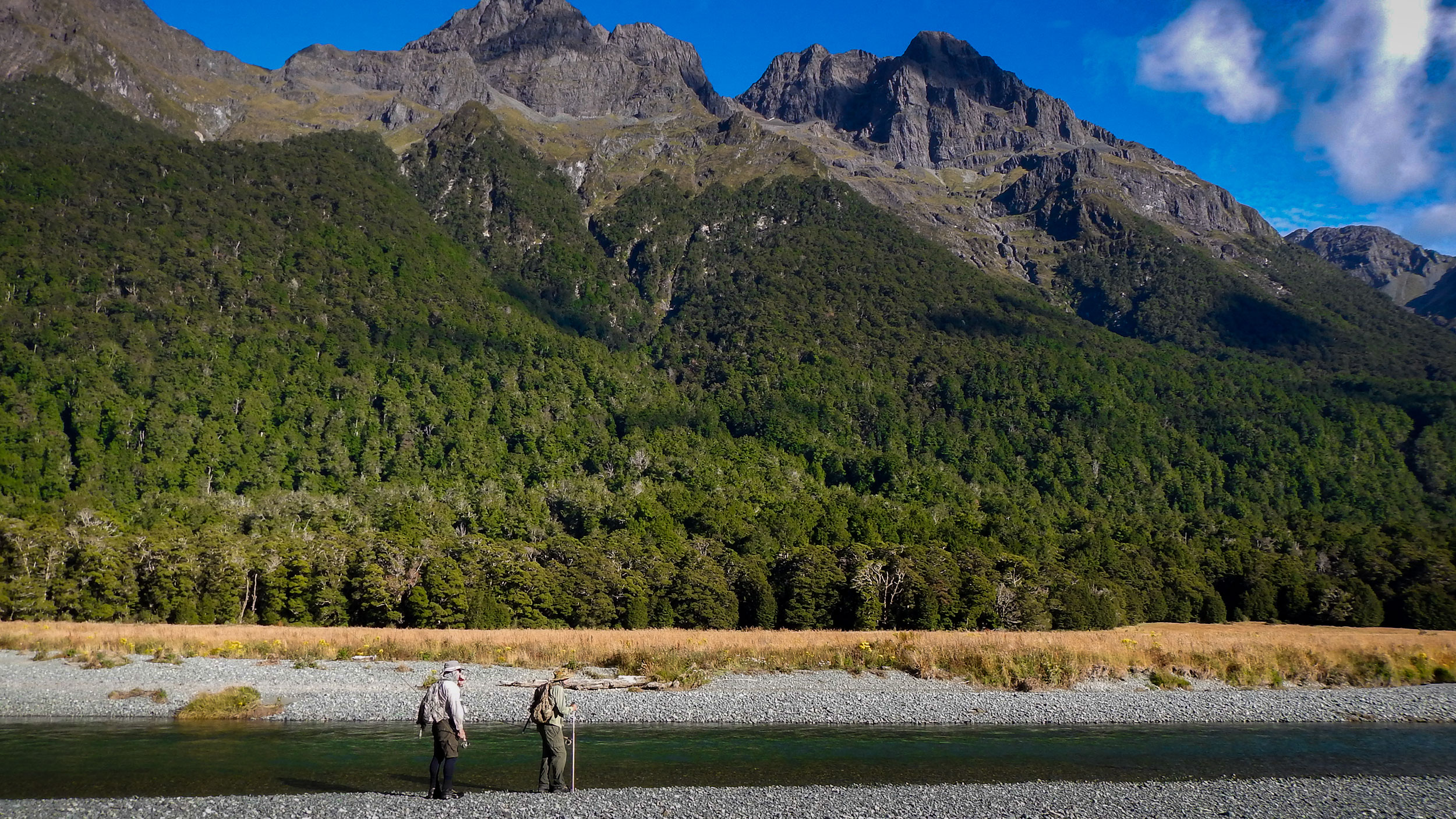
There is something psychologically restorative about arriving in the South Island after time away. The scale of the country immediately alters your thinking. The open valleys. The cold rivers. The long spaces between towns. Even the quality of the light feels different there.

For the first few days we based ourselves out of Te Anau rather than our usual farmhouse at Dunrobin, which was still undergoing renovation work. Accommodation throughout Southland had become surprisingly difficult after the pandemic. Many operators had closed permanently, and the region — already limited for lodging — was still recovering from the absence of international tourism.

It didn’t matter much to us.

We were simply happy to be back.

The Eglinton, Waiau and Whitestone greeted us with excellent conditions. Dry flies drifted through clear current again. Brown trout slid from undercut banks to inspect presentations. The rhythm of river life, dormant for years, returned almost immediately.

And perhaps that was the strangest part of all.

How quickly it came back.

The feel of cold current pushing against your legs.
The sound of gravel beneath wading boots.
The instinctive scanning of seams and current lines.
The quiet concentration required to stalk visible trout properly.

After years dominated by lockdowns, restrictions and uncertainty, standing in clear New Zealand water again felt deeply restorative.

Not triumphant.
Just quietly right.

One afternoon in the Eglinton Valley we encountered a wounded deer attempting to cross the river. Its pelvis appeared badly broken and we assumed the current would sweep it away almost immediately. Instead, against all logic, it fought through the flow and somehow reached the far bank.

I still remember all of us standing there silently watching it disappear into the grass.

Rivers have a way of reminding you how small human concerns can become out there.

Eventually we returned south toward Dunrobin, the farm that has become our seasonal home in New Zealand over so many years. There is always a particular feeling driving back into that valley after time away. Familiar fences. Familiar hills. The Aparima winding quietly through the flats below the house.

Some places slowly become woven into your life whether you realise it at the time or not.

The fishing itself reflected the conditions of the year. Southland was dry. Water levels dropped steadily as summer progressed and by late season the rivers had become exceptionally clear and technical. On larger, more famous systems like the Mataura and Oreti, anglers congregated heavily around the limited sections still fishing well.

That is the nature of New Zealand now. Information travels quickly. Angling pressure concentrates rapidly. Rivers once considered remote no longer remain hidden for long.

Yet Southland still rewards those willing to move differently.

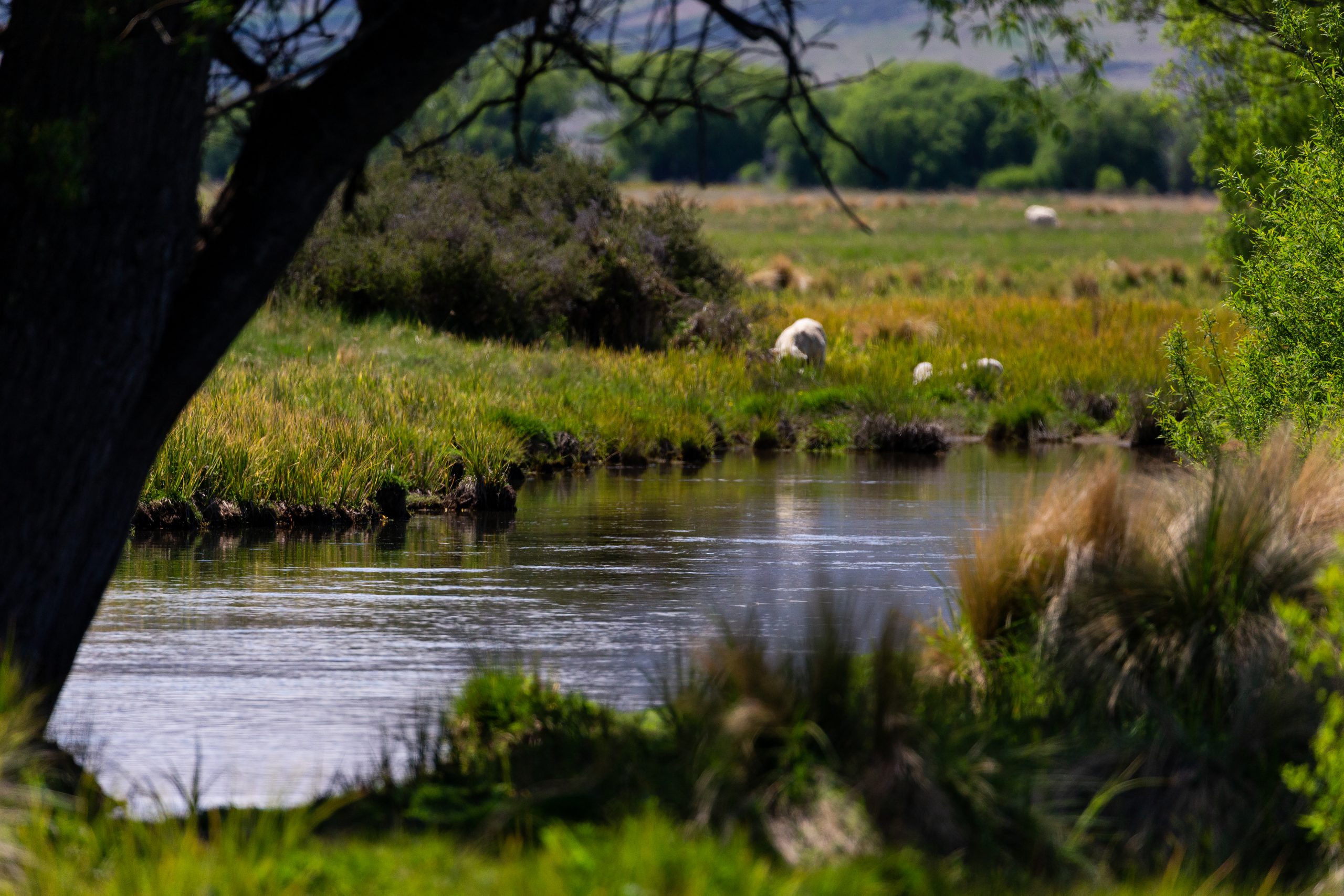
Again and again during that season, it was the smaller rivers and anonymous creeks that produced the most memorable fishing. Narrow streams winding quietly through farmland or tucked beneath distant hills. Water too insignificant-looking for most travelling anglers to notice while driving past.

Those rivers suited the season perfectly.

The fish were spaced carefully through long shallow glides, often occupying only the best pieces of structure in miles of water. You had to slow down properly. Rushing accomplished very little. Presentation mattered enormously. So did patience.

By late summer many of the better trout required near-perfect drifts to move confidently.

That challenge is part of what continues drawing us back.

New Zealand trout fishing at its best is not random. It demands thoughtfulness. Observation. Restraint. The fish are rarely difficult because of intelligence alone, but because the clarity of the environment exposes every careless movement and every rushed decision.

There is nowhere to hide from poor presentation in clear Southland water.

Some evenings we fished the Waiau well into darkness beneath heavy caddis and mayfly hatches. Those sessions became a favourite part of the season for many clients. Early dinners in Te Anau followed by twilight fishing beneath fading light while trout rose steadily through long slick tailwater currents.

New Zealand Season Review - Small stream brown.

Not everybody chose those late sessions. Some preferred whisky beside the fire back at the farmhouse, which is understandable too. But many embraced the opportunity, and those evenings often became the memories people spoke about long after individual fish blurred together.

That is something I’ve noticed repeatedly over the years.

The moments people remember most clearly are rarely just about fish.

They remember atmosphere.
Fatigue.
Weather.
Conversation.
Silence.
Shared experiences.

One particularly memorable day involved Cameron and several clients on the Oreti. One angler was managing an old knee injury, so the group split and adjusted plans accordingly. Flexibility has always been central to how we operate in New Zealand. The goal is never simply to move people mechanically through an itinerary. Different anglers need different things physically and emotionally throughout a week.

That day eventually unfolded into one of those rare sessions where everything aligns. Good fish. Good company. An early dinner in town followed by evening dry-fly fishing on the Waiau until almost dark.

The clients were exhausted by the time they returned.

Completely happy too.

Looking back now, what stays with me most strongly about that season is not any individual trout or river.

It is the feeling of movement returning.

Cars loaded again before daylight.
Clients arriving excited at Queenstown Airport.
Guides discussing weather and river levels over breakfast.
Wet waders hanging outside the farmhouse at dusk.
The simple rhythm of travelling, fishing and sharing rivers together after several years where none of it seemed guaranteed.

Perhaps that is why the season carried such emotional weight for many people involved.

The pandemic reminded us that experiences we assume permanent can disappear remarkably quickly.

Travel.
Friendship.
Gathering together.
Standing beside rivers in distant countries.

None of it should be taken entirely for granted.

As our final week approached, the atmosphere became quieter. Only two anglers remained: a long-time regular now living locally in Alexandra and an enthusiastic fly fisher from Germany. Small groups often create the best rhythm in New Zealand. Less noise. More flexibility. More room for weather, conversation and spontaneity to shape the week naturally.

By then autumn was already beginning to edge slowly into the valleys.

The season had come full circle.

And once again, the South Island had reminded us why we continue returning year after year.

Not simply because the fishing remains exceptional, though it certainly does.

But because certain places eventually become intertwined with memory, friendship and identity itself.

After enough seasons, New Zealand stops feeling like somewhere you visit.

It starts feeling like somewhere that quietly becomes part of your life.

Notes on a Few Patterns I Still Carry After Thirty Years on Rivers

Fly anglers love discussing flies.

Open any old fly box and there is usually a story attached to half the patterns inside it. Certain flies become connected to rivers, seasons, people and moments in ways that are difficult to explain to non-anglers. Some patterns arrive with great fanfare before disappearing quietly a year later. Others somehow survive decades of changing fashions and continue catching trout long after newer creations have come and gone.

Over the years I’ve become less interested in novelty for novelty’s sake.

That probably happens naturally after enough seasons on rivers.

You begin noticing that while anglers endlessly debate fly patterns, colours and materials, trout often continue eating the same handful of sensible, well-presented flies they have always eaten. Confidence, presentation and understanding current usually matter more than possessing the latest “must-have” pattern from the internet.

Still, certain flies genuinely earn permanent places in a guide’s fly box.

Not because they are fashionable.
Because they consistently work.

The flies below are not necessarily the only patterns worth carrying, nor are they arranged in strict order of importance. They are simply flies that, over many years across Australia and New Zealand, have repeatedly proven themselves in real conditions.

Some are subtle.
Some are attractors.
Some imitate insects closely.
Others merely suggest life convincingly enough to trigger a response.

But all of them have earned their place honestly.


The Royal Wulff
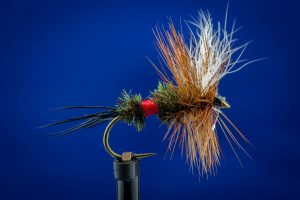
The Royal Wulff - makes our list of top 50 trout flies.

There are more technically realistic dry flies available these days.

Many of them are excellent.

Yet the Royal Wulff continues catching trout with remarkable consistency, particularly in rougher water where visibility and floatation matter more than precise imitation.

It is an old-fashioned fly in the best possible sense.

The white wings remain easy to track through broken current and the fly floats stubbornly even after prolonged punishment. In fast pocket water, high-country streams or heavier riffled runs, it still performs beautifully.

I’ve watched clients overcomplicate fly choice countless times while some slightly chewed-up Royal Wulff quietly continues producing fish in the background.

That says something.

The Royal Wulff is especially useful as a searching pattern when no obvious hatch is occurring. Fish it confidently. Let it drift naturally. Or suspend a small nymph beneath it when deeper fish are involved.

It remains one of those flies every experienced guide seems to carry, even if they occasionally pretend otherwise.


Beadhead Flashback Pheasant Tail
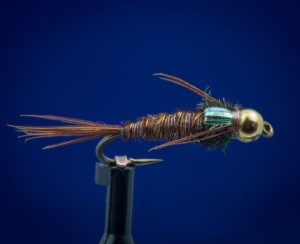
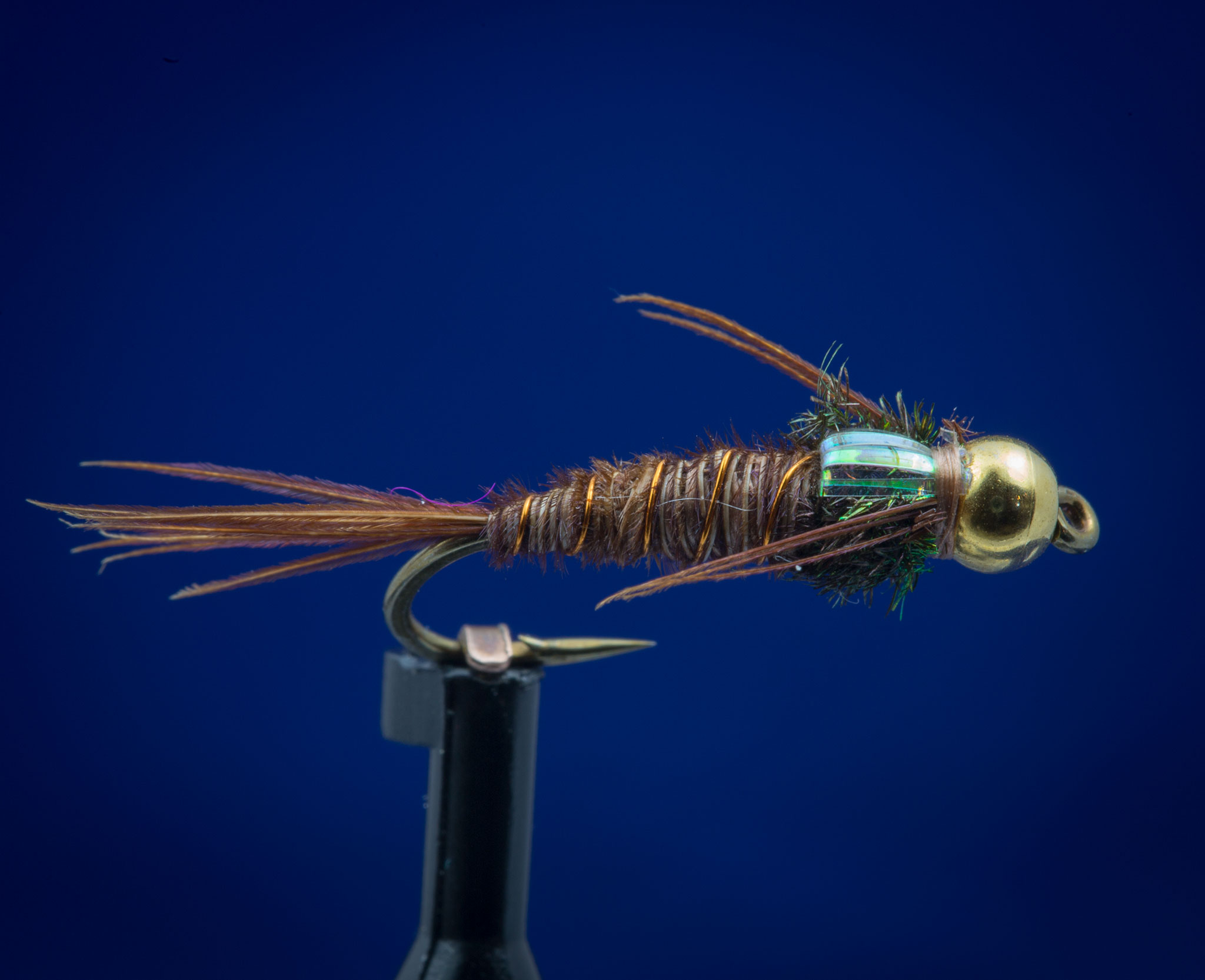
The Beadhead Flashback Pheasant Tail - makes our list of top 50 trout flies.
If somebody forced me to reduce all nymph fishing to one pattern, this would probably come very close.

Simple.
Versatile.
Effective.

The pheasant tail imitates an enormous range of mayfly nymphs while the bead and flashback help attract attention without becoming excessively gaudy. It sinks quickly, fishes naturally and works across an enormous range of rivers.

There is nothing particularly glamorous about the pattern, which is perhaps part of its strength.

It simply catches fish.

Most importantly, it fishes well in many different ways:
under indicators,
tightline presentations,
dry-dropper rigs,
or dead-drifted beneath larger attractor dries.

Some flies become confidence flies because of marketing.
Others earn confidence gradually through repeated reliability.

The beadhead flashback pheasant tail belongs firmly in the second category.


Chernobyl Ant
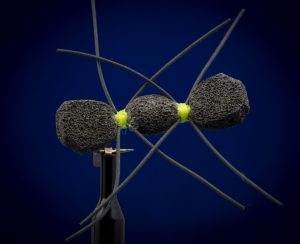
The Chernobyl Ant - makes our list of top 50 trout flies.

No fly causes more confusion among beginners.

“It doesn’t really look like anything.”

Exactly.

The Chernobyl Ant succeeds because trout are opportunistic creatures. Particularly in summer, large terrestrial patterns crashing onto the surface often trigger reactions far more aggressive than delicate imitations.

This fly excels in places where realism becomes secondary to impact.

Undercut banks.
Tight structure.
Foam lines.
Windy afternoons.
Fast bankside water beneath overhanging vegetation.

It is also one of the great teaching flies because clients can see it clearly and fish tend to eat it decisively.

Some of my favourite moments guiding involve throwing large foam patterns into ugly-looking structure where clients are initially convinced no trout could possibly live.

Then the river erupts.

The Chernobyl Ant may not be elegant, but elegance has never been its purpose.


Parachute Adams
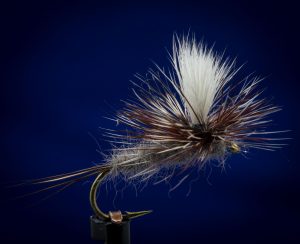
The Parachute Adams - makes our list of top 50 trout flies.

If there is a universal dry fly, this is probably it.

Few patterns adapt themselves so effectively across so many situations.

At various sizes, the Parachute Adams can suggest midges, mayflies and countless small unidentified insects drifting naturally in the surface film. More importantly, it lands correctly, remains visible and fishes naturally in a wide variety of conditions.

Its simplicity is deceptive.

Good parachute patterns sit beautifully in the film, which is often where trout expect vulnerable insects to appear. That subtle low-riding posture frequently matters more than exact imitation.

On difficult overcast days, particularly during late-autumn BWO activity, a slightly oversized parachute with a visible post can save enormous frustration.

Guides quietly rely on flies like this constantly.

Not because they are exciting.
Because they continue working when many trendier patterns do not.


Bubbleback Pupa
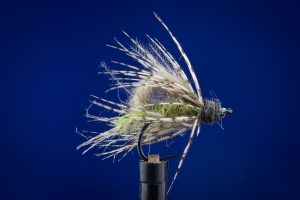
The Bubbleback Pupa - makes our list of top 50 trout flies.

Rene Harrop understood trout and insects at an extraordinarily deep level.

The Bubbleback Pupa reflects that understanding beautifully.

At first glance it appears relatively understated, but underwater the pattern possesses remarkable realism. The reflective bubbleback imitates the trapped gases forming around emerging caddis pupae as they ascend toward the surface.

Trout often feed heavily on these ascending insects.

Particularly selective trout.

Fished correctly beneath the surface during caddis activity, this fly can produce some extraordinarily technical fish. Its strength lies less in aggression and more in quiet persuasion.

Good emerger fishing often feels this way.

Subtle.
Patient.
Measured.

The Bubbleback Pupa rewards anglers willing to fish carefully rather than simply quickly.


Copper John
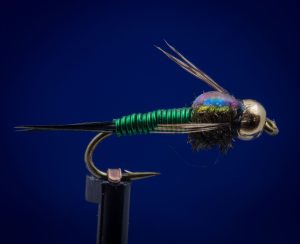
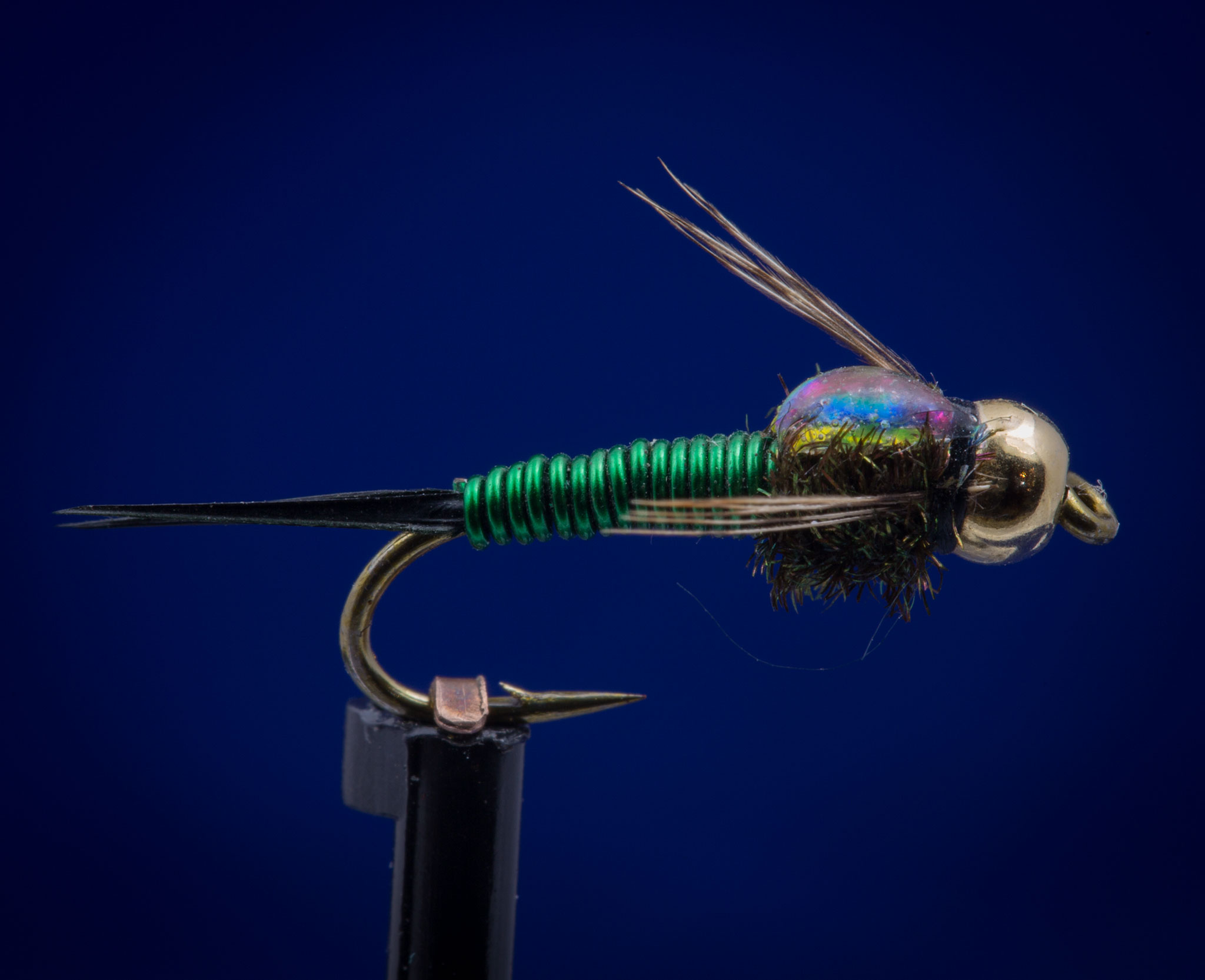
The Beadhead Copper John - makes our list of top 50 trout flies.

Some flies are designed primarily around elegance.

The Copper John was not.

John Barr designed a practical fish-catching tool built to sink rapidly and attract attention. In fast rivers, deep runs and heavier current seams, that practicality becomes enormously useful.

Its copper body gets the fly down quickly while still maintaining a slim enough profile to resemble natural nymphs convincingly.

And importantly:
it catches fish in ugly conditions.

Cold water.
Fast current.
Deep slots.
Heavy pocket water.

It is one of those patterns guides often reach for when clients need to simply begin feeling fish again after a difficult session.

There is comfort in dependable flies.


Klinkhammer
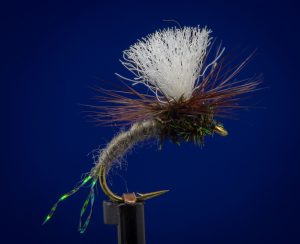
The Klinkhammer - makes our list of top 50 trout flies.

The Klinkhammer changed modern dry fly fishing significantly because it solved an important problem:
trout often feed on insects trapped during emergence rather than fully formed adults floating cleanly on the surface.

That vulnerable transition stage matters enormously.

The curved hook and partially submerged body imitate exactly that moment when an insect struggles between water and air.

Once anglers begin understanding emerger fishing properly, they usually start viewing rises differently too.

Not all rises are true dry-fly eats.

Many fish are feeding just beneath the surface.

The Klinkhammer bridges that gap beautifully.

And on difficult technical trout, particularly in New Zealand or on slower Australian tailwaters, it remains devastatingly effective.


Royal Stimulator
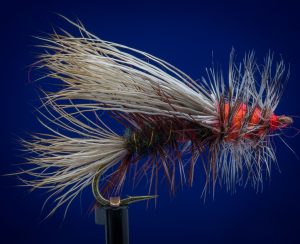
The Royal Stimulator- makes our list of top 50 trout flies.

The Royal Stimulator sits somewhere between attractor pattern, stonefly imitation and pure optimism.

It is large.
Visible.
Buoyant.
And wonderfully effective in rough water.

I particularly like it in fast freestone water or smaller mountain streams where fish have less time to inspect flies critically.

But its greatest strength may actually be as the top fly in a dry-dropper rig. The buoyancy supports heavier nymphs while remaining highly visible in turbulent current.

A good Royal Stimulator can hold an entire rig together structurally.

And occasionally, despite the nymph hanging beneath it, the dry itself gets eaten violently by a fish charging several feet through broken water.

Those moments never really become boring.


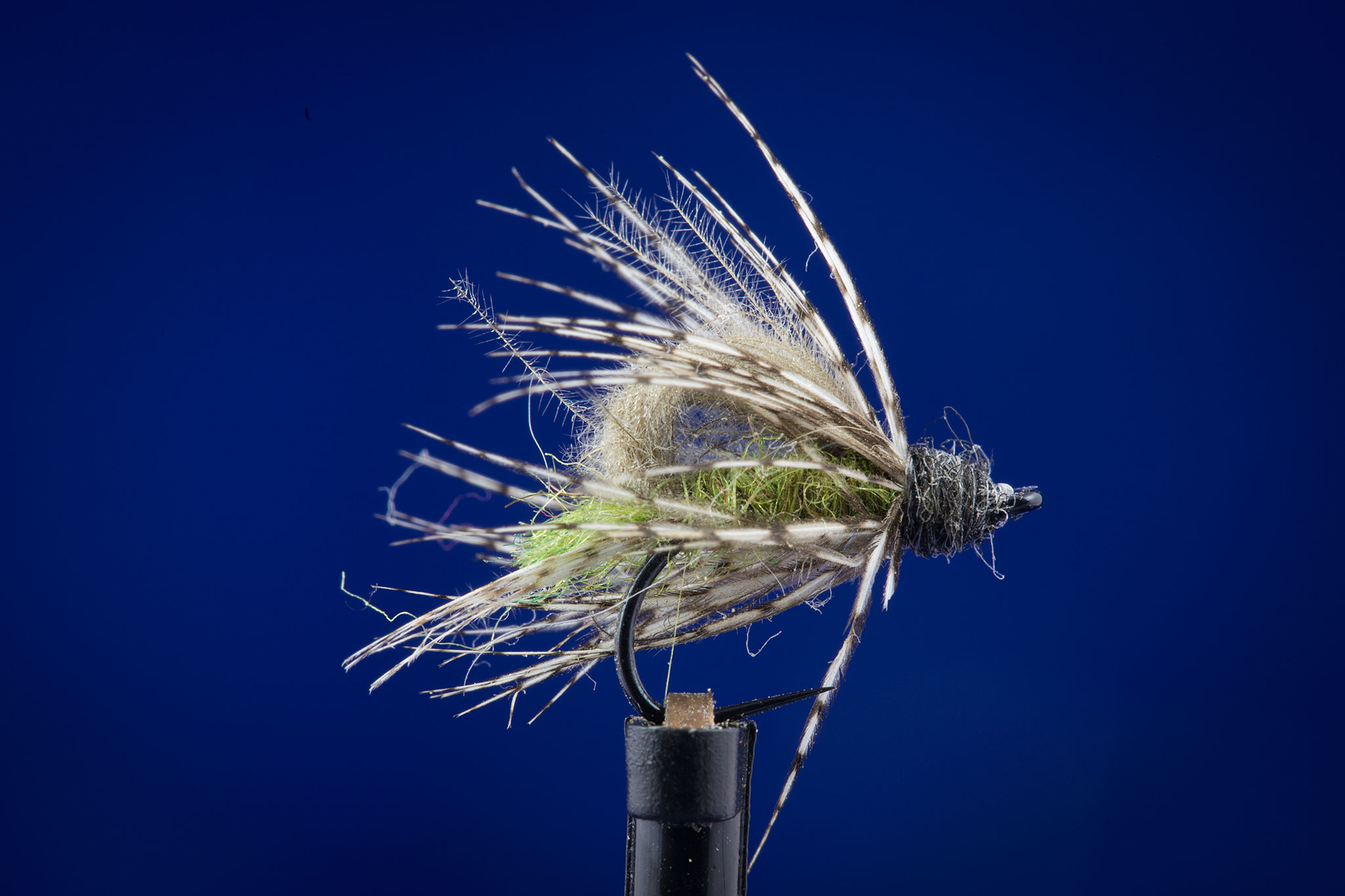
Bushy’s Emerger
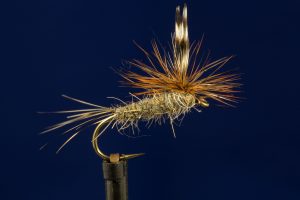
The Busjy's Emerger - makes our list of top 50 trout flies.

Kaj Busch understood difficult trout exceptionally well.

Bushy’s Emerger reflects a very Australian understanding of selective fish feeding calmly in clear water.

Unlike highly visible attractor dries, this fly relies on subtlety:
muted tones,
soft silhouette,
natural posture.

In difficult mayfly hatches, especially under overcast skies, Bushy’s Emerger often outfishes brighter or more heavily hackled patterns because it simply looks alive in the film.

This is not a fly for impatient anglers.

It rewards careful presentation, fine leaders and restraint.

But when conditions align properly, it can become one of the most effective dry flies on the river.


Final Thoughts

As anglers age, many gradually simplify their fly boxes.

Not because they stop enjoying flies, but because certain patterns repeatedly prove themselves over enough seasons that confidence naturally settles around them.

That confidence matters more than many people realise.

A well-presented fly fished with belief generally performs better than constant anxious changing. Rivers reward calm observation more than panic.

There will always be new patterns arriving.
New materials.
New trends.
New debates.

Some will genuinely advance fly design.
Others will disappear almost immediately.

But the flies that truly endure usually share similar qualities:
simplicity,
function,
versatility,
and an ability to suggest life convincingly without unnecessary complication.

Those are the flies guides continue carrying long after fashion has moved elsewhere.

Not because they are nostalgic.

Because they still work.


Notes on Current, Position and the Quiet Hierarchy of Rivers

Most anglers spend remarkably little time simply watching trout.

Not casting to them.
Not moving toward them.
Not trying to catch them.

Just watching.

Yet some of the most valuable lessons rivers offer emerge during those quieter moments when you slow down enough to properly observe how large fish behave in current.

The trout featured in this short unedited footage had been holding in the same section of the Goulburn for some time. Big fish in tailwaters often become deeply connected to particular lies, especially those offering the ideal balance between security, oxygen, current speed and food delivery.

To somebody unfamiliar with rivers, the fish appears almost motionless.

In reality, it is constantly making tiny adjustments.

A slight tilt of the body.
A subtle movement sideways through the seam.
A gentle rise in the water column to intercept a drifting insect before sliding back into exactly the same current line again.

Large trout rarely waste energy unnecessarily.

That is one of the first things years on rivers begin teaching you.

Everything about a mature fish revolves around efficiency.

The best lies in a river are not random. They are positions where a trout can maximise reward while minimising effort and exposure. A fish holding properly should be able to access oxygen-rich current, drifting food and nearby protection without constantly fighting the river.

The larger the trout becomes, the more carefully it tends to position itself.

That is especially true in rivers like the Goulburn where fluctuating water levels constantly reshape current seams and feeding lanes. Unlike stable spring creeks, tailwaters are dynamic systems. Water rises. Water drops. Gravel shifts. Current pushes differently through bends from one week to the next.

And every significant change in flow alters the hierarchy of the river.

Prime lies emerge.
Others disappear.

Fish that once held comfortably beneath a bank suddenly become exposed. New seams form. Current pressure changes. Feeding lanes improve or collapse almost overnight.

Then the quiet reshuffling begins.

Smaller trout are displaced first. Larger, more experienced fish generally adapt quickest, slipping back into the newly formed prime water with remarkable speed. Years spent surviving in moving water seem to sharpen their instinct for positioning. They understand current in ways difficult to fully appreciate until you spend enough time watching them closely.

This is one of the reasons experienced anglers become slightly obsessed with observation.

The more time you spend watching trout rather than simply fishing for them, the more patterns begin revealing themselves. You notice how fish behave differently depending on light levels, water height, insect activity and pressure. You begin recognising the subtle distinction between fish that are actively feeding and fish merely holding in comfort water.

You also realise how much of trout fishing revolves around understanding current itself.

Current is everything.

Food delivery.
Security.
Oxygen.
Energy expenditure.

The river determines all of it.

A trout holding comfortably behind a submerged rock may only need to move several inches to intercept food drifting downstream. Another fish positioned poorly in heavy current may burn enormous energy simply trying to maintain its place in the river. Over time, these differences matter. Large trout do not survive many seasons by making poor energy decisions repeatedly.

That economy of movement becomes fascinating once you start noticing it.

Watch a truly dominant fish long enough and it begins to feel less like randomness and more like quiet calculation. Not intelligence in the human sense, of course, but instinct refined through survival. Every movement is measured against current speed and opportunity.

Sometimes the fish barely moves at all for several minutes.
Then suddenly:
tilt,
rise,
eat,
return.

The simplicity of it is strangely compelling.

Tailwaters like the Goulburn make this type of observation particularly interesting because the fish are often visible for extended periods. Long slicks, gentle seams and controlled flows allow anglers opportunities to study trout behaviour in remarkable detail if they resist the urge to immediately cast.

That patience is difficult for many anglers initially.

Modern fishing culture often encourages constant movement. Cast here. Change flies. Cover more water. Chase outcomes. Yet some of the most important understanding develops while standing quietly on a bank doing almost nothing at all.

Just watching.

Over decades guiding on the Goulburn, I’ve probably learnt as much observing trout as I have catching them. Certain fish teach you things. Certain lies reveal patterns that repeat throughout rivers everywhere. Eventually you stop merely seeing “a fish” and begin recognising structure, current relationships and feeding opportunities almost instinctively.

The river starts making more sense.

You begin understanding why one seam consistently produces better fish than another seemingly identical run nearby. You notice how changing light alters trout confidence. You recognise how subtle increases in flow reposition fish through entire stretches of river.

These are not dramatic revelations.

Most occur gradually over years.

And perhaps that is one of the reasons fly fishing remains so endlessly interesting. Rivers refuse to fully surrender their patterns all at once. They reveal themselves slowly to those willing to keep paying attention.

The trout in this footage will likely shift position many times over coming seasons as the river changes around it. Floods may reshape the run entirely. Lower flows may expose the lie completely. Another larger fish may eventually displace it.

Nothing in rivers remains static for very long.

That constant change is part of their appeal.

Still, for this brief moment captured on camera, the fish sits exactly where experience has taught it to be: balanced perfectly between effort, opportunity and survival.

A good lie in a river is a valuable thing.

The trout understand that well.