Category: All Posts

Part II: The Tension and Release of Dillon – Beaverhead, Big Hole & Ruby

By Anthony Boliancu

After four days of drifting the broad, steady flows of the Missouri, we packed the vehicles and turned south. Within a couple of hours, the canyon walls gave way to something altogether different-big sky desert plains, sagebrush flats, and long ridgelines that rose abruptly from the grasslands. It was a striking shift in geography. Gone were the fir-lined cliffs of Craig; in their place, Dillon unfolded with a sense of space and dryness – more ranchland than river valley.

Our base here was a renovated barn a few miles out of town – an upstairs loft with all the comforts: hot showers, solid beds, gear space, and a long porch that opened up to views of the surrounding mountains. At night, with a glass of whiskey or red wine in hand, we’d sit out there and watch the colours change over the distant peaks. Somewhere between cowboy country and trout camp, it felt just right.

The Beaverhead – Precision Required

Fishing the Beaverhead is like operating on a smaller canvas, but with finer brushes. It’s technical water, tight and sometimes claustrophobic, with dense banks and narrow drifts. At first glance, it seems unremarkable – a low, spring-fed tailwater meandering through farmland. But don’t be fooled. It holds some of the largest fish we encountered on the entire trip.

Just below Clark Canyon Dam, we ran classic bobber rigs – double nymphs with a touch of weight and subtle indicators. It wasn’t elegant, but it was devastatingly effective. Trophy fish came steadily to hand, one after the other. The kind that make even experienced anglers second-guess their hooksets.

Further downstream, near Barretts and beyond, things changed. The water widened and shallowed, with long grassy margins. Hoppers came into play. We didn’t see the full emergence of the PMDs or caddis, but even on the shoulder of the hatch, the dry fly potential was obvious. Big fish lurked in skinny water, and when they committed to a hopper-mouth wide, slow rise, back breaking the surface-it was electric.

One moment that stands out was a fish that took an emerger, then turned right around and sipped the dry as it trailed behind. Two eats in one drift, clear as day, in water barely knee-deep. It was like watching a slow-motion lesson in trout behaviour.

The Big Hole – Moving Water, Moving Hearts

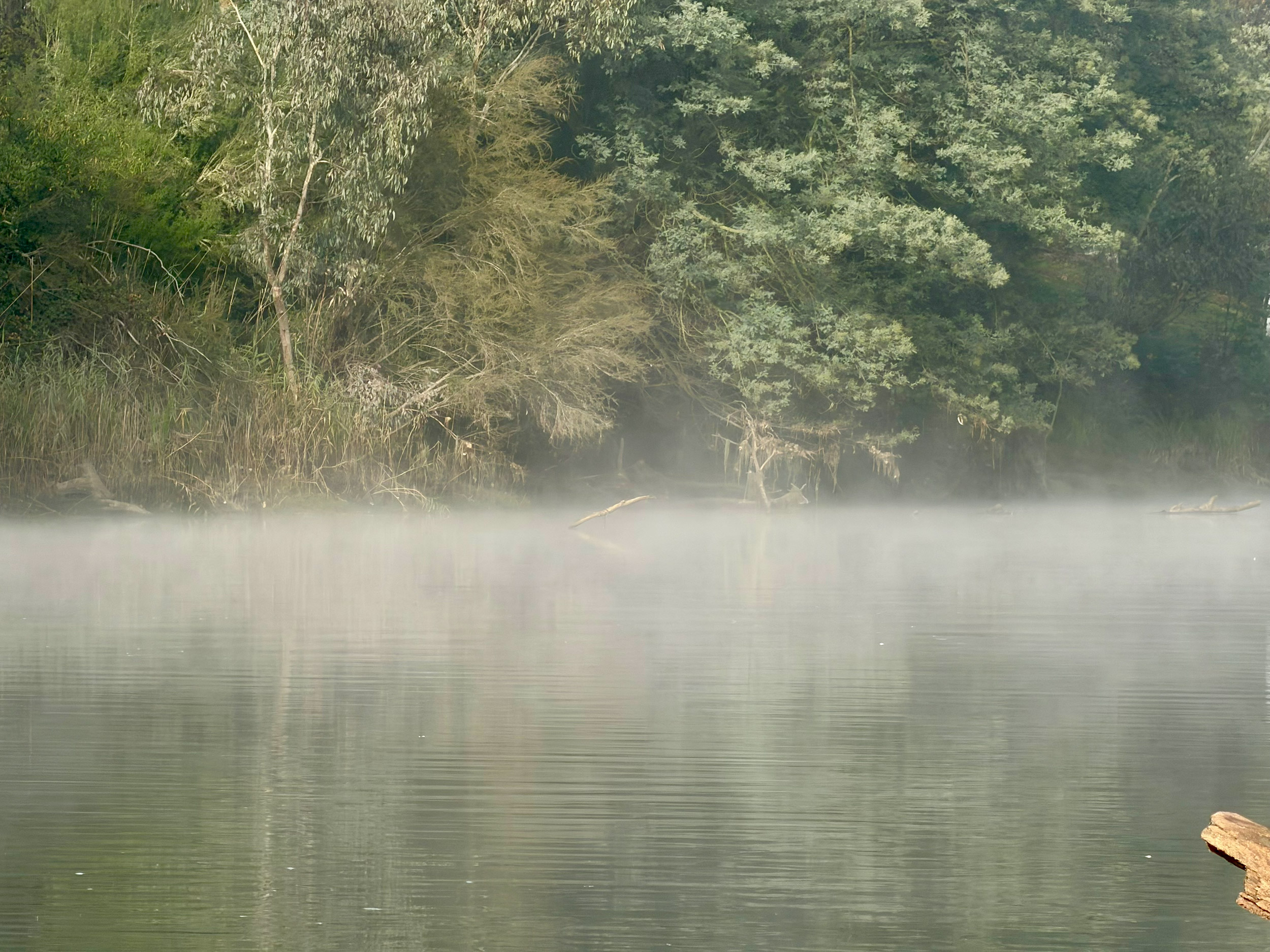
The Big Hole was a different beast altogether. With hoot owl restrictions in place by late July, we set alarms for 4:45am and were on the water shortly after first light. These early starts brought their own kind of magic. Mist rising off the river. Birds cutting across the valley. That cool, lavender light that only exists for a few minutes in the Montana dawn.

The Big Hole gave us fast pocket water and room to wade. It felt wild-less tailwater, more freestone energy. We fished dries where we could, streamers when the water called for it, and got some solid fish to hand. The scenery here left a mark. Towering cliffs, old buffalo jump sites, and long grassy meadows that whispered stories older than any of us.

One morning, just as the sun crested the ridgeline, we landed a thick brown that had tucked itself tight behind a boulder. A textbook rise, a perfect cast, and a clean eat. But it wasn’t just the fish-it was the light, the air, the moment. It reminded us why we come all this way.

The Ruby – Delicate Negotiations

The Ruby was fickle but beautiful. We only had one session on this smaller, trickier river, but it was enough to glimpse its personality. A mix of overgrown banks, tight casts, and crystal-clear runs made for some nerve-wracking sight-fishing. Browns would hover mid-column, slowly shifting in and out of view, requiring absolute precision to fool.

This was fly fishing at its most intimate: light leaders, subtle drifts, and no room for error. We didn’t catch many, but the few that came to hand felt earned. Hard-earned.

The Dillon Vibe

Back in town, the days wrapped up with classic Americana: burgers and beers at Sparky’s Garage, steak nights at The Den, and the kind of conversation that only happens when a group of anglers is three rivers deep into a trip. Talk turned to rod action, leaders, tippet sizes – and eventually drifted into politics, history, and home.

There’s something grounding about this middle leg of the journey. The Missouri introduces you to Montana’s grandeur. Yellowstone delivers its epic final act. But Dillon? Dillon is where you settle into the rhythm of the trip. Where the fish don’t come easy, and that’s part of the point.

It’s also where the relationships start to deepen. Guiding days gave each angler a chance to fish with each member of the group and work on specific goals – mending techniques, reading micro-currents, changing fly strategy based on water depth or clarity. There were personal breakthroughs. Quiet moments. Shared frustration. And laughter. Always laughter.

Weather, Water, and What Comes Next

Despite it being mid-summer, the weather remained unusually mild. Most days sat in the mid-20s, with just a couple nudging past 30°C. This meant comfortable fishing and fish that stayed active throughout the morning. We watched the sun arc across big Montana skies and felt time slow down.

In just a few days, we’d be packing the vehicles again – headed towards the final leg: Henry’s Lake and the west entrance to Yellowstone National Park. But before that, we soaked in Dillon for all it was: quiet, challenging, expansive. A place where you don’t just fish – you learn.

Coming up in Part III: Yellowstone’s upper reaches, the famed Madison River, and high alpine creeks that test your timing, presentation, and patience.

By Anthony Boliancu

There’s a moment that happens each year, about five minutes after stepping off the plane in Bozeman. You look up at the sky – it’s wider than you remembered – and everything slows down. The world doesn’t stop, but it exhales. That’s how it begins.

Most of our Montana guests choose to arrive two or three days early. It’s a smart move. After a long-haul flight from Australia, the extra time allows you to settle in, reset the body clock, and gently sink into the rhythm of the American West.

Bozeman is a town that wears its fly fishing heritage on its sleeve. It’s a gateway to world-class water, but also a place with a foot in both worlds – old timber shopfronts, rooftop bars, high-end fly shops, and a genuinely friendly local crowd. We recommend guests explore the town, visit the Museum of the Rockies, wander through the gear shops and coffee haunts, and stretch the legs along the Gallatin River trail.

The night before our official trip start, we always meet for dinner – and a few laughs. This year, we found ourselves front and centre at a local comedy club. To our delight (and slight terror), we had front-row seats for a show by none other than Rich Hall – Montana-born comedian, writer, and all-around razor wit. Unfortunately for one of our group, Rich took exception to a bit of good-natured heckling. What followed was ten minutes of savage, hilarious takedown. We were in tears. It broke the ice perfectly and set the tone for the trip: no egos, just humour, humility, and a shared love of the game.


On the Road to Craig

The next morning, we loaded up and headed out. The drive from Bozeman to Craig takes you through Helena, climbing up and over hills that roll like low-slung mountains. It’s a transition – geographically and mentally. The bustle fades, the road narrows, and eventually you drop down into a wide, windswept valley where the Missouri River quietly weaves through cottonwoods and cliffs.

Our base for the first leg of the trip was a set of lodges right on the river’s edge. Picture an expansive deck overlooking the Missouri, complete with a huge stone firepit, a BBQ kitchen station built for serious grilling, and the sort of oversized deck chairs that seem made for post-fishing bourbon. We had private water access, easy boat pickup, and enough room to comfortably stretch out after a long day in the sun. It felt like home, but with a better view.


The Missouri River – A Drift Fisher’s Dream

Craig itself is barely a town – more a handful of buildings, a post office, two pubs, and The Trout Shop, which somehow anchors it all. But don’t let its size fool you. Craig is the beating heart of Missouri River fly fishing, and the river itself is a masterclass in classic tailwater fishing.

Every day, we’d meet our guides at the shop early – coffee in hand, rods rigged, flies chosen with the usual blend of wisdom and hopeful guesswork. The Missouri here is a large river, with long, glassy glides and endless seams. It’s big water, but not intimidating. Most fishing is done from drift boats, allowing you to cover miles of water with grace and precision.

The technical challenge lies not in distance or power, but in nuance. This is delicate dry-fly work: size 16–18 PMDs, 20-24 Tricos, and 16 caddis. Some mornings we fished pods of trout rising steadily to spinner falls, needing downstream reach casts with long leaders to avoid drag. Other evenings, we cast to sporadic caddis risers in the shadows of the banks. Accuracy mattered. So did timing.

One standout feature of the Missouri is the sheer density of fish. The river is rich with healthy rainbows and browns, and while not every rise is a guaranteed hook-up, there’s a real sense that if you do things right – if you make the cast, get the drift, choose the fly – you’ll be rewarded.


Hatch Match and Memory

We arrived early-July, right in the heart of the PMD spinner window. Mornings often began with pale duns drifting like confetti in the back-eddies, while spinners lay crumpled on the surface in the slow water. The fish keyed in on them with surgical precision.

Caddis came on strong in the late afternoons, especially during the second and third days. There were times when you’d drift through a slow corner and see dozens of dimples – a trout ballet, set to the rhythm of emerging adults skittering on the surface. We fished everything from X-caddis to CDC emergers and even managed a few fish on soft hackles swung across the current when the rise form turned splashy.

Tricos also made an appearance, especially on the flatter water on the mornings of the warmest days. By the third trip they brought with them fine weed mats – typical of late July – but the key was to false cast just enough to knock off the debris. Some days, that was all it took to stay in the game.

One of our anglers, a first-time Montana visitor, hooked a chunky rainbow on a #18 spinner just as the wind picked up and the water went dead calm. The fish rose three feet upstream of his fly, hesitated, then reversed course and sipped it as if in slow motion. It was a moment we all saw and will long remember.

Craig with a beautiful Missouri River brown. July 2025

Craig After Hours

Evenings in Craig carry their own kind of magic. After fishing, we’d reconvene on the deck, sharing stories and photos over drinks while the sky shifted from bright blue to dusty gold. The Missouri would soften into a mirror, disturbed only by the occasional rising trout or the silhouettes of other guides drifting home.

Dinner was often at The Trout Shop’s restaurant, where the set menu featured hearty mains – steaks, ribs, Montana lamb – paired with local craft beers and simple, seasonal sides. Service was friendly, meals unpretentious but satisfying. Afterward, some would wander across the road for a local brew and a game of shuffleboard, while others lingered by the firepit, talking gear, politics, or nothing at all.

The beauty of this first leg of the trip is the way it balances technical challenge with emotional ease. You can get as focused or as relaxed as you like. The water is consistent. The town is small enough to exhale in. And the shared rhythm – fish, eat, laugh, rest – works like a reset button.


A Shift in Pace

By the fourth morning, as we packed the trucks for the next leg of the trip, there was a subtle but noticeable shift. We’d found our rhythm. The banter had warmed. The casting had sharpened. The sense of “holiday” had given way to something more grounded – an immersion.

Next stop: Dillon. The land of tighter rivers, trickier drifts, and wilder landscapes.

But Craig had done its job. It had softened the transition from home to here. And it reminded us – gently, steadily – why we travel halfway across the world just to follow the rise of a trout.


Learn more about our upcoming Montana Trips 


Montana Dispatch, Part II – Tight Water, Big Fish: Dillon and the Valley Rivers


30 Years on the Goulburn, and What We’ve Learned

By Anthony Boliancu

In an age where anyone can buy a raft, throw up a few drone shots, and call themselves a guide, you’d be forgiven for asking: does experience still matter?

After three decades on the water – thousands of days, countless conversations, and more kilometres walked, drifted, and driven than I care to count – I can answer that quietly, but firmly:

Yes. It matters more than ever.

A River That Shapes You

The Goulburn River doesn’t suffer fools. Nor does it reveal itself easily. Like all good teachers, it offers its lessons in layers – some slow and subtle, others swift and humbling.

I’ve fished the river through floods and droughts, bushfires and frosts, through long summers where the water barely trickled, and deluges of biblical proportions where it surged brown and angry. I’ve sat beside it on still days, waiting for a hatch that never came, and I’ve raced its currents in a drift boat chasing evening rises against the clock.

But what stays with me isn’t just the fish or the photos. It’s how this river – my home water – has shaped the way I see the world. It’s taught me patience, attention, humility. And it’s shown me, over and over again, that nature doesn’t bend to our will. It requires respect. And time.

Guiding here isn’t about “knowing the spots.” It’s about understanding the interplay between light, current, season, and bugs. It’s about noticing when the flow from the dam has subtly changed through the day, and how that change – though invisible to the untrained eye – alters everything from where the trout hold to how the boat should be positioned.

More than that, it’s about reading people. The guests in your boat. Their energy, their limits, their need for silence or laughter or challenge. That’s a skill that takes years – not just of guiding, but of living.

Swap Screens for Streams


What Three Decades Teaches You

Longevity brings clarity. You stop chasing gimmicks. You stop believing in silver bullets. And you learn, often the hard way, what really matters.

You come to understand that most breakthroughs on the water don’t come from new gear or secret techniques. They come from quiet, incremental refinement. From getting things 5% better, then doing that a thousand times.

You also learn the value of timing – knowing when to teach and when to step back. When to correct, and when to let someone make the cast their own way, even if it fails. Because sometimes that failure teaches more than a perfect drift ever could.

You learn how to build a trip that’s more than just fishing. The little things: hot tea on a cold morning. Remembering that someone prefers a left-hand retrieve. Carrying an extra fleece for the guest who insisted they were fine in just a shirt.

These things aren’t in any manual. But over time, they become second nature.


Behind the Curtain: The Business of Guiding

There’s a romance to the idea of being a guide – sunrises, fish, wild places – but behind that lies a reality few see.

It’s early mornings and late nights. Gear repairs, food orders, insurance renewals, safety briefings, permit applications, and vehicle maintenance. It’s being a host, medic, counsellor, and mechanic – often all in the same day.

And it’s pressure. Real pressure. Because when people entrust their time, their money, and their hopes to you, you carry the weight of delivering – not just technically, but emotionally.

At Goulburn Valley Fly Fishing, we’ve built systems over the years that allow us to handle that pressure. Systems that give us room to improvise when needed, and resilience when things go wrong (as they occasionally do in the outdoors). We’ve made mistakes. We’ve learned from them. And each season, we refine things further.

It’s not just about delivering “a good day.” It’s about building trust – trip after trip, year after year.

That’s how we’ve built a loyal following. And it’s why so many of our international trips, particularly in Montana and New Zealand, are often booked out by returning guests before we’ve even had a chance to advertise them.

Because people don’t just want fishing. They want consistency. They want to know the person they’re travelling with has been through it all, and knows what to do when the plan changes.


The World of Fly Fishing Today

We’re in a moment where social media can make anyone look like a seasoned expert. A few edited reels, a slick website, and suddenly someone with a few years  of part-time experience is packaging trips that appear to rival long-standing operations.

There’s nothing wrong with newcomers. We all start somewhere. And there are some excellent young guides coming through who genuinely care about the craft.

But experience matters. Not because it guarantees perfection – but because it teaches humility. It teaches restraint. It teaches you to think long-term.

Fly fishing, like medicine or aviation, is not a field where confidence should be mistaken for competence. It takes time. And it takes mistakes – hundreds of them. The difference is, with enough experience, those mistakes become less frequent, less costly, and more instructive.


A Culture Worth Preserving

One of the things I worry about isn’t just the future of rivers — but the culture around them.

Fly fishing, at its best, has always carried with it a sense of stewardship. A code. A humility before the fish, the river, and each other. That’s why we teach etiquette. Why we preach catch and release. Why we talk about leaving the river better than we found it.

That culture is easy to lose when guiding becomes a commodity. When trips are sold like theme park rides, with little understanding of what the sport actually stands for.

That’s why experience matters. Not just for catching fish – but for passing on something older, and deeper.


Passing the Rod: On Mentorship and Legacy

As the years have gone by, one of the quieter joys of this life has been watching others grow into the craft.

Some were guests who became friends, and eventually, guides themselves. Others were younger anglers I mentored, who showed promise – not just in their casting or river knowledge, but in how they carried themselves. In how they watched. How they listened.

Mentorship in fly fishing isn’t formal. There are no graduation certificates. It happens in drips – over campfire conversations, shared drifts, or quiet moments beside a pool. You offer what you know, but only when asked. You model steadiness more than you explain it. You teach not by instruction, but by presence.

That’s the part of experience no one sees. The part that leaves a mark long after the rods are packed away.

I’ve had the privilege of helping a few young men find their footing as guides over the years. Some stayed in the game, some moved on. But all of them left carrying a little of the culture we tried to instil: patience over ego, humility over hype, and care over convenience.

Fly fishing, done properly, is a slow apprenticeship. And if we’re serious about keeping it honest, we need to pass on more than techniques – we need to pass on values.

That, to me, is the true legacy of experience. Not what you keep. What you give away.


Why It Still Matters

In the end, this business isn’t about rods or rivers. It’s about people.

It’s about building something solid enough to stand the test of time – and flexible enough to evolve.

It’s about showing up – season after season, year after year – and doing the work with care, honesty, and respect for the craft.

That’s what we’ve tried to do at Goulburn Valley Fly Fishing. It’s not flashy. It’s not loud. But it’s real. And it’s built to last.

If you’ve fished with us, you’ll know what I mean.

If you haven’t – we’d love to show you.

No gimmicks. No shortcuts. Just thoughtful, time-earned experience – shared between casts.


Montana skies, Australian roots, and a quiet sense of loss.

I’m writing this from the porch of a cabin in Montana. It’s been nearly a month on the rivers – long days of dry-fly fishing, laughter, late-night debriefs, and coffee-fuelled mornings that come around faster than you’d like. The Missouri, the Madison, the Yellowstone… these names have become part of our rhythm.

I’ve been making this journey for years now. Not as a guide or operator – the local professionals here do an outstanding job of that, and besides, I’d rather not get myself deported – but as a fellow traveller. I organise the logistics and share the experience with a small group of like-minded anglers, most of whom have become good friends over the years.

It’s become a winter tradition – our winter, their summer. A seasonal rhythm that offers both great fishing and, strangely enough, a chance to think more clearly about home.

And no matter how far you travel, a part of you stays back there.

Australia on My Mind

Maybe it’s the altitude. Maybe it’s the distance. But I often find that it’s here, halfway around the world, that I reflect most deeply on where Australia is heading – and what we may be leaving behind.

Like many others, I was raised in a version of Australia that felt… quieter. Fairer. Cohesive, even when imperfect. People worked hard, looked out for one another, and had faith that the country was broadly on the right track.

These days, I’m not so sure.

It’s not just one issue. It’s everything, all at once. Cost of living. Housing. Political distrust. A creeping sense that too many of our leaders are asleep at the wheel—or worse.

Over decades of guiding I’ve spent thousands of hours in drift boats and dusty utes, in honest conversation with Australians from all walks of life—doctors, sparkies, farmers, barristers, and soldiers. Lately, a common theme has emerged:

“It doesn’t feel like the country I grew up in.”

That’s not nostalgia talking. It’s concern. Quiet, thoughtful concern – for the future.

The Drift Boat and the Current

Back in the ’90s, when I first began guiding on the Goulburn, drift boats were almost unheard of here. We were the first to use them in Victoria. Not because it was trendy – but because it made sense.

You see the river differently from water level. You move with it. You learn to read its shifts. You feel the current and adjust. You don’t fight it – you flow with it.

That simple act – drifting – taught me something lasting.

Australia feels like it’s caught in fast water right now. There’s turbulence, conflicting pulls, and no clear signpost to a safe eddy. And while I don’t pretend to have the answers – no one really does – I do believe we need to pay closer attention to the current.

Where is it actually taking us? And is that where we want to go?

If we don’t pause and read the water, we risk drifting right past the takeout… into waters unmapped, and not entirely by choice.


Between Casts

This blog – Between Casts – was born out of reflections like these. A space between the action, where we can stop and think.

Some posts will be about fishing. Others will explore the deeper currents: philosophy, politics, history, and the stories we tell ourselves about who we are.

I don’t claim to speak for anyone but myself. What I write is simply the product of three decades spent in quiet conversation with people on rivers and roads across Australia. These are the thoughts of one man who still believes in the value of honest discussion and considered words—spoken with respect for all, regardless of creed or conviction.

If that sounds like a conversation worth having, I’m glad you’re here.


Author Bio:

Anthony Boliancu is the owner of Goulburn Valley Fly Fishing Centre. A full-time guide since the mid-1990s, he helped to pioneer drift boat fishing in Victoria and has led thousands of trips both locally and abroad. When he’s not rowing, teaching, or being a father, he’s reflecting on the state of the river – and the world around it.

*******************************************