The Many Madisons
There is a moment on the drive from Dillon when Montana changes again. We leave the dry Beaverhead Valley behind, pass through Twin Bridges and begin climbing towards Virginia City and Nevada City, the old gold-rush towns sitting little more than a mile apart in Alder Gulch. Virginia City has been preserved rather than simply abandoned, and there is enough of the original town remaining that it does not require much imagination to picture another version of Montana operating along the same street. Old shopfronts remain. Boardwalks run past historic buildings. Inside are collections of machinery, furniture and objects from a period when gold rather than trout determined where people travelled and why they stayed.
Years ago, we wandered into a restaurant there and discovered the owner was Australian. What followed was one of those conversations that only seems unusual until you have travelled for long enough. Two Australians standing in an old mining town in Montana swapping stories about home and grizzly bears. He told us about bears coming onto his property and, on one occasion, one finding its way into his garage in the middle of the night. He had become accustomed to living with animals that would make most Australians reconsider taking the rubbish out after dark. It was another small reminder that although Montana can occasionally feel familiar to an Australian, particularly in its agricultural towns and dry open country, the similarities have limits.
The road keeps climbing beyond Virginia City. Forest appears out to the right and for a while there is little indication of what lies ahead. Then you reach the top and the Madison Valley suddenly opens beneath you. It is difficult to describe the scale of that first view. The valley is broad enough that the mountain ranges on either side appear to belong to different landscapes. Huge, almost level benches step down towards the valley floor, one terrace below another, before eventually reaching the river. Beyond them the Madison Range rises sharply, jagged against the horizon. Ennis sits below, small enough from above to seem almost incidental to the country surrounding it. After the tighter landscape of the gold towns just passed, the sudden space is startling.
We usually stop in Ennis for lunch. It is a proper Montana town rather than a town created primarily for visitors. There are bars, real estate offices, a library, fly shops and businesses serving the ranching country surrounding it. Rodeos and hunting are as much a part of the place as fishing. Main Street is not large, but it feels lived in. People are travelling through as well as staying. Roads meet there from Bozeman and the north, Dillon and Virginia City to the west, and West Yellowstone and Idaho to the south. Eventually we get back into the vehicle, drive out of town and almost immediately cross the Madison.
I first fished the river in 2010. My wife was with me on that trip and I had rented a farmhouse near the water, using it as a base while clients came through for a couple of weeks. Like most anglers arriving at a famous river for the first time, I thought I understood roughly what the Madison was. I had seen photographs and read about it for years. I knew about salmonflies, drift boats, boulder water and the famous fifty-mile riffle. It seemed straightforward enough. Sixteen years later, I am less certain that there is any single thing called the Madison.
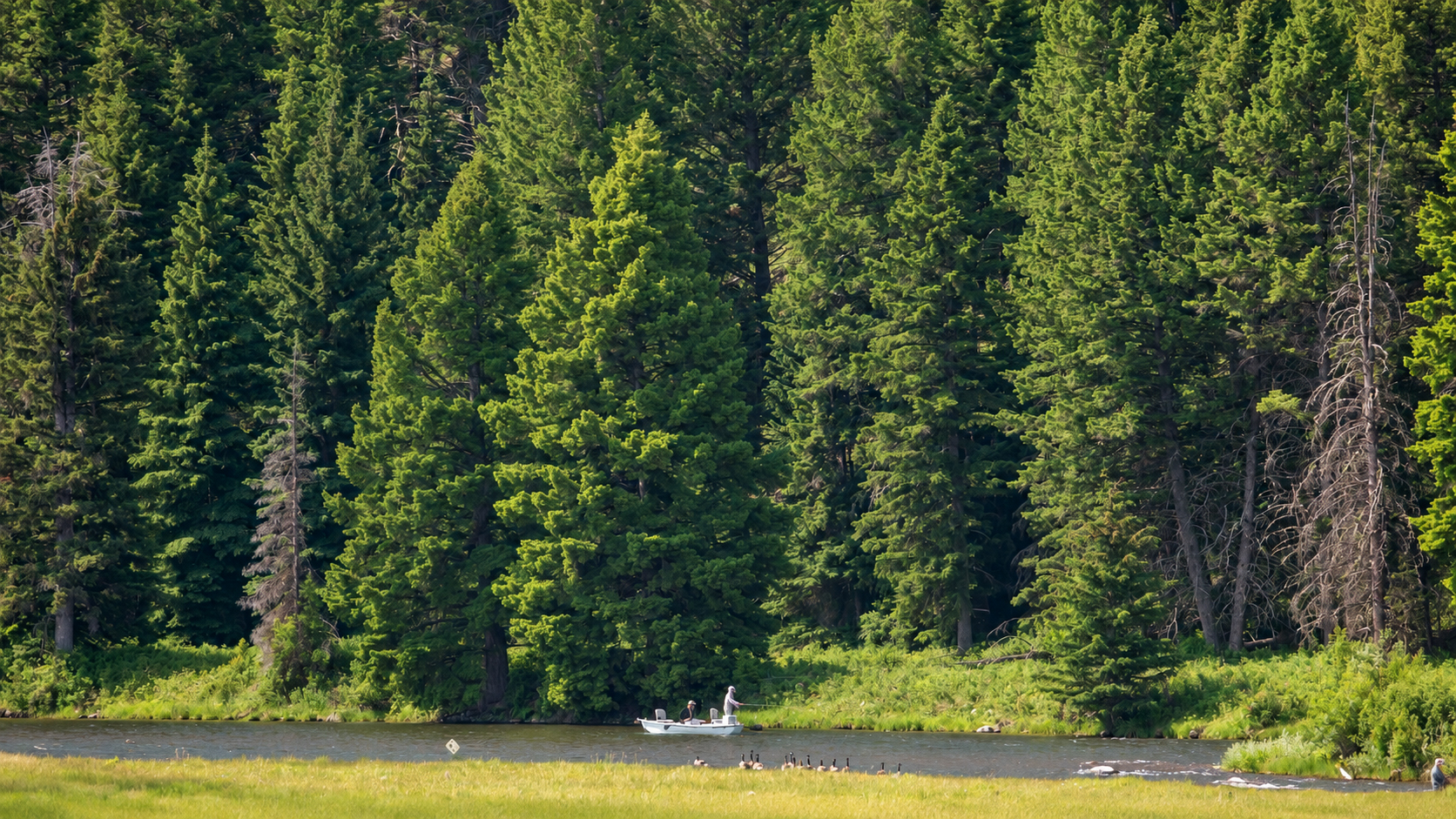
I have now fished it from the meadow country inside Yellowstone National Park through Hebgen Lake, the short tailwater between Hebgen and Earthquake Lake, the water around Quake itself, the Slide, the walk-and-wade reaches below it, the long drift-boat water towards Ennis, and farther downstream through Bear Trap Canyon and beyond. I have fished it from boats, from the bank, in small one-man rafts and standing waist-deep in the current. I have fished tiny dry flies to individual trout on flat water and rubber-legged attractors through whitewater. I have chased salmonflies large enough to make delicate presentation seem faintly ridiculous and watched lake fish refuse mayflies almost too small to see. It is one river, but it contains an extraordinary number of different rivers within it.
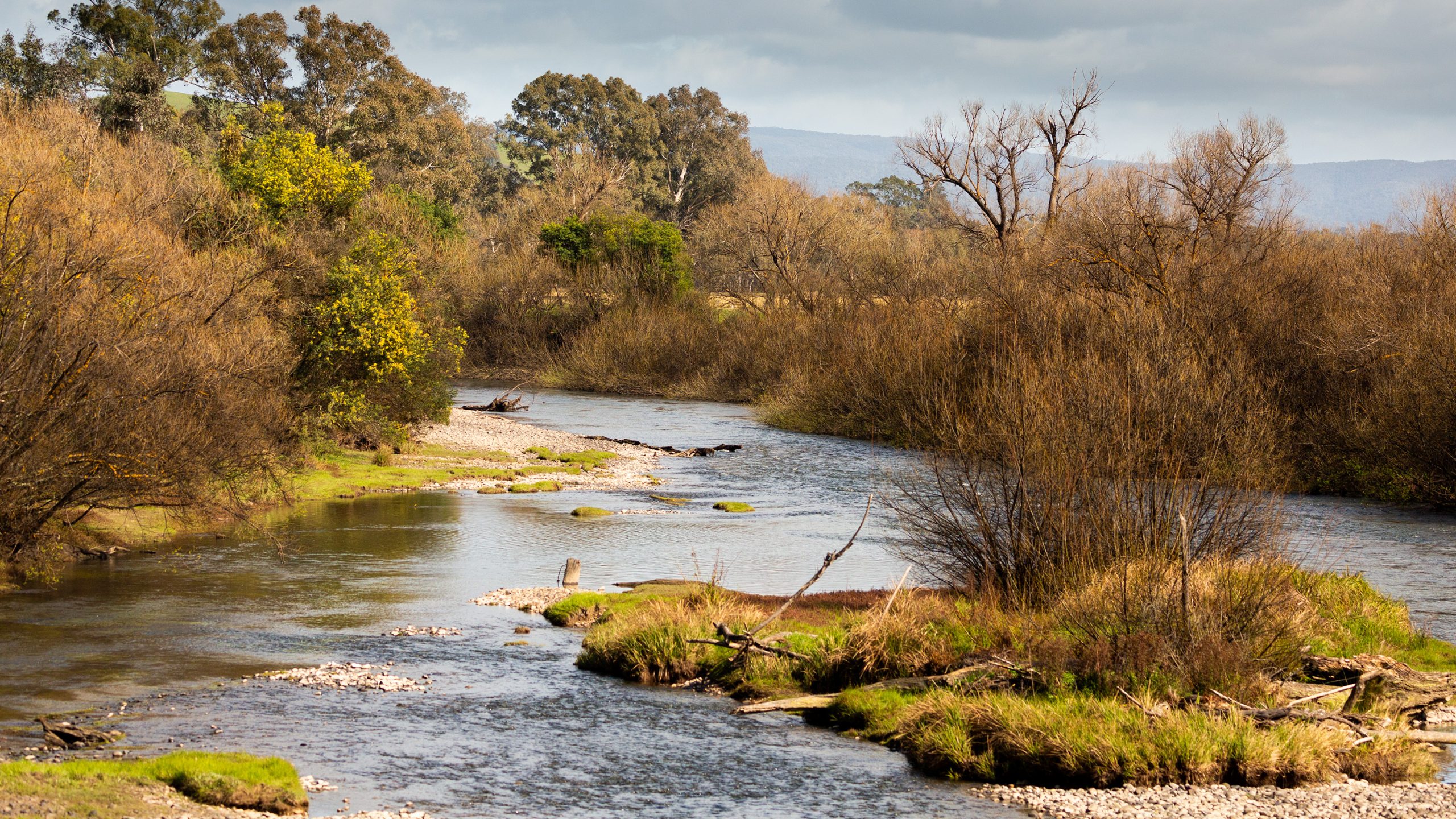
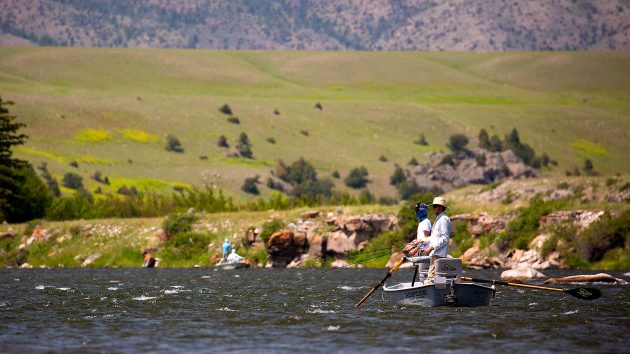
The section most anglers picture when they hear the name is probably the water above Ennis, the famous fifty-mile riffle. The description is close enough to literal that it makes sense once you have spent a day there. The river runs over a broad bed of cobble and boulders and seems almost reluctant to form anything resembling a conventional pool. You come around a bend expecting the current eventually to ease, only to find another long run of broken water. Beyond that is another. Then another.

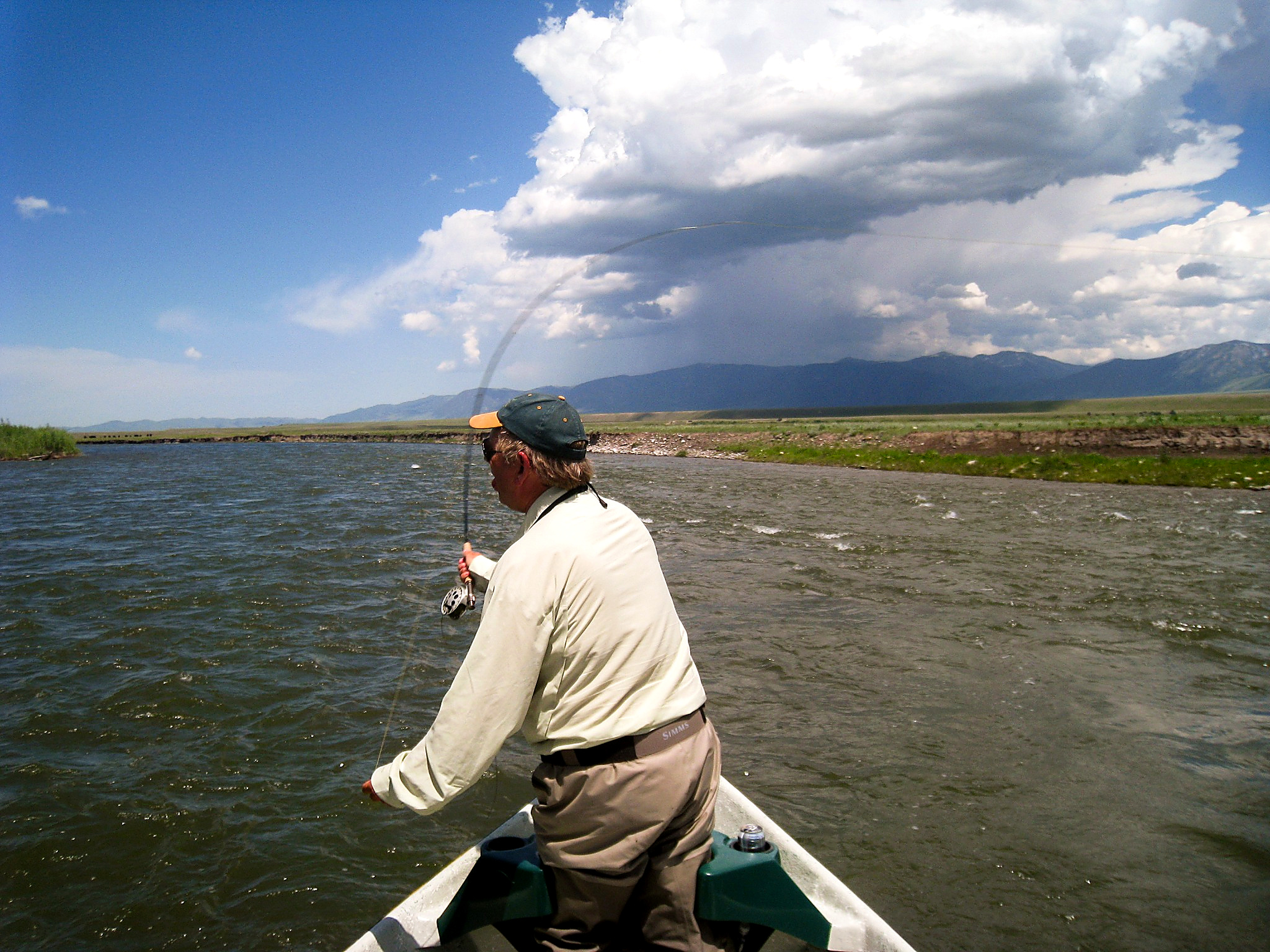
The Madison has an energy that is immediately recognisable. On many rivers the angler searches for the fast water among slower pools. Here you often search for the ten per cent reduction in speed. A depression behind a boulder. A small slick. A subtle shelf. A narrow seam beside heavier current. The trout use tiny variations in velocity because there is so much current everywhere else. Fishing it properly demands concentration. The fly is moving almost from the instant it lands. Line begins bowing downstream. Mends need to be made quickly and accurately. The boat is moving as well, and the guide is constantly positioning it around boulders, other boats and the next piece of useful water. There are moments when the angler, guide, line, flies and current all seem to be travelling at different speeds and somehow have to arrive at the same place together.
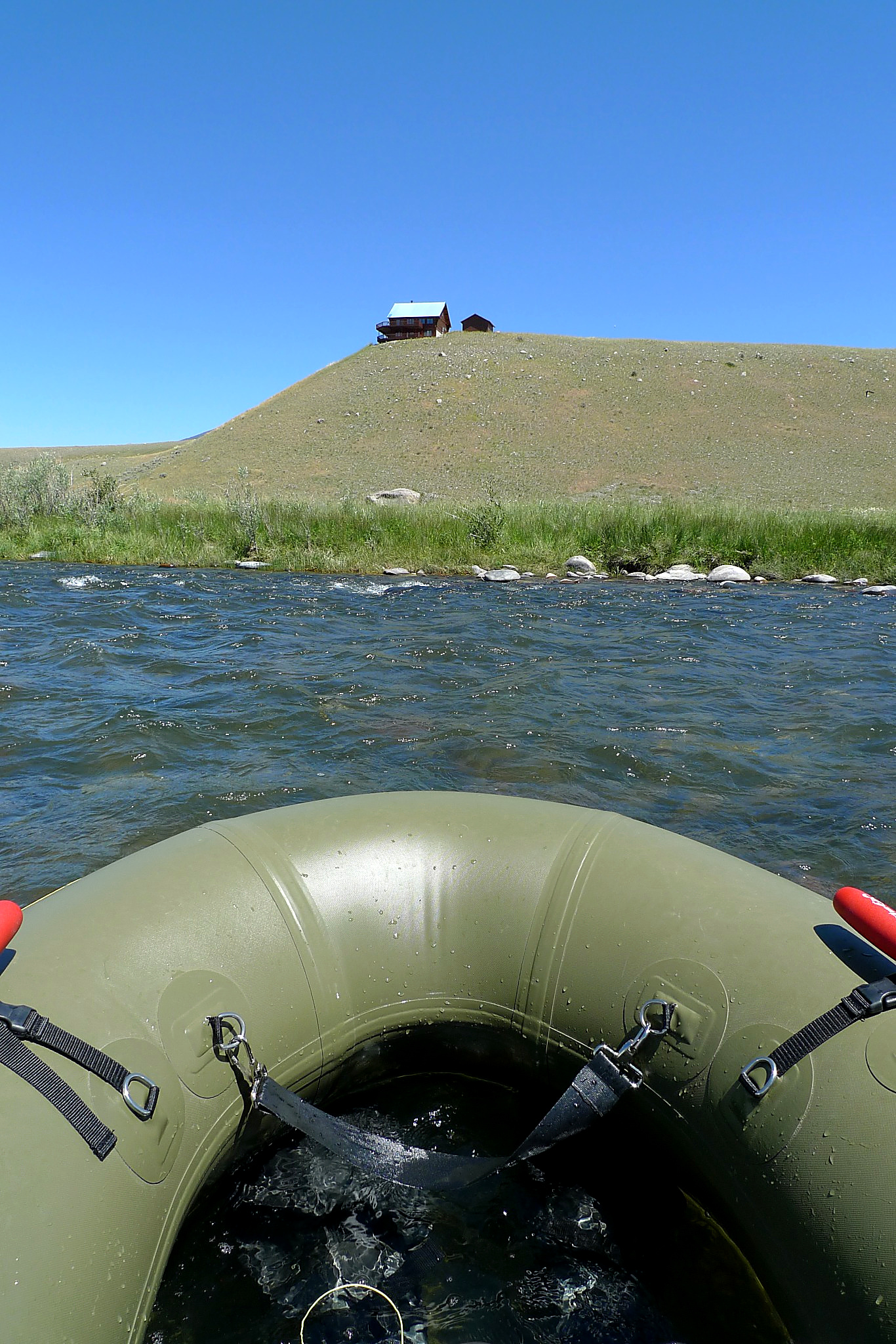
Years ago, David and I floated a long section in Water Master Kodiaks, little one-man inflatable craft with a seat between the tubes. Your legs hang in the water and a small set of oars sits atop the tubes, but much of the steering can be done with fins. On the Madison we discovered another advantage. By pointing our feet almost vertically down, we could let the tips of the fins brush across the tops of submerged boulders, creating just enough resistance to slow ourselves while we fished a run. We must have looked ridiculous. Proper drift boats passed with anglers and guides looking across at two Australians sitting low in the water, legs hanging beneath them, occasionally scraping their fins across the riverbed to avoid being swept away from the water they were trying to fish.
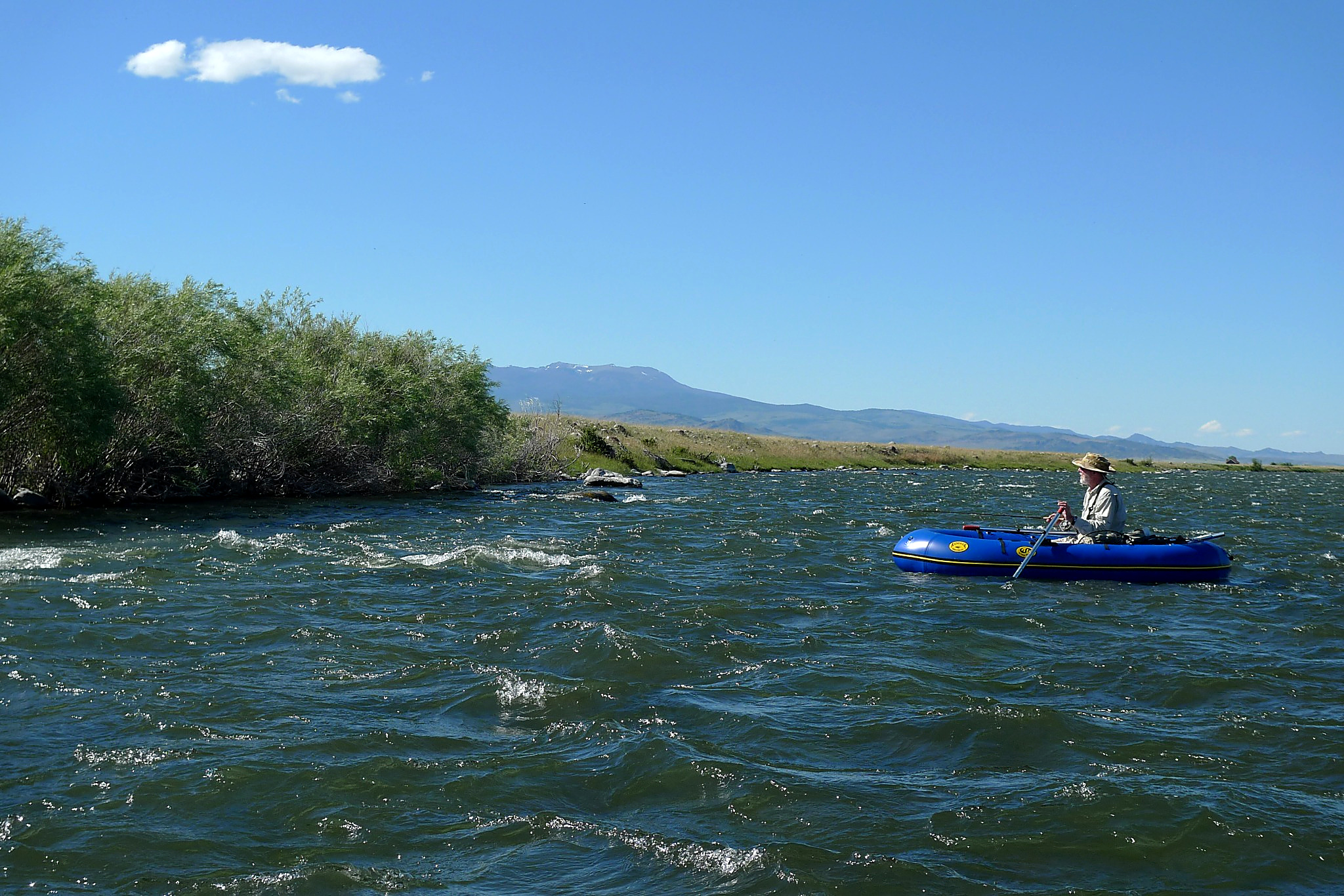
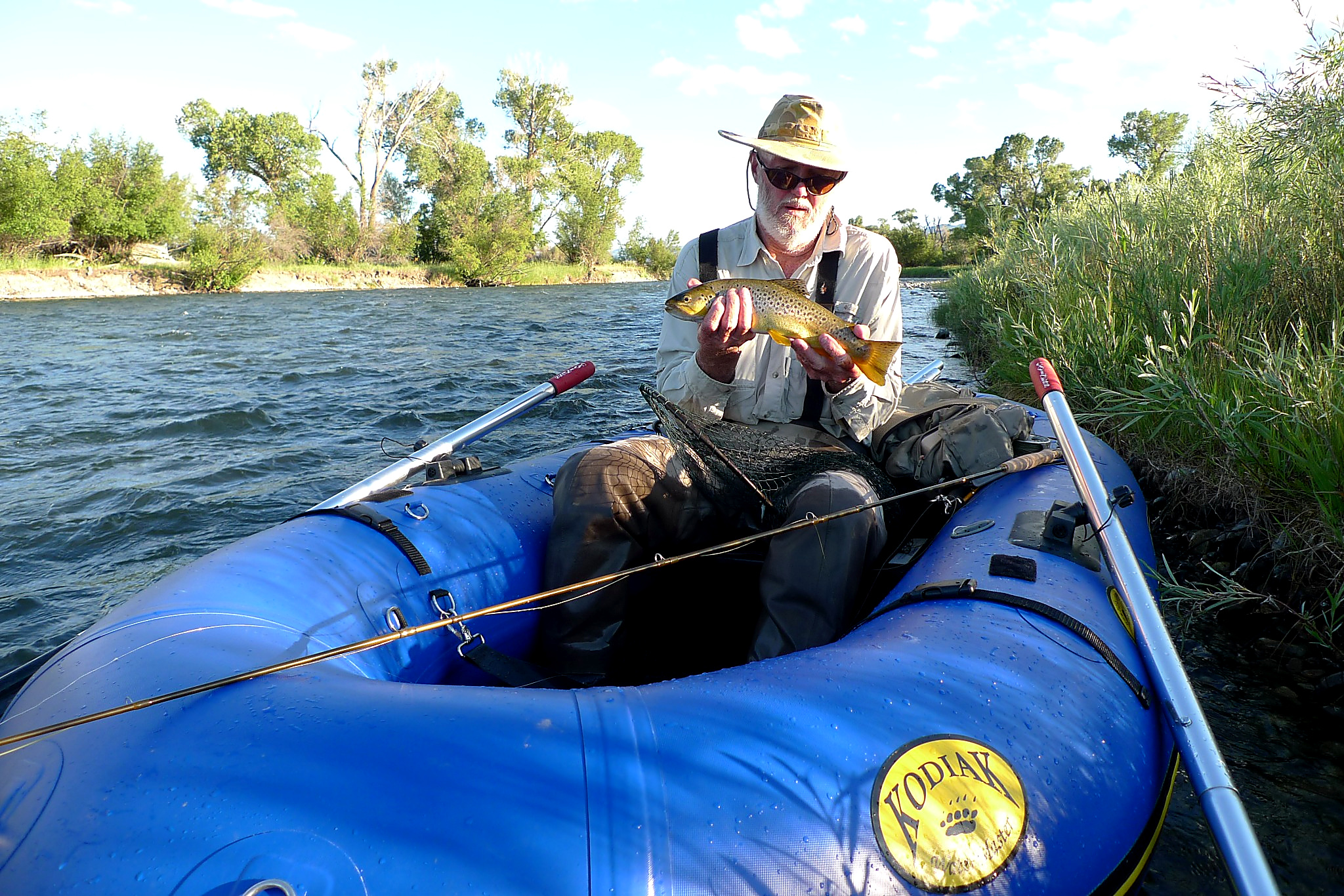
It worked, though. We fished all day and eventually came out below Varney Bridge completely exhausted. What really brought home the distance was retrieving the vehicle afterwards. Driving back along the highway at Montana speeds still took roughly thirty-five minutes. We did not fish the following day. The river had extracted enough from us in that foolish thirteen hour float.
There is another way to experience that same water, and it remains one of my favourite events in American fly fishing. The salmonfly hatch moves progressively through the Madison each year as summer takes hold. These are not subtle insects. They are enormous stoneflies, often several inches long, and when the hatch is properly underway they cling to bankside vegetation, fly awkwardly across the river and hit the water with enough impact to attract attention. The guides follow them. Everyone follows them. During the peak of the hatch, boats seem to arrive from everywhere. Fly shops know roughly where the leading edge of the bugs is. Guides talk to one another. Reports move quickly. A section that was relatively quiet yesterday can be full of boats tomorrow because the insects have moved several miles upstream.
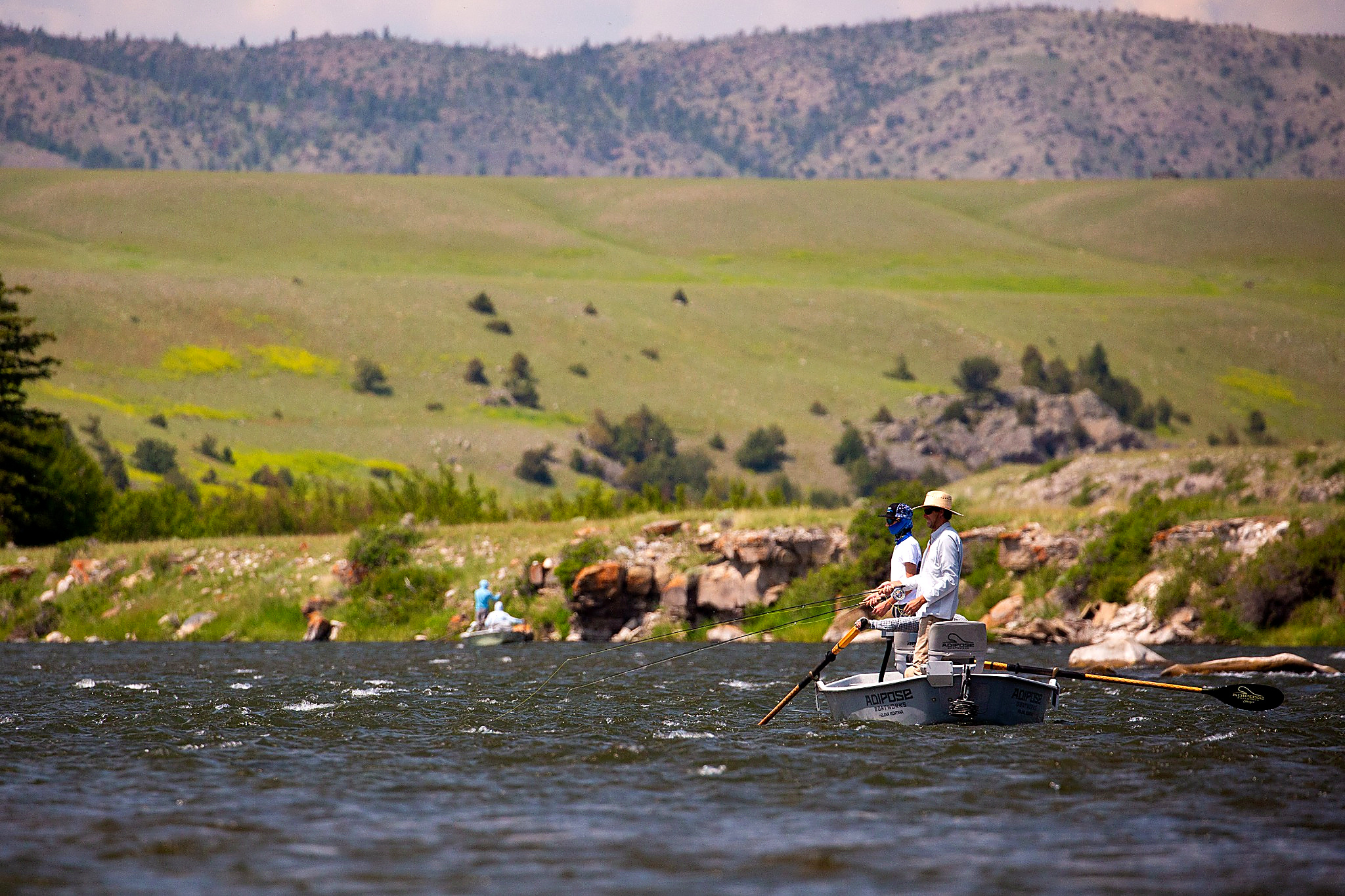
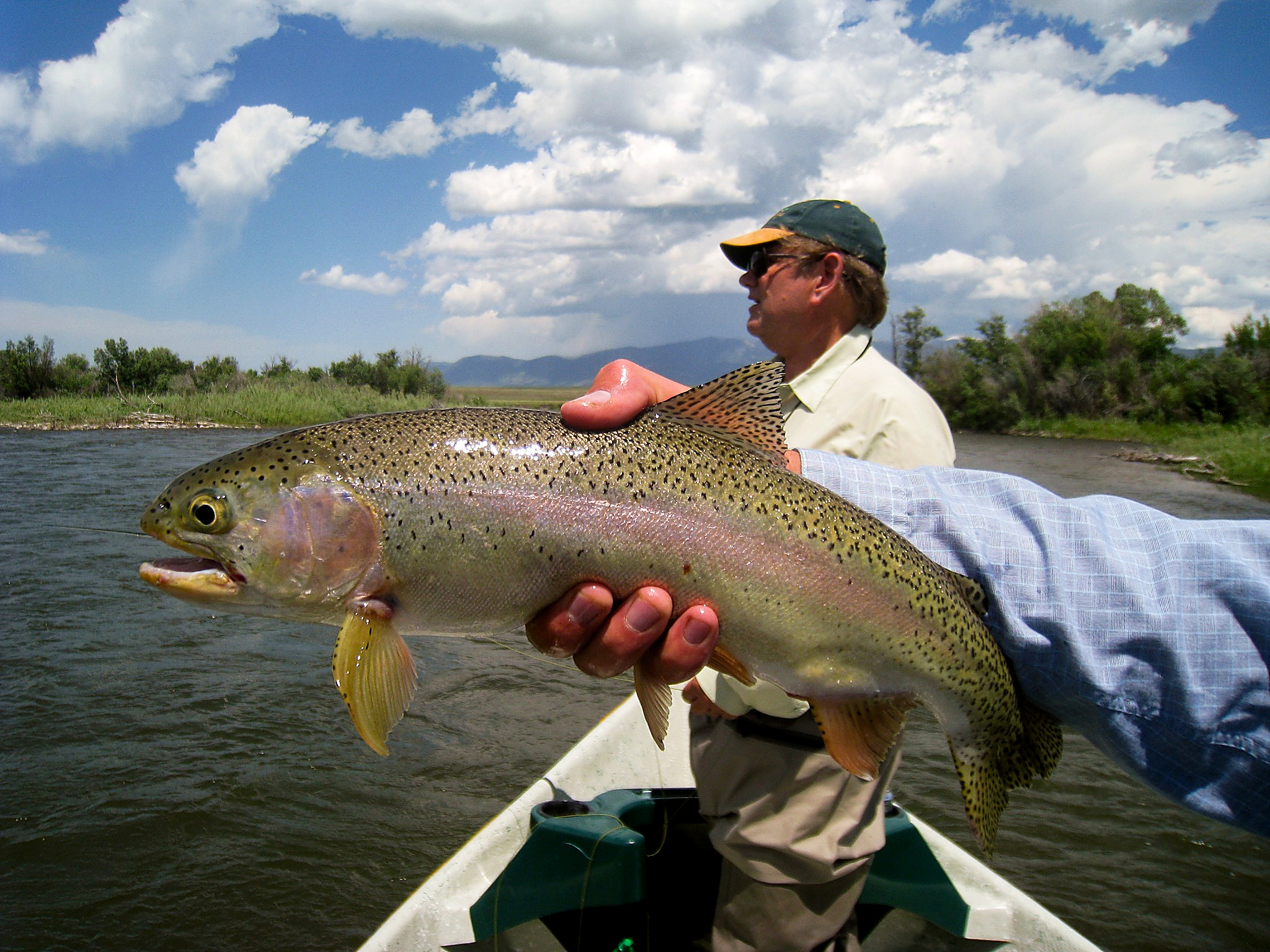
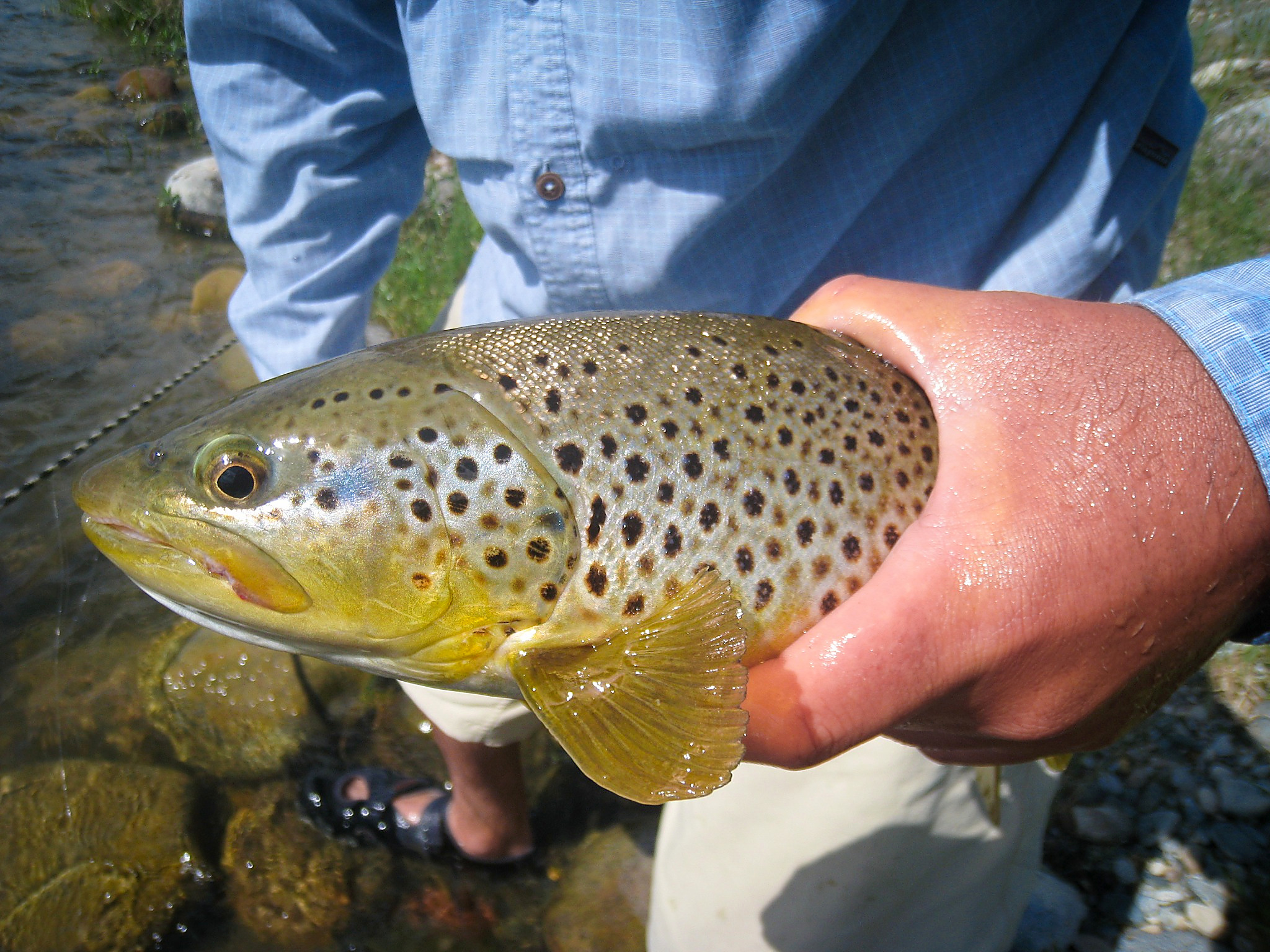
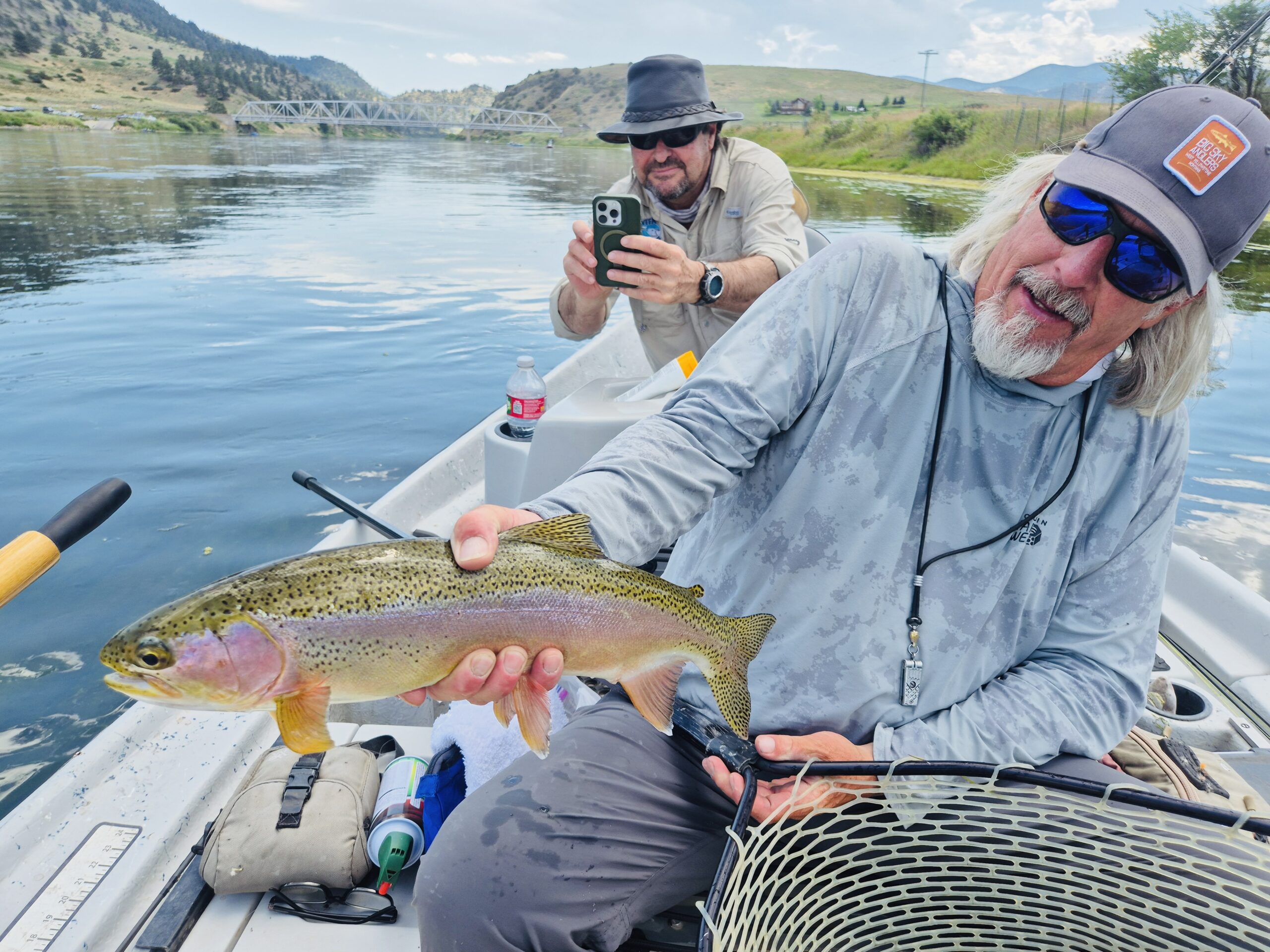
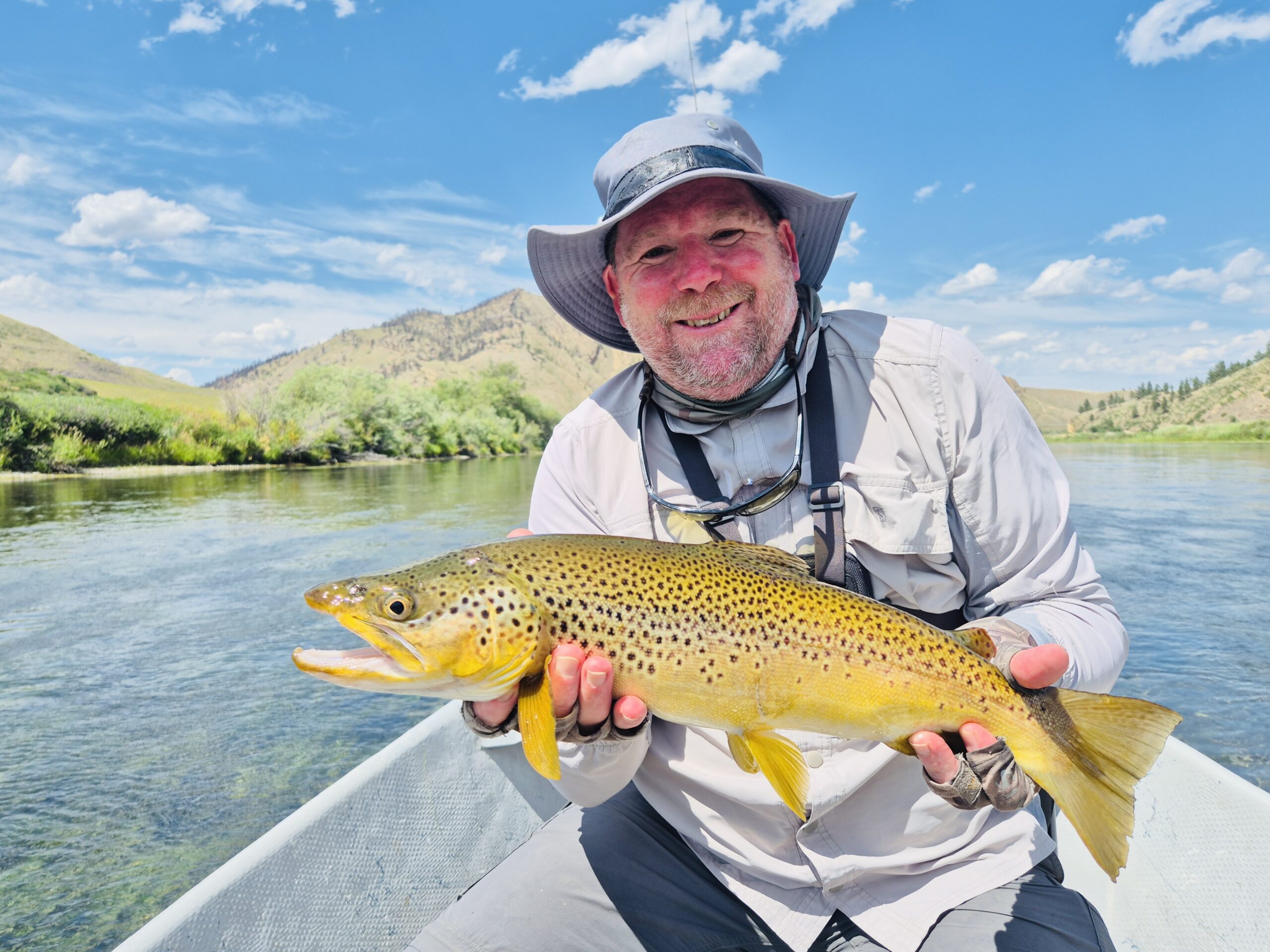
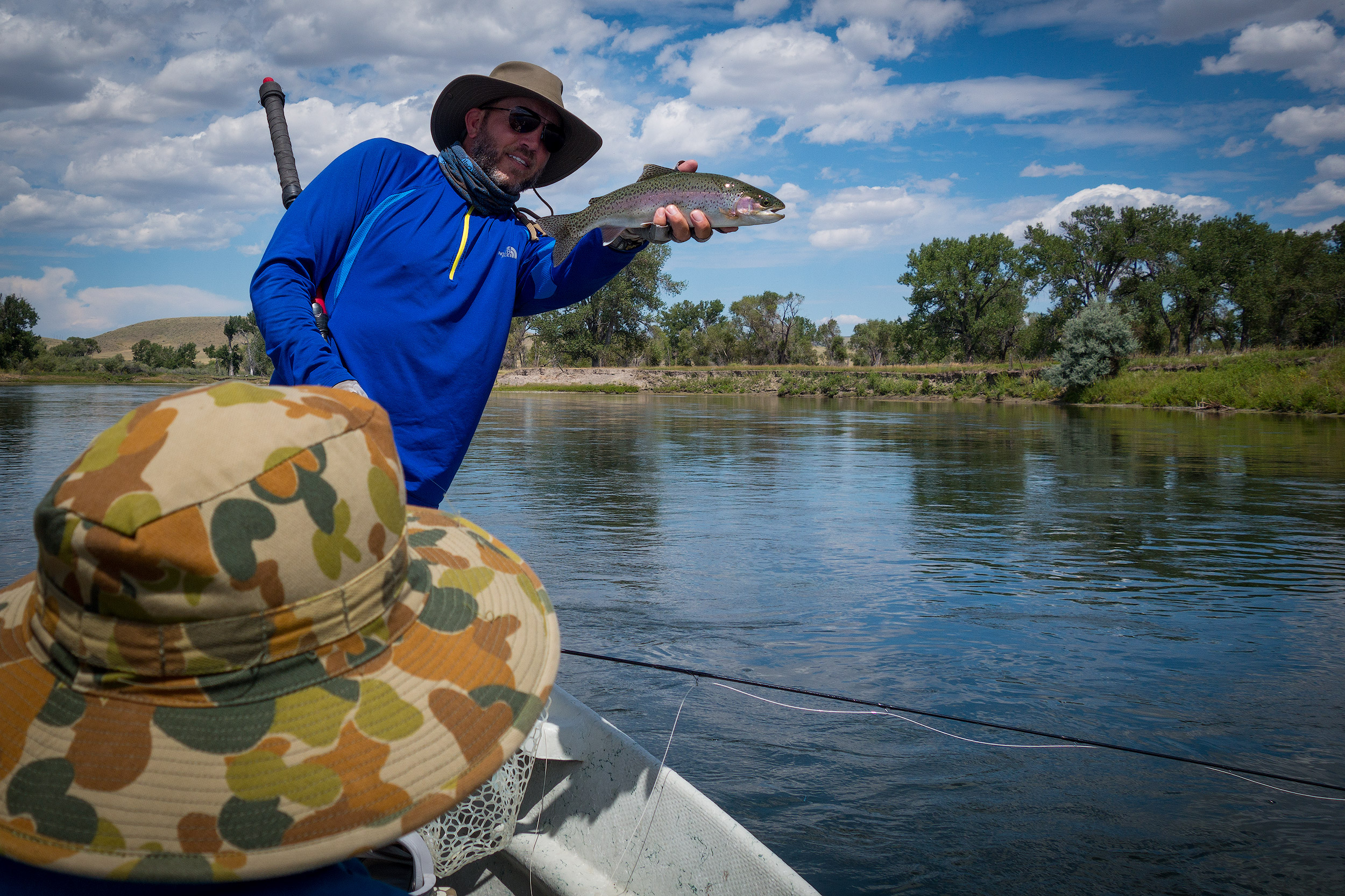
On one of my early trips we hit it properly. Through dumb luck rather than careful planning. Rather than accepting that we would drift through the hatch once and leave it behind, the guide organised the day around the insects. We floated the productive section, pulled out, drove back and did it again. Then we repeated the process a third time. It was not one of those ridiculous stories where seventy trout somehow find their way into a net before lunch. We probably caught twenty fish across the day. What I remember is their quality and the violence of some of the takes. Big browns came out from structure to eat enormous dry flies. Some smashed them hard enough to make you instinctively tighten your grip on the rod. Others rose beneath an undercut bank with such restraint that the only indication of a take was that the fly was suddenly no longer there.
The contrast fascinated me. The insect was enormous. The fish was large. The river was fast. Yet the eat could still be little more than a sip.
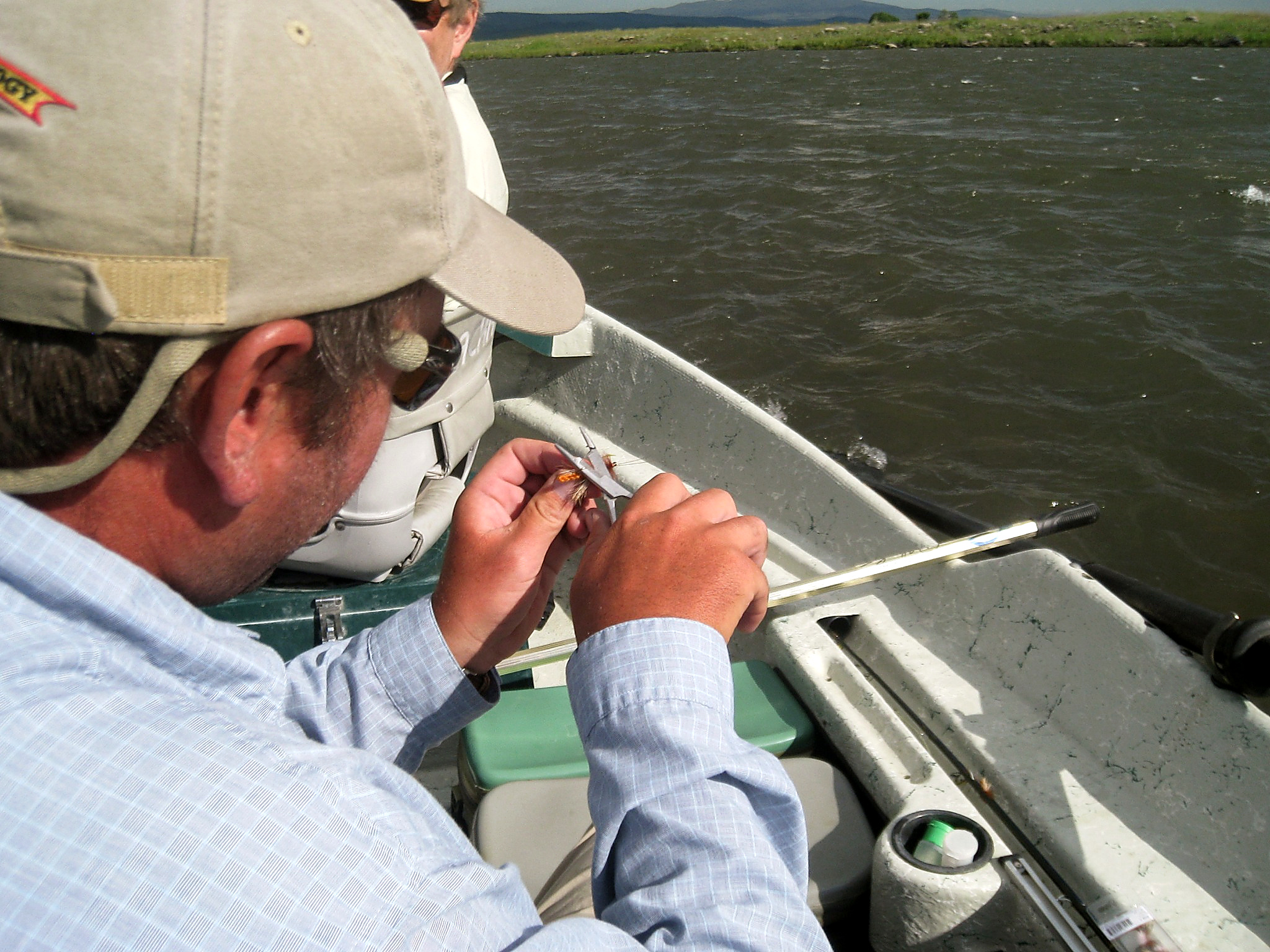
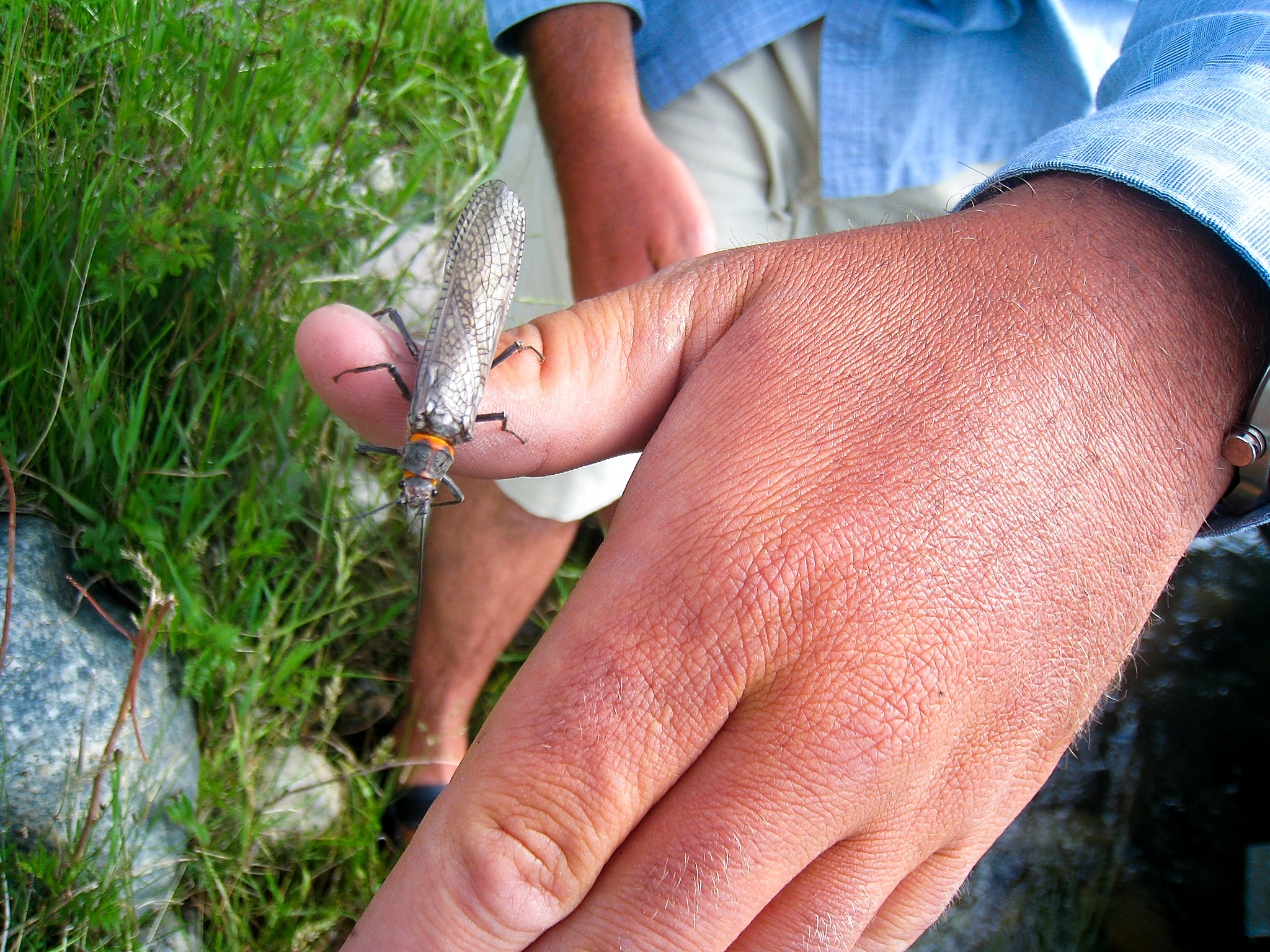
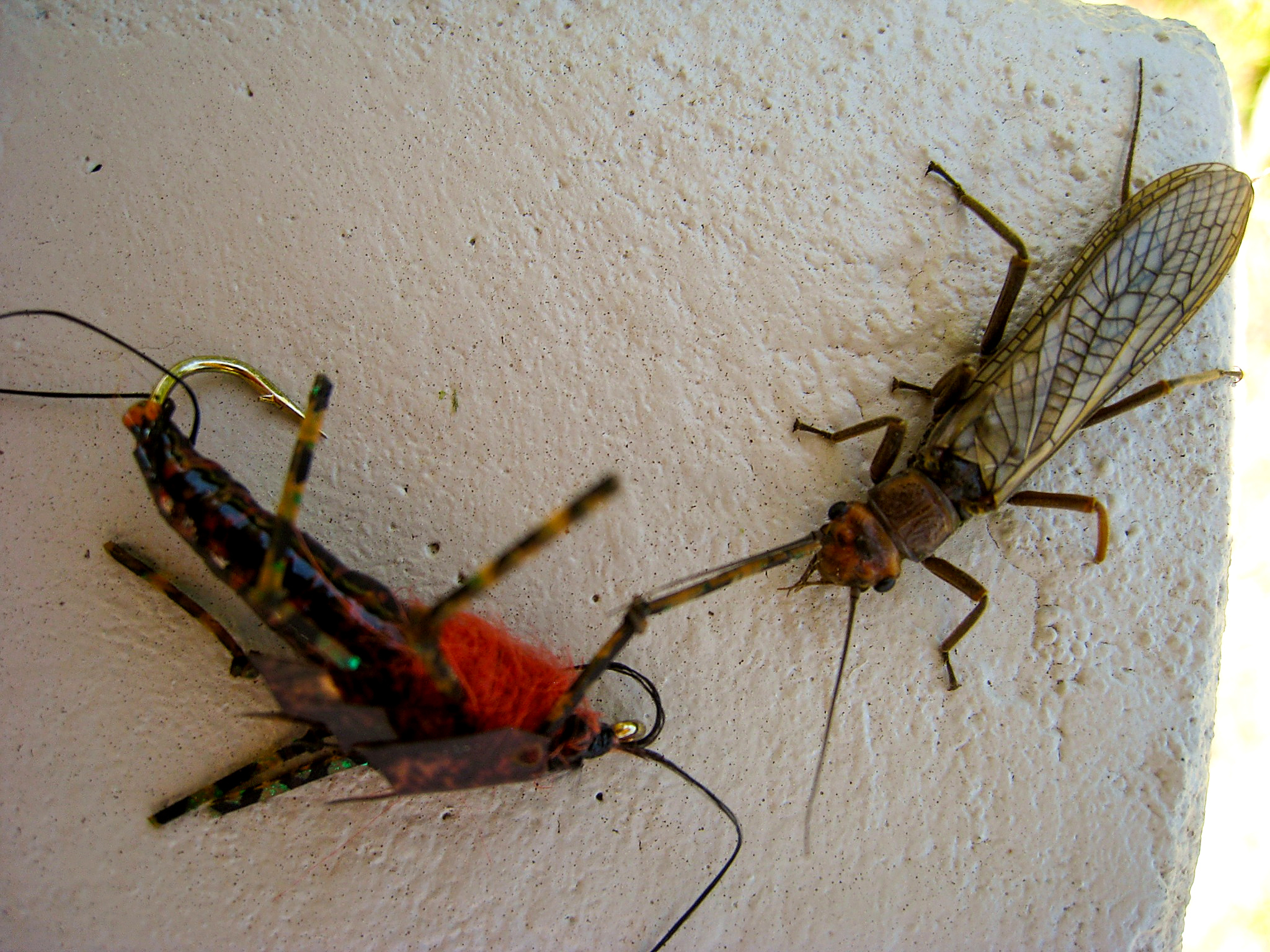
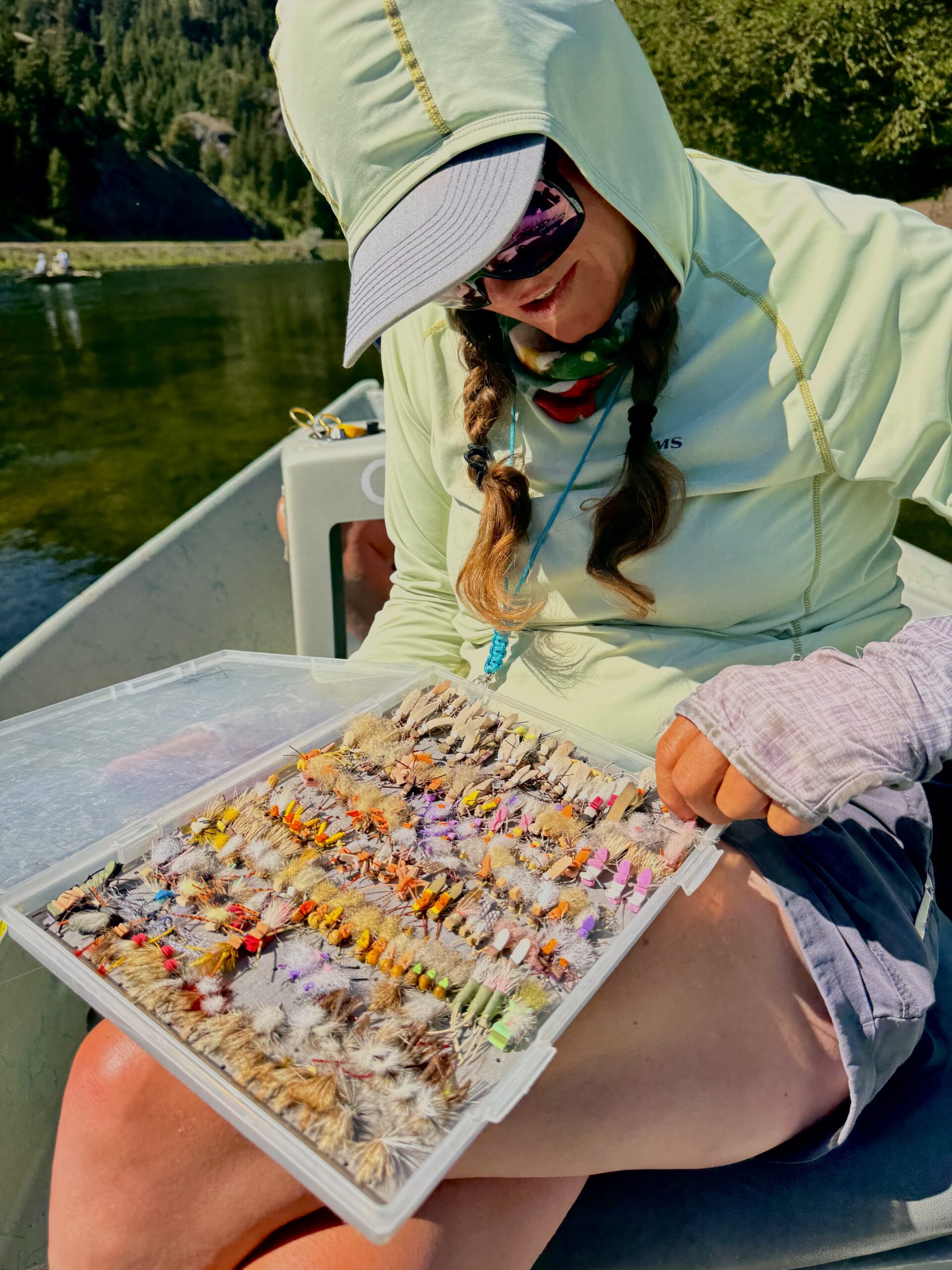
By July, the fishing changes again. PMDs and caddis become important, and later the river can fill with terrestrials. Spruce moths appear in high summer and occasionally fall onto the water in sufficient numbers for trout to become completely preoccupied with them. They are terrestrial insects associated with the surrounding conifer forests rather than something emerging from the river, but the trout do not care about taxonomy. When enough reach the water, fish begin looking for them and can become surprisingly reluctant to eat anything else. The fishing can be exceptional. Then there are hoppers. Caddis. Spinners. Attractor dries. Large rubber-legged patterns worked through broken water. The Madison gives an angler plenty of reasons to keep looking up.
It also gives you difficult days. On one of our more recent trips I was fishing from the back of the boat while we worked likely pockets along the edge. The fishing had been slow from the beginning. There had been some cloud early and we found a handful of trout sitting in the little pieces of softer water behind boulders, occasionally willing to eat a spent caddis or spinner, but as the day warmed the opportunities became fewer.
At some point I wrapped my fly line around a boulder. There are sensible ways to deal with this. The guide can pull the boat to the edge and anchor. You can then walk back and retrieve the fly. Even slowing the boat can buy a few precious seconds to throw a loop back out and free the line. But I was annoyed with myself and chose none of them. Rather than make the guide stop because of my mistake, I pointed the rod directly at the boulder and pulled. About twenty feet of fly line broke off.
There are moments in fishing when decades of experience express themselves as calm judgement. There are others when it apparently expresses itself as destroying a perfectly good fly line because you are irritated with yourself. We still caught eight or nine trout that day, which says something about the strange standards Montana can create. Back home, most anglers would consider that a great session. On the Madison, after several days of exceptional fishing, it felt difficult. We eventually stopped, climbed onto a large boulder overlooking the valley, ate lunch and watched other boats move past below us. Later we swam. It was still a good day.
That is something these trips gradually teach people. A hard fishing day does not necessarily need rescuing.
Upstream of the fifty-mile riffle, the Madison begins changing so dramatically that the name alone stops being useful. Inside Yellowstone National Park it is meadow water. The river moves through open country lined in places by low, scrubby willow growth and vegetation thick enough to conceal an animal remarkably well. I have always felt slightly more alert fishing there than I do on most rivers. Grizzly country changes the senses. You hear things differently. Timber and brush cease to be scenery and become places from which something may emerge.
The Madison eventually leaves the park and enters Hebgen Lake, a large reservoir sitting west of Yellowstone. The river disappears into still water and the fishing changes with it. Hebgen is famous among fly fishers for its gulpers, trout feeding rhythmically on mayflies across the surface. On the right summer morning, particularly when Callibaetis and other mayflies are on the water, the lake can appear to contain an impossible number of rising fish. The guide runs a small motor to reach a productive bay, shuts it down and takes the oars. Then everything becomes quiet.
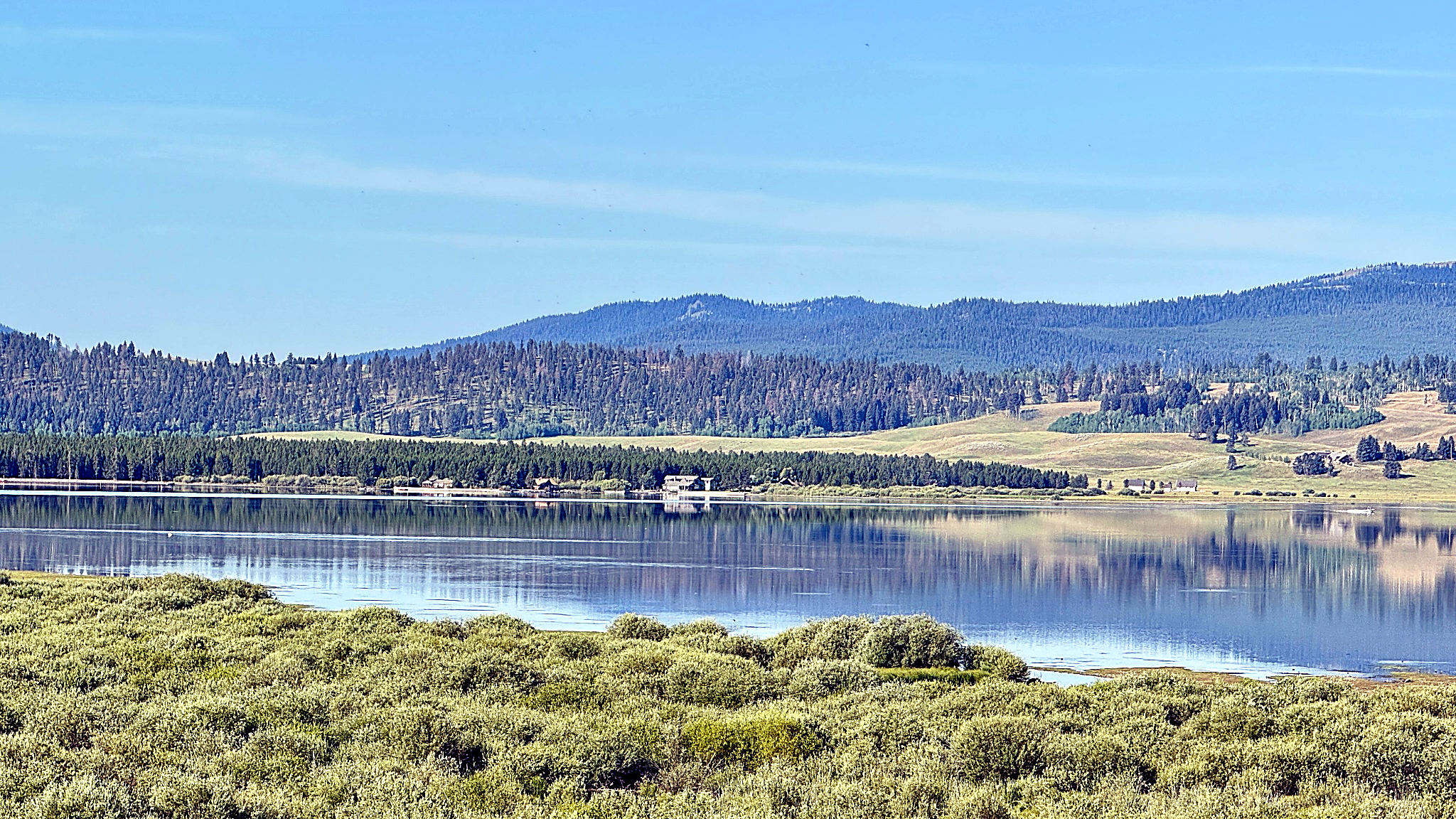
You watch. A fish rises. Then again. Perhaps ten metres away another begins feeding. Behind it is another. Soon there are rings appearing everywhere and the problem becomes deciding which fish to present to.
The trout often establish a rhythm. Rise. Swim. Rise again. Sometimes they are visible beneath the surface and you can track them between rises. At other times all you have is a sequence of expanding rings from which you try to calculate direction and speed. The guide rows quietly, attempting to put the boat somewhere that gives the angler a chance of placing a tiny dry fly ahead of the fish without putting line across its path. It is technical fishing. Leaders are long. Tippets fine. Presentation matters. The surface is flat enough for mistakes to remain visible for an uncomfortable amount of time.
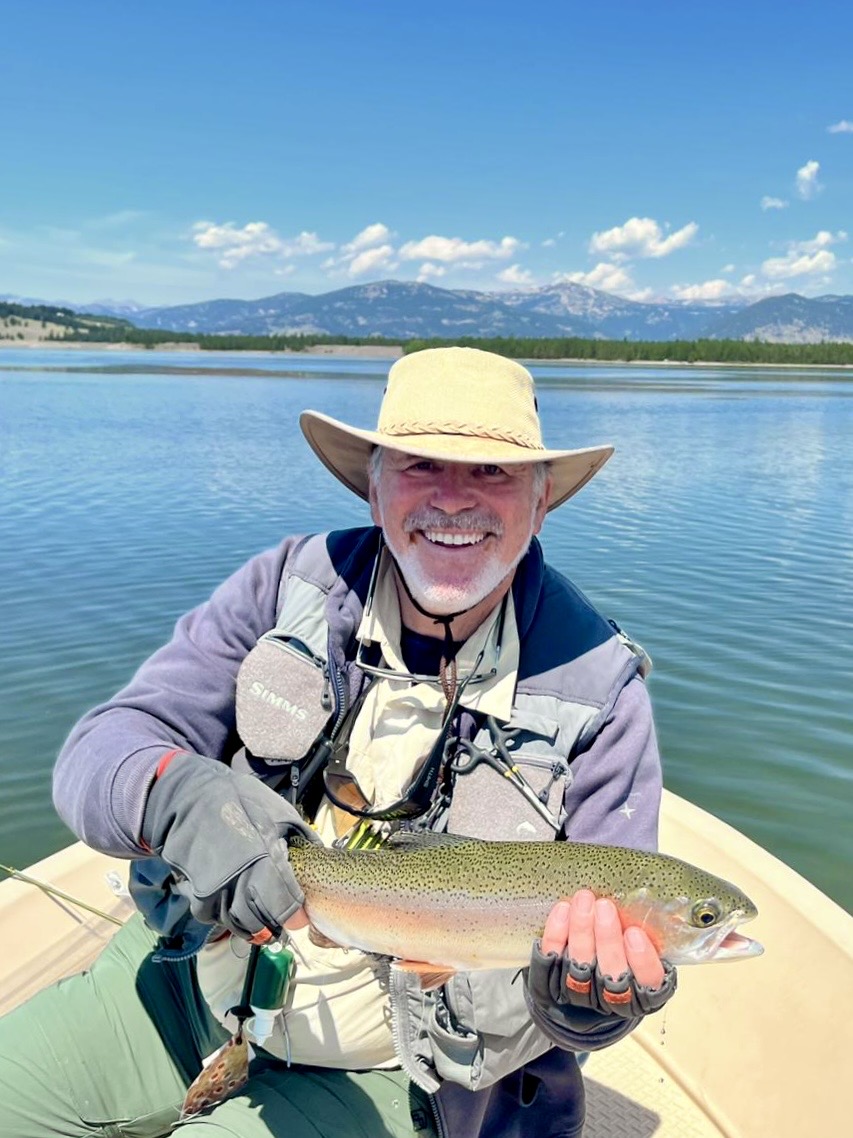
Refusals are part of the information. If a trout feeding confidently turns away from your fly from two feet below it, something is probably wrong. The pattern, the size, the tippet or the presentation has given the game away early. If the fish rises until its nose almost touches the imitation before deciding against it, you are much closer. Sometimes the answer is another fly. Sometimes the same fly simply needs to arrive more naturally the next time. That process can occupy an experienced angler for hours. A fish rises six times on naturals. You make what appears to be the perfect cast. It approaches your fly and refuses it. Then it rises again five feet away as though nothing happened.
There are mornings when the lake seems covered in fish and you still feel as though you cannot buy one. There are others when everything aligns. The wind can help for a while. A little surface movement disguises the leader and creates lanes where insects collect. Too much eventually makes tracking individual fish difficult. By late morning, as the wind strengthens or the rise begins fading, we often leave the lake and move onto the river.
The transformation can be almost absurd. An hour earlier you were casting a tiny mayfly to one visible trout in flat water. Now you are throwing a Chubby Chernobyl or another large attractor into heavy current and mending frantically as the Madison tries to carry the fly, the line and perhaps the angler towards Ennis. Both are the same river system. That is what took me years to fully appreciate.
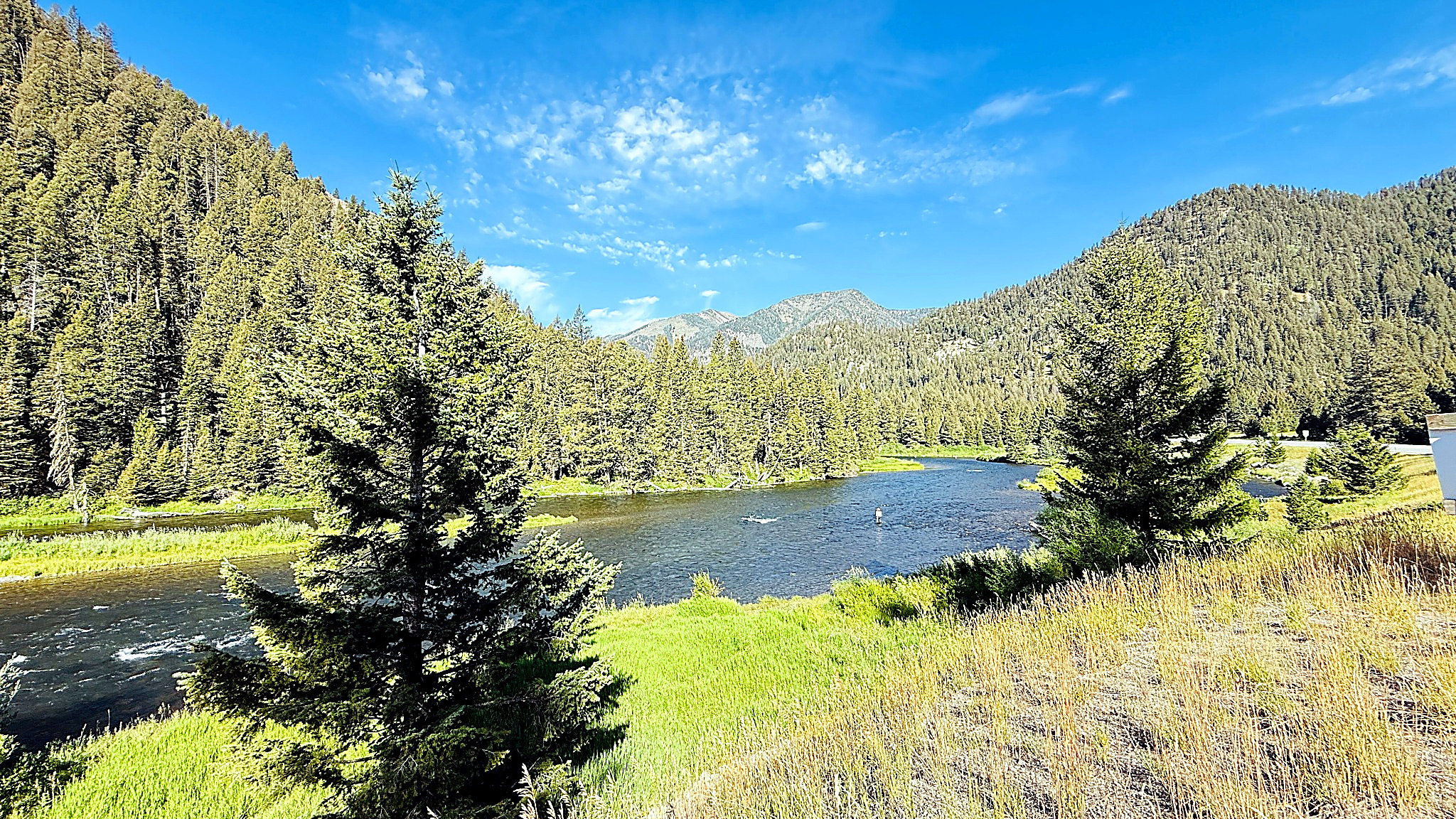
Between Hebgen and Earthquake Lake lies another short section of Madison. I have fished it several times, including days when a small boat was useful simply for crossing the river to reach water inaccessible from the road side. Once across, you can walk downstream towards the delta and fish back upstream through a mixture of fast and flatter water. It is beautiful country. Forest rises around both sides and the landscape begins merging with the vast connected country of eastern Idaho and Yellowstone. It is not wilderness in the sense that nobody has ever been there, but there are large areas without roads and remarkably few people once you leave the obvious access points.
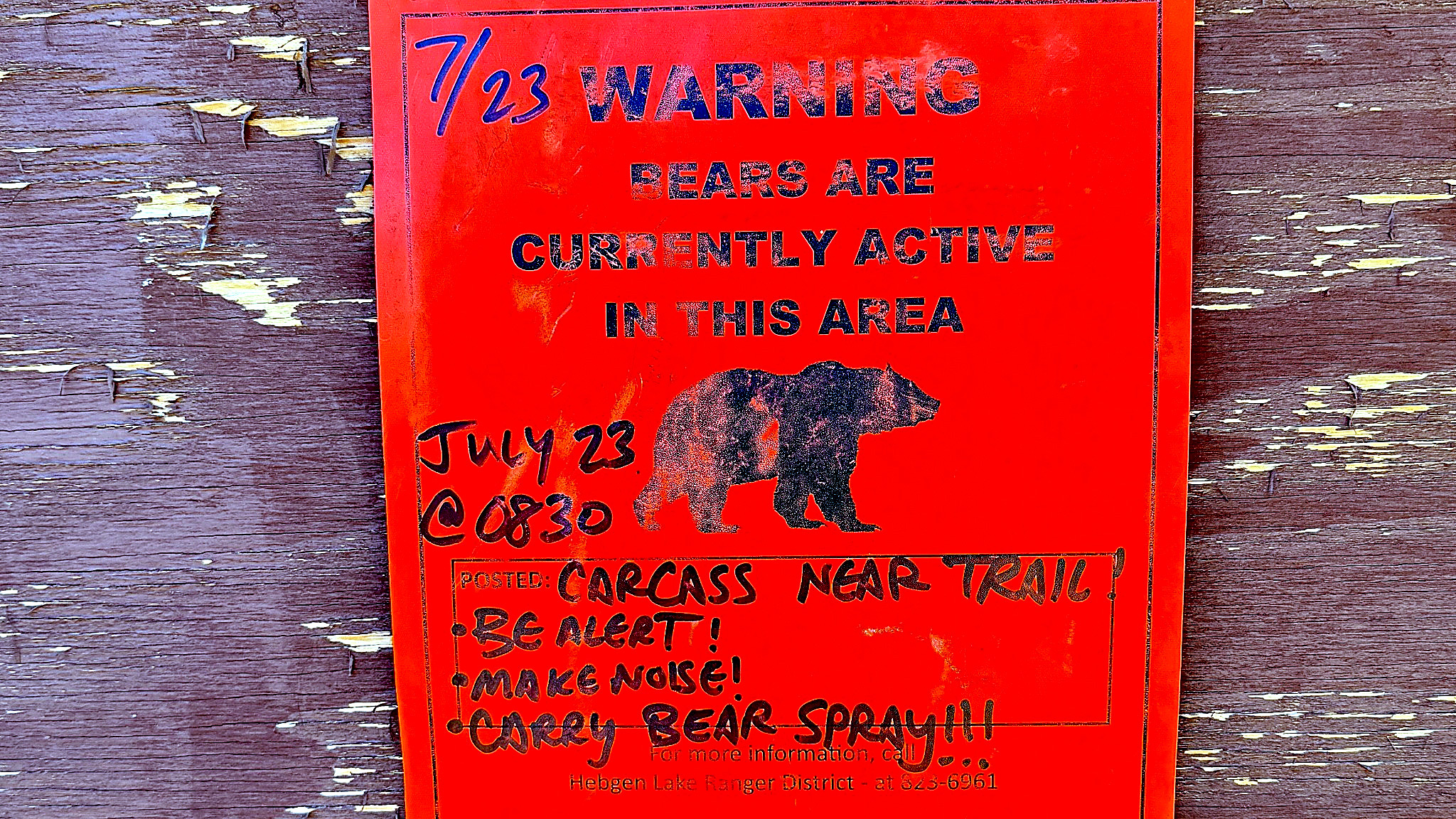
That matters because the bears use it too. Last year, while clients were fishing with guides, I had a day to myself. At the trailhead I found a warning sign stating that a carcass and a bear were somewhere in the area. The information was precise enough to make you nervous and vague enough to be almost useless. Other anglers arriving at the trailhead were making the same calculation. Nobody seemed particularly interested in walking farther along the trail without knowing where the carcass was or whether the bear remained with it.
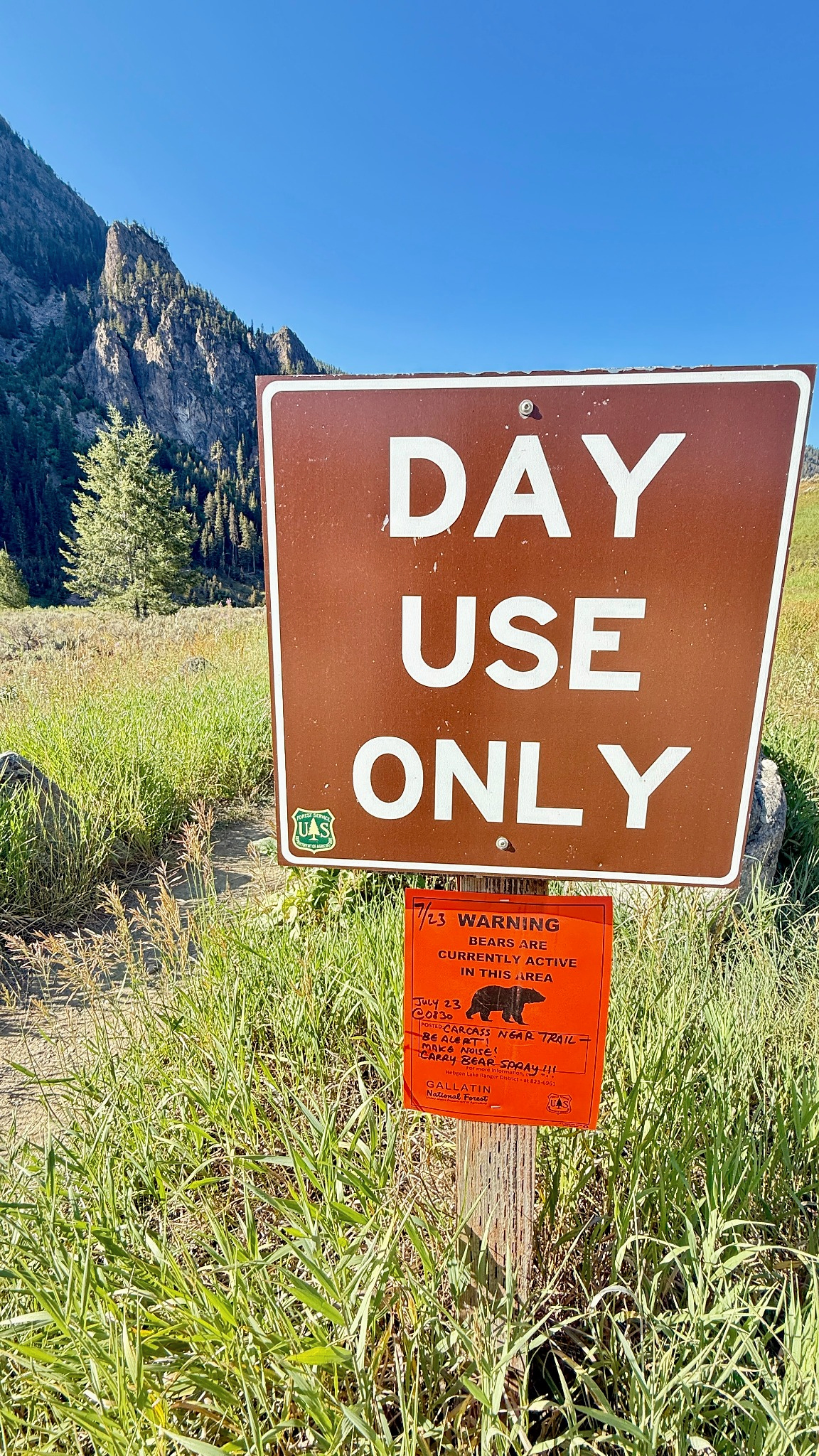
The fishing conditions were almost perfect. Blue sky. Mild warmth. Very little wind. Fish rising everywhere. If this had been New Zealand, I would have regarded the situation as idyllic. Instead I started walking alone down a trail calling, “Hey bear,” every so often into the forest.
It is difficult to describe how much that changes fishing. Rationally, I knew grizzly encounters were uncommon. I carried bear spray. I understood the basic precautions. None of that stopped the older part of the brain from becoming extremely interested in every sound coming from the trees. Eventually I reached a point where I needed to cut through to the river. Between me and the water was a dense wall of vegetation perhaps fifteen feet high. I could not see through it. The only way forward was to push into it. I remember standing there reconsidering how badly I actually wanted to catch a trout.
Eventually I went through. Once in the river, the fishing was excellent. It should have been one of those quiet afternoons when everything else disappears. Instead, every drift was accompanied by another glance over my shoulder. Cast. Mend. Watch the fly. Look behind. Cast again. Nothing happened. I did not see a bear. That did not make the bear feel absent.
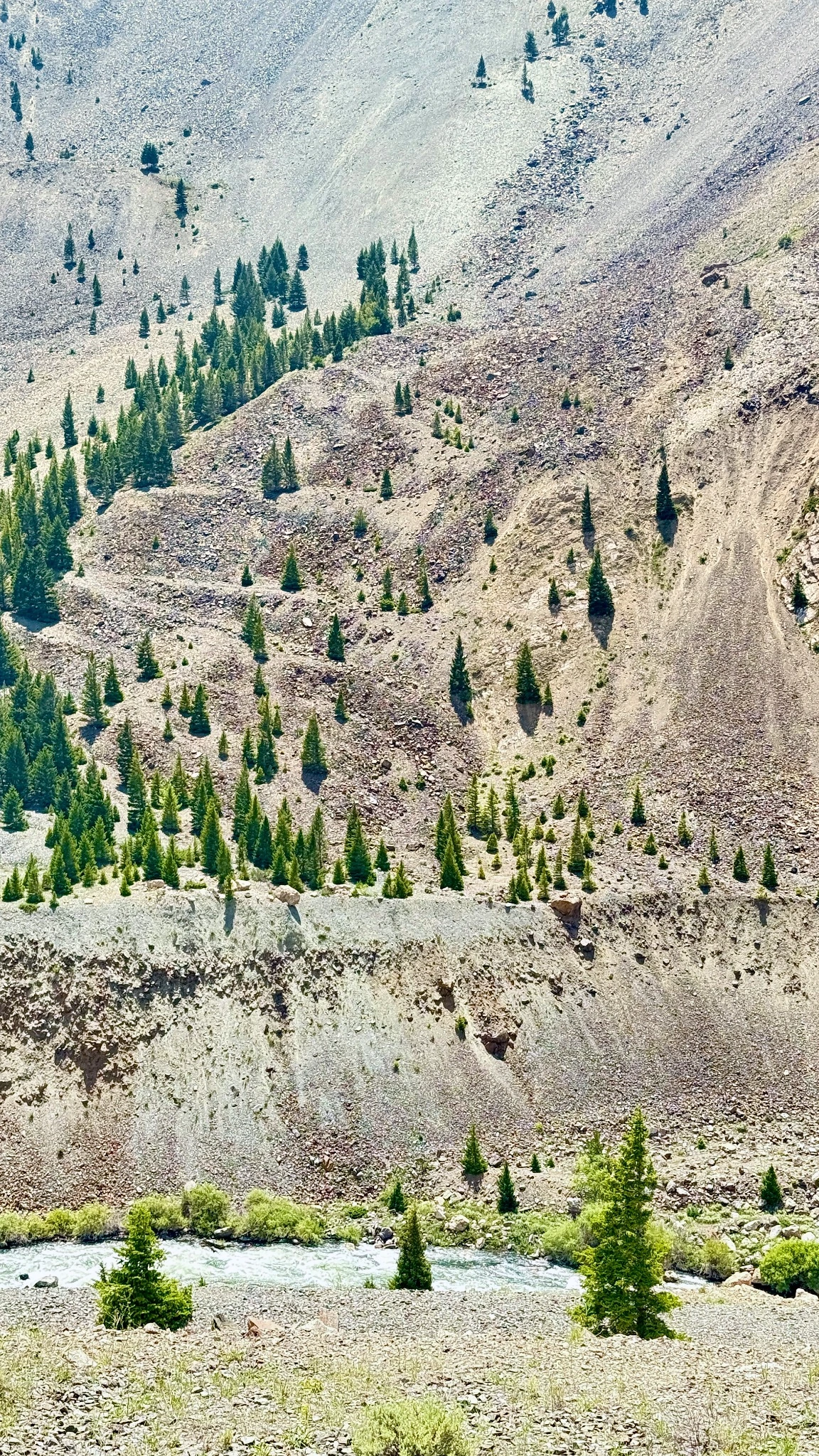
Eventually the Madison enters Earthquake Lake, and here the river’s story changes for reasons having nothing to do with trout. The first time I saw Quake Lake, I knew almost nothing about what had happened there. But no one needed to tell me that something extraordinary had occurred. The mountain had a wound across it.
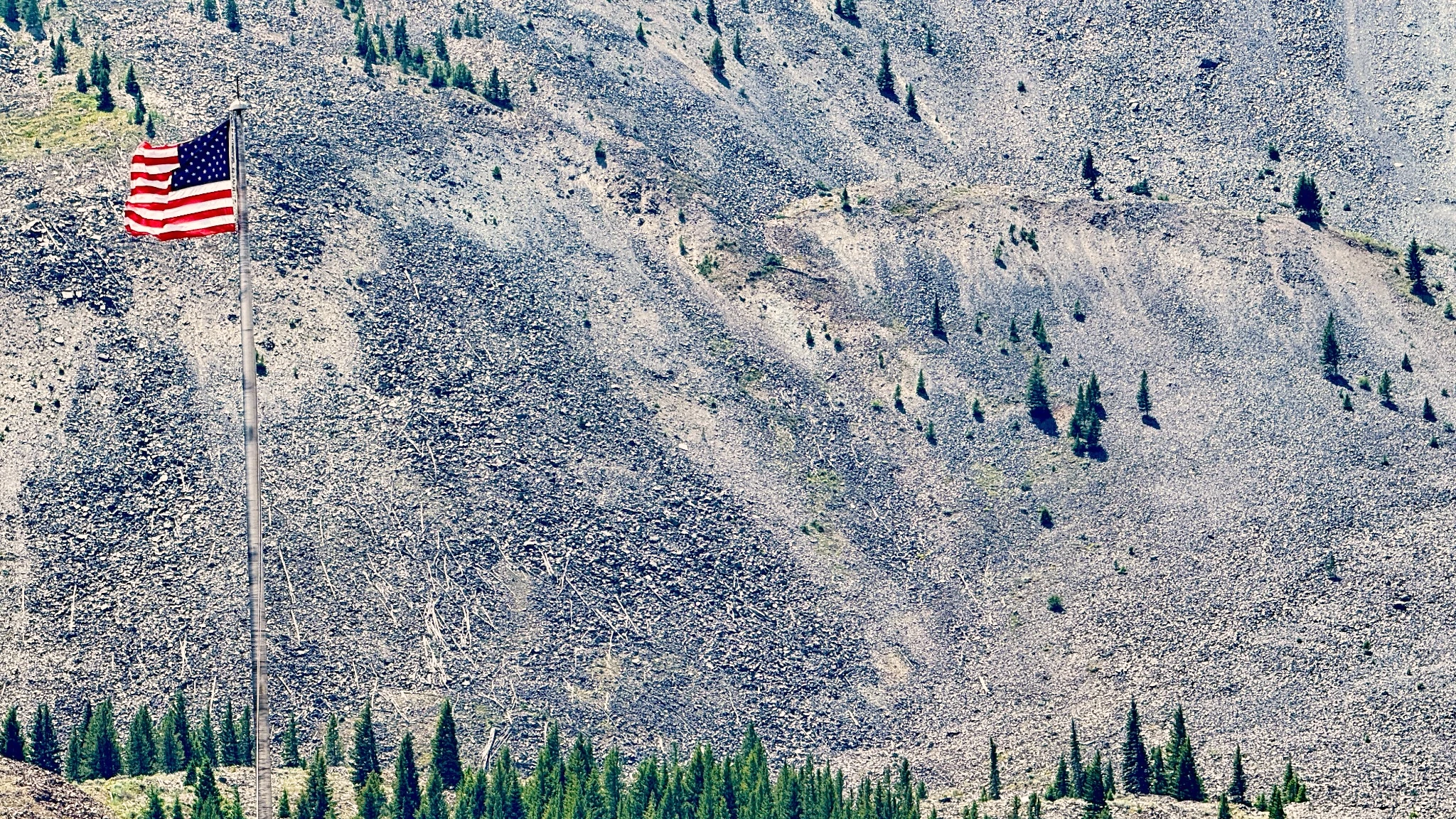
Even from a distance the scar was obvious. An enormous section of forest simply stopped, replaced by exposed rock and debris running down the mountainside towards the lake. Dead trees protruded from the water. Along the Slide itself, timber lay among boulders and broken ground as though the landscape had been picked up, shaken and dropped again. Photographs do not convey the scale particularly well. A wide-angle image reduces the scar to a pale patch on a mountain. Standing among the debris is different. The visitor centre sits within the slide area, and as you drive towards it the size of the material around you begins providing scale. The mountain above towers over the road. What looked like gravel from across the valley becomes rock. What looked like rock becomes boulders.
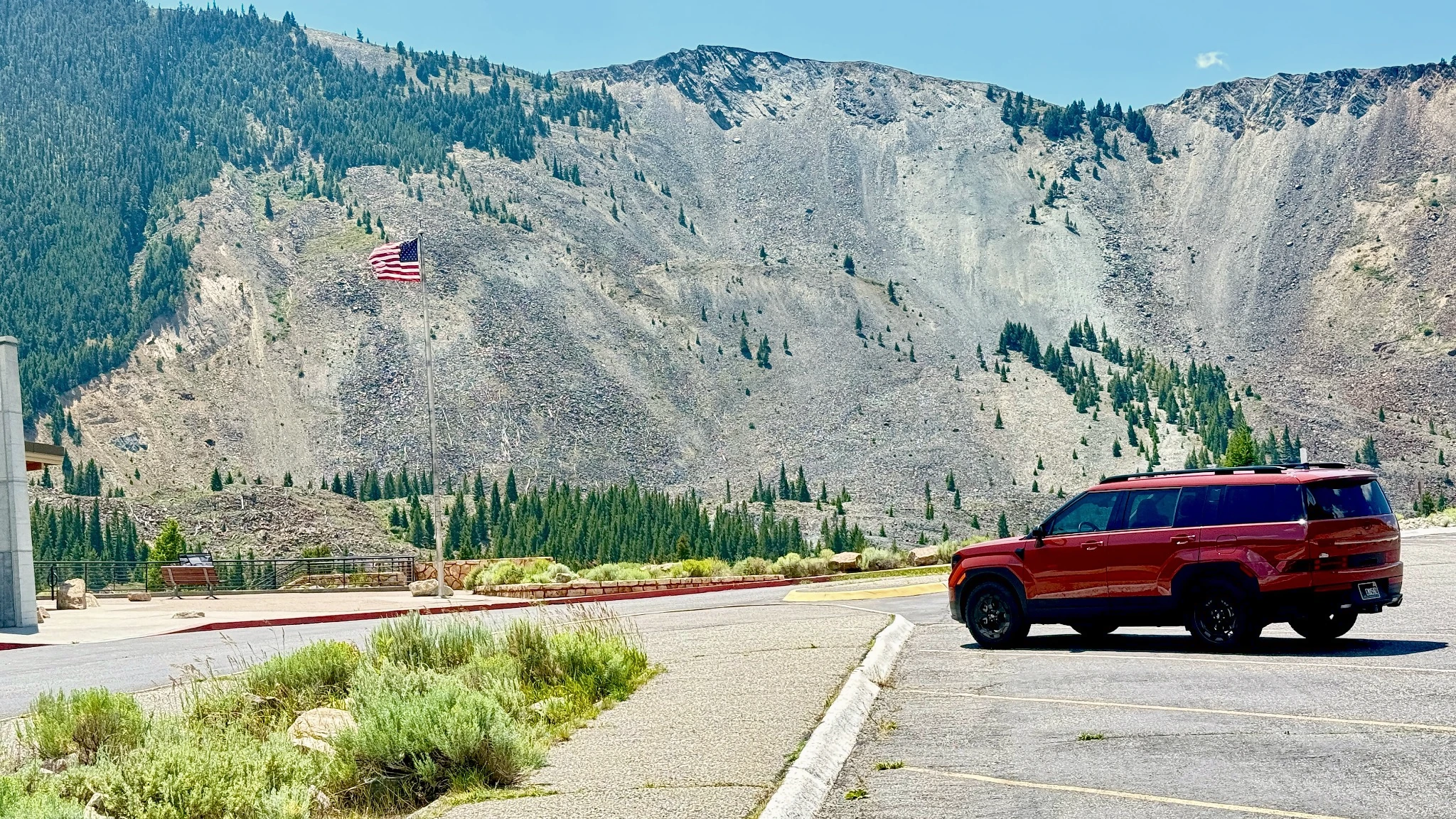
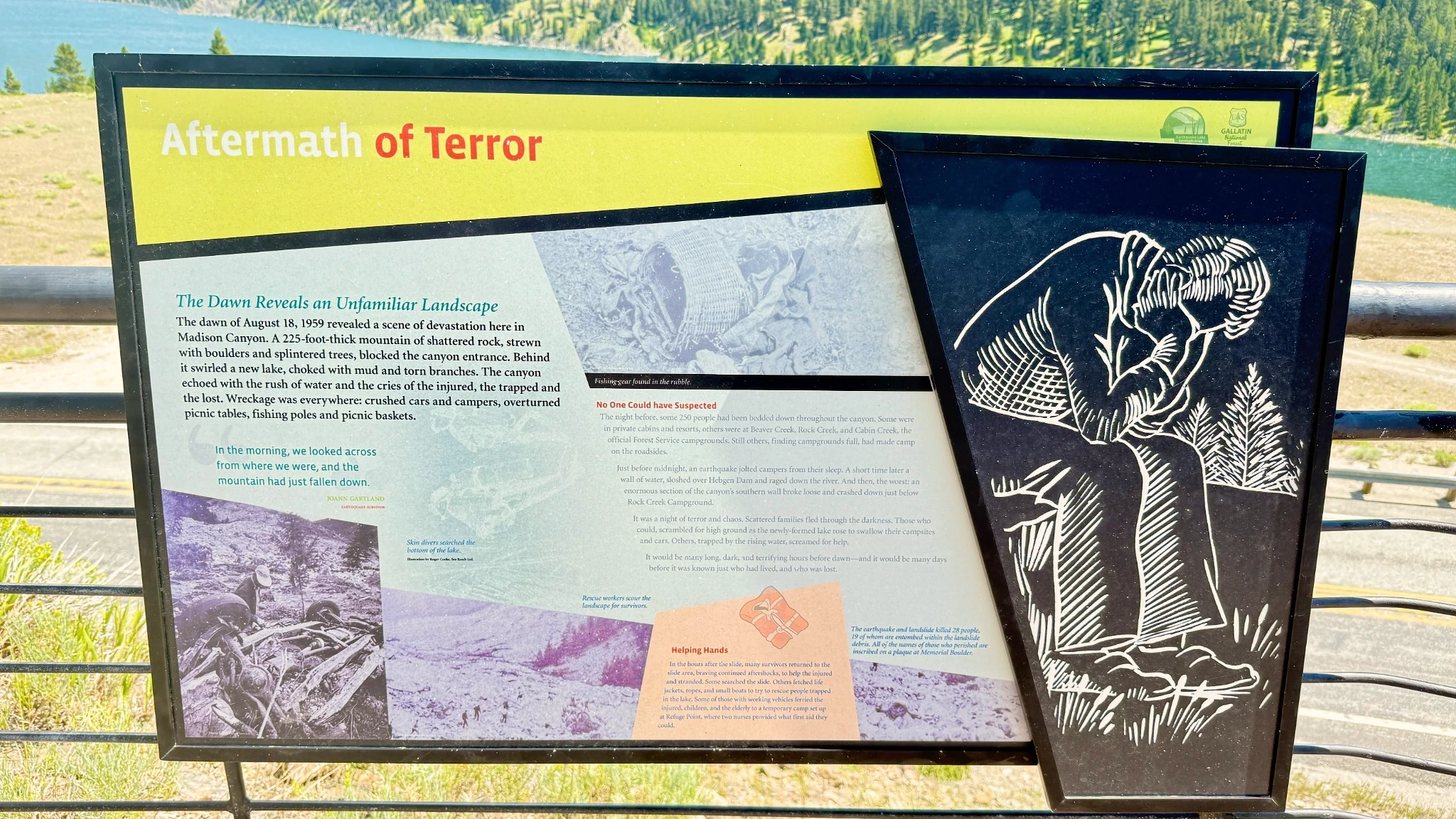
The event that created it happened late on the night of 17 August 1959. At 11.37 pm, a magnitude 7.3 earthquake struck near Hebgen Lake. Within seconds of the strongest shaking, a section of the canyon wall approximately 1,300 feet high collapsed into the Madison Canyon. Tens of millions of cubic yards of rock, earth and timber crossed the valley, ran hundreds of feet up the opposite wall and buried part of the Rock Creek campground. Twenty-six people died beneath the slide. Nineteen were never recovered. The earthquake’s overall death toll was twenty-eight.
The detail I find hardest to shake is the timing. Eyewitness accounts suggest the landslide began only seconds, perhaps half a minute, after the strongest shaking subsided. I sometimes try to imagine that from the campground. You are asleep. The ground begins moving violently enough to wake you. Perhaps things are falling inside the camper or tent. People are shouting. It is dark. You have not had time to understand that there has been an earthquake, much less decide what to do next.
Then another sound begins.
I imagine it as something beyond thunder. Rock, trees and part of a mountain accelerating down the slope must have produced a sound for which there was no useful comparison. I can picture being woken by the shaking more easily than I can picture understanding what came after it. In daylight, standing across the canyon, the direction of the slide is obvious. In a tent, in the dark, with the ground still moving, I wonder whether you would even have known which way to turn.
The accounts of what followed are scarcely easier to comprehend. The slide drove a wave of muddy water and a violent blast of displaced air through the camping area. Survivors gathered on higher ground at Refuge Point, trapped between the landslide downstream and damaged roads upstream. By half past six the following morning, the rising water had covered the cars and trailers in Rock Creek Campground. Helicopters eventually evacuated the most seriously injured, while a rough road bulldozed around the damaged sections allowed the remaining survivors to leave.
The visitor centre makes those events difficult to keep at a comfortable historical distance. There are photographs, seismograph records, recovered objects and personal accounts, along with a film that runs through the story. Outside is the actual mountainside. You can look at the evidence indoors, then turn towards the windows and see where it happened. I remember finding that more affecting than any single display. There was no need to imagine the setting. It occupied the view.
Blocking the river created another emergency. Water backed up behind the slide, and the new lake continued rising. Engineers feared it could overtop the debris and erode a breach, sending a destructive flood towards Ennis and other communities downstream. There was also concern that the rising lake could destabilise Hebgen Dam upstream. The shaking had stopped, but the situation was still developing.
The U.S. Army Corps of Engineers organised the construction of an emergency spillway. By September, 62 pieces of heavy equipment and 190 operators and mechanics were working around the clock. On 10 September, 23 days after the earthquake, water began flowing over the new channel. Even then, the work was not finished. Uncontrolled erosion cut into the steep lower spillway, and attempts to protect it with enormous boulders proved unsuccessful. Draglines were brought in to excavate a lower outlet while the water continued flowing. A stable configuration was finally achieved on 29 October.
I had once assumed that the weight of the slide had simply compressed everything into a barrier solid enough to hold the lake. Learning about the excavation changed that picture. The outlet was not merely a gap the Madison had found for itself. People had worked through the debris to give the water a controlled passage before it could cut an uncontrolled one.
The drowned trees are perhaps the easiest part of the story to read without entering the visitor centre at all. They were standing in the valley before the earthquake, and the rising lake inundated them where they grew. Their trunks still project from the water. The earthquake and slide happened in moments; the lake took shape over the weeks that followed. When I fish Quake now, I find myself looking at those trees almost as often as I look at the scar. From a boat, they give the scale of what happened a more familiar measure.
Below the lake, the water leaves any resemblance to stillwater fishing behind.
On one of my more recent visits, I had been working on my book while the clients went out with their guides. We were one person short on that trip, which left a spare seat beside one of the anglers. His guide had prepared a second lunch in case I decided to join them. I declined, partly because I wanted to write and partly because it seemed a shame not to let the client enjoy having the boat to himself. The guide gave me the lunch anyway. Later, with the weather looking good and a day still ahead of me, I decided to take it down to the Slide.
Getting to the water required a careful descent from the road through loose gravel and broken ground. From above, I could see that the river was fast. Once I reached it, the height of the waves and the size of the boulders became much more apparent. Some of the rocks were as large as small vans. Water struck them, climbed against their faces and dropped into narrow slots before being forced around the next obstruction. Timber complicated the picture further. Looking at that particular water as a rower, I had no desire to put my drift boat into it.
Fishing it on foot required its own caution. I had a wading staff, but that did not turn an awkward stretch of river into a safe one. Every step needed consideration, as did what might happen after a slip. There were places where the current would carry a person straight into the next obstruction, with very little opportunity to recover. Much of the fishing involved working around or over rocks rather than walking through the river, and even that demanded attention. The next useful foothold mattered at least as much as the next useful cast.
At first the water appeared almost too violent to hold fish. After a while, smaller pieces began separating themselves from the general confusion. There was a cushion of softer water against the upstream face of a boulder, a narrow slick behind another and a dark slot running along a rock wall. Some pockets were scarcely larger than a dining table. Others were no more than a turn in the current, briefly slowing before being drawn back into the main flow. Those were the places I began fishing.
One fish remains particularly clear in my mind. I was standing on a boulder, looking almost directly down into a patch of shaded water beneath another. The main current swept past hard, but a small reverse flow curled back under the rock ahead of me. The surface was so broken and distorted that I could get close without seeing directly through to the bottom. There was barely any casting involved. I simply lowered the dry fly into the eddy and kept the line in the air away from the surrounding current.
For perhaps thirty seconds I held it there, making small adjustments as the fly drifted and dapped beneath the boulder. Then a trout took it. After all the effort of getting into position, the actual fishing had involved little more than dropping a fly directly below me and keeping it bobbling in the right water.
I caught a couple of very good fish in that section and lost others that I couldn’t stop. Once a fish reached the heavier current, the balance changed immediately. There was no open gravel bank to follow it along and no way to move quickly between the boulders. Some fish broke me off. I remember being surprised by how few small trout I encountered. The water looked improbable from the road, yet it held fish substantial enough to make the struggle to reach it seem understandable.
Working upstream, I kept looking between the boulders around me and the exposed mountainside above. At the visitor centre, the scale had been measured in photographs and figures. Down here, it was measured in the effort required to get around one rock and then another. The river was loud enough that it was difficult to imagine hearing anything else, and occasionally my thoughts returned to what the canyon must have sounded like that night.
Farther downstream, around Three Dollar Bridge, you find another version of the Madison. It is still quick, still broken and still capable of making wading hard work, but the fishing becomes a matter of examining smaller differences within a much broader sweep of water. From the road, several anglers spread across a section can make it look thoroughly occupied. On foot, I have found that a surprisingly small patch can take a long time to fish properly. One boulder conceals several possible presentations. A shallow seam leads into a slot that was not visible from the bank. Water that appeared uniform from above begins dividing into separate pieces.
There is no need to charge along covering every metre. You might spend a considerable time in an area that would barely register during a drift. The work is in getting a fly through one pocket without having the faster water beside it pull the line away. Then the angle changes, or you move a few steps, and the same section offers something else. It is absorbing fishing, although the concentration can leave you surprisingly tired by the end of the day.
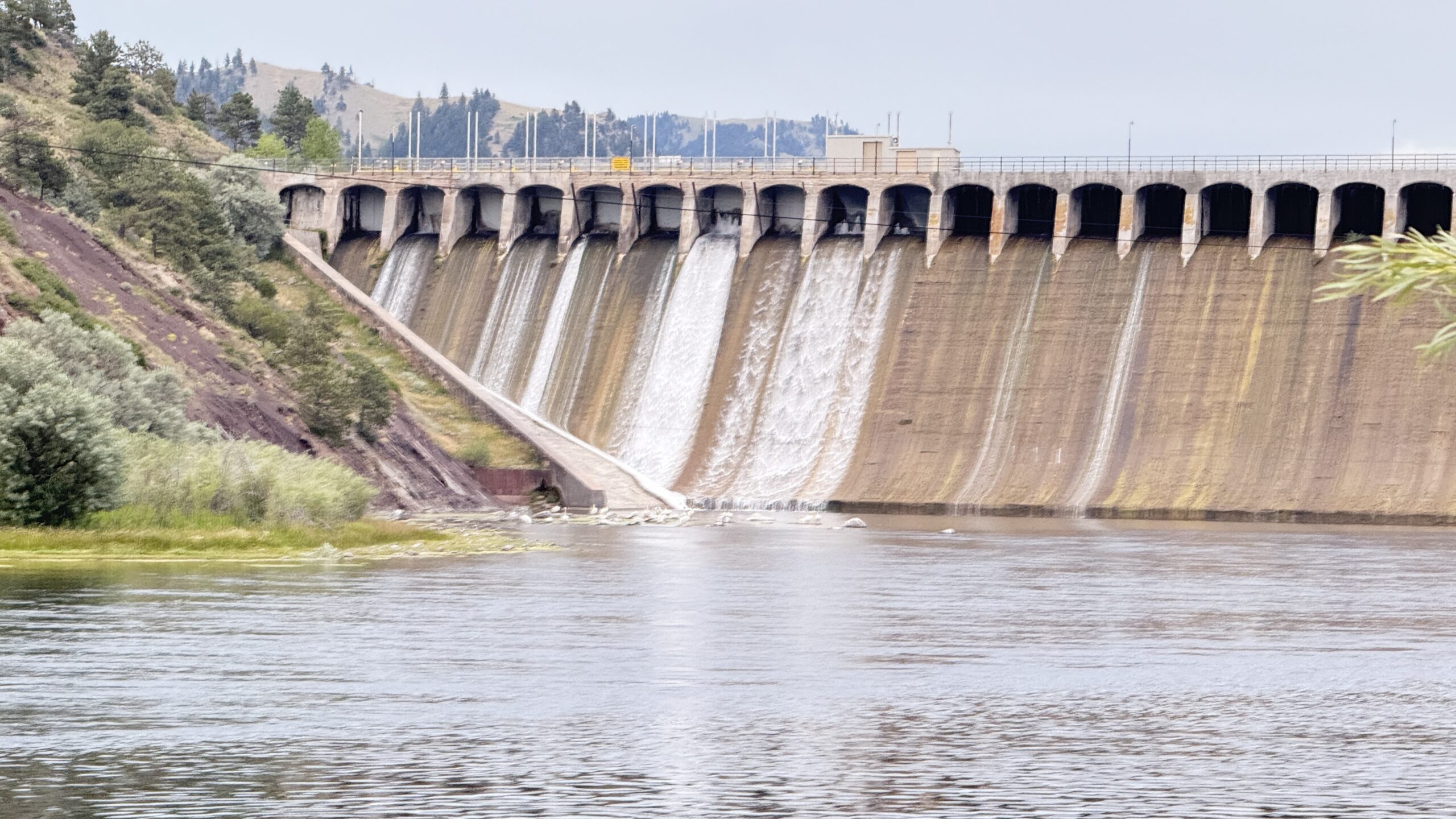
Nor does the river keep that character all the way downstream. Ennis Lake interrupts it again, and below the dam the Madison enters Bear Trap Canyon, where the enclosed canyon eventually gives way to a broader, more open river. My fishing there has generally belonged to the earlier part of the season. Once the summer heat takes hold, I’m usually looking elsewhere. Later, when the inner tubes and rafts begin filling the lower river, it can be difficult to connect that floating summer gathering with the quiet lake fishing or the rough water below Quake.
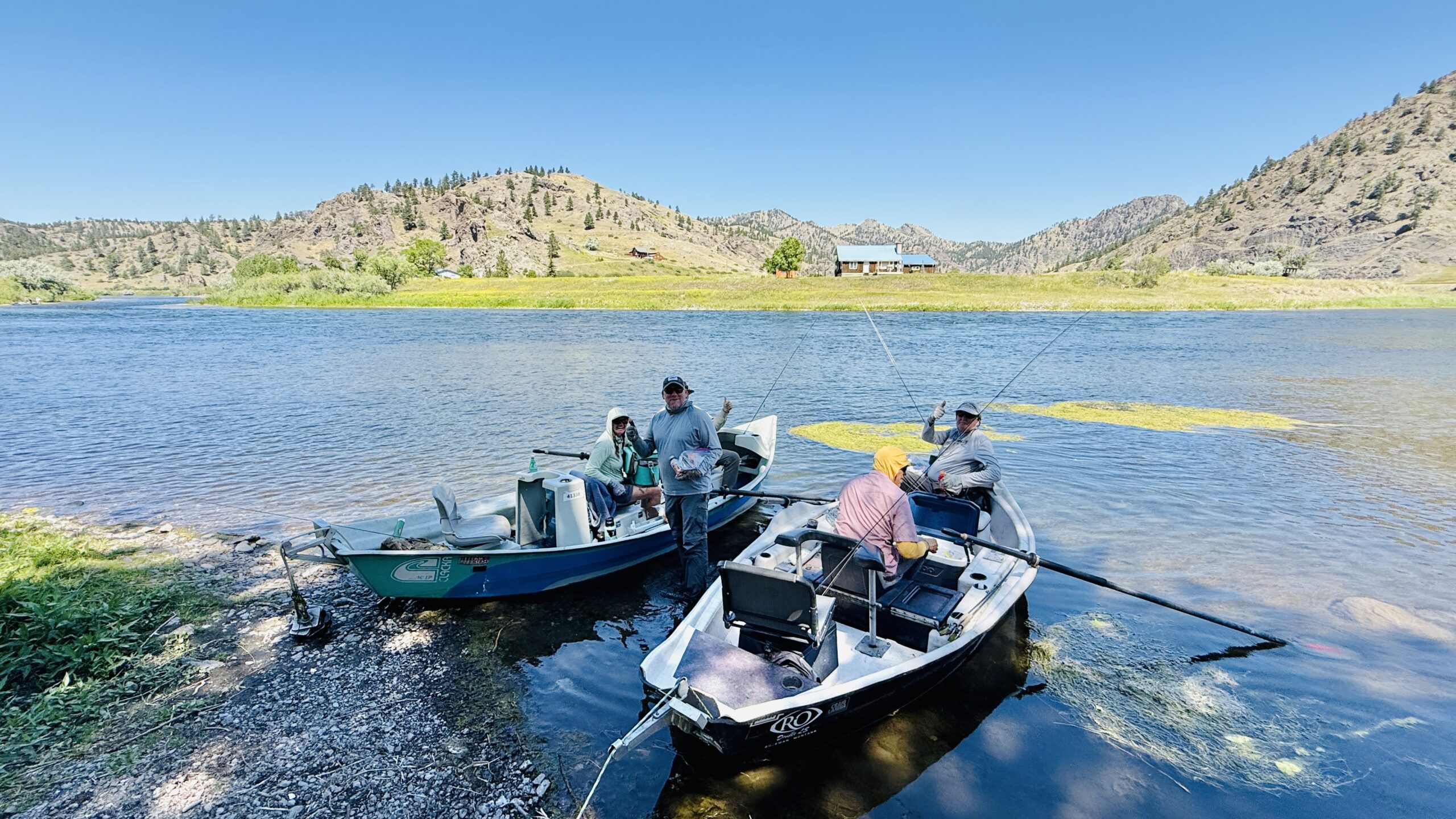
Moving between these places is one reason the local guides matter. I have fished the Madison with people from several operations over the years, including Big Sky Anglers, TroutHunter and Anderson and Platt. The guides I have particularly enjoyed are the ones who remain good company even when a day proves to be challenging. Some of the Dillon crew have a dry, self directed humour that feels familiar to an Australian. There is plenty of joking, but beneath it they are paying attention. A morning planned for the lake might finish on a river, and not necessarily the river I had expected.
One day, after fishing the lake from a drift boat, I assumed we would launch on the Madison for the afternoon. Instead, the guide decided we would fish the Gallatin. Rather than tow the boat all the way there, he drove back to a junction, pulled over and unhitched the trailer. Then he left the entire outfit beside the main road and we drove away.
I spent considerably more time thinking about that decision than he did. To me, it looked like an expensive boat being left unattended where anyone could attach it to a vehicle and disappear. He did not seem remotely concerned. When pressed on it, his explanation was that people knew the boats and knew who owned them. The wrong boat behind the wrong pickup would attract attention. I understood what he meant, but it did not entirely settle the part of my mind that had watched him disconnect the trailer and walk away.
It is one of those small incidents that has remained with me despite having almost nothing to do with the fish we caught. I cannot now remember every detail of the afternoon on the Gallatin. I can still picture the boat sitting beside the road.
The towns around this part of the trip have similarly distinct characters. Ennis remains the place I most readily recognise as a working Montana town. West Yellowstone is useful and sometimes enjoyable, but I rarely feel any desire to stay in the middle of it. After a day on the water, the crowded streets, souvenir shops and constant traffic can be a difficult adjustment. There are good meals to be found, and it is convenient for accessing the park, but I prefer having somewhere quieter to return to.
Island Park suits me differently. From the main road it can seem scattered and almost without a centre, yet turn into the forest and there are cabins and houses everywhere. On summer evenings, ATVs appear in numbers that initially surprised me. They pass along the roadside tracks, stand on trailers outside accommodation and gather near the bars. It is not silent country during daylight hours. Nevertheless, once dinner is finished and people retreat to their places among the trees, the evenings we spend there are generally quiet.
At TroutHunter in Last Chance, we have often eaten overlooking the Henry’s Fork. After a day on the Madison or Hebgen, it is mildly absurd to sit down for dinner beside yet another river capable of occupying an entire trip. The lodge and shop bring anglers together from all over the world, and the conversations around the tables tend to reflect it. I have heard enough discussion of rivers during dinner there to fill another day before anyone has ordered dessert.
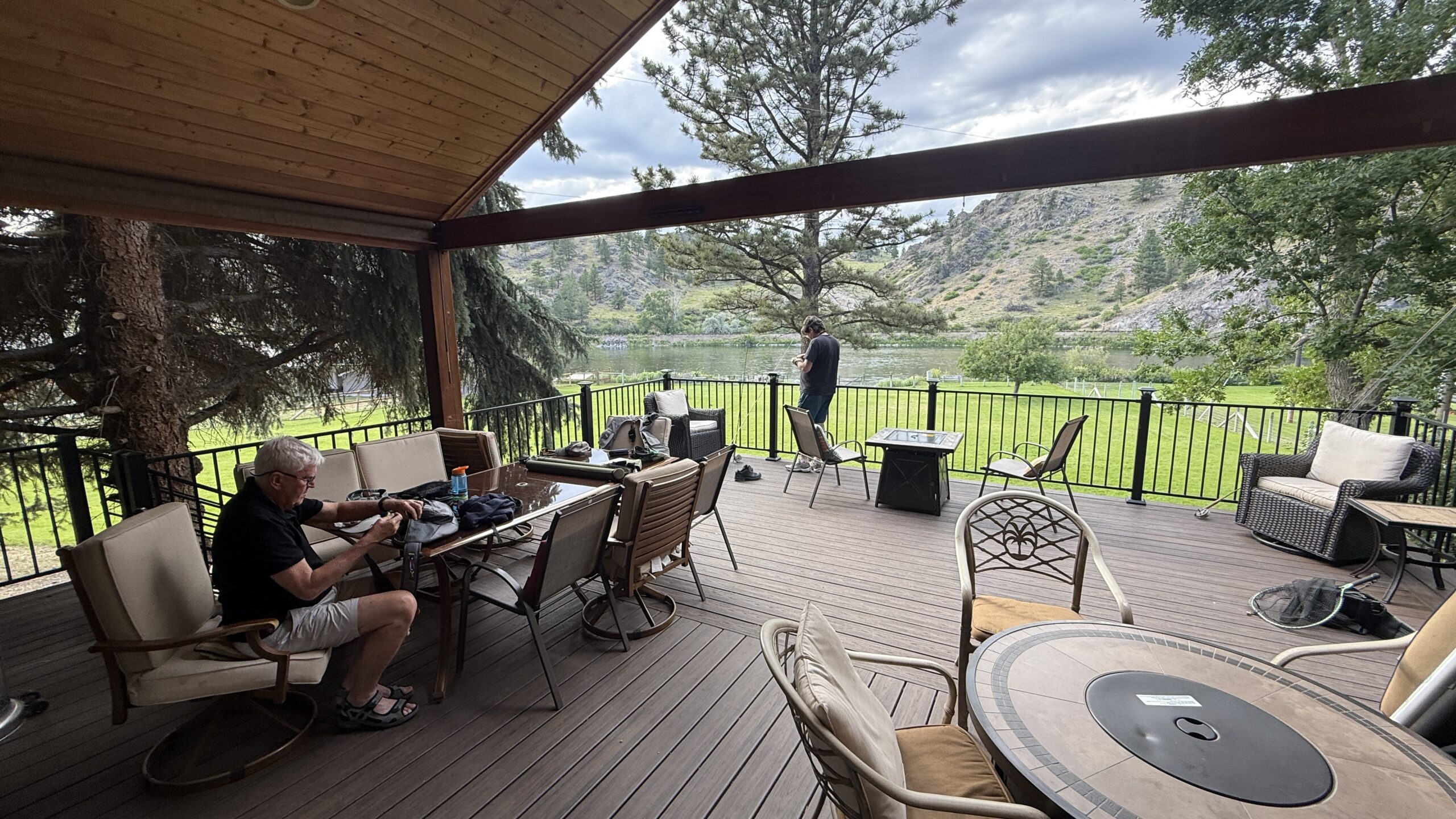
More often, we go back to the house. We usually stay outside the busiest parts of town, around Henry’s Lake or in deep in the timber, with enough room for people to spread out. Someone puts the barbecue on while the others shower. Ribeyes, salad, baked potatoes and a bottle of wine make a fairly reliable dinner after a day outdoors. Photographs are passed around. Calls are made home. Someone may have a book open while another is sorting gear for the morning. Occasionally deer or a moose appear outside and interrupt whatever everyone is doing.
These evenings do not need organising in the way the fishing days do. By this stage, the group has generally worked out how to share the space. Some want to talk. Others are happy sitting quietly for a while. The conversation may stay with the day’s fishing, but it is just as likely to move somewhere else entirely. After enough days together, nobody feels obliged to keep discussing flies simply because it is a fishing trip.
This is usually the final part of our standard journey. There have been three days on the Missouri, a break while we move, three days around Dillon, another day between regions and then these last days near Yellowstone. That spacing matters. People are not simply being marched through two weeks of consecutive fishing days until they can no longer lift a rod. There has been time to travel, look around, eat somewhere different and arrive at the next river with some interest left.
By the final evening, most are content rather than desperate. They have caught fish, sometimes a great many, and have spent days working through different techniques with guides who know their water. They have fished from boats and on foot, watched insects arrive, missed fish they should have caught and landed others they did not expect. An angler who was uncertain on the first morning in Craig may now be making adjustments without waiting to be told. You notice it in the little things, including how much less time they spend looking at the guide for reassurance.
The next morning I will drive them back to Bozeman. Some are flying home. Others are meeting their wives to continue travelling, and a few will remain longer in the West. There are bags to organise and flight times to check, but the final dinner rarely feels hurried. People talk about the places they liked and the fishing they would return for. There are thanks, which I always appreciate. Much of hosting happens before anyone reaches the river, and it is good to know when the work has allowed people to settle in and enjoy themselves.
When I think back over this leg of the trip, though, I do not see one final scene that neatly gathers it all together. I see the lake on a quiet morning, with so many rings appearing that I briefly lose track of the fish we are following. I see the shaded pocket beneath that enormous boulder. I see the empty trailer hitch as a guide leaves his boat beside the road, apparently untroubled by a decision I am still considering a long time later.
The Madison I first imagined from photographs was not wrong. It was simply incomplete. I knew about the riffle water, the salmonflies and the boats. I had not pictured how different the same day could become after moving only a short distance, or how much of the river’s present shape could be traced to a night within living memory. Some of what I now recognise came from guides. Some came from fishing badly enough to have to reconsider what I was doing. Some required putting the rod down and walking into the visitor centre.
Yet the stretch that most often returns to me is the long water above Ennis. I can still feel the movement of the boat there and the need to keep adjusting the line as the fly travels past one boulder towards the next. There is always another small piece of softer water to examine. Before I have quite finished with it, the boat has carried me towards another bank, another seam, another place that deserves a cast.
The valley opens around us, with those level terraces stepping away towards the mountains. Ahead, the river bends out of sight. On most rivers I would expect to find a pool somewhere beyond it, a place where the current gathers and slows enough to give everyone a moment. Here, the bend reveals another long stretch of broken water, moving at much the same pace as the one we have just left. The guide adjusts the boat. I lift the line and cast again.
On this part of the Madison, you eventually stop waiting for the pool.
The river simply keeps going.
Anthony Boliancu
Drift Boat Guide
More from the Madison