Tag: Fly Fishing Skills

Most anglers spend remarkably little time simply watching trout.

Not casting to them.
Not moving toward them.
Not trying to catch them.

Just watching.

Yet some of the most valuable lessons rivers offer emerge during those quieter moments when you slow down enough to properly observe how large fish behave in current.

The trout featured in this short unedited footage had been holding in the same section of the Goulburn for some time. Big fish in tailwaters often become deeply connected to particular lies, especially those offering the ideal balance between security, oxygen, current speed and food delivery.

To somebody unfamiliar with rivers, the fish appears almost motionless.

In reality, it is constantly making tiny adjustments.

A slight tilt of the body.
A subtle movement sideways through the seam.
A gentle rise in the water column to intercept a drifting insect before sliding back into exactly the same current line again.

Large trout rarely waste energy unnecessarily.

That is one of the first things years on rivers begin teaching you.

Everything about a mature fish revolves around efficiency.

The best lies in a river are not random. They are positions where a trout can maximise reward while minimising effort and exposure. A fish holding properly should be able to access oxygen-rich current, drifting food and nearby protection without constantly fighting the river.

The larger the trout becomes, the more carefully it tends to position itself.

That is especially true in rivers like the Goulburn where fluctuating water levels constantly reshape current seams and feeding lanes. Unlike stable spring creeks, tailwaters are dynamic systems. Water rises. Water drops. Gravel shifts. Current pushes differently through bends from one week to the next.

And every significant change in flow alters the hierarchy of the river.

Prime lies emerge.
Others disappear.

Fish that once held comfortably beneath a bank suddenly become exposed. New seams form. Current pressure changes. Feeding lanes improve or collapse almost overnight.

Then the quiet reshuffling begins.

Smaller trout are displaced first. Larger, more experienced fish generally adapt quickest, slipping back into the newly formed prime water with remarkable speed. Years spent surviving in moving water seem to sharpen their instinct for positioning. They understand current in ways difficult to fully appreciate until you spend enough time watching them closely.

This is one of the reasons experienced anglers become slightly obsessed with observation.

The more time you spend watching trout rather than simply fishing for them, the more patterns begin revealing themselves. You notice how fish behave differently depending on light levels, water height, insect activity and pressure. You begin recognising the subtle distinction between fish that are actively feeding and fish merely holding in comfort water.

You also realise how much of trout fishing revolves around understanding current itself.

Current is everything.

Food delivery.
Security.
Oxygen.
Energy expenditure.

The river determines all of it.

A trout holding comfortably behind a submerged rock may only need to move several inches to intercept food drifting downstream. Another fish positioned poorly in heavy current may burn enormous energy simply trying to maintain its place in the river. Over time, these differences matter. Large trout do not survive many seasons by making poor energy decisions repeatedly.

That economy of movement becomes fascinating once you start noticing it.

Watch a truly dominant fish long enough and it begins to feel less like randomness and more like quiet calculation. Not intelligence in the human sense, of course, but instinct refined through survival. Every movement is measured against current speed and opportunity.

Sometimes the fish barely moves at all for several minutes.
Then suddenly:
tilt,
rise,
eat,
return.

The simplicity of it is strangely compelling.

Tailwaters like the Goulburn make this type of observation particularly interesting because the fish are often visible for extended periods. Long slicks, gentle seams and controlled flows allow anglers opportunities to study trout behaviour in remarkable detail if they resist the urge to immediately cast.

That patience is difficult for many anglers initially.

Modern fishing culture often encourages constant movement. Cast here. Change flies. Cover more water. Chase outcomes. Yet some of the most important understanding develops while standing quietly on a bank doing almost nothing at all.

Just watching.

Over decades guiding on the Goulburn, I’ve probably learnt as much observing trout as I have catching them. Certain fish teach you things. Certain lies reveal patterns that repeat throughout rivers everywhere. Eventually you stop merely seeing “a fish” and begin recognising structure, current relationships and feeding opportunities almost instinctively.

The river starts making more sense.

You begin understanding why one seam consistently produces better fish than another seemingly identical run nearby. You notice how changing light alters trout confidence. You recognise how subtle increases in flow reposition fish through entire stretches of river.

These are not dramatic revelations.

Most occur gradually over years.

And perhaps that is one of the reasons fly fishing remains so endlessly interesting. Rivers refuse to fully surrender their patterns all at once. They reveal themselves slowly to those willing to keep paying attention.

The trout in this footage will likely shift position many times over coming seasons as the river changes around it. Floods may reshape the run entirely. Lower flows may expose the lie completely. Another larger fish may eventually displace it.

Nothing in rivers remains static for very long.

That constant change is part of their appeal.

Still, for this brief moment captured on camera, the fish sits exactly where experience has taught it to be: balanced perfectly between effort, opportunity and survival.

A good lie in a river is a valuable thing.

The trout understand that well.


Most guided fly fishing trips go very smoothly.

Clients arrive excited, the coffee is still hot, the river looks good and by mid-morning everybody has settled into the natural rhythm that good fishing days tend to find eventually.

But after thirty years in drift boats and on rivers across Australia, New Zealand and Montana, guides do begin noticing certain recurring patterns.

None of these things are particularly serious. In fact, many are quietly amusing once you’ve spent enough years around anglers. Still, there are a few small observations that can make a guided trip noticeably more enjoyable for both client and guide alike.

So in the interests of preserving morale, fly boxes and mutual sanity, here are a few gentle observations from the front seat of the drift boat.


Arriving Late

Most guides are awake long before clients arrive.

Boats have already been launched or prepared. Lunches packed. Gear organised. Weather checked repeatedly. Coffee consumed in industrial quantities.

Turning up thirty minutes late without warning usually means missing the best part of the morning hatch while beginning the day slightly flustered.

If you are running behind, simply send a message. Your guide will probably forgive you instantly, particularly if it gives them time for another coffee.


Trust the Guide

One successful afternoon fishing hoppers in 2009 does not necessarily override twenty years of local river experience.

Guides spend enormous amounts of time observing current conditions. Water levels, insect activity, temperature changes, fish positioning and weather all influence daily decisions. Sometimes clients understandably arrive with confidence in a favourite fly or technique, but part of the value in hiring a guide lies in trusting somebody who has likely spent the previous hundred days on that same river.

Occasionally the guide may still be wrong of course.

But statistically, they’re probably your best bet.


“I Know”

This is one guides hear often.

“Yep, I know.”

Usually moments before the exact same mistake happens again.

Good guides are not trying to lecture people. Most genuinely want clients to improve and enjoy themselves more. Small adjustments in casting angle, line control or presentation often make enormous differences.

If a guide repeats something several times during the day, there is generally a reason.


The Quiet Economy of Flies

Every guide eventually develops a slightly haunted look after watching clients donate half a fly box to submerged timber.

Good flies take time to source, organise or tie. Some patterns become difficult to replace entirely. Others represent years of small refinements and experimentation.

Losing flies occasionally is simply part of fishing. Repeatedly throwing the same rig directly into obvious overhanging branches begins drifting into another category altogether.

At a certain point, even the trout start feeling embarrassed.


Other Guides

Talking constantly about another guide while floating downriver with your current one is a little like discussing your ex-partner on a first date.

Most guides know each other.
Some are close friends.
Some are fierce rivals.
Some actively avoid each other at boat ramps.

You may not necessarily know which category your stories fall into.

A little awareness goes a long way.


Politics

There are few places left in modern life that still feel genuinely quiet.

Rivers are one of them.

Most people come fishing to escape noise, pressure and argument for a while. The fish do not care about elections, tax reform or social media outrage, and truthfully, the river is usually improved by following their example.

There is nothing wrong with thoughtful discussion outdoors. Some of the best conversations I’ve ever had happened in drift boats. But endless aggressive political debate tends to drain the atmosphere remarkably quickly.

Particularly before lunch.


GPS Pins and “Secret Spots”

Every experienced guide eventually develops a sixth sense for clients quietly reaching into pockets near productive water.

Guides understand the temptation. Beautiful water invites curiosity. But good river sections are often the product of decades spent exploring, learning flows, understanding access and gradually piecing together patterns over many years.

Dropping GPS pins on somebody else’s hard-earned water without permission is generally considered poor form in fishing culture almost everywhere on earth.

Besides, most truly good rivers change constantly anyway. Learning why fish hold somewhere matters far more than simply marking a coordinate.


Phones

One loud ringtone cutting through a quiet river valley can undo twenty minutes of carefully rebuilt serenity.

Enough said.


Significant Others Who “Might Enjoy the Drift”

This one occasionally requires delicate handling.

A drift boat looks peaceful from the outside. And often it is. But eight hours exposed to weather, casting, tangles, sun, cold, repetitive drifting and long periods without shade can feel surprisingly long for somebody with absolutely no interest in fishing.

If your partner genuinely enjoys rivers and the outdoors, wonderful.

If they merely “might like coming along,” proceed carefully.


Criticism

Good guides correct people constantly.

Not because they enjoy criticising clients, but because small adjustments matter enormously in fly fishing. A slightly altered drift angle or timing change may completely transform results.

Most experienced anglers eventually realise something important:
the best guides are rarely the ones endlessly telling you how well you’re doing.

They are the ones quietly helping you improve.

Even when it bruises the ego slightly.


Weather

Guides control many things.

Weather is not one of them.

Guide not God is a common phrase and bumper sticker in Montana. Most fly Fishing guide peeves relate to a breakdown in client common sense.

Neither are floods, cold fronts, bushfires, hydro releases, thunderstorms or unexpected wind changes.

Despite this, guides across the world continue receiving apologetic looks from clients whenever conditions deteriorate, as though they personally arranged the low-pressure system several days earlier.

Sometimes difficult conditions produce the best fishing anyway.

And sometimes rivers simply humble everybody equally.

That too is part of the sport.


The Handshake

One final observation.

Most drift boat guides have hands resembling old cricket gloves by the end of the season. Years of rowing, anchors, ropes and cold water tend to do that.

There is no need to test your full grip strength upon introduction.

Your guide still needs those hands functional enough to untangle your leader later in the day.


The truth is, most clients are excellent.

They are thoughtful, enthusiastic and genuinely appreciative of the experience. Many become long-term friends. Some return year after year until certain stretches of river become part of a shared history between guide and angler.

And really, that is one of the more rewarding parts of this profession.

Because at its best, guided fly fishing has never simply been about catching trout.

It is about shared days outdoors.
Conversation.
Weather.
Learning.
Patience.
Stories retold over dinner afterwards.
And occasionally laughing at the small absurdities that naturally emerge whenever human beings spend long enough together in moving water.

The river usually sorts the rest out eventually.

Tight lines.

People often ask when the best time to fish the Goulburn is.

The truth is that there isn’t really a single answer.

The river changes enormously across the course of a season. Water levels rise and fall with irrigation demand. Insect hatches build and collapse. Trout reposition themselves constantly as current speeds, temperatures and food sources evolve from spring through to winter.

In many ways, the Goulburn fishes like several completely different rivers across a single season.

That is part of what keeps it endlessly interesting.

The Goulburn has occupied a large part of my working life since the mid-1990s. When I first began guiding here, drift boats were virtually unknown in Victoria. Most anglers approached the river on foot and much of the water we routinely fish today received relatively little attention. Over the decades I have watched floods reshape entire bends, seen drought reduce sections of river to a shadow of themselves, witnessed extraordinary insect hatches and endured years where fish populations struggled badly.

The river has changed repeatedly.

So have the anglers.

And perhaps so have I.

Yet despite all those changes, certain seasonal rhythms continue reappearing often enough that you begin recognising them almost instinctively. Not as rigid rules—rivers rarely obey those for long—but as recurring moods that shape the character of the river from opening day through until winter.

This is not intended as a technical manual.

More simply, it is an overview of how the river tends to evolve from opening day through to the close of the season, and some of the lessons it has taught me along the way.

SPRING

September – Low Water, Clear Flows and Careful Fishing

Opening week on the Goulburn often arrives with the river running low and exceptionally clear.

Unless Lake Eildon is near spilling, releases are usually reduced heavily throughout winter and early spring while water is captured for the irrigation season ahead. The result is a river sitting near minimum flow levels with beautiful clarity and highly wadable conditions.

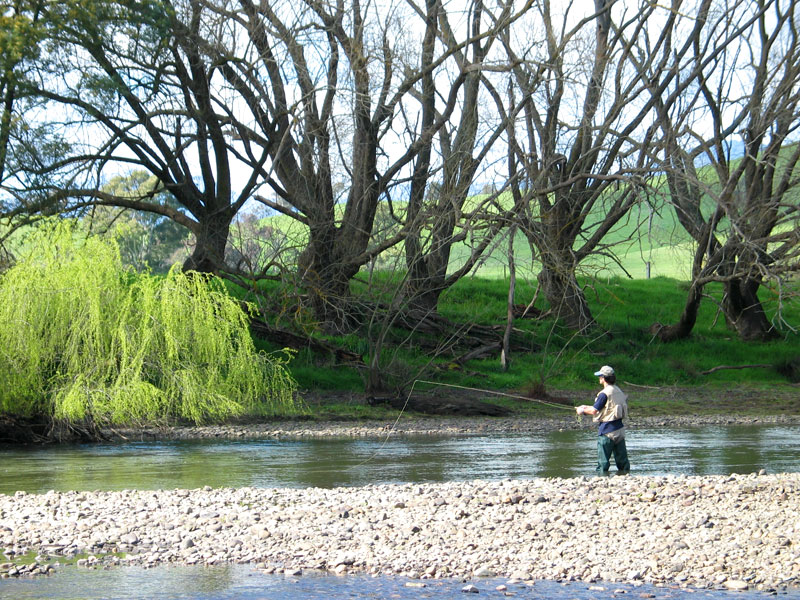
At the same time, many surrounding freestone rivers remain cold, high or discoloured from winter rain and snowmelt.Low water conditions in September

That contrast is one of the reasons the Goulburn becomes so important early in the season. While many rivers remain difficult to fish, the Goulburn is often stable, accessible and already producing hatches.

The trout, however, can be extremely cautious.


Months of low, clear water make fish nervous and highly aware of movement. Large browns frequently sit along inside bends, gravel edges and shallow feeding lanes where they are easily spooked by careless approaches.

September is not generally a month for charging around the river.

It rewards patience, long leaders, careful positioning, good light and accurate presentation.

One of the great mistakes many anglers make in September is assuming the fish are difficult because they are not feeding. Usually they are feeding quite actively. The problem is that they can see almost everything. Shadows, poor wading, drag, heavy footfalls and rushed casting all become magnified in low clear water.

The fishing early in the month remains largely subsurface, though evening rises build steadily week by week. Midges dominate initially, along with small mayflies and scattered caddis activity. Yet even during opening week, larger pale duns often appear unexpectedly during mild evenings.

That first proper spring rise after winter remains one of the great pleasures of the season.

October – The River Wakes Properly

By October, the Goulburn begins feeling fully alive again.

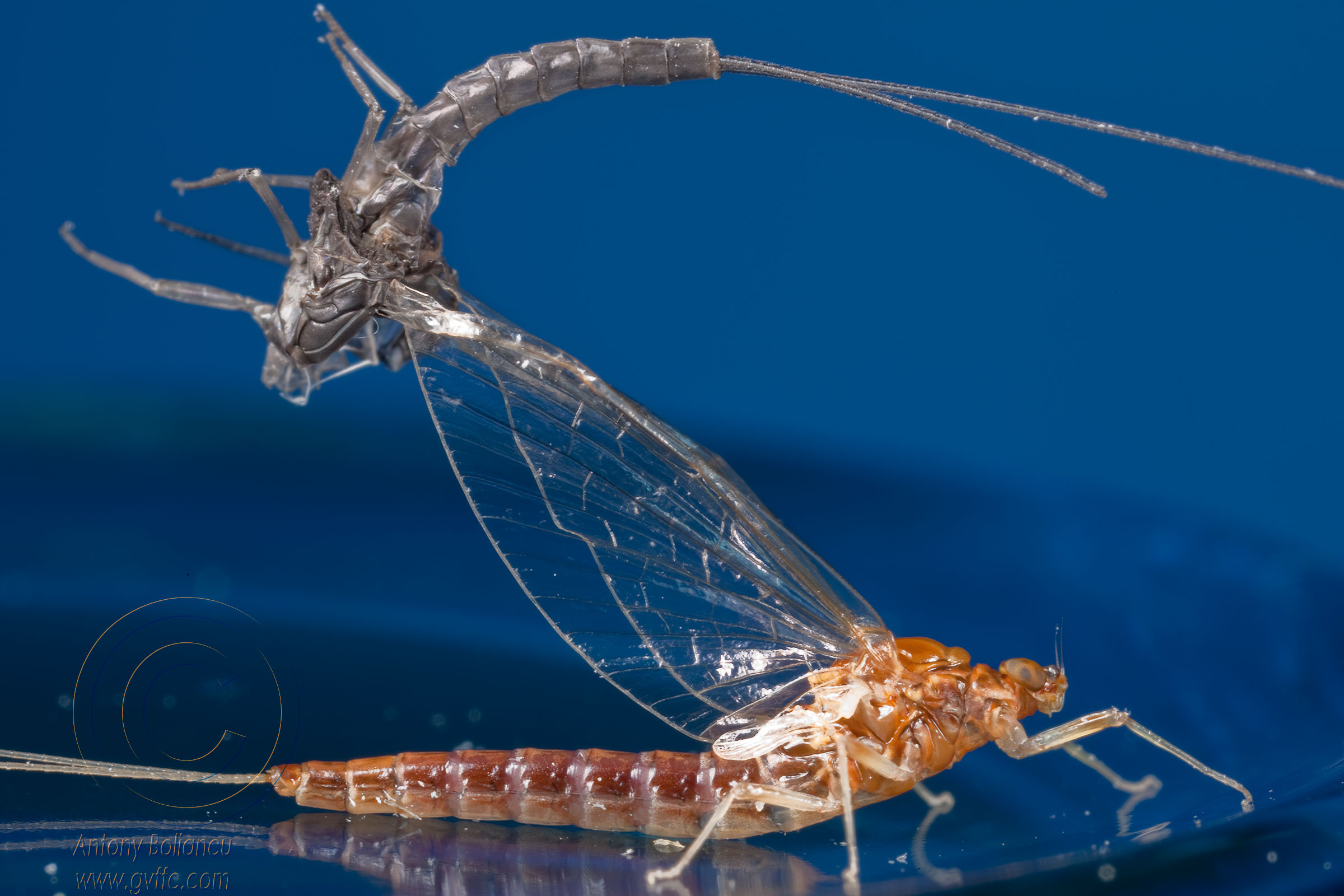
Water temperatures rise noticeably and insect life accelerates quickly. Depending on rainfall and irrigationbwo_02_L demand, flows may remain relatively low or begin climbing steadily through the month, but either way the river generally fishes exceptionally well.

This is when the first truly significant hatches begin occurring consistently.

Caddis appear in heavy numbers through the day. Mayflies build each evening. Caenids begin hatching in extraordinary densities on calm mornings.

Some years the river feels almost covered in insects.

And importantly, the trout know it.

October dry-fly fishing on the Goulburn can become remarkably technical. During heavy caenid activity especially, trout often feed rhythmically and selectively in flat slick water. Tiny flies, long leaders and drag-free presentation matter far more than heroic casting distance.

Many anglers overcomplicate imitation during these hatches.

Presentation usually matters more.

Getting the fly into the correct lane at the correct moment is everything.

There are mornings during peak caenid activity where the Goulburn rivals any dry-fly fishery I have seen anywhere in the world. That may sound like a bold statement, but after spending considerable time fishing New Zealand, Montana and other celebrated trout destinations, I remain convinced that the Goulburn at its best deserves far more recognition than it receives.

November – Crescendo

If October is excellent, November often becomes ridiculous.

By now almost everything is hatching.

Caenids at first light. Caddis throughout the day. Large evening mayflies. Spinners at dusk. Stoneflies. Flying ants. Termites on humid afternoons.

The river enters a period of abundance where trout seem permanently tuned toward the surface.

This is one of the great dry-fly months on the Goulburn.

The famous Kossie Dun also begins making regular appearances around this time. These large mayflies emerge right on last light and can trigger explosive short-lived feeding windows from some of the river’s better fish.

There are evenings where trout ignore almost everything for hours, then suddenly begin feeding aggressively during the final twenty minutes of fading light.

You learn to stay late in November.

Many memorable fish are hooked after most sensible people have already started walking back toward the car.

Termite falls can also produce astonishing fishing during humid weather. Fish become completely locked onto them and rise with extraordinary confidence. Having a good imitation during one of these falls can transform an ordinary afternoon into something unforgettable.

November feels like abundance.

The river is rich. The trout are active. The insect life is extraordinary.

Everything seems to be happening at once.

SUMMER

December – Terrestrials and Edge Water

By December, the river usually rises significantly as irrigation demand increases downstream.

Higher flows change the entire shape of the fishing.

Fish move tighter to structure and softer edge water while the main currents become faster and less efficient feeding zones. Trout begin sitting astonishingly close to the banks beneath grass, willow roots and submerged structure where slower current delivers food consistently.

This is where drift boats become incredibly effective.

The rise of irrigation flows during summer was one of the reasons drift boats proved so valuable when we first introduced them to the river. Water that is difficult or impossible to fish effectively on foot suddenly becomes accessible. Long banks lined with willows, undercut grass edges and flooded structure can be covered quietly and efficiently.

Many visitors are surprised by how little of the river’s productive summer water is actually located in the middle. The best lies are often only a metre or two from the bank.

Summer also marks the beginning of the great terrestrial period.

Cicadas appear. Hoppers increase. Beetles become important.

And then eventually the willow grubs begin falling.

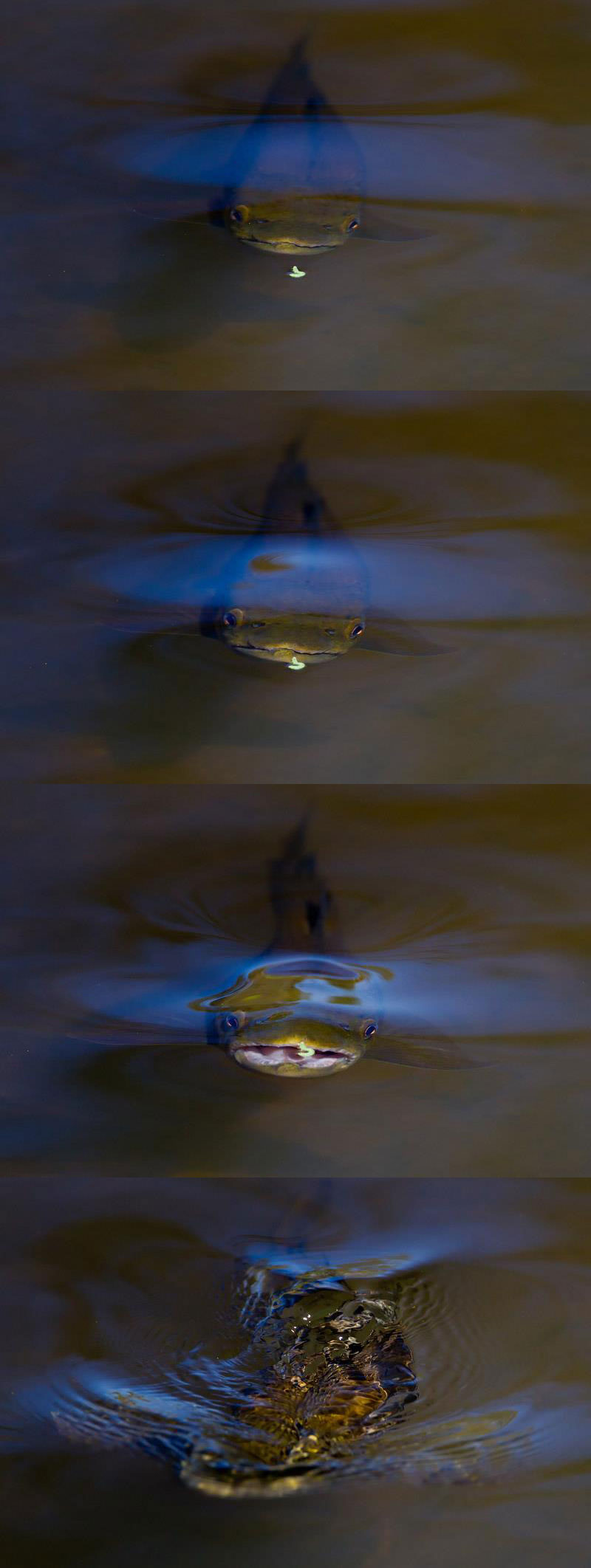
For many Goulburn anglers, willow grub fishing defines summer entirely.A sequence of a solid Goulburn brown eating willow grubs beneath the trees

Fish feed on them with astonishing commitment, often rising repeatedly beneath overhanging willows for hours at a time. Large trout simply patrol beneath the trees waiting for the next helpless grub to fall.

The river feels rich during December.

The river feels rich during December, and the trout are among its greatest beneficiaries.

January and February – The Tailwater’s Great Advantage

January and February reveal the Goulburn’s greatest strength.

While surrounding rivers often become warm, low and increasingly stressed by summer heat, the tailwater influence keeps the Goulburn comparatively cool and productive. This is what makes it such a special fishery.

Backwaters, flooded edges and softer side channels become critical.

These areas hold extraordinary numbers of trout throughout summer, many of them large fish feeding quietly away from the heavier main current.

This is visual fishing at its best.

You often see the trout before casting. Watch them feeding. Position the boat carefully. Then attempt to place the fly naturally into tight feeding lanes along the edges.

Some of the river’s biggest browns become surprisingly vulnerable during this period.

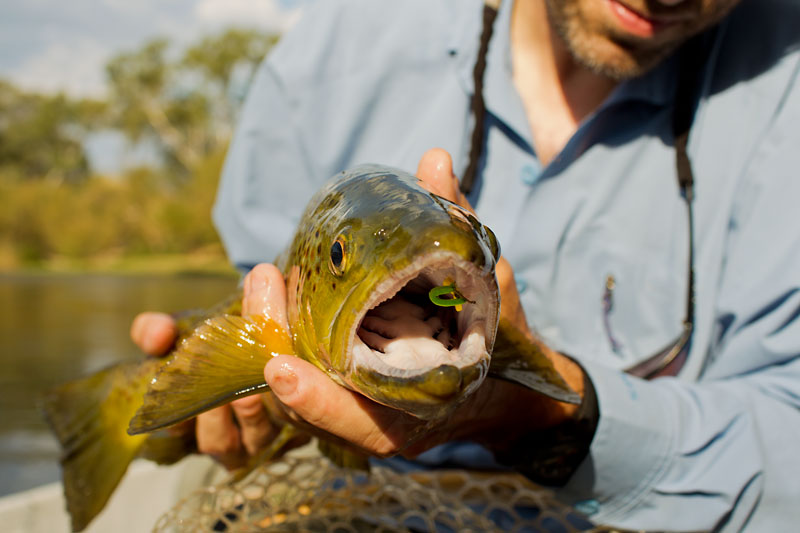
Provided you approach properly.Willow grubbers are voracious and you often catch the same fish immediately after dropping it. The second fly in this one was from a break-off the previous day.

The backwaters become fascinating places. Large trout cruise slowly through submerged grass and quiet lagoons feeding on everything from beetles and hoppers through to spiders, wasps and drowned insects washed from the banks.

Big attractor patterns fish extremely well now, though paradoxically downsizing can also become important when fish become suspicious in very clear water.

That contradiction is very Goulburn.

AUTUMN

March – TransitionMarch is a month of slow transition

March sits between seasons.

The heat still lingers. The terrestrial fishing remains productive. But the river slowly begins changing direction again.


Water levels often fall gradually and the first stronger aquatic hatches begin rebuilding after the heavy irrigation flows of high summer.

The trout remain fat and heavily conditioned from months of easy feeding.

Backwaters continue fishing well, though fish slowly redistribute back toward seams, runs and bubble lines as flows decrease and aquatic insects regain importance.

There are no strict rules in March.

And that uncertainty makes it wonderfully interesting.

April – Perhaps the River’s Finest Month

If forced to choose a favourite month on the Goulburn, April would be very difficult to overlook.

The river often settles into beautiful medium flows. The weather softens. The crowds reduce. The fish feed heavily ahead of winter.

And importantly, both terrestrial and aquatic fishing remain excellent simultaneously.

Few months offer such variety.

You can still catch trout confidently on hoppers, beetles and ants while also encountering increasingly technical mayfly and caddis fishing.

Autumn feels different emotionally as well.

The urgency of spring has passed. The abundance of summer begins fading. The river seems to slow its breathing slightly. Mornings arrive cooler. Shadows lengthen earlier. The first leaves begin drifting onto the water.

Perhaps because I have spent so many years guiding through these months, autumn increasingly feels like the season when the river becomes easiest to appreciate.

Not necessarily easiest to fish.

But easiest to understand.

May – Quiet Water and Precision

May is perhaps the most beautiful month on the Goulburn.

Cool mornings. Still air. Low clear water. Trout rising steadily through the middle of the day.

The river slows down now.

Midges and blue-winged olives dominate much of the fishing. Presentation becomes increasingly delicate and fish become highly aware of movement again after the heavier summer flows disappear.

Stealth matters enormously.

You begin stalking fish properly once more.

Careful wading. Long leaders. Tiny flies. Soft approaches.

The rewards, however, are immense.

May trout are often in magnificent condition and the atmosphere along the river during stable autumn weather can feel almost perfect.

And occasionally, almost absurdly, Kossie duns still appear right into late May and even June.

The river always retains the ability to surprise you.

WINTER

June to August – The River Rests

The trout season closes during winter so fish can spawn undisturbed.

For guides and anglers, winter becomes the season of tying flies, servicing gear, writing, planning and thinking ahead toward spring once again.

Or occasionally heading north to Montana and Idaho where another trout season is just beginning.

The cycle never really stops.

Only shifts hemispheres.

Final Thoughts

People often ask whether I ever become bored guiding the same river for so many years.

The honest answer is no.

Partly because the river never truly repeats itself.

But mostly because familiarity and understanding are not the same thing.

The longer I spend on the Goulburn, the more I realise how much remains to be learned. Every flood changes something. Every drought reveals something. Every season offers new puzzles for those paying attention.

That, perhaps, is the real gift of a tailwater.

Not consistency.

Curiosity.

The Goulburn is not perfect. No river is. It has endured floods, droughts, changing water management, cormorant pressure and countless other challenges over the years. Yet it remains one of the most fascinating trout fisheries in Australia.

Thirty years later, the river is still teaching.

And I suspect it always will.

Ant