Blog

How to Avoid Tormenting Your Fly Fishing Guide

As we dive into these friendly nuggets of wisdom, remember, a fishing guide doesn’t just guide you to fish – they also guide you away from turning the fishing trip into a comedy of errors. So, grab your fly rod, waders, a sense of humour, and let’s set sail!

Fly Fishing Guide Peeves – A basic list

⏱️ Hooked on Punctuality – Don’t let tardiness get in the way of a great day on the water. If you’re late, you could miss the hatch and a chance at that trophy fish. So set your alarm, and be punctual! Or if you’re going to be late, let your guide know, so he can get a coffee.

🤝 Handle with Care: It’s a Handshake, Not a Strength Test  – When you first greet your guide, bear in mind they’ve been rowing heavy-duty anglers around for years. Their hands are as tough as nutcrackers. And remember, your guide needs their hands for rowing, casting, and undoing tangles all day!

📏 Expectation Management: Keep it Reel – Now I’m all for reaching for the stars, but don’t try shooting for the moon with a water pistol. If you haven’t even seen a trout up close, let’s not aim for a Guinness world record just yet. Dream big, but stay in the same post code as reality.

🌦️ Weather or Not: It’s Not Up to Your Guide – Remember, your guide doesn’t control the weather. So if the day turns out gloomy, don’t take it out on them. We’re here to fish, rain or shine!

Guide not God is a common phrase and bumper sticker in Montana. Most fly Fishing guide peeves relate to a breakdown in client common sense.

👨‍✈️Backseat Angler: Trust the Guide – Your one-time success with hoppers doesn’t make you the expert. Don’t counter the guide’s advice with past experiences. They know the river’s current conditions better than anyone. After all, they’re on the water every day. Trust their judgement and let them lead the way.

🍌 Food Faux Pas: Be Wise with Your Eats – Don’t let superstition ruin your day; avoid bringing bananas on board. It’s a widely believed fishing bad luck charm. And that Banana Boat sunscreen? Leave that at home too. Let’s not tempt fate.

🎥 Filming Faux Pas: Request Permission – Your guide is a fishing professional, not a Kardashian. Want to capture parts of the trip on film? Politely ask for their permission. No one enjoys finding videos of themselves they didn’t know existed on the internet.

🤔 Knowledge Acknowledgement: Listen to Learn – It’s easy to nod and say “I know” when your guide offers advice, but doing so might cause you to miss out on valuable expertise. You’re there to learn from their experience, not just to nod along pretending you know as much as the guide on the one subject they are experts in.

🎗️ Knot Knowledge: Blame Not the Guide –  If you lose a fish due to a snapped line, don’t just blame it on a “guide knot.” Your guide is a pro knot-tier. Instead of pointing fingers, use the experience to learn better technique in playing fish.

🍭 Delicate David / Sensitive Sally – Take Constructive Criticism – Good guides aren’t sugar-coaters. If your casting resembles a toddler’s tantrum, they’ll let you know. If your gear is subpar, they won’t hold back. Embrace their advice and be grateful they’re  preventing you from flailing around like a blindfolded child in a piñata showdown. Critiques on your casting are for your benefit, not to hurt your feelings. Take them in stride, be thankful for the guide’s honesty, and improve.

🪰 Fly Supply Fiasco: Respect the Guide’s Flies – Think of your guide’s flies as a finite resource. Each lost fly represents time and effort – don’t carelessly allow your sevength dry-dropper rig in-a-row to drift into log jams. Consider the time it takes to tie a fly and multiply it by the number of flies lost during your trip. A guide who’s working at a rate equivalent to minimum wage, after accounting for fly loss, might have to resort to using any old, rusted bits of junk he can find in the carpet of his truck. Let’s not force them to reach into that box.

🦟 Fly Selection: Trust in the Guide – Doubting your guide’s fly choice is like questioning your doctor’s prescription. They’re the experts, so trust them to make the right calls. And if you die, it’s on them.

📍 GPS Deception: Don’t Steal the Guide’s Spots – Secret fishing spots are a guide’s livelihood. Resist the urge to sneakily mark these spots on your GPS. It’s not just bad manners, but it’s also against the unwritten rules of the fishing community.

🧭 Trust the Guide’s Compass: Sure, you’ve seen your share of rivers and hooks, but hold your horses before you start playing the armchair expert back at the lodge bar. “If only the guide listened to me, we’d have caught 50 fish!” exclaims the corporate honcho who juggles spreadsheets more than fishing lines. Listen, your guide has probably been fishing this river since they tossed their graduation cap in the air. So, let’s leave the fish counting to them, shall we?

🔕 Audio Annoyance: Keep It Down – An aggressive ringtone can shatter the tranquil atmosphere in seconds. Keep your phone on silent to maintain the peace and quiet that makes fishing so enjoyable.

💏 Significant Other Syndrome: Think Twice – Bringing your significant other because “they might like the drift” is like taking them to a chess tournament because they might enjoy the quiet. If they’re not into fishing, they’re going to hate being stuck on a boat for eight hours without shade. Trust me, no one’s going to be getting lucky tonight if you put them through that ordeal.

💰 Gear Responsibility: Pay for Breakages – Handle the guide’s gear with care, and treat it as if it were your own. If you break something, offer to cover the repair costs. It’s the right thing to do.

🥾 Footwear Faux Pas: Choose Your Wading Boots Wisely – Studded wading boots may give you the grip you want, but they’re a drift boat guide’s nightmare. They can wreak havoc on a boat’s floor, costing time and money in repairs. Choose your footwear wisely depending on the style of fishing you’re doing.

🗣️ Be Aware of Guide Relations: Careful with the Chatter – It’s great that you’ve fished with other guides. But constantly name-dropping them to your current guide is like talking about your ex on a first date. Some guides are friends, some are rivals, and no one wants to hear about the one who got away all day. Keep the past in the past and focus on the fish in the present.

🗣️ Politics: The Ultimate Conversation Killer  – Want to debate tax policies or climate change? Save it for Facebook. The river isn’t the place for it. The only ripple effect you want on the river is from your fly, not from heated discussions.


Well, there you have it, the fly fishing clients do’s and don’ts. Let’s keep the bellyaching to a minimum, the high fives frequent, and the fish stories only mildly embellished.

As you cast your line into the vast watery expanse, remember these pointers. Not only will it save you from becoming the punchline of the guide’s next campfire story, but it’ll also make your time on the water that much more enjoyable. After all, fishing isn’t just about the thrill of the catch, but also about the camaraderie and the tales spun in the wake of the setting sun.

Guides are passionate about fly fishing and dedicated to sharing their knowledge with you. Avoid these pitfalls, and you’ll have a better time out on the water, get more value for your money, and who knows, you may even get invited to come back.

Tight lines! Happy fishing!

P.S. Annoying things Guides do and say. COMING SOON…


GV FLY FISHING empathises with all guides out there. It's time to address Fly Fishing Guide Peeves.

Discover. Connect. Respect.


GV FLY FISHING ENDORSED BRANDS

We use Waterworks Lamson Reels for our Private Fly Fishing LessonsWe use UMPQUA flies at our Private Fly Fishing Lessons
We use SCOTT fly rods for our Private Fly Fishing Lessons
GV Fly fishing use SIMMS waders for our Private Fly Fishing Lessons


Being in a drift boat' or on an extended inertnational trip, you're going to be in close contact with your guide. Choosing a Guide based on their personality is a big consideration.

Choosing a Guide

Fly fishing is an exhilarating adventure, offering rewarding experiences while challenging your skills and knowledge. However, for beginners or those new to the local fishing area, finding your bearings can prove difficult. Enter: the fly fishing guide – your local fishing guru who not only helps you find and catch fish, but provides invaluable insights into the local environment and the sport itself. Choosing a guide though comes down to doing a little research and being willing to ask some questions. Read on to learn more.

The Multifaceted Role of a Fly Fishing Guide

Many people initially view the role of a fly fishing guide simply as a conduit to a successful day of fishing. While catching fish is indeed one aspect of their role, their responsibilities and their impact extend far beyond this basic understanding. These professionals are multifaceted, with skills and expertise in various areas.

Mentors, Coaches, and Teachers

Fly fishing guides wear the hat of a mentor, a coach, and a teacher, often switching between these roles in an instant, depending on their client’s needs and the situation at hand. As mentors, they share their vast knowledge and experience with their clients, guiding them through the diverse world of fly fishing. As coaches, they give hands-on training and advice on the various techniques involved, how to cast the line, and how to achieve a drag free drift. As teachers, they educate about local fisheries, water conditions, and the best fishing techniques to use on any given day.

Their role is not restricted to helping the client catch fish; they also impart essential lessons about the local environment. They cultivate in their clients a deeper understanding and appreciation for nature and the sport’s significance in relation to it. They help you understand the interconnectedness between the fish, the river, the local ecology, and your role as an angler.

Catering to a Spectrum of Skills and Experience

Whether you are an absolute beginner or a seasoned angler, a good fly fishing guide seamlessly adjusts their approach to suit your skill level, experience, and personality. For beginners, they start with the basics, making sure the foundations are strong, and gradually add layers of complexity. With experienced anglers, they focus on refining techniques, breaking old habits, and introducing new strategies. They challenge and push experienced fishers, helping them further hone their skills and unlock new levels of expertise.

Personalised Experience

Fly fishing guides excel at tailoring the experience to the unique needs, desires, and skill level of each client. They understand that every person brings different expectations and aspirations to their fishing journey, and therefore, there is no one-size-fits-all approach to guiding.

Each individual is given undivided attention, ensuring they receive a fishing experience tailored to their specific wants and needs. Guides might spend hours planning and adjusting the itinerary to ensure each client gets the most out of their trip.


Fostering Confidence and Love for Fishing

One of the primary roles of a fly fishing guide is to instil confidence in their clients. Confidence is crucial in any sport, and fly fishing is no exception. A confident angler is more likely to experiment, take risks, learn from mistakes, and ultimately, become more proficient in the sport.

Guides aim to make their clients comfortable with their fishing equipment, helping them feel more in control. They teach clients to self-diagnose and rectify errors, fostering self-reliance on the river. This not only helps in catching more fish but also strengthens the bond between the angler and the sport.

A significant part of the guide’s role is also to deepen the client’s love for fishing. Through their passion and dedication, they inspire clients, making them see beyond just catching. They convey that fishing is not a competitive sport but a harmonious interaction with nature, a peaceful escape from daily pressures, and a pathway to personal fulfillment.

Choosing a Guide males a huge difference to client outcomes. Choose a guide who shows enthusiasm and displays patience during the booking phase.

A guide’s experience and expertise form the bedrock of their service. Their mastery in fly fishing, awareness of local fish behaviour, and proficiency in understanding water conditions and deploying effective fishing techniques are all vital. However, don’t merely stop at inquiring about the years of experience they have.

Seek details about their credentials and certifications, which will vouch for their knowledge and skills. Ask about the types of fish they specialise in, and inquire about their success rate with clients. An adept guide will also be familiar with various fishing techniques tailored to different weather and water conditions. Their knowledge of local topography, flora, fauna, and local fish behavior can significantly enrich your overall experience.

Choosing a Guide

Now that we understand a bit more about what to expect from a guide, let’s learn a about the criteria to use when choosing a guide.

Reputation and Reviews

Reviews and reputation provide insight into the guide’s credibility and the quality of their services. Peruse reviews from past clients on their websites, social media pages, or on review platforms. Pay particular attention to testimonials that speak to their personality, patience, knowledge, safety measures, and how they handle unexpected situations or challenges.

Also, look for endorsements from fishing associations or sporting bodies when choosing a guide. A reputable guide will usually be known in the fishing community, so asking around or checking in fishing forums can also be helpful.

Use TripAdvisor and other review platforms to assist you in choosing a guide


Personality and Communication Skills


The guide’s personality and communication skills are often overlooked but can greatly impact your experience. A guide should be friendly, patient, and easy to get along with. Fly fishing requires a certain amount of instruction, and having a guide who can communicate these instructions clearly and effectively is vital.

Assess if they are approachable and open to questions, whether they are adaptable in their teaching style to suit different learning paces, and if they are enthusiastic and passionate about the sport. Remember, your guide will be your companion during the entire fishing excursion, so it’s crucial you feel comfortable with them.

Safety

Safety is paramount in any outdoor activity, and fly fishing is no exception. Ensure the guide has the necessary safety equipment like life jackets, first aid kits, and is trained in first aid and CPR. You can even ask about their safety procedures and emergency response plan, should any untoward situation arise.

Check how they plan for changing weather and water conditions, as both can affect fishing safety and success. It’s essential your guide is vigilant about safety and can adeptly handle any unexpected circumstances. All professional operators will have dedicated safety plans that account for most contingencies, and it is not rude to ask about this when choosing a guide.

Itinerary and Pricing

Take a thorough look at the guide’s offered itinerary and pricing structure. A reliable guide will be transparent about their services and charges, providing a detailed itinerary, including the meeting location, time, trip duration, fishing locations, equipment provided, meals, and refreshments.

Compare these specifics across various guides, considering the kind of experience each one offers. Look for value, not just the lowest price. Make sure you understand what is included in the price, such as equipment rental, meals, licenses, etc., and what extra charges you might incur.

Misconceptions and Realities

The art of fly fishing, like any other angling discipline, carries with it a host of misconceptions that can cloud one’s understanding of the sport. This misunderstanding can extend to the role of the fly fishing guide, the nature of guided fly fishing, and even the nature of the sport itself. Here, we aim to dispel some of these misconceptions and shed light on the realities of guided fly fishing.

Understanding Misconceptions about Guided Fly Fishing

    1. The Guide is a Show-Off: A common misconception is that guides are there to flaunt their skills, catching the largest fish or demonstrating complex casts. The reality is that a professional guide’s primary goal is to serve their client, teach them skills, and help them have an enjoyable and successful fishing experience.
    2. Guides Foster Competition: Contrary to this belief, guided fly fishing isn’t about creating competition between clients or with the guide. Instead, the focus is on learning, skill development, enjoyment of the natural environment, and the thrill of the catch.
    3. The Guide Expects the Client to be a gun fly fisher: No professional guide expects a client to shock them via their fishing ability and revolutionise the sport. Guides understand that every angler brings their unique skill set, learning pace, and understanding to the table, and they are well-equipped to tailor their guidance to match the client’s needs.

Last Words on Choosing a Guide

The Heart of the Matter: Passion of the Guide

Passion forms the bedrock of any successful guide-client relationship. Passionate guides genuinely love their work, the sport, the natural world that they operate in, and they strive to share this enthusiasm with their clients.

Such a guide will be energetic, excited, and dedicated, creating a contagiously positive atmosphere. This passion can make every part of the trip, even discussing the intricacies of a leader or the philosophy behind the practice of catch and release, engaging and enriching.

A Shared Journey: A Lasting Memory

Choosing the right fly fishing guide can significantly alter your experience, transforming it from a mere pastime into a cherished memory. It’s not just about locating a guide who knows where the fish are rising; it’s about finding a guide who can transform your journey into a richer, more insightful experience.

Guides have a wide array of roles and responsibilities that extend far beyond helping you catch fish. They serve as mentors, educators, and safety supervisors. They teach not only the practical aspects of fishing but also the ethos of the sport, encouraging an appreciation for nature, fostering respect for the environment, and imparting wisdom about the delicate balance of the ecosystem.

The best fly fishing guides will have a combination of rich experience, comprehensive knowledge, robust reputation, excellent communication skills, meticulous safety practices, and above all, a burning passion for the sport and the environment. They will provide you with the tools to not only fish effectively but also understand and appreciate the environment you are fishing in.

In conclusion, guided fly fishing is a rewarding experience that provides an enriching blend of education, adventure, and appreciation of the natural world. When choosing a guide, keep these points in mind and remember that every good guide’s ultimate goal is to help you become a better angler and steward of the environment. This journey can leave you with invaluable skills, deeper respect for nature, and fond memories that will last a lifetime.


Discover. Connect. Respect.Choosing a Guide at GV Fly fishing


GV FLY FISHING ENDORSED BRANDS

We use Waterworks Lamson Reels for our Private Fly Fishing LessonsWe use UMPQUA flies at our Private Fly Fishing Lessons
We use SCOTT fly rods for our Private Fly Fishing Lessons
GV Fly fishing use SIMMS waders for our Private Fly Fishing Lessons


Why Fly Fishing is the Ultimate Outdoor Adventure
Are you looking for a new outdoor activity that can provide a range of benefits and experiences? Look no further than fly fishing! As an expert fly fishing instructor, I’ve seen firsthand how fly fishing can be the ultimate outdoor adventure. Not only does it provide physical and mental benefits, but it also connects people with nature, challenges them to develop new skills, and fosters social connections.

I still remember the first time I picked up a fly rod. I was a teenager, and my grandfather had taken me out to a local stream to try my hand at fly fishing. I was immediately captivated. There was something about the rhythmic motion of casting and the anticipation of a take that had me completely captivated. Since then, I’ve spent countless hours on the water, guiding clients and teaching them the art of fly fishing.

In this article, I want to share with you why I believe fly fishing is the ultimate outdoor adventure. Whether you’re a seasoned angler or a complete beginner, there’s something about fly fishing that can provide a sense of excitement, challenge, and connection to the natural world. Over the next few sections, I’ll explore some of the benefits of fly fishing, share personal anecdotes, and hopefully inspire you to give it a try for yourself.


Benefits of Fly Fishing

Fly fishing provides a range of physical and mental benefits and as a professional instructor, I’ve seen firsthand how this activity can improve overall health and wellbeing.

Physically, fly fishing is a low-impact activity that can help you stay active and fit, without putting too much strain on your joints or muscles. It’s a great way to get outside and enjoy the fresh air, sunshine, and natural beauty of your surroundings. Personally, I’ve found that fly fishing is a great way to clear my head and get some exercise at the same time.

Mentally, fly fishing can be a meditative and calming activity. When you’re out on the water, you must focus on your casting technique and reading the water to find fish. This requires concentration and mindfulness, which can help reduce stress and promote relaxation. I’ve had clients who were initially sceptical about the meditative benefits of fly fishing, but after spending a few hours on the water, they were hooked (pun intended) on the sense of calm that comes with the activity.

But the benefits of fly fishing go beyond just physical and mental health. Fly fishing is also an excellent way to connect with nature and the environment. When you’re out on the water, you’re surrounded by natural beauty and wildlife. You become more aware of your surroundings, noticing things you might have missed otherwise. I’ve seen eagles soaring overhead while guiding clients on local rivers, and I’ve had close encounters with curious otters while fishing in Montana.

Finally, fly fishing can be a great way to promote conservation efforts and protect the environment. As anglers, we have a responsibility to protect our natural resources and ensure that future generations can enjoy them as well. By practicing catch-and-release techniques, respecting fishing regulations, and participating in conservation efforts, we can help preserve our rivers, streams, and lakes for years to come.


Connection to Nature

One of the most rewarding aspects of fly fishing is the opportunity to connect with nature and the environment. Over the years I’ve seen firsthand how this activity can increase awareness and appreciation for natural resources.

When you’re out on the water, you’re surrounded by natural beauty and wildlife. You become more aware of your surroundings, noticing things you might have missed otherwise. Personally, I’ve had some incredible experiences while fly fishing that have helped me feel more connected to the natural world around me.

I remember one time when I was fishing with a friend on a remote river in Alaska. We had been ‘fishing’ for a while without much luck, and then suddenly, we saw a grizzly bear emerge from the trees on the other side of the river. It was an incredible sight – the bear was massive, with shaggy brown fur and a powerful stride. We watched in awe as it fished for salmon in the river, occasionally glancing over at us with a curious look. It was a moment that reminded me of the power and beauty of nature, and how lucky we are to be able to experience it firsthand.

But it’s not just about the big moments – fly fishing also allows you to appreciate the smaller details of the natural world. When you’re standing in a stream, looking for trout, you notice every little thing. From insects scrambling across the streambed, to the subtlest movements of the currents. Senses are heightened and you become more aware of the sounds and smells of your surroundings, from the rustle of leaves in the wind to the scent of wattles and wildflowers.

Overall, fly fishing can help increase your awareness and appreciation for nature, promoting conservation efforts and protecting our environment. By spending time on the water and connecting with the the outdoors, we can better understand our place in the world and our responsibility to protect it.


Social Connection

While fly fishing can be a solitary activity, it can also provide opportunities for social connection and community building. Many is the time I have witnessed how this activity can bring people together and foster relationships.

Whether you’re fishing with friends or joining a local club, fly fishing can be a great way to meet new people and bond over a shared love of the outdoors. Numerous lifelong friendships form on our guided trips, and I’ve watched as clients who were initially strangers bonded over their shared love of fly fishing.

One of my favourite stories about the social connections that fly fishing can foster is from a guided trip I led a few years ago. I had a group of clients who were all strangers to each other, but they quickly bonded over their shared love of fly fishing. They spent the week swapping stories, sharing tips and tricks, and cheering each other on as they caught fish. By the end of the week, they had exchanged phone numbers and rebooked to fish together again the following year. It was a great reminder of how fly fishing can bring people together and create lasting friendships.

But it’s not just about making new friends – fly fishing can also be a great way to connect with family members and loved ones. I’ve had parents and grandparents bring their children and grandchildren on guided trips, passing down their love of fly fishing to the next generation. It’s a great way to spend quality time together in a beautiful outdoor setting.

Learning to cast is where we all start on our fly fishing adventure


Accessibility

One of the great things about fly fishing is its accessibility. It’s a sport that can be enjoyed by people of all ages and abilities, whether you’re wading in a local stream or exploring a remote wilderness area.

For beginners, fly fishing can seem intimidating – there’s a lot to learn, from casting technique to fly selection. But with the right instruction and practice, anyone can learn to fly fish. I’ve had clients who were initially nervous about trying fly fishing, but after some one-on-one instruction and practice, they were able to make beautiful, accurate casts and catch fish.

But it’s not just about beginners – fly fishing can also be adapted to meet the needs of experienced anglers and those with physical disabilities. For example, there are special rods and reels designed for people with limited mobility, as well as adaptive techniques for casting and retrieving. Whether you’re dealing with arthritis or a spinal cord injury, there’s a way to make fly fishing work for you.


Conclusion

Fly fishing is the ultimate outdoor adventure for anyone looking for a rewarding, challenging, and engaging activity. Fly fishing can provide physical and mental benefits, connect people with nature, foster social connections, and be adapted to meet individual needs and preferences.

Whether you’re a seasoned angler or a complete beginner, there’s something about fly fishing that can provide a sense of excitement, challenge, and connection to the natural world. From standing in a local stream to exploring a remote wilderness area, fly fishing allows you to appreciate the beauty and complexity of the natural world.

So grab your fly rod and head out to the water – you never know what incredible experiences await you! Whether you’re looking for a way to stay active, reduce stress, make new friends, or connect with nature, fly fishing has something to offer.


Discover. Connect. Respect.


GV FLY FISHING ENDORSED BRANDS

We use Waterworks Lamson Reels for our Private Fly Fishing LessonsWe use UMPQUA flies at our Private Fly Fishing Lessons
We use SCOTT fly rods for our Private Fly Fishing Lessons
GV Fly fishing use SIMMS waders for our Private Fly Fishing Lessons


Fishing late Autumn hatches of midges (Chironomids) and Blue-winged Olives (BWOs) can be a productive and exciting experience. Here are some fishing tips to keep in mind when fishing these hatches:

  1. Timing: Both midges and BWOs are prevalent during the latter part of Autumn, although their specific hatching periods can vary depending on your location and local conditions. It’s essential to do some research or check with local fly shops or fishing reports to determine the most active times for these hatches in your area.
  2. Understanding the insects: Midges are small flies that belong to the Chironomidae family. They come in various colors and sizes, but most are quite small, often ranging from size 18 to 24. Blue-winged Olives, on the other hand, are small mayflies with olive-colored bodies and distinctive grayish-blue wings. They are typically larger than midges, ranging from size 16 to 22.
  3. Fly selection: When imitating midges, choose patterns that match the size and color of the natural insects. Popular midge patterns include the Griffith’s Gnat, Zebra Midge, and RS2. For Blue-winged Olives, patterns such as the Parachute Adams, Comparadun, and Sparkle Dun can be effective imitations.
  4. Presentation: Midge and BWO hatches often occur in calm or slow-moving water, such as can be found in tailwaters. Approach the water cautiously to avoid spooking the fish. Use delicate presentations and make sure your fly drifts naturally with the current. Both midges and BWOs can be found in the surface film, so fishing with dry flies or emergers can be successful. However, be prepared to switch to nymphing techniques if the fish are not actively feeding on the surface.
  5. Observation: Take time to observe the water and look for any signs of rising fish or insect activity. Watch for trout feeding on the surface or any emerging insects. Keep an eye out for any midge clusters. This information can guide your fly selection and presentation.
  6. Weather and water conditions: Fall weather can vary, so pay attention to the conditions on the day you’re fishing. Both midges and BWOs prefer overcast and cooler days, as they tend to hatch more actively under these conditions. Windy days can also trigger better insect activity. Additionally, water temperature and clarity play a role, as fish tend to be more active and willing to feed in optimal conditions.

Remember that autumn fly fishing can be unpredictable, and fish behaviour can vary from one location to another, or one day to the next. It’s always helpful to gather local knowledge, adapt your techniques as needed, and be prepared to experiment with different fly patterns and presentations until you find what works best for the specific situation you encounter on the water.


A row of freshly tied flies sits - the key to unlocking Autumn's dry fly magic
Small dry flies are what Autumn is all about.

Learn more about fall fly fishing on our site – Click here

Learn more about fall fly fishing on the internet  – Click here


Read on for a basic month by month guide of what to expect when fly fishing the Goulburn River over the course of a season.


SPRING

SEPTEMBER:

Unless the lake is completely full, the Goulburn River will be running at a very low level with a minimum riparian flow of 400 ML/D (Megalitres a day with a megalitre being a million litres; the equivalent of one Olympic swimming pool of water). This is so that Goulburn Murray Water (GMW) can capture as much water as possible to sell to farmers when things are dry and hot throughout the summer. Lake Eildon is the source of much of central Victoria’s irrigation water, and the plan is to let it fill from May to November and then use this stored water once the spring rains cease and the demand from farmers for irrigation water increases. Typically, most of our rain comes in August, September, and October.

Heavy spring rains falling onto a soaked catchment can see up to 100,000 ML/D coming into the lake from its feeder streams, such as the Big, Upper Goulburn, Jamieson, Delatite, and Howqua Rivers. Many people mistakenly believe that snowmelt plays a major role in the amount of runoff and the level of the lake each spring. This is incorrect. Heavy spring rain, at weekly or fortnightly intervals, is the key to seeing the lake fill. It is at this time of year that releases of water into the Goulburn River below Lake Eildon are all but stopped.

The fishing in this month is a mixture of streamer/nymph and dry fly, about 75:25 subsurface to surface. The Goulburn is often the only fishable river in the state as the natural flowing rivers are in flood and either too discoloured or too cold. The minimum flows of the Goulburn River ensure good fishable conditions, and water releases from deep in Lake Eildon ensure clear/warmer water for the river when compared with naturally flowing streams in the region.

Clear water can almost be guaranteed between Eildon and Thornton, but as you move further downstream, more gullies and gutters enter the Goulburn and cause some discoloration as they join the river. Also, as we move downstream of the Rubicon confluence, the water is much colder and therefore less likely to offer up good hatches or very active fish in September.

The fish can be very wary in the low, clear flows of early spring. A lot of the browns will line the inside of river bends, feeding in shallow water and sitting still, waiting to ambush prey in these exposed spots. This is demanding fishing that requires great stealth and precision. As a result, blind fishing with nymphs in the faster runs is a more productive option, as is stalking the flat pools armed with long leaders of 12-15 feet and tiny imitative dry flies, mostly midges and small mayflies.

Evening rises are usually slow at first, but they build in intensity from week to week. There is an observable improvement from day to day at times. Despite the emphasis on tiny dry flies, there will be a smattering of larger duns popping off most nights, even on opening day. Most years, we see hatches of quite large duns as early as August 20. I cannot recall a trout opening where these large, pale duns haven’t made an appearance. As the month progresses, the hatches will dramatically increase in intensity, with caddis showing up in greater numbers and numerous other mayflies also appearing in larger concentrations as we near the end of the month.

Low water conditions in September


OCTOBER:

If the weather is cool and we are getting regular rain, i.e., normal conditions, the river can remain at 400 ML/D for the entire month of October. Seasonal weather of weekly rain events and cooler temperatures will ensure that there is little or no demand for irrigation, and if the farmers are not buying it, the river will stay low. In a warmer year like a La Nina, drying conditions combined with the need to sustain optimal growth in agriculture along the river can see water levels rise as high as 3,000 ML/D. Generally speaking, you can expect to find the river between 400 and 2,000 ML/D.

By now, water temps have increased, and the first significant hatches have begun. My diaries show it happening most often sometime between October 1 and 7. Huge hatches of caddis will persist throughout the day, and duns will make an appearance in the evenings. The fishing throughout the day on caddis pupa patterns can be ridiculously good. Cricket score fish days are relatively common, and the river is often in perfect condition, easily wadeable with fish actively feeding from the surface all day.

As the month progresses, we start to see larger insects and more of them. Grannoms begin to appear in great numbers, crash landing on the water’s surface as they make their way upstream. Caenids begin to hatch in huge clouds, and this will continue for several months. These hatches are by far the biggest emergence on the Goulburn, rivalling anything we’ve encountered worldwide. By 8 or 9 am, there are literally millions of them in the air and on the surface of the water drifting.

Again, stealth and presentation are key, so long fine leaders and tiny flies are in order. Catching these fish is more about presentation than imitation. Getting in sync with the fish and putting your fly across the fish’s nose at the exact right moment is key. The best days occur on a river running <1500 MLD after a cold, clear sky night. You can expect some world-class dry fly fishing when this hatch is happening.

By month’s end, the fishing is one notch off as good as it gets. First light caenids, caddis all day with overlapping hatches of multiple species of mayfly duns, caddis, and spent spinners as well, with a sprinkling of flying ants. Just glorious dry fly fishing!

bwo_02_L


NOVEMBER:

At this point in the season, we usually have slightly higher water levels as the demand for irrigation increases. This is a welcomed change as the fish have had six months of lower water levels, and they are beginning to develop psychological issues – just kidding. Levels of between 1,000 and 3,000 ML/D bring on some of the best fishing of the season. The terrific fishing is not hindered by even much higher water levels should they occur. There is just so much insect activity, and conditions are perfect.

The intensity of the hatches is building to a crescendo that will occur somewhere between late November and Christmas. Absolutely everything is hatching. Caenids at first light for a few hours. Then caddis will pop through the day, as will several species of mayfly. Beetles are starting to become important, and evenings will be a smorgasbord of duns, spinners, caddis, stoneflies, grannoms in every size shape and colour. Even the cicadas are out. Being prepared for all eventualities is advisable!

On thundery and/or humid afternoons, termites hatch in great numbers in the farmland and wooded areas adjacent to the river. Many of them will end up in the Goulburn, not only getting the attention of the trout but completely mesmerising them. A good imitation is worth its weight in gold when this happens, and you will be able to sell an effective fly to frustrated anglers you encounter for 20 bucks a pop. Some great fish are caught during this hatch each season.

Termites make November memorable

Some nights the Kossie Duns will hatch out, and the fish can be a bit ‘Meh. They can also be a bit, ‘this is my last meal on death row’. Either way, this is the iconic Australian hatch so revered by so many. The biggest mayfly that we have here in Australia. Make no mistake; this is one of the highlights of the year.

Very big duns appear at last light with little indication/warning, and the fish go nuts for about twenty minutes as the light fades. This is a must-experience event with #8-10 mayflies drifting down in the last of the light, and the silhouetted profiles of the fish’s heads, snouts, and backs being the last thing you’ll see before you retreat to the car. These nights have given me some of my fondest memories of evening rise fishing, as well as taught me many lessons about how fish behave versus how our logical brains tell us they should. My advice is to stay late and pick a pool that has a decent westerly aspect to it. There is nothing quite like fishing to Kossie feeders as the light fades in the western sky.

Caenids in flight. google trico hatches for more info on patterns and techniques
Fish love termites and decent falls of this insect bring masses of trout to the surface to feed
Size 22-26 caenid patterns are needed when this hatch is coming off

SUMMER


DECEMBER:

As a fishing guide on the Goulburn river, I can tell you that summer is here and the river flow can range from 2,000 to 5,000 ML/D, with higher levels during drought years. Fishing along the river edges is becoming more productive as fish seek shelter from the strong currents and look for food in slower water. The bigger fish usually occupy the best spots, less than a foot off the bank. This helps us decide where to fish and what to discard, but there are always exceptions.

In December, the biggest insects of the year start hatching, and the fishing can be fantastic if you time it right. The first days of the cicada hatch are my favorite because the fish seem to be in a feeding frenzy. Small hoppers and beetles also start falling into the water, and green is the preferred color for hopper imitations tied on hook sizes 12-14. Terrestrial insects become the main target during the day, and fishing along the edges is crucial to success.

As the month progresses, the hoppers get bigger, and the flies should match their size. However, there are also good hatches of Caenids and rusty duns that can be epic if you’re willing to get up early. Caddisflies are also important, but they can be hard to spot in larger volumes of water. If the river flows are on the lower end of the spectrum, the numbers of mayfly and caddis will be intense.

Willow grubs usually start in December


Willow grubs become the most important source of protein for our trout around this time of year. The larva of the Sawfly is a game-changer for the fish of the Goulburn as it appears in high-summer when the hatches of aquatic insects are decreasing in intensity. This gives the trout the most abundant and easy-to-capture food source of the year, which they wouldn’t normally find on the surface as often.

The grubs fall from trees all day long, and the fish will rise for hours at a time, reacting to each and every plop on the water. It’s not uncommon to fish for rising fish from 9am to 9pm. The fish go crazy for these grubs, knowing that an easy meal has just arrived and is unable to escape. By the end of the month, we notice more and more large fish occupying the prime spots, and all fish are putting on substantial amounts of weight.

The fishing becomes so easy (most of the time!) that I usually only take a camera and telephoto lens out and leave the rod at home.

A sequence of a solid Goulburn brown eating willow grubs beneath the trees


JANUARY:

January is one of our favorite months as fishing on the Goulburn river is amazing, and all the natural streams (undammed rivers) are at perfect levels, offering an abundance of fishing options with dry flies. As the weather gets warmer and drier, water demand increases from farmers downriver of Lake Eildon, resulting in increased water flows between 4,000 and 8,000 ML/D. Backwater fishing becomes crucial, with brilliant hatches when water levels are low and backwaters being the only real option when levels are high.

The willow grub remains the most important food source for Goulburn fish, and January is often the best month to fish them. Fish rise all day and put on a tremendous amount of weight quickly. Hopper fishing with larger flies averaging around a #10 is now the way to go, and cicadas are often the fly of choice. Beetles and small soft hackle wets are deadly in the backwaters, and parachute duns can take a fussy fish that refuses the beetle or hopper.

Trophy browns can be found in close, and the best backwaters are nearly always occupied by a hefty fish. On most days, careful edge fishing can yield at least a dozen sighted and often rising fish. Evenings are not a dead loss as the best backwaters are worth fishing just on last light. Long flat pools offer excellent spent spinner falls in the last two hours of the day for those on a drift boat.

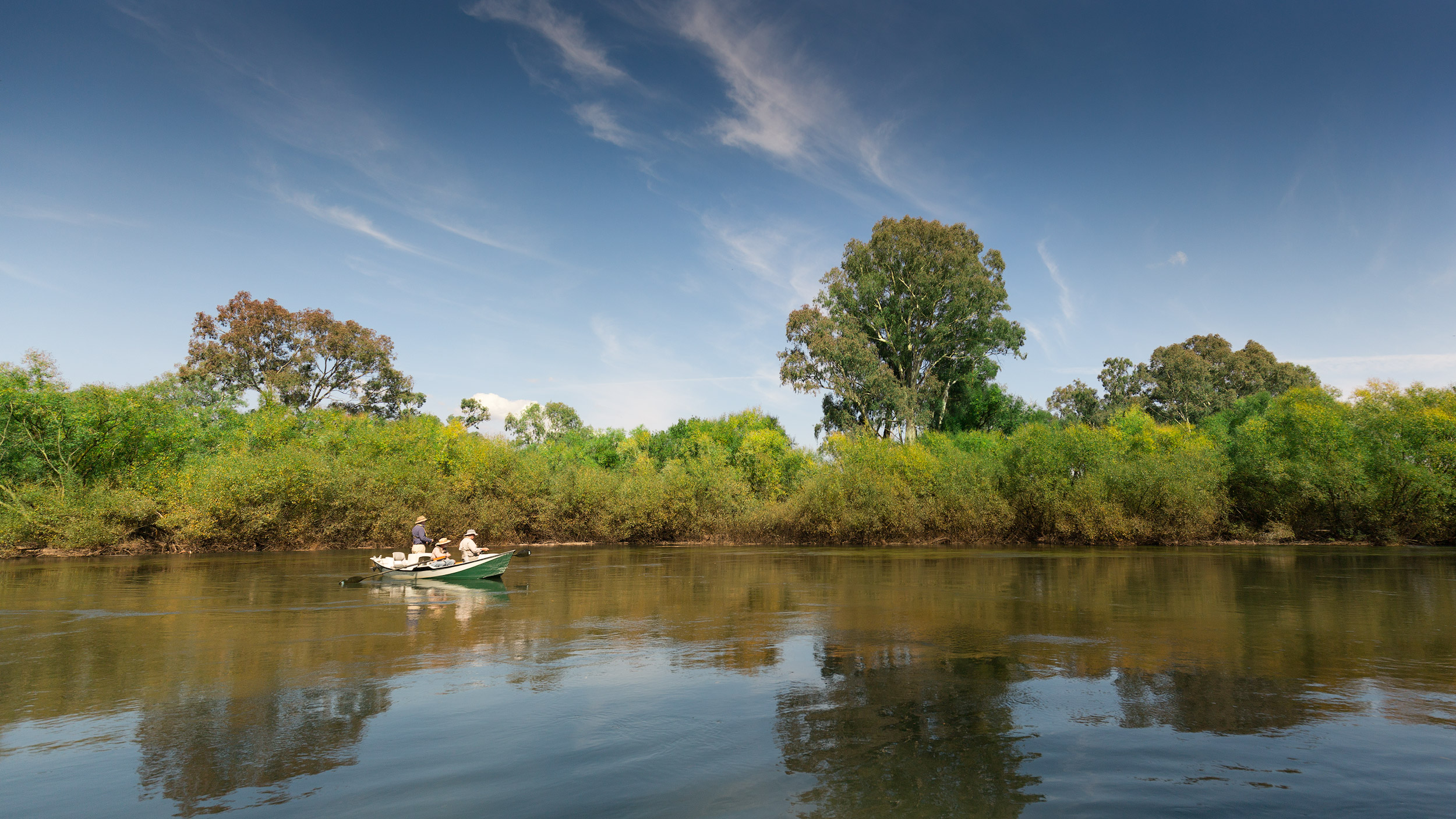
My drift boat......perfect for fishing the Goulburn River

Having a drift boat with a skilled guide on the oars opens up the entire river.


FEBRUARY:

In February, the unique nature of the Goulburn river as a bottom release tailwater river is most evident. While other rivers around it are running low and warm, the Goulburn runs high and cold, which is great for the trout as daytime temperatures can reach up to 40 degrees Celsius.

River levels severely hinder hatches of aquatic insects, with releases between 6,000 and 10,000 MLD resulting in considerably fewer hatches. The focus is now on backwaters and large areas inundated off the river proper, such as billabongs and lagoons. These areas can extend back a mile into adjoining farmland, and fish cruise these areas silently and slowly. Most of these fish go unmolested for the entire summer, and the section from Alexandra downstream is particularly good for this type of fishing.

Willow grubbing is peaking, but populations may vary depending on the amount of rain and temperatures, both daytime and nighttime. European Wasps also start to show up in large numbers at this time, and they have had a huge impact on the willow grub population in recent years. Some years see all the willows denuded of vegetation and grub numbers thinning out, while other years have prime conditions with willows covered in grubs throughout the month. Great fishing can be expected, and some very large fish can be caught.

Big hoppers and attractors like the stimulator and chernobyl ant work well as the fish have become accustomed to everything from cicadas to grasshoppers to beetles to spiders going into the river. Many larger fish will be visibily eating grasshopperss all day. If you get a refusal of your hopper, don’t be reluctant to tie on a tiny dry fly of sizes 18 – 20. The water will be very clear and downsizing can be very effective.

Sunken grasshopper patterns seent to be very effective as February rolls on.


AUTUMN

MARCH:

March is not considered autumn in the Goulburn Valley as stable high-pressure systems bring blue skies with a few scorchers thrown in for good measure. Hot weather often persists until early April, and although river levels come down quite a bit, we still regularly see 3,500 to 5,000 ML/D being released. March does, however, bring a glimpse of M.I.A. hatches that were so blunted by the large releases of water experienced during high-summer. Gradually the number of duns and caddis increases, and offers a slither of what can be expected as the water levels further reduce next month.

Backwaters are still fishing very well, with good fish in every one of them. After many months of sustained higher water levels, they are content to work these softer currents. Continually putting on condition as they feed in the easy flows along the edges. Hoppers and beetles are still working, although smaller duns and caddis will catch a fair percentage of the fish on offer. Cicadas, crickets, and the humble soldier beetle shouldn’t be discounted as they can be crucial at this time of year.

Perhaps more than any other month, attractor patterns hold sway. There is such a mix of insects, both aquatic and those originating from land, that taking a more liberal approach to fly selection is often rewarded with the best trout.

Willow grubs will begin to taper off at some stage this month, but don’t bet on it. In recent years the grubs have been hanging in there until after Anzac Day. Our initial observations were that the first frosts were their undoing. But as with most first appraisals, this appears to be incorrect. So, while we may indeed experience a decline in their numbers this month, pockets of them will not only hold on, but get stronger until almost the arrival of May.

Willow grubbers are voracious and you often catch the same fish immediately after dropping it. The second fly in this one was from a break-off the previous day.


 As the river levels fall away, fish once again take up positions in the main current seams, runs, and bubble lines adjacent to willow trees along the outside corners and the tailouts of pools. Regular blind searching techniques will bring good results, but as the month progresses, water levels and air temperatures will decrease, triggering stronger hatches and the resurgence of mayflies and caddisflies.


March is a month of slow transition
March is a month of slow transition; but the fishing can be very good


APRIL:

April can be one of the best months of the season, with the river often sitting somewhere between 1,000 and 3,000 ML/D and terrestrial fishing hanging in there as the return of the aquatic insects becomes evident. While April once was dominated by the maylies and caddises, the lower flows of recent summers has seen more aquatic insects hatching right through the summer, so there isn’t a huge backlog effect during April. What is noticeable is just how important terrestrial fishing has become. I would go so far as to say that April is the best month of the season

While it’s true the aquatic insects are getting smaller in size, there are still lots of hoppers, ants, beetles and crickets. The fish are very familiar with larger insects and willing to eat them. So, April is a month for the both the technical match the hatch addict, as well as the run and gun fisher of rubber leg patterns.

Of course, the fish are biologically programmed to feed heavily at this time of year in anticipation of spawning in the coming months. As the day’s get shorter and the night’s cooler, this survival imperative to consume as many calories as possible only increases in intensity. Hatches are usually met with solid rises from the trout. Small parachute duns, especially in rust, grey, or olive, will work very well. Emergers in dark browns and even black will also draw a favourable reaction from the fish.

Of course, as with all things in the natural world, there is a catch. Nature’s curveball coming in the form of tremendous kossie hatches on last light most evenings, which may only last 10 minutes but will attract bigger browns that rise to them. Spinner falls of this mayfly will occur any time from 5 pm onwards, and large rusty spinners should be carried for just such an event. When this hatch comes off, you can throw away most of what I’ve said about small imitative flies.

By the end of April, the river will start to drop in level, and the days will get much shorter. Overnight frosts or early morning fogs may occur, but generally these happen a few weeks from now.

Either way you look at it, autumn proper has arrived and it won’t long until things really change drastically.

goulburn river fly fishing
April heralds the return of the kossies

MAY:

Every year, from about the third week in April until mid-late May, there is a glorious period that lasts for three to five weeks. It is the most pleasant time of the year and brings about some of the most enjoyable fishing experiences on the Goulburn. Cool, crisp mornings give way to the bluest skies imaginable, and days of little or no wind and rising fish. The river is usually running low between 1000 – 1,500 ML/D and stays this way throughout the winter/early spring period as rainfall is captured in Lake Eildon for the following summer’s irrigation releases.

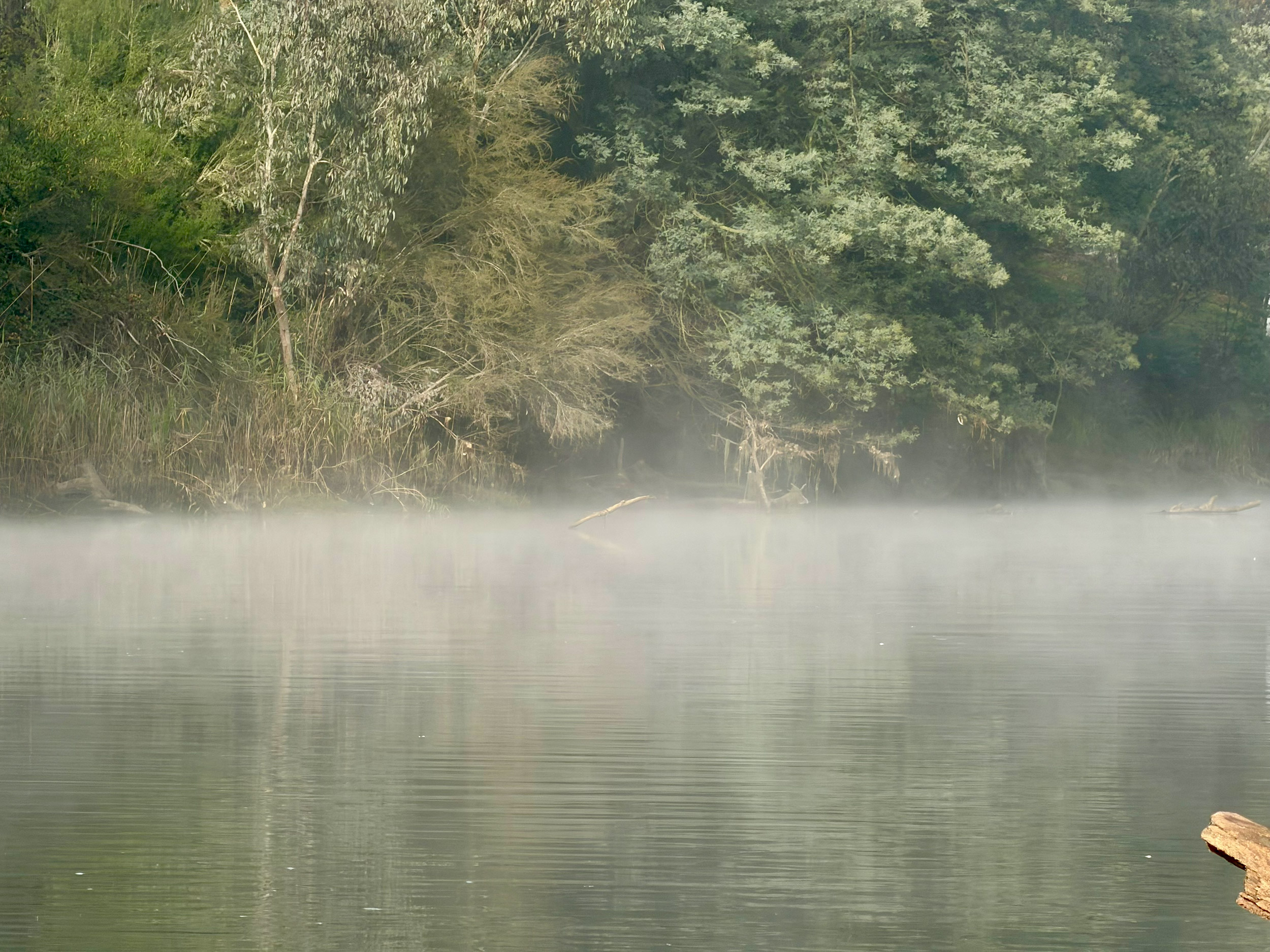
This is the time of midges, blue wing olives, and light gear. It is also requires careful wading and approaches to feeding fish so as to not send them scurrying for cover as your entrance to the water is noticed. Fish will often rise from about 8:30 am throughout the day. On foggy mornings, the start is just a bit later at around 11 am. Regardless of the start time, the good fishing endures. The most pleasant memories of fishing on the Goulburn are during this time period with the weather as close to perfect as it gets.

Sometime later in the month or in June, the weather changes significantly, although often the first major rain events are not until at least mid-June. The days are shorter, and the hatch and rise occur in the middle of the day with less emphasis on the last hour or so.

About the end of the month, the first browns start to spawn and should be left alone as catching these fish requires little to no skill and is not sporting. Please leave fish that are in spawn mode to their efforts. There are plenty of (not yet spawning) fish still actively feeding, with only the early run fish involved at this time of the season. This usually occurs in the last 7 – 10 days of May.

The one surprise that we sometimes encounter is that kossies continue to hatch on last light right throughout this month and into June. In May-June 2013, we saw Kossies hatching most nights on dusk, long after we would have expected them to have stopped. This is worth keeping in the memory bank as most of us are not expecting to be fishing # 8 dry flies at the end of May.

Anomalies aside, this is a month for stealth and precision. Careful observation and stalking are mandatory, but the rewards of catching fish in prime condition on such picture-perfect days, make our endeavours worth the efforts.

goulburn river fly fishing
May = great weather and low water levels


WINTER


JUNE – AUGUST:

The end of the trout fishing season is heralded by the Queen’s birthday weekend in mid June. This three-month period of closure allows the trout of our rivers to spawn unmolested, keeping within the sporting ethic of fly fishing. This is the perfect time to tie flies, plan trips, head to Idaho/Montana with us. The adventure never ends.


LAST WORD

I hope this overview gives you a better understanding of what goes on here on the Goulburn River. While this write-up is comprehensive, there’s a lot I didn’t cover, including some things that change from season to season like our stonefly hatches, black ant falls, and other significant events that most people won’t encounter.

If you need flies for an upcoming visit, feel free to order a fly pack from our online shop or stop by the shop for some flies, a mud map, and up-to-the-minute advice from our staff of guides.

Don’t hesitate to reach out if you have any questions. You can contact us in the shop anytime at 03 5773 2513 or on my mobile at 0418 995 611. Of course, we’re available for guiding, tuition, and drift boat trips every single day of the season.

Cheers,
Antony

A crowded start on the Missouri River below Holter Dam. 

Escaping crowds on the Goulburn River has become a common challenge faced by all fly fishers this season, and never is it as bad as during periods of low flows. Fortunately, there are several strategies that can be employed to avoid the crowds and still enjoy a successful fishing experience.

One effective strategy is to explore lesser-known areas. The Goulburn River has  multiple access points, and some of these are less popular than others. By doing some research and scouting out these less-frequented areas, fly fishers can increase their chances of finding solitude and unpressured fish. HINT – Study the section of river that lies between Breakaway and Molesworth. There are many off the beaten path places you can fish in this area where angling pressure is minimal.

Another strategy is to fish during off-peak times. Tailwater fisheries can become particularly crowded during peak fishing times, such as weekends and holidays, especially when the weather is good. By fishing during weekdays or early mornings and evenings, or even on rainy days, fly fishers can avoid most crowds and have a more peaceful experience on the water.

Using smaller flies and lighter tippets, while not directly dealing with the crowd situation, can be effective tools in escaping the effects of wary fish in busy sections of river. These tactics require a bit more finesse, but they can be highly effective in catching wary fish that have been pressured by other anglers casting all manner of metal and plastic at them.

Lastly, fly fishers can consider hiring a guide to take them to less-frequented areas, or to drift through the many sections of river that wading anglers just can’t reach. Guides can be invaluable resources for finding solitude on crowded tailwater fisheries like the Goulburn. HINT – If in doubt, phone us for advice.

Overall, escaping the crowds requires a bit of creativity and strategy, but it is certainly possible. By exploring lesser-known areas, fishing during off-peak times, using smaller flies/lighter tippets, and utilising the expertise of guides, fly fishers can enjoy a peaceful and successful fishing experience on the Goulburn this autumn.


Keep up to date with the latest photos on our Facebook Page