Category: Fishing Reports

Goulburn Valley fishing report – Friday 25 September 2026

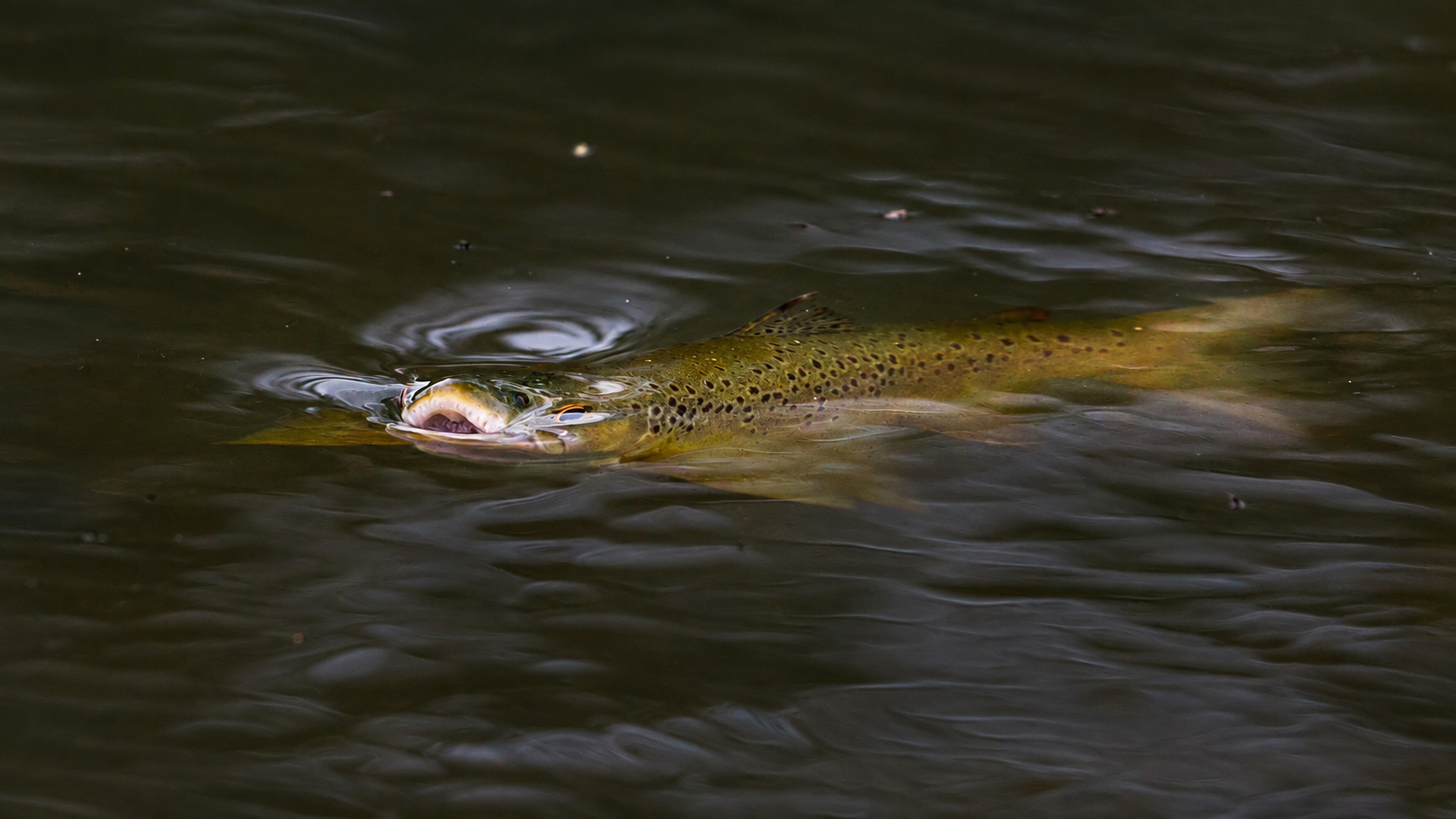
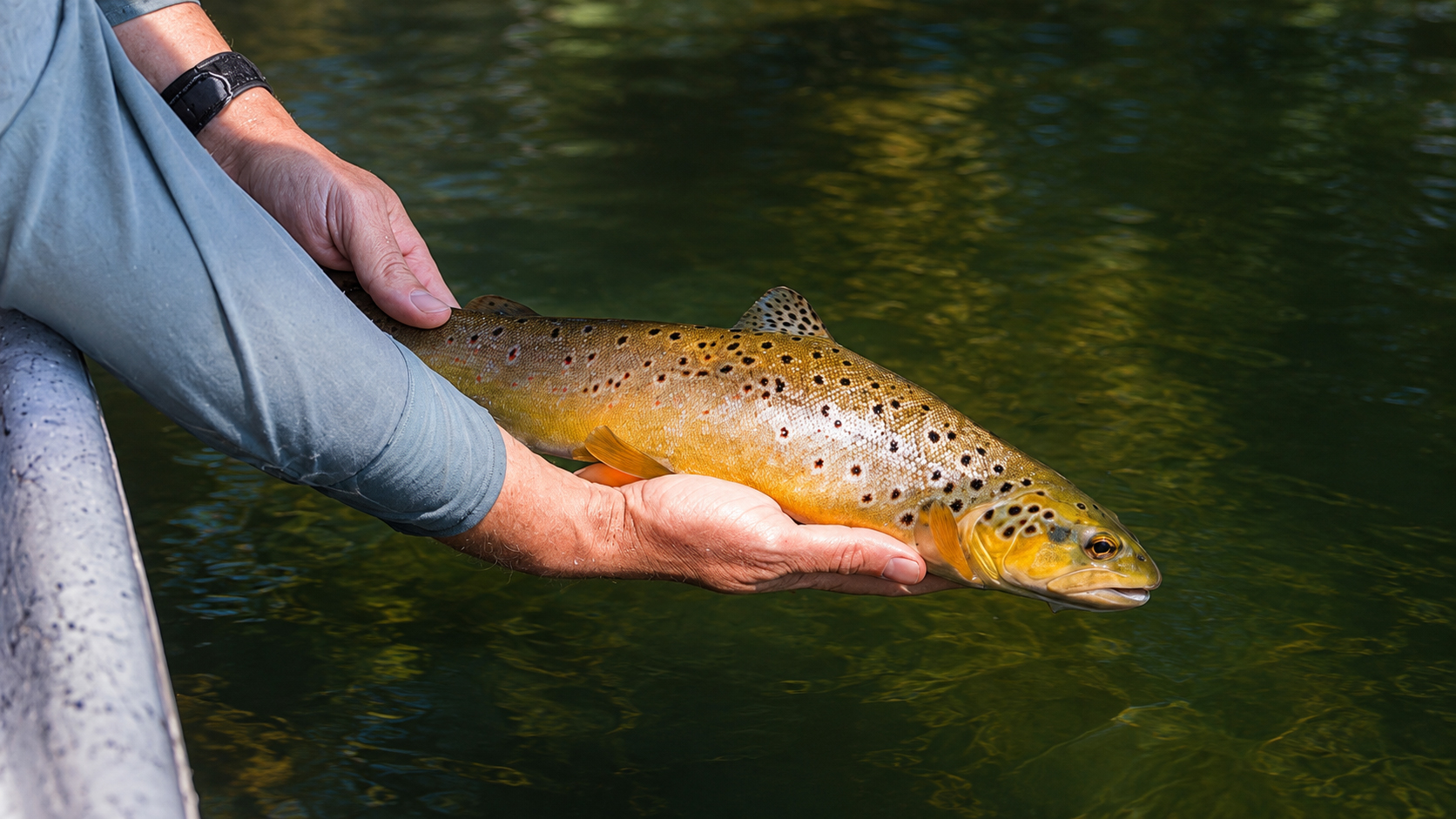
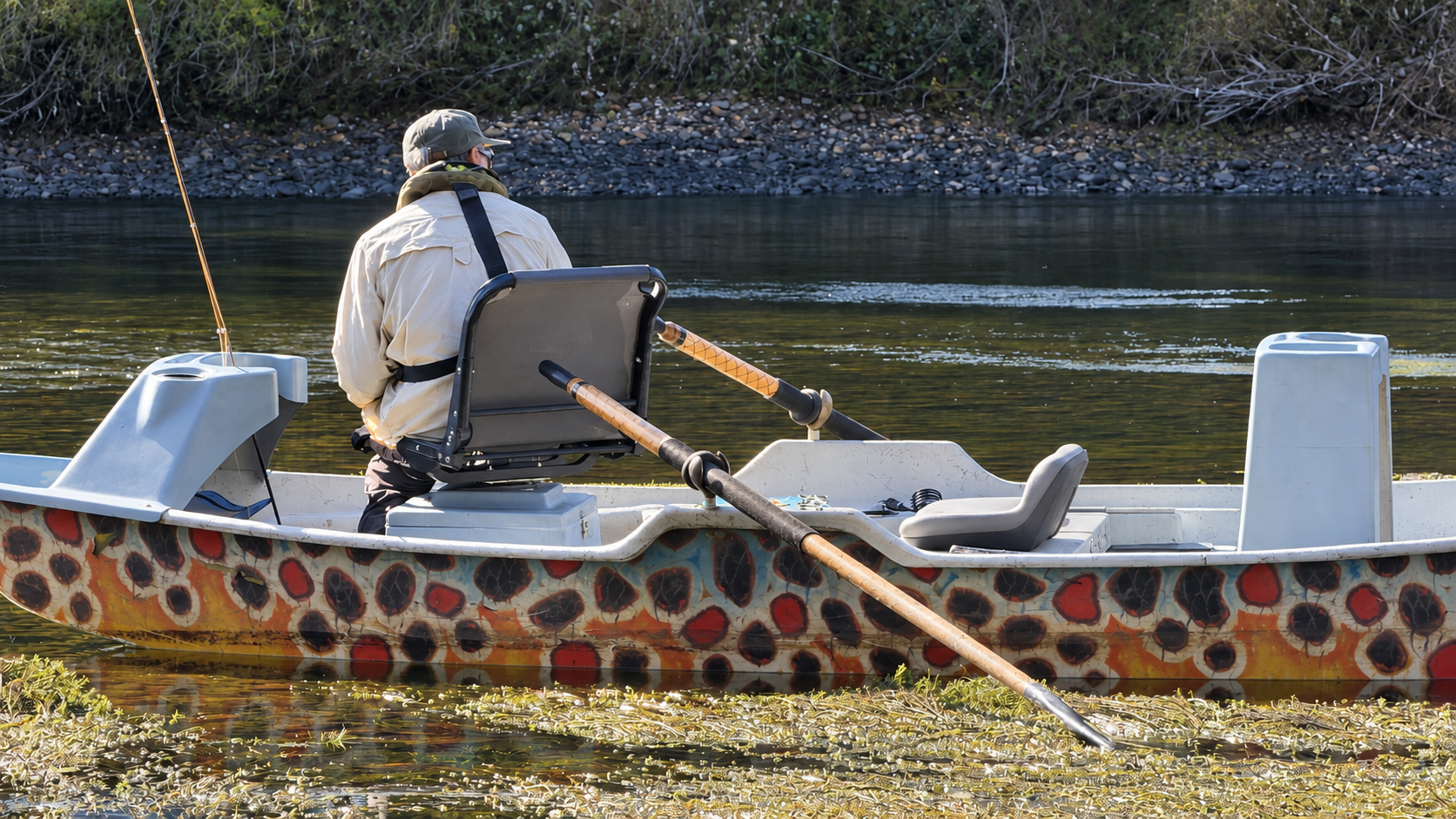
With the Grand Final long weekend underway, here’s an update after two full days of drift boating on Wednesday and Thursday. I fished with a father-and-son team across several parts of the Goulburn, finishing Thursday with five fish in the net and around twenty hits or follows on streamers. In the clear water, we could often watch the whole encounter unfold.

We also sighted around twenty platypus on Thursday alone, some within a couple of rod lengths of the boat. Between watching flies, looking for fish and having platypus surface alongside us, there was plenty to keep everyone occupied.

The river is rising gradually, insect activity is building and the willows are filling out. Fish are still thinly distributed through the stretches we’re covering, but the past two days have given us a better picture of how to approach the fishing, along with some good reasons to get out.

Streamers have been the best option

Wednesday was warmer, with less water in the river, and the fishing was challenging. Thursday’s increase gave several runs more depth and made manoeuvring the boat across the shallow gravel bars noticeably easier.

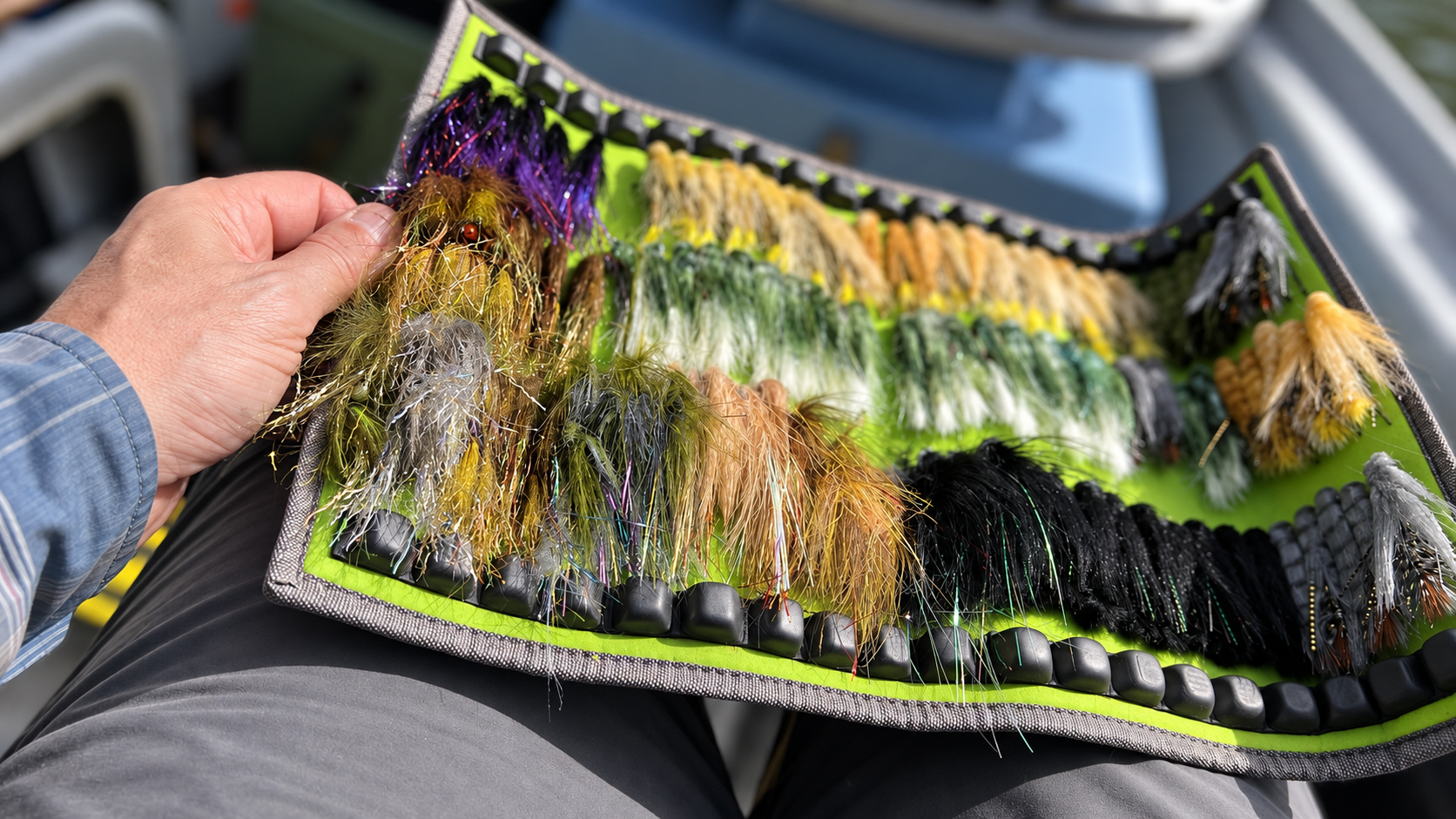
Fishing streamers has been our most productive approach, and also the most exciting. In the clear water, you can track the fly from the moment it lands all the way back to the rod. Sometimes a fish appears behind it and follows without committing. Sometimes there’s a sudden flash and a hit. It’s extremely exciting and almost entirely visual – quite different from the picture many people have of retrieving a submerged fly through a lake. You see the approach, the hesitation, the change of direction and, sometimes, the take. There’s much more to the day than the final tally in the net.

Thursday’s five landed fish came from around twenty hits or follows. There was enough interaction to keep us experimenting and paying attention, but those numbers also need some context. Two or three years ago, a day fishing this way could quite readily produce a dozen to fifteen fish, with forty or fifty follows, bumps, hits or looks along the way.

To me, that comparison points to substantially fewer fish in the river. We’re still finding opportunities, but we’re covering plenty of water to find them.

With fish spread out, streamers let us search successive banks and runs while watching how the trout respond. The interest doesn’t always turn into a hooked fish, but each follow gives us something to work with.

I first walked into Kelly Galloup’s Slide Inn in Montana in 2010, after an American friend made me promise I’d stop by. I came away with a bunch of new flies and some fresh ideas for fishing the Goulburn. We spent a few weeks experimenting between summer dry-fly sessions in Idaho. While the timing wasn’t ideal for streamer fishing, those early outings changed how we approached our home waters. We’ve been refining that approach ever since.

I’ve recently put together half a dozen outfits covering three different systems, with line and fly combinations suited to different water levels and presentations. They’ll allow us to get the best out of the conditions as they change over the coming months. If you’ve been interested in trying a day of streamer fishing from the boat, this is a good opportunity to get a feel for it.

There are rising fish, too

On Thursday, I bumped into GVFFC founder and my former business partner, David Pickering, at the boat ramp at the top end of Breakaway. He was fishing with our guide Chad and drifting down towards Alexandra. They found a few fish rising throughout the day. Their best was a rainbow of around three pounds, which took about an hour of attention and several fly changes before it finally ate the fly.

There are opportunities on the dry fly, but they’ve been scattered. At present, I’d come prepared to search with streamers and stop when a rising fish gives you a reason to change.

When that happens, take a moment to watch. Where is it feeding? How often does it rise? What is the current doing between you and the fish? David and Chad’s rainbow was a reminder of how much patience can matter once you’ve found a worthwhile trout.

A lot of the rising fish we’ve found have been in mirror-like water, where stealth and presentation are paramount. Don’t be afraid to extend your leader and go finer with the tippet when the fly and fish warrant it. A 10–12-foot leader down to 5X is a useful starting point, but we’ve gone longer and as fine as 6X to tempt fish in the slower pools.

In the boat, it’s handy to have several rods rigged for different situations so we can swap methods quickly. When wading, you need to be more proactive about making those adjustments yourself. Take the time to alter your leader or tippet rather than persevering with a setup that isn’t giving you the presentation you need.

The river is coming up

Heading into the long weekend, releases from Eildon are forecast to continue their gradual rise. They were around 800 ML/day on Wednesday just gone, to approximately 1,100 ML/day yesterday, with 1,300 ML/day forecast for today, Friday.

These small increases make a noticeable difference at the lower end of the flow range. They put more water over the gravel bars, give us additional clearance for the boat and open up more room for fish to hold and feed. A little extra depth can make an exposed run feel considerably more comfortable for a trout.

The release forecast issued at 10 am on 23 September sets out the following:

Date Forecast release
Friday 25 September 1,300 ML/day
Saturday 26 September 1,450 ML/day
Sunday 27 September 1,500 ML/day

These are releases from Lake Eildon, rather than measurements at every point downstream. Changes take time to travel through the river, and actual releases can vary from the forecast. Check the latest Goulburn–Murray Water release forecast before heading out.

Significant rain could change the picture and see releases reduced again. We’re not yet into the main summer irrigation period, but the river is beginning to have that feel about it, with releases edging upwards.

With the lake lower than we’d like, my hope is that summer flows remain moderate – around the 3,000- 5,000 ML/day mark for much of the main season – rather than reaching the much higher levels we sometimes see. That’s a hope from a fishing perspective, rather than a release forecast. We’ll follow the actual operating updates as the season develops.

A note for anyone rowing below Gilmore’s Bridge

There are two dangerous shallow runs over gravel bars below Gilmore’s Bridge where the current sweeps hard from left to right, pushing boats towards the willows.

The difficulty is that the water on the left can be too shallow to get an effective stroke with the left oar, just when you need it to counter the current. A boat can be swept into the trees before the rower has much opportunity to recover.

The first of the two is particularly awkward late in the day, when the low sun can obscure your view on the approach and through the run. Discretion is the better part of valour here. If you’re unfamiliar with these passages at the current levels, stop well upstream and inspect them. My preference would be to walk the boat through where the footing, depth and current allow that to be done safely, rather than commit to rowing through without a clear line.

I know most readers won’t be rowing this stretch themselves, but if you are and would like a heads-up, drop me a line. I can send Google Maps pins identifying the two locations.

We’ve drifted the upper river several times since opening, along with stretches around Breakaway and Alexandra. This week was our first drift below Thornton. We waited until the river had risen enough to give us more room to pass wading anglers without disturbing their fishing.

Despite plenty of traffic crossing the bridges, we saw only four or five anglers along roughly fifteen kilometres of river.

The insects are the early arrivals

The insect activity is what feels particularly advanced for September. Across Wednesday and Thursday, I saw an extraordinary number of dragonflies – possibly more than I can remember seeing in any comparable 24 hour period. There have also been large numbers of grannoms.

Those two stand out as perhaps a month ahead of what I’d normally expect. Mayflies have been sparse during these sessions, with only a sprinkling of other caddis. Earlier in the week we saw some spinner falls, and beetles have been landing on us in the boat.

The willows are closer to their usual schedule, perhaps a week early. They’re putting on leaf quickly, and I’d expect them to look fully bushy within another five days or so.

It’s an interesting combination: a familiar spring change along the banks, with some insects appearing unusually early and in remarkable numbers. That gives us plenty to watch over the next few weeks, although abundant insects don’t automatically mean trout rising everywhere.

A cooler change for the weekend

The forecast we’re working from has Alexandra reaching 23°C today (feels warmer than that), followed by 18°C on Saturday and 16°C on Sunday. Saturday brings showers and a southerly change, with 1–5 mm indicated.

Monday and Tuesday look mostly dry, with tops of 18–19°C. Farther ahead, the forecast shows showers on Wednesday 30 September, followed by 10–20 mm on Thursday 1 October and 5–10 mm on Friday 2 October.

Those later rainfall totals are still several days away and may change. If the rain arrives across the catchments, we’ll need to reassess the smaller rivers.

The cooler spell may interrupt some of the insect activity, but it will be interesting to see what happens when the next run of warmer days arrives.

Finding fish remains the challenge

On the way home, I ran into a former local guide while getting fuel, and we had a lengthy chat about what we’d both been seeing.

He’d spent a week camping and fishing here, wading, stalking the edges and backwaters, and working through the runs and pools. He’d found very few fish away from the areas immediately around the access points and bridges where trout had been stocked for opening.

Nearly all the fish being caught in those areas were rainbows, which was consistent with his impression that the recent stocking was providing much of the activity.

I’ve also had a report passed on from an angler with Australian team experience who struggled to locate fish away from those main access areas.

These are observations from particular anglers and stretches, rather than a population survey, but they agree with the amount of searching we’re doing and the difference we’re seeing compared with a few years ago.

It’s worth knowing that before a visit. Good-looking water won’t necessarily hold the number of fish you remember from earlier years. Moving, exploring and making the most of the fish you locate are all important at present.

The boat gives us options through the quiet stretches. We can cover more water, reach places that are difficult from the bank and stop when we find something worth working on. The clear water also makes that search absorbing: even a fish that follows and turns away can teach you something.

There’s plenty happening beyond the trout, too. We’ve been seeing azure kingfishers along the river, and Thursday’s platypus encounters were exceptional. Having one surface close enough to watch it properly, then quietly disappear again, is a lovely interruption to a day’s fishing. Seeing so many, along with the kingfishers and everything else happening around us, made it a memorable outing.

Keep an eye on the smaller streams

The smaller rivers may offer some of the more interesting opportunities over the coming weeks.

The figures I’ve been looking at put Lake Eildon at around 61% of capacity, with combined inflows of roughly 2,000 ML/day. That doesn’t tell us the condition of every tributary, but it gives us a reason to check rivers we might ordinarily expect to be running higher at this point in spring.

On the Rubicon, we often associate the first reliable dry-fly fishing with November. During some of the drought years, however, we were fishing dries from opening day, with insect activity seemingly brought forward by as much as two months.

If suitable flows persist and another warm spell follows this change, there could be worthwhile small-stream fishing well before the usual calendar suggests.

Start looking now. Check the individual river, spend a few minutes watching the quieter water and let what you find guide your approach. Next week’s rain may change the picture, so stay flexible.

Looking towards summer

Our recent Montana trip is still in the back of my mind. It was among the hottest, driest visits I can remember. By mid-July, a number of rivers were facing restrictions on fishing hours, with some closures following as heat, low flows and water temperatures became increasingly difficult.

Basing our fishing around tailwaters gave us access to good fishing despite those wider problems. Even so, it reinforced my feeling that June through to around mid-July is becoming the better window for the variety of fishing we want to do there. Later summer can still produce excellent fishing, but I’m increasingly reluctant to assume we’ll have the same range of options.

That experience doesn’t predict our summer, and early dragonflies don’t tell us exactly what February will bring. I’m sharing these observations because they’re worth keeping in mind as we decide where and when to fish.

I’m optimistic about the Goulburn over the next few months. Last November, December and January produced some exceptional sessions, and there is potential for very good fishing again as food becomes more available and the flows give us more water to work with. How consistently that happens will also depend on the fish available in each stretch.

Although Eildon at around 61% is lower than we’d like, my assessment is that there is ample stored water to carry the Goulburn through this summer with cold releases and good fishing opportunities. The longer-term concern is what happens if we don’t receive adequate rain next winter and spring to replenish it.

We’ll continue watching river temperatures and releases. Very hot air temperatures may also influence the hours we choose to spend on the water, particularly in January and through February, even when the river itself remains cold.

The smaller streams may offer their best opportunities earlier, with the Goulburn becoming increasingly important as summer progresses. Beyond that, I’m also looking forward to the fishing that March, April and May can bring.

Come for a drift
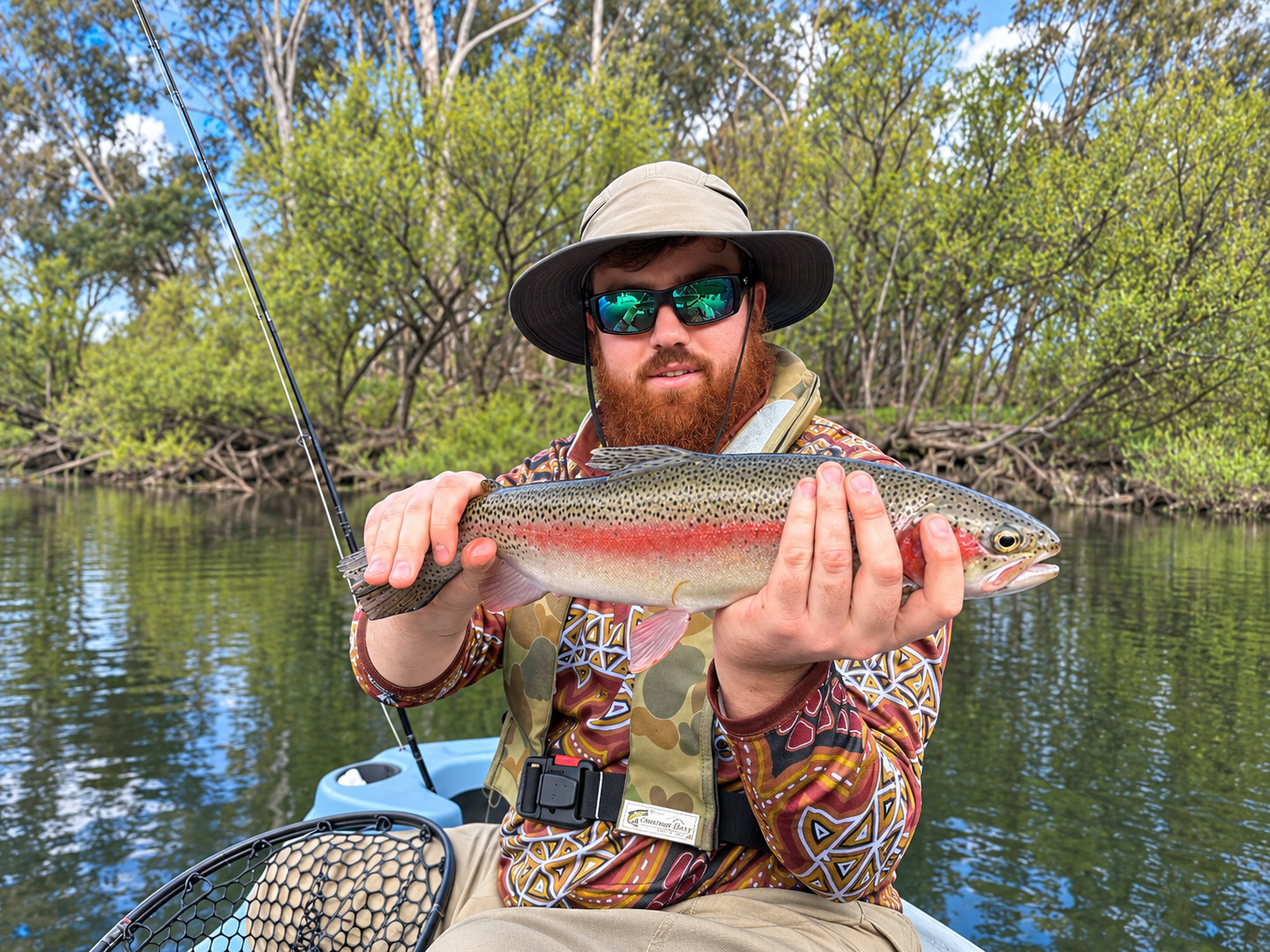
We have multiple boats on the river most days and more capacity for local bookings this season. Whether you’re considering a half-day drift, a full day or a few days fishing and staying locally, you’re welcome to get in touch.

If the streamer fishing appeals, let me know. The outfits are ready, the water is clear, and watching a trout appear behind your fly adds another dimension to the day. It’s also a lot of fun and can easily replace a cardio gym session if you’re worried about a ‘sedentary’ day of drifting in the boat.

We’ll give you an honest account of the conditions and help choose an outing that suits your experience. Short-notice enquiries are welcome too – if a day opens up at your end, it’s always worth asking.

Enquire about a drift-boat day

Enjoy the long weekend, whether you’re watching the football, heading for the river or fitting in a bit of both.

Tight lines,
Ant

Goulburn Valley Fly Fishing Centre
03 5773 2513 | 0418 995 611
gvflyfishing@gmail.com


Goulburn Valley fishing report: 22 September 2026

There were beetles landing on us while we fished yesterday. We’ve already seen a few weak spinner falls, caddis are starting to appear, and another run of warm weather is approaching. For the fourth week of September, there is quite a bit happening.

After today’s cooler conditions, Alexandra’s forecast climbs to 20°C on Wednesday, 23°C on Thursday and 25°C on Friday, with temperatures staying in the low twenties through the weekend. There is very little rain indicated before early next week. Combined with a gradual increase in river flows, that gives us something to look forward to.

The Goulburn is very clear. Releases from Eildon have been around 400 megalitres a day, but the forecast issued on 21 September sets out the following increases:

Date Forecast release
Tuesday 22 September 600 ML/day
Wednesday 23 September 800 ML/day
Thursday 24 September 1,000 ML/day
Friday 25 September 1,000 ML/day

Beyond Friday, we’ll wait for the next update. These are planned releases from Eildon, and they can change; check the latest Goulburn–Murray Water forecast before heading out.

That extra water should make a useful difference. As the river rises, more of the gravel bars and their edges come into play, giving fish additional feeding water and a little more cover. We’ll be watching for trout moving into those areas as more food becomes available.

It also opens up our drift-boat options. Being able to work along a bank, cover successive runs and spend time out in the bubble lines where fish are feeding gives us more opportunities across a day. With the river clear and insect activity building, drift boating is becoming a much bigger part of our week again.

The fishing itself still requires care. The Goulburn has had a difficult couple of years, and the recent low, clear water has been demanding. We’ve brought a few fish to the fly this week, but our recent beginner sessions, including two boat days, have finished without a fish. The trout we are finding rising are asking for a good approach and an accurate, drag-free presentation.

That is worth knowing before you arrive. Give yourself time to watch a fish, work out its feeding rhythm and choose your position before making the first cast. A few well-considered presentations are often more useful than repeatedly covering the same trout.

We started the season doing more streamer fishing, but have increasingly moved towards dry-dropper rigs and straight dry-fly setups. From the boat, a nine-foot leader – and sometimes something shorter – with a stronger tippet can work well when we can position ourselves for a controlled drift. For stalking fish from the bank in the current clear water, I’d be starting with a 10–12-foot leader down to 5X.

Keep an eye on what is actually arriving on the water. The spinner falls have already given us reasons to stop and watch, caddis are becoming more noticeable, and yesterday’s beetles were a reminder to have a few terrestrial patterns handy. Flying ants are something I’ll be watching for next. If the warmth continues, it will be interesting to see how early the cicadas appear.

The smaller rivers deserve attention too. On the Rubicon, we often associate reliable dry-fly fishing with November. During some of the drought years, though, we were fishing dries from opening day, with the usual progression of insect activity seemingly brought forward by a month or more.

We may see some of that again. My advice is to start looking earlier than you ordinarily would. Visit a favourite stretch, spend a few minutes watching the quieter water and let what you see determine how you fish. There could be some very worthwhile small-stream fishing over the next couple of months.

Looking further ahead, the Bureau’s latest climate update confirms an established El Niño, while emphasising that its strength does not translate directly into the severity of local conditions. That’s spoken like a true politician. A warm, dry season is something we need to prepare for, but September cannot tell us exactly how every river will look in February.

Our recent Montana trip was a reminder of how much water choice matters in a difficult summer. It was among the hottest, driest visits I can remember. We found good fishing on the tailwaters while other waters were affected by heat, low flows and fishing restrictions. That experience has me thinking carefully about the coming season here.

If our smaller rivers become low and warm, their best fishing may come earlier, and there may be periods when we should leave them alone. The Goulburn’s cold releases from Eildon give us an important option, although we’ll still be watching temperatures and flows rather than assuming conditions will remain suitable everywhere.

For now, there is plenty to watch with interest: clear water, a measured rise in flows, insects appearing and warm days ahead. I have five consecutive days with experienced fly fishers coming starting tomorrow, which should give us a better picture of how the river responds.

We expect to have boats on the river most days from now on. Whether you’re thinking about a half-day drift, a full day on the water or a few days fishing and staying locally, get in touch. It’s always worth asking if an opportunity comes up at short notice.

We’ll keep you posted as the flows change and the fishing develops.

Tight lines,
Ant

0418 995 611


Opening Week — September 2026

Lake Eildon: 60.7%
Inflows: 3,500 ML/day
Goulburn release: 1,000 ML/day
River temperature: 13.1°C
Dissolved oxygen: 10.0 ppm
Rainfall, past 24 hours: 0 mm
Eildon Pondage: 49%

The trout season has begun in fairly typical September fashion: a little chaotic, a little frustrating and with enough signs underneath it all to remind us that the good fishing is not very far away. Rain on Friday afternoon and evening made a mess of the river almost immediately, with dirty water right up through the upper river below the Pondage. We deliberately stayed away from the opening-weekend circus, although we did have a boat out for a reconnaissance run. We weren’t interested in flogging the river. The idea was simply to have a look, see what had changed over winter and find out whether anybody was home.

There were fish willing to move to streamers. We had a few bumps and managed one to the net, which was enough to open the account for another season. Through the week the Goulburn crept up to around 1,000 ML/day and gradually began to clear. By midweek there was enough visibility to fish properly through the upper sections, and by the end of the week we had fishable water all the way down below Alexandra.

That extra 600 ML/day over the winter minimum makes quite a difference. At 1,000 the river covers a lot more gravel, reconnects edges and side water and gives trout considerably more room than they have at 400. It also makes them a little less exposed and, in places, a little less nervous. I am not entirely sure how long this slightly higher flow will remain, but while it does, there are certainly opportunities there for anyone desperate to get out and have a look.

The fishing itself has been modest rather than spectacular, which is about what I would expect in the middle of September. We have taken fish on nymphs and had some interest in dries (one landed), with small, slim copper-bodied nymphs proving useful. On most sessions there have also been at least a handful of fish rising somewhere, and there are a few duns beginning to appear in dribs and drabs through the day, with some evenings showing a little more activity.

It is not boiling yet.

In truth, it is not even simmering.

But the first bubbles are starting to appear.

That is often how September feels. You can watch a pot of water for what seems like forever and nothing much happens. Then one small bubble rises from the bottom. A little later there are two or three. Then a few more. Before long the whole thing is moving and suddenly it is boiling. The river feels much the same at the moment. There are a few duns, a few rising fish, water temperatures creeping in the right direction and longer afternoons beginning to do their work. Nothing has really taken off, but for the first time this season you can see the first signs that it is about to.

The river temperature is sitting at 13.1°C with dissolved oxygen around 10 ppm. Another couple of decent high-pressure systems, a little more warmth and some stable water, and things can change surprisingly quickly. My feeling remains much the same as it does most Septembers: Grand Final weekend and beyond is where I would rather have my days in the diary.

We had another enquiry only this morning asking whether I would recommend fishing in the next week or pushing the booking back. My answer is always much the same at this time of year. If you only have one available day, go fishing. There are trout to be caught now, and at 1,000 ML/day the river is in much better shape than it is at the winter minimum. But if you have the luxury of choosing, I would save the day of annual leave for a little later. September rewards patience.

What sort of spring are we heading into?

There is plenty of local speculation about the season ahead. The current climate outlook is pointing towards a warmer and generally drier spring across our part of south-eastern Australia, with the present El Niño expected to persist into autumn next year. That does not automatically mean poor fishing. In fact, for the Goulburn it could produce some very interesting conditions.

Lake Eildon is currently at 60.7%, so we are beginning the season with a substantial amount of stored water. A warmer, drier spring should also bring terrestrial activity forward, particularly ants, beetles, grasshoppers and eventually the larger summer insects. Irrigation demand is also likely to become important as the season develops. Exactly what that means for river flows will depend on allocations, demand and water-management decisions, so I would not pretend to know in September what the Goulburn will be running at in January.

What I can say is that some of our most consistent drift-boat fishing occurs when the river settles into solid, moderate irrigation flows rather than the very highest releases. A season with extended flows somewhere in that middle range can make an enormous amount of the Goulburn accessible and productive, and from a drift-boat perspective it can often produce more consistent fishing than a season dominated by the very highest water. So there are reasons to be quietly optimistic.

The smaller rivers may be the other interesting part of this spring. If the warmer, drier pattern develops as forecast, the smaller streams may come into condition earlier than they do in a cool, wet year. The trade-off is obvious. The same streams that benefit from an early warm spring can become difficult later in January, February and March if the summer turns genuinely hot and dry. For now, though, they are worth watching and they may come alive quickly.

More boats available this season

There has also been a bit happening behind the scenes. Tony Edwards has established a base here in Alexandra and will be spending considerably more time on the Goulburn this season while continuing to guide the Tumut as well. He now has a drift boat based at each location, so if you particularly want to fish with Tony on either river, sing out.

We have also had one experienced guide become available again after a couple of years away and another tell me he can give us considerably more time this season. I will introduce them properly when everything is settled, but the important consequence is that we again have considerably more multi-boat capacity. Tony and I will be available through most of the season, and with the wider guide team we can now put together two, three and, with enough notice, four-boat days.

That opens up something we have been doing in various forms since the 1990s.

The Goulburn River Journey

For a group of friends wanting something more substantial than a single guided day, we have formalised one of the trips that has effectively been part of GVFFC since the early years. The Goulburn River Journey follows the river progressively downstream from the Eildon Pondage towards Molesworth over three or four days.

The standard group is four anglers in two drift boats, although with enough notice we can organise up to eight anglers. The idea is not simply to fish four unrelated sections of river. You travel through it. At the top, the Goulburn is colder, tighter and more obviously influenced by Lake Eildon. Farther downstream it broadens, tributaries enter, islands appear and the surrounding country changes. Eventually you reach sections below Alexandra that very few anglers ever see properly on foot.

The three-day version moves through the river more quickly, beginning each morning around where the previous day finished. I prefer the four-day version. It gives us time to overlap some water from one day to the next. You see a piece of river twice, perhaps under different light or at a different time of day. You get another chance at the fish somebody missed yesterday. You begin recognising bends and runs instead of simply passing through them.

In the 1990s we sometimes camped beside the river on these longer trips. These days we have become slightly more civilised. We pull out each evening, get everyone back to comfortable accommodation, find a decent meal and begin again the following morning. For four friends looking for a proper fishing trip without getting on an international flight, it is worth considering.

Link to the Goulburn River Journey at the bottom.

New Zealand this summer

For those who do want to get on a plane, we still have some room in Southland this coming summer. At the moment there are three weeks where we could still accommodate a complete group of four.

Our New Zealand weeks run Sunday to Sunday through January, February and March, with seven nights at Dunrobin and six full guided fishing days. Five days are fished at one guide to two anglers, and every guest now gets one full day of individual 1:1 guiding. If four friends take the available places in the same week, that week effectively becomes your own small-group trip.

There is no need to put a group together before contacting us, though. Individual anglers and pairs are equally welcome and we can usually find the right group for them.

Workshops are starting again

We also had a small workshop running this weekend. The regular beginner workshops begin properly next month and will run each month through the season.

If your own fly fishing has become a little rusty over winter, or you know somebody who has always said they would like to learn but does not know where to begin, point them our way. The workshops are two days, all the equipment is supplied, and importantly Sunday includes actual river fishing. We spend the first part building the fundamentals and then begin putting those skills to work on real water.

That distinction matters. Fly fishing makes a lot more sense when the casting, flies, currents and trout are finally all in the same place.

For now…

So for the moment, September is doing what September usually does. If you are desperate for a fish, the Goulburn at 1,000 ML/day is clear enough now to make a day worthwhile, and that extra water is certainly preferable to scratching around at the winter minimum. If you have flexibility, however, keep accumulating those brownie points.

Mow the lawn. Finish the jobs you have been promising to do. Be an exemplary husband. Be unusually productive at work. Perhaps do not mention that you are doing any of it because you are quietly banking a fishing day.

There is a cooler change moving through before conditions improve again later in the week, but the river is beginning to show those first little signs. A few duns. A few rising fish. Clearer water. Longer afternoons. Magpies swooping again.

It is a little like watching that pot of water.

For ages, apparently nothing happens. Then the first bubble rises. Then another. And another.

Before long, you look away for a moment and the whole thing is boiling.

We are not there yet. But the first bubbles are visible. After a long winter, that is enough for now.

Thanks, as always, to everyone who has supported us through the quieter months. It is very good to have some sunshine again, clear water flowing out of the lake and another trout season underway.

Tight lines.
Anthony

Goulburn Valley Fly Fishing Centre
0418 995 611
info@gvflyfishing.com


Links

  1. The Goulburn River Journey
  2. New Zealand Trips
  3. Fly Fishing Workshops


Opening Week — September 2026

Lake Eildon: 60.7%
Inflows: 3,500 ML/day
Goulburn release: 1,000 ML/day
River temperature: 13.1°C
Dissolved oxygen: 10.0 ppm
Rainfall, past 24 hours: 0 mm
Eildon Pondage: 49%

The trout season has begun in fairly typical September fashion: a little chaotic, a little frustrating and with enough signs underneath it all to remind us that the good fishing is not very far away. Rain on Friday (4/9/26) afternoon and evening made a mess of the river almost immediately, with dirty water right up through the upper river below the Pondage. We deliberately stayed away from the opening-weekend circus, although we did have a boat out for a reconnaissance run. We weren’t interested in flogging the river. The idea was simply to have a look, see what had changed over winter and find out whether anybody was home.

There were fish willing to move to streamers. We had a few bumps and managed one to the net, which was enough to open the account for another season. Through the week the Goulburn crept up to around 1,000 ML/day and gradually began to clear. By midweek there was enough visibility to fish properly through the upper sections, and by the end of the week we had fishable water all the way down below Alexandra.

That extra 600 ML/day over the mandated minimum makes quite a difference. At 1,000 the river covers a lot more gravel, reconnects edges and side water and gives trout considerably more room than they have at 400. It also makes them a little less exposed and, in places, a little less nervous. I am not entirely sure how long this slightly higher flow will remain, but while it does, there are certainly opportunities there for anyone desperate to get out and have a look.

The fishing itself has been modest rather than spectacular, which is about what I would expect in the middle of September. We have taken fish on nymphs and had some interest in dries, with small, slim-bodied nymphs suspended beneath a dry proving useful. On most sessions there have also been at least a handful of fish rising somewhere, and there are a few duns beginning to appear in dribs and drabs through the day, with some evenings showing a little more activity.

It is not boiling yet.

In truth, it is not even simmering.

But the first bubbles are starting to appear.

That is often how September feels. You can watch a pot of water for what seems like forever and nothing much happens. Then one small bubble rises from the bottom. A little later there are two or three. Then a few more. Before long the whole thing is moving and suddenly it is boiling. The river feels much the same at the moment. There are a few duns, a few rising fish, water temperatures creeping in the right direction and longer afternoons beginning to do their work. Nothing has really taken off, but for the first time this season you can see the first signs that it is about to.

The river temperature is sitting at 13.1°C with dissolved oxygen around 10 ppm. Another couple of decent high-pressure systems, a little more warmth and some stable water, and things can change surprisingly quickly. My feeling remains much the same as it does most Septembers: Grand Final weekend and beyond is where I would rather have my days in the diary.

We had another enquiry only this morning asking whether I would recommend fishing in the next week or pushing the booking back. My answer is always much the same at this time of year. If you only have one available day, go fishing. There are trout to be caught now, and at 1,000 ML/day the river is in much better shape than it is at the winter minimum. But if you have the luxury of choosing, I would save the day of annual leave for a little later. September rewards patience.

What sort of spring are we heading into?

There is plenty of speculation about the season ahead. The current climate outlook is pointing towards a warmer and generally drier spring across our part of south-eastern Australia, with the present El Niño expected to persist into autumn next year. That does not automatically mean poor fishing. In fact, for the Goulburn it could produce some very interesting conditions.

Lake Eildon is currently at 60.7%, so we are beginning the season with a substantial amount of stored water. A warmer, drier spring should also bring terrestrial activity forward, particularly ants, beetles, and eventually the larger summer insects. Irrigation demand is also likely to become important as the season develops. Exactly what that means for river flows will depend on allocations, demand and water-management decisions, so I would not pretend to know in September what the Goulburn will be running at in January.

What I can say is that some of our most consistent drift-boat fishing occurs when the river settles into solid, moderate irrigation flows rather than the very highest releases. A season with extended flows somewhere in that middle range can make an enormous amount of the Goulburn accessible and productive, and from a drift-boat perspective it can often produce more consistent fishing than a season dominated by larger variations between the higher and lower water levels. So there are reasons to be quietly optimistic.

The smaller rivers may be the other interesting part of this spring. If the warmer, drier pattern develops as forecast, the smaller streams may come into condition earlier than they do in a cool, wet year. The trade-off is obvious. The same streams that benefit from an early warm spring can become difficult later in January, February and March if the summer turns genuinely hot and dry. For now, though, they are worth watching and they may come alive quickly.

More boats available this season

There has also been a bit happening behind the scenes. Tony Edwards has established a base here in Alexandra and will be spending considerably more time on the Goulburn this season while continuing to guide the Tumut as well. He now has a drift boat based at each location, so if you particularly want to fish with Tony on either river, sing out.

We have also had one experienced guide become available again after a couple of years away and another tell me he can give us considerably more time on the oars this season. I will introduce them properly when everything is settled, but the important consequence is that we again have considerably more multi-boat capacity. Tony and I will be available through most of the season, and with the wider guide team we can now put together two, three and, with enough notice, four-boat days.

That opens up something we have been doing in various forms since the 1990s.

The Goulburn River Journey

For a group of friends wanting something more substantial than a single guided day, we have formalised one of the trips that has effectively been part of GVFFC since the early years. The Goulburn River Journey follows the river progressively downstream from the Eildon Pondage towards Molesworth over three or four days.

The standard group is four anglers in two drift boats, although with enough notice we can organise up to eight anglers. The idea is not simply to fish four unrelated sections of river. You travel through it. At the top, the Goulburn is colder, tighter and more obviously influenced by Lake Eildon. Farther downstream it broadens, tributaries enter, islands appear and the surrounding country changes. Eventually you reach sections below Alexandra that very few anglers ever see properly on foot.

The three-day version moves through the river more quickly, beginning each morning around where the previous day finished. I prefer the four-day version. It gives us time to overlap some water from one day to the next. You see a piece of river twice, perhaps under different light or at a different time of day. You get another chance at the fish somebody missed yesterday. You begin recognising bends and runs instead of simply passing through them.

In the 1990s we sometimes camped beside the river on these longer trips. These days we have become slightly more civilised. We pull out each evening, get everyone back to comfortable accommodation, find a decent meal and begin again the following morning. For four friends looking for a proper fishing trip without getting on an international flight, it is worth considering.

New Zealand this summer

For those who do want to get on a plane, we still have some room in Southland this coming summer. At the moment there are three weeks where we could still accommodate a complete group of four.

Our New Zealand weeks run Sunday to Sunday through January, February and March, with seven nights at Dunrobin and six full guided fishing days. Five days are fished at one guide to two anglers, and every guest now gets one full day of individual 1:1 guiding. If four friends take the available places in the same week, that week effectively becomes your own small-group trip.

There is no need to put a group together before contacting us, though. Individual anglers and pairs are equally welcome and we can usually find the right group for them.

You can read more by clicking the links at the bottom of this update.

Workshops are starting again

We also had a small workshop running this weekend. The regular beginner workshops begin properly next month and will run each month through the season.

If your own fly fishing has become a little rusty over winter, or you know somebody who has always said they would like to learn but does not know where to begin, point them our way. The workshops are two days, all the equipment is supplied, and importantly Sunday includes actual river fishing. We spend the first part building the fundamentals and then begin putting those skills to work on real water.

That distinction matters. Fly fishing makes a lot more sense when the casting, flies, currents and trout are finally all in the same place.

For now…

So for the moment, September is doing what September usually does. If you are desperate for a fish, the Goulburn at 1,000 ML/day is clear enough now to make a day worthwhile, and that extra water is certainly preferable to scratching around at the winter minimum. If you have flexibility, however, keep accumulating those brownie points.

Mow the lawn. Finish the jobs you have been promising to do. Be an exemplary husband. Be unusually productive at work. Perhaps do not mention that you are doing any of it because you are quietly banking a fishing day.

There is a cooler change moving through before conditions improve again later in the week, but the river is beginning to show those first little signs. A few duns. A few rising fish. Clearer water. Longer afternoons. Magpies swooping.

It is a little like watching that pot of water. For ages, apparently nothing happens.  Then the first bubble rises. Then another. And another. Before long, you look away for a moment and the whole thing is boiling.

We are not there yet. But the first bubbles are visible. After a long winter, that is enough for now.

Thanks, as always, to everyone who has supported us through the quieter months. It is very good to have some sunshine again, clear water flowing past Alexandra and another trout season underway.

Tight lines.
Anthony

Goulburn Valley Fly Fishing Centre
0418 995 611
info@gvflyfishing.com