Category: Global Adventures

Travel stories, destination guides and observations from some of the world’s great fly fishing regions. From Montana and New Zealand to Patagonia and beyond, these articles explore the places, people, landscapes and experiences encountered along the way.

Beaverhead, Big Hole and Ruby | Summer 2025
By Anthony Boliancu
After our days on the Missouri, we packed the vehicles and turned south towards Dillon. The road followed familiar water for a while before the country began opening into larger valleys. Beyond Helena and Butte, dry hills, sagebrush and irrigated fields replaced much of the river scenery. By the time we arrived, the fishing we had just left felt farther away than the drive suggested.

Around Dillon, the morning’s choice is not simply which stretch to fish, but which river. The Beaverhead is narrow and quick, keeping both angler and rower occupied. The Big Hole opens out across ranch country, with more room around the water. On the Ruby we leave the boats behind and work our way upstream on foot. All three are within reach of the same base, yet a day on one does surprisingly little to prepare you for the next.

A Base Outside Town

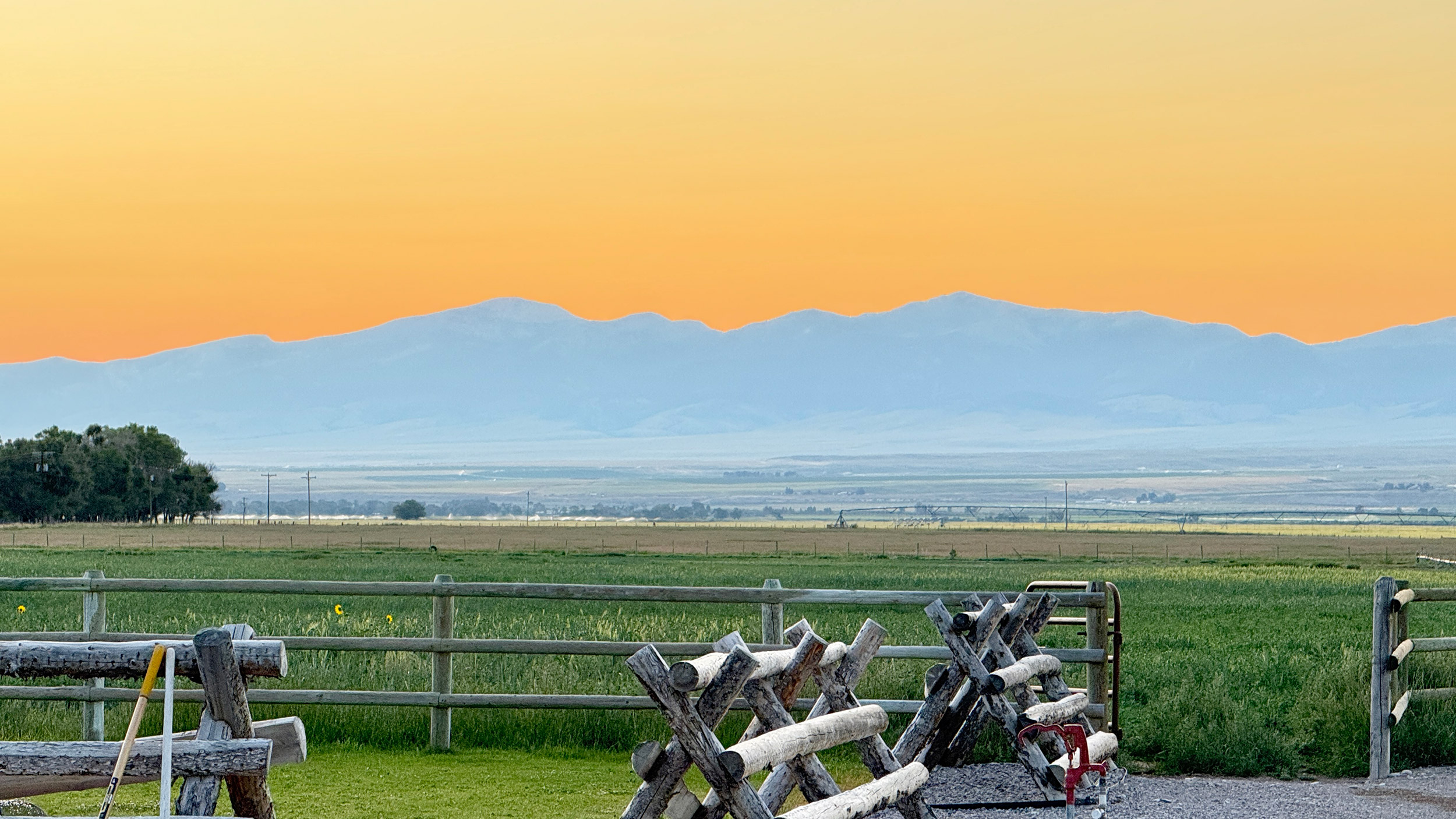
We stayed outside Dillon in a converted barn, with the accommodation upstairs and a broad balcony looking across the property towards the mountains. There was room for gear and enough space for everyone to settle in without living out of a suitcase. In the evenings the colours returned to hills that had looked pale and washed out during the afternoon.

Dillon feels more like a working town than somewhere arranged around visitors. Fly shops and restaurants sit among businesses serving the surrounding ranch country. It is easy to get into a routine: breakfast, the drive into town, the morning discussion with the guides, then off towards whichever river makes sense.

Those discussions matter. There is no need for everyone to fish the same stretch in the same way simply because it is printed on an itinerary. Conditions, recent reports and what the anglers want from the day all influence the choice. Someone who has enjoyed a productive day nymphing might want to spend the next looking for rises. Another might be ready to get out of the boat and walk.

The Beaverhead: A River That Keeps You Occupied

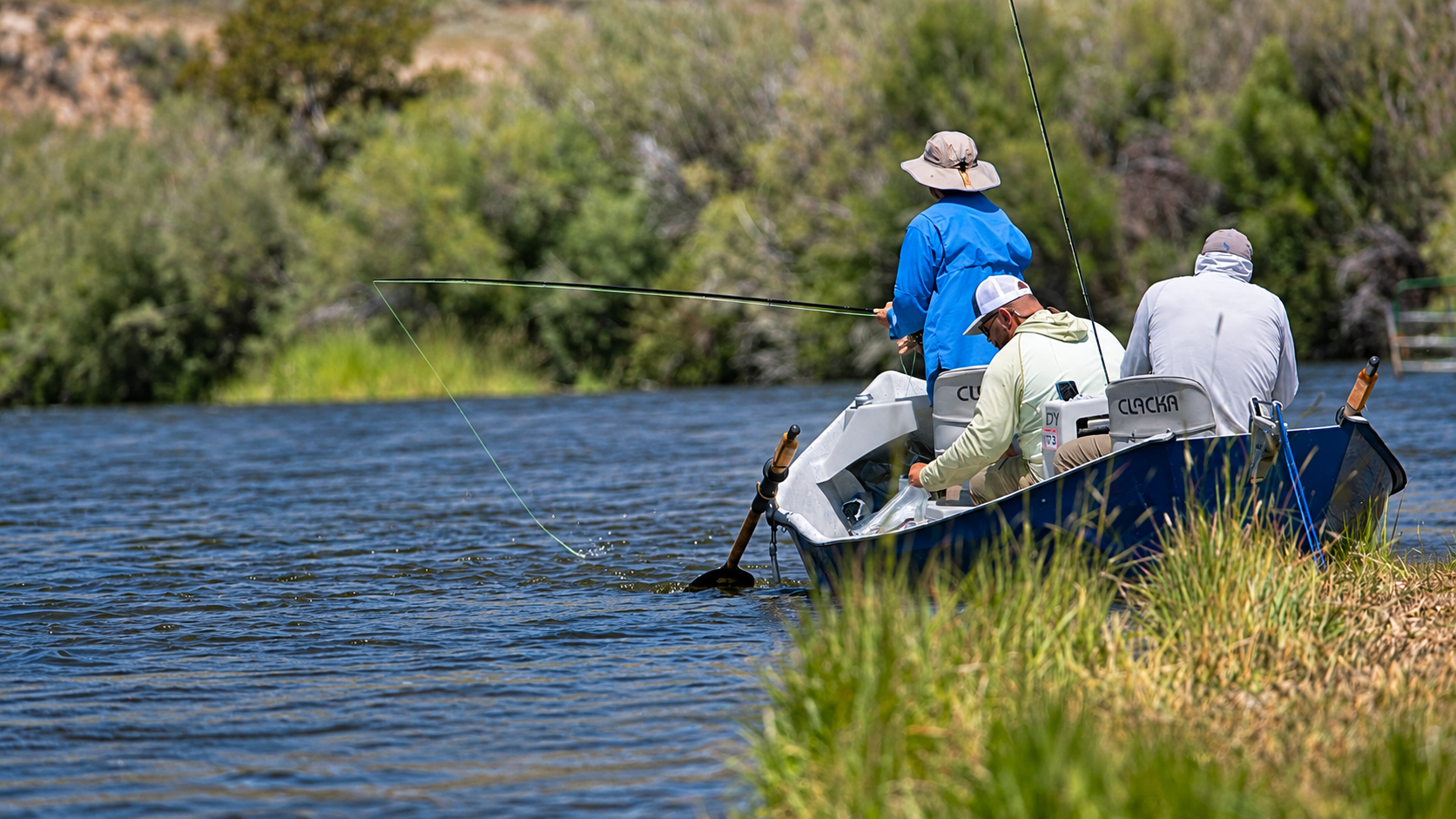
Below Clark Canyon Dam, the Beaverhead looks modest after the Missouri. It is narrow and quick, with runs that appear manageable until you begin fishing or rowing them. There is less room to let the boat wander while considering the next piece of water. The bends arrive quickly, and an angler’s opportunity can pass while the rower is still dealing with the previous one.

I have never been guided on the Beaverhead. My own experience of it has been from the oars of the borrowed boat, which is a good way to learn just how much is happening in a relatively small river.

The upper river’s nymph fishing is particularly productive. The rigs can look excessive: two nymphs, split shot and a round indicator the size of a very large marble. But the weight is there for a reason. The flies need to get down through the current and spend time close to the bottom.

Watching the indicator is an education in itself. As the weighted rig bumps along, it checks, dips and pulls under, then reappears and continues. Tap, tap, tap. You are watching the movement below translated into disturbances on the surface. Then, among all those interruptions, the indicator suddenly shoots upstream. Something considerably more mobile than the riverbed has become involved.

There are substantial trout to be caught that way. The fishing is hardly delicate in appearance, but the results make it difficult to argue with.

Choosing to Look Up

Not everyone wants to spend every day watching an indicator. After half a day, or a full day, fishing nymphs near the dam, some of the guests chose to return with dry flies or move farther downstream to water that better suited that approach.

The difference can be substantial. Taking off the weight and fishing the surface usually means accepting fewer fish. It also changes what occupies you. Instead of interpreting the movement of a bobber, you are watching the fly, the bank and the water around it, waiting to see whether a trout will come up.

Farther down, where the river flattens and grassy margins become more prominent, hoppers offer another way to fish. Those banks require attention. You want the fly close enough to the edge to be useful without leaving it in the vegetation, and the boat continues moving while you make the decision. The more open country does not necessarily make the presentation effortless.

I enjoy having that choice. There is no need to pretend the dry fly will produce the same numbers as a well-fished nymph rig. People can understand the trade and still prefer it. A good day on the Beaverhead might mean catching plenty of trout below the surface. On another day, fewer fish coming to a hopper could be exactly what someone wants.

That flexibility is one of the pleasures of staying several nights. Nobody has to make one day carry every ambition they have brought to Montana. There is another morning coming, and another way to fish.

The Big Hole: Room Around the River

The Big Hole opens the country again. The river is larger, although in summer the channel can seem generous for the amount of water passing through it. Ranches spread away from the banks, gravel and rock give the current more definition, and the views extend well beyond the next bend.

It is still working country, with ranches and open grassland along the river, but the wider catchment reaches into forested mountains as well. The contrast with the Beaverhead’s dam-fed course through the valley floor is part of its appeal.

Wildlife adds to that feeling. We can round a bend and find a large group of deer close to the water. Eagles are another familiar presence. Even when the trout are uncooperative, there is plenty to notice beyond the next likely run.

I had experienced quieter fishing there in the preceding years, so one of my more recent days on the Big Hole was especially welcome. A cold change had brought some rain. We fished the following day under cloud, with the air warming into the low to mid-twenties. Fish were rising from near the beginning of the drift, and the opportunities continued through to the end.

They were not as large as the Beaverhead trout we had been catching, but there were plenty of them and they were feeding on the surface. We kept finding another rise, another reason to pay attention to the water ahead. After visits when the fishing had asked considerably more patience of us, it was very good to be occupied by rising fish again.

There was no single fish that needed to rescue the day. The pleasure was in the continuing opportunities, working through different pieces of water and finding trout willing to come up. We had come back to a river that had disappointed us before and found it in a much more generous mood.

That does not make every subsequent visit predictable. It does give you a reason to keep returning.

The Ruby: Back on Our Feet

The Ruby gives us a change of pace. I do not fish it every year, but I like having a day on smaller water among the boat fishing. There is pleasure in stepping onto a bank, walking at your own pace and deciding which pool or run deserves some time.

You can search likely water with a dry fly or stop to work on an individual rising trout. Without the boat carrying you downstream, there is time to look at the current from different positions and think about where the fly needs to land. You can watch a fish for a while without worrying about where the boat will be by the next cast.

The local fly shops help take some of the guesswork out of the flies. Tell them where you intend to fish, down to the bridge or particular stretch, and they can often give a very useful account of what has been happening. The hatches are familiar to the people watching them every day. The remaining work is ours: find the fish, get into position and make the fly drift naturally.

That is what I enjoy about this sort of fishing. You can arrive with sensible advice and suitable flies, but there is still a particular fish in a particular current to deal with. You have to decide where to stand, how close to get and how to keep the line from pulling the fly out of its drift.

One spinner fall produced a moment I have thought about repeatedly since. A trout was rising like a metronome, taking insects with scarcely any interruption. There had already been two or three missed takes from that same fish. Then came a cast and drift that looked right.

The trout rose, but instead of taking the fly into its mouth, it lifted it on its snout. For a moment the artificial rode up with the fish. Then the trout sank and the fly settled back onto the surface and continued drifting.

We had been close enough to see what happened. From farther away it might have looked like another ordinary missed take. Up close, it was something much stranger: the fish had come for the fly, touched it and somehow left it behind.

After enough years of watching trout eat, you can still be shown a version you have not seen before. I remember that little sequence more clearly than plenty of fish that reached the net.

Back in Dillon

Evenings brought us together again. We ate at Sparky’s Garage and The Den, or settled back at the accommodation with the mountains beyond the balcony. After days on different rivers, there was plenty to compare.

There was no single description of how the fishing had been. The answer depended on the river, the section and what someone had chosen to do. A productive day with nymphs and a slower day with dry flies could both leave people happy. Getting out to walk the Ruby offered something different again.

That is what I value about this middle part of the journey. Dillon gives us choices without requiring another move every night. We can stay in one place long enough to become comfortable while the fishing changes around us.

Eventually the bags went back into the vehicles and we turned towards the Madison and Yellowstone. The Missouri’s long glides had given us one experience of Montana. Around Dillon, the Beaverhead’s quick runs, the Big Hole’s open country and the smaller decisions made on foot beside the Ruby had supplied several more.

There was another region ahead. By then, nobody expected it to fish like the last one.


The GVFFC newsletter

Stay connected with GVFFC

Enjoyed the read? Join us for fishing reports, stories from the river, trip news and more.

All subscribers are included in our monthly giveaway, with prizes including hand-tied flies, gear and gift vouchers.


By subscribing, you agree to receive the GVFFC email newsletter. Unsubscribe at any time.


Craig, Montana | Summer 2025
By Anthony Boliancu

There is a moment each year, soon after arriving in Bozeman, when I look towards the mountains and remember the scale of the place. We have left an Australian winter behind, crossed the Pacific and arrived in a summer that seems to have considerably more daylight than it knows what to do with. The fishing is still ahead of us, but the journey already feels worth the effort of getting there.

In 2025, I hosted three consecutive thirteen-day trips, returning to the same regions with successive groups as summer developed. These dispatches draw on those visits rather than a single departure. That was particularly noticeable on the Missouri. We would leave with one set of hatches occupying us, then return with the next group to find the fishing had changed completely.

Most of our guests arrive two or three days before the hosted trip begins. That gives them time to recover from the flight, explore Bozeman and arrive at the first fishing day feeling reasonably human. At least that’s the plan. The Museum of the Rockies, fly shops and cafés provide plenty to occupy those early days. There is no shortage of equipment to inspect, although arriving with a full suitcase rarely prevents an angler finding room for something else.

We generally meet for dinner on the Saturday before the trip begins. It is a chance for those who have arrived to get together, and occasionally the evening supplies a story of its own. For one of our July groups, that involved front-row seats at a Rich Hall comedy show. All went to plan until one of the group offered some good-natured heckling. Rich took the invitation seriously. The resulting ten-minute dismantling left the rest of us in tears. Any formality that might have survived dinner was gone by the time we left the show. The first guided day was still ahead of us, but we already had something to laugh about together.

On the Road to Craig

The following morning we loaded the vehicles and headed towards Craig, travelling through Helena before meeting the Missouri in all its splendour. Cottonwoods gathered along the water, cliffs rose beyond them, and the river began appearing beside the road. After all the flights, planning and anticipation, we were finally looking at the water we had come to fish.

My connection with the Missouri began long before I first visited it. In the 1990s, while working night shifts in Australia, I spent hours talking online with American anglers. Among them was Leon Chandler, who would describe what was happening on the river while I sat on the other side of the world. He talked about hatches, changing flows and stretches that had fished well. For years he encouraged me to come to Craig.

Back then, the trip seemed a very distant possibility. I could afford to listen much more readily than I could afford to go. Returning now with a group of anglers gives those old conversations another dimension. I know what it is like to carry a version of this river in your imagination before seeing it. Those long, slow slicks full of caddis and rising fish. The incredible headhunting for picky fish on smooth water. This is truly one of the world’s great fly fishing rivers.

Our accommodation sat beside the Missouri, with a broad deck, a stone firepit, a substantial barbecue area and comfortable chairs well suited to people who had spent a long day in a boat. We could see the river from the house and had easy access to a small stretch of water. After the movement of arrival, it was good to unpack properly and settle somewhere for several nights.


A Town Arranged Around Fishing

Craig is small enough that its reputation seems out of proportion to everything that sits within the zip code. Fly shops, places to eat and drink, and drift boats account for a considerable part of what a visiting angler notices. There is little separation between the town and the fishing. The river supplies the work, the visitors and much of the conversation.

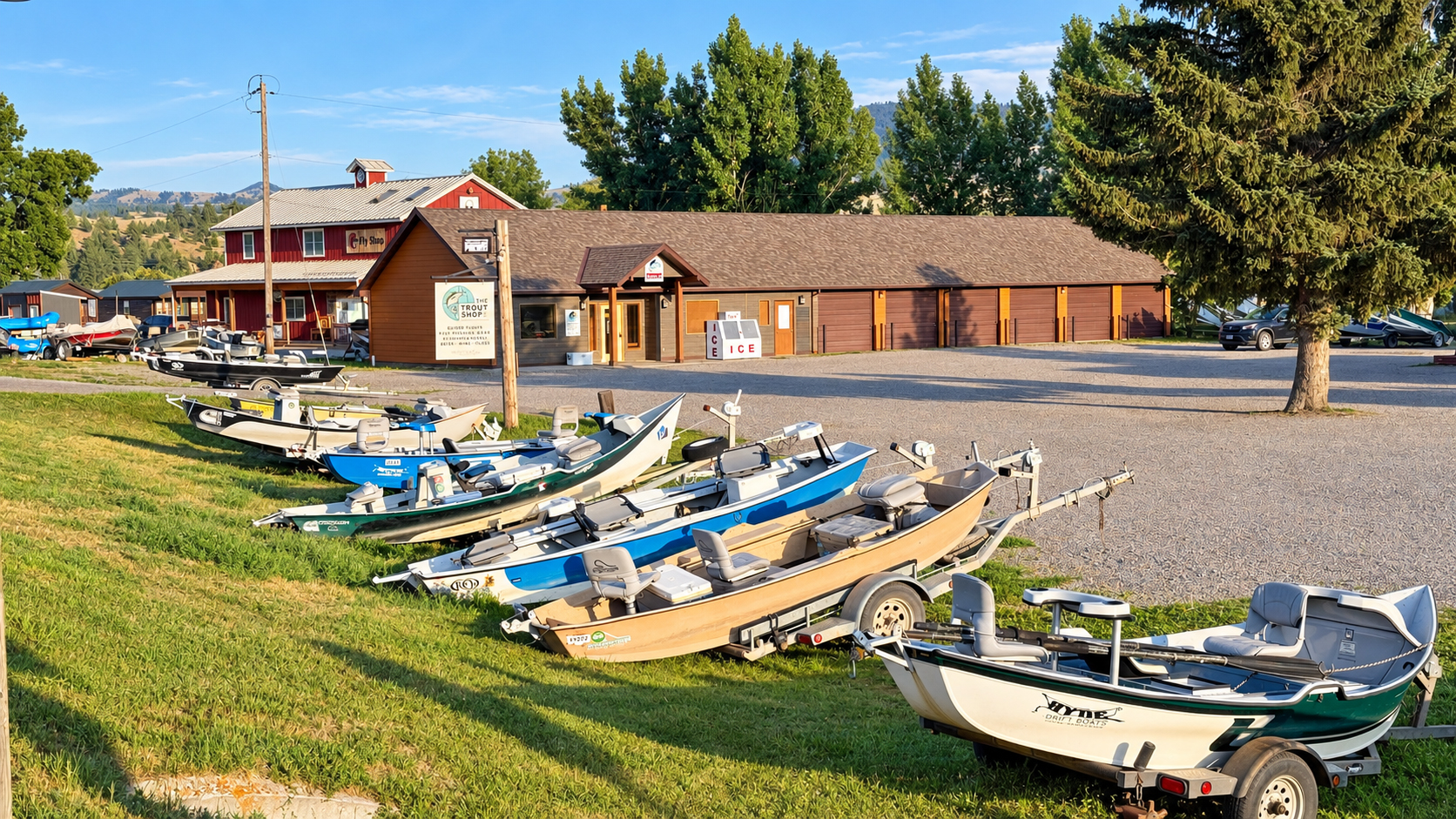
We meet our guides at The Trout Shop each morning. Coffee, rods, fly choices and the usual mixture of confidence and curiosity come together before we set off. Mornings in Craig have their own familiar sounds: boat trailers moving and people getting ready for the water. For anyone who spends much of their life around drift boats, it is a pleasant place to begin a day. For newcomers, it is extremely exciting.

The guests fished with the local guides, while my own days varied. Sometimes I joined a guided boat when there was a spare seat. At other times I rowed the boat a friend in Bozeman had lent me, or fished with a guide friend on his day off. Those different days gave me time both alongside the group and on the water myself.

From a distance, the Missouri can look almost too broad to make sense of. There are long glides, seams extending well ahead of the boat and enough water to make you wonder where to begin. Once the fish start rising, the scale changes. Your attention narrows to a particular seam or one trout feeding within it.

That is part of what makes the river so absorbing. The landscape is enormous; the thing occupying you may be a size 18 fly.

From the Dam to Cascade

The three guided days give the guests a chance to see how much the Missouri changes as you move downstream. We often spread the fishing across different sections: from Holter Dam towards Craig, from town into the canyon, then from farther down around Mid Canon out towards Cascade. It is a useful way to experience the river rather than spend every day looking at another version of the same water.

Near the dam, much of the productive fishing happens beneath the surface. Some guides use surprisingly substantial crayfish imitations, working them just above the bottom in the pool below the spillway. They are a considerable contrast to the tiny flies we offer spinner-feeding trout. Both belong to the same river, sometimes within the same hour.

Farther downstream, the water spreads across broad, weedy flats. The current can look almost uniform until you watch it carefully. A line of bubbles moves at a slightly different speed from the water beside it. A fish rises along an edge that seems indistinguishable from everything around it. These are the stretches where the Missouri’s reputation for demanding dry-fly fishing makes immediate sense.

Below Craig, the country begins closing around us. Rock walls rise higher, there are more boulders and quicker pieces of water, and the boat requires a different sort of attention. The broad flats give way to a river moving through a canyon, with the walls towering above us as we work downstream.

The fishing changes with it. A long drift over smooth water is no longer the only thing to consider. There are shorter opportunities around individual rocks and along the edges of quicker current. You can be occupied with the water beside the boat, then look up and realise how much of the sky the canyon walls have taken away.

Eventually those walls fall back and the river emerges into open country towards Cascade. The horizon widens, the grass is dry, and the enclosing rock gives way to farmland and long views. This is hopper country, and rattlesnake country too, a very different setting from the water near the dam.

My experience of those lower reaches has generally been fewer fish, but a better chance of a particularly good one. The attraction is less about finding another pod of trout feeding steadily on small insects and more about working likely banks with a grasshopper pattern, knowing that a fish might appear without first announcing itself with a rise.

Cascade also offers a useful variation on the usual riverside lunch. More than once we have anchored near the bridge, left the boat in the shade and walked up to the Driftwood Bar and Grill. It hardly looks like a bar from the outside, but the burgers and chips are very good.

I like those stops. You spend a little time in a town that might otherwise be little more than a name attached to a take-out. There is no need to load the boat or organise another drive. We leave the fishing where it is, walk up for lunch and return to it afterwards. Not everything about a fishing trip needs to be more complicated than that.

Learning the Missouri

Much of our fishing is from drift boats, but covering water is only part of their value. They also give us a way to approach individual fish and present a fly from a useful angle. On broad, smooth water, the position of the boat and the path of the leader matter a lot more than the distance of the cast.

We fished pale morning duns, usually shortened to PMDs, caddis and, as July progressed, Tricos. The flies were often modest things to be offering substantial trout: PMDs in sizes 16–18, caddis around size 16, and Tricos down to 20–24. There was plenty of opportunity at just about any time of the day, but the river does not dispense with the need to fish carefully. You still have to get a lot right to enjoy repeated success on the Missouri.

During spinner falls, pods of trout rise steadily in the slower water. We use long leaders and downstream reach casts to keep the fly drifting without drag. At other times the opportunities are scattered along the banks, where caddis bring fish up in the shadows of overhanging foliage. A cast suited to one situation is not automatically the right answer in another.

The Missouri rewards watching. A rise gives you a place to begin, but the next rise tells you more. With several fish feeding in front of you, there is a temptation to keep changing targets. It is often more useful to choose one and concentrate on getting a good drift over it. A surface pockmarked with rises can produce a surprising amount of unproductive casting.

For me, the pleasure lies in that combination of abundance and difficulty. There were enough feeding fish to keep any fly fisher interested, but no reason to become casual about the fishing. There were huge numbers of solid rainbows and browns. But, as is often the case, seeing them and catching them are two entirely different things.

Following the Hatches

Returning with successive groups allowed us to see the season developing. On the earlier departures, PMDs and caddis featured heavily. Duns recirculated through the back-eddies while spent spinners collected on the slower water, and the trout gave us plenty of time to look closely at what they were eating. Even so, there is an element of guesswork going on at times.

The caddis fishing brought a different sort of activity. They were particularly noticeable in the late afternoons and evenings during our early visits. We would come around a slow corner and find the surface disturbed by repeated rises. At other times, fish fed less consistently along side channels that most people drifted right past.

X-caddis and CDC emergers both had their place, and we also caught fish on soft hackles with a bit of movement imparted at just the right moment. Having several ways to approach the fishing was useful. At times, overlapping hatches meant you could throw different flies to different fish. The day could move from careful presentations to steady risers into something less orderly, and it paid to change with it.

By our later visits, Tricos had become more prominent on some of the flatter water, particularly on calm mornings. Fine weed fragments were another feature of late July. Keeping the fly clear became part of the routine, sometimes requiring just enough false casting to shake the debris away before making another presentation. It was a minor annoyance (Google ‘first-world problem’), but in the end it was only a small interruption.

Staying through several departures meant that these changes became part of my summer, even though each group encountered only a few days of them. The river I returned to with the next guests was familiar, but the fishing was not simply a repeat of the previous visit.

There is a danger in describing all of this as though a hatch chart could have organised the day for us. It couldn’t. Those were the insects we encountered and the approaches that worked at different times. The interesting part was carefully watching the water in front of us and trying to work it all out.

One rainbow remains especially clear in my memory. The angler was visiting Montana for the first time and fishing a size 18 spinner. The trout originally let the fly pass, hesitated, then reversed direction and came back to sip it while facing us. We could see the whole sequence. There was no spectacular or aggressive take. The fish simply changed its course and took the fly. That was enough. Among the hatches, different stretches and photographs from those days, I still remember that small movement and how clearly we all saw it.

Craig After Hours

Back at the accommodation, the deck gave everyone somewhere to settle without leaving the river behind. Photographs were passed around and the day was recounted while the light changed across the water. A boat drifting home or a trout rising below us could interrupt the conversation without anyone considering it an interruption.

“You had to be there” is how I’d best sum it up.

Dinner was often at The Trout Shop’s restaurant. The meals were substantial and straightforward: steaks, ribs, lamb, seasonal sides and local beers. After a full day outdoors, there was little need to make the evening complicated. Some of the group wandered out for another drink and a game of shuffleboard. Others stayed near the firepit.

With boats fishing different sections, there was more to discuss than how many trout someone had caught. One pair might have spent the day concentrating on small flies and steady risers, while another had worked through the canyon or fished hoppers towards Cascade. We were staying beside the same river, but people returned with different accounts of it.

I like having that room around the fishing. A hosted trip can become too tightly packed if every hour needs an activity attached to it. Here, the river occupies the day, and the evenings can find their own pace. People can talk tackle, politics or home, study photographs, or sit quietly with the water in view.

That ease matters when a group is travelling together for nearly two weeks. The fishing supplies a shared interest, but it is the time around it that allows people to get to know one another. The comedy night had helped us along. So did several days of fish that offered everybody something to celebrate and something to reconsider.

Turning South

By the time each group’s three Missouri fishing days were over, the casting had sharpened and people had settled. The river no longer looked like a single broad expanse. Its different sections had begun to acquire their own character: the flats below the dam, the enclosed canyon, the open country towards Cascade. We had also begun recognising the smaller opportunities within each of them.

Then it was time to pack the vehicles again.

Dillon was next, with the Beaverhead, Big Hole and Ruby waiting to give us a different set of problems. There would be different drifts and water that bore little resemblance to the stretches we were leaving behind.

For now, though, the first leg had given us a place to settle and fish properly. The flights felt a long way behind us. Craig had become familiar.

We turned south with most of the trip still ahead.


The GVFFC newsletter

Stay connected with GVFFC

Enjoyed the read? Join us for fishing reports, stories from the river, trip news and more.

All subscribers are included in our monthly giveaway, with prizes including hand-tied flies, gear and gift vouchers.


By subscribing, you agree to receive the GVFFC email newsletter. Unsubscribe at any time.


Montana Skies and Thoughts of Home

I’m writing this from the porch of a cabin in Montana. The sun has dropped behind the hills, a few swallows are still working the evening air, and somewhere downstream somebody is probably convincing themselves there is time for one last fish. I’ve spent enough evenings doing exactly that to recognise the temptation. Tonight, though, I’m happy to sit here. We have been travelling and fishing for nearly a month, and there is plenty to think about without assembling another rod.

Our days have taken us across the Missouri, the Madison, the Yellowstone and smaller waters in between. Coffee just after daylight, long drifts, lunch when we get around to it and the day’s stories over dinner have become familiar routines. Each evening brings another discussion about where to fish tomorrow. After a while, it becomes difficult to remember what was occupying so much of your attention before you left home.

I’ve been making these journeys for years, organising and hosting rather than guiding. The local guides look after the fishing, and they do it very well. Besides, I would rather avoid testing American immigration law as I would like to keep returning here in the years to come. My part involves arranging the accommodation, transport and fishing, then sharing the journey with a small group of anglers. Many return regularly, and over time the distinction between clients and friends becomes less important than the fact that we enjoy being here together.

Exchanging an Australian winter for an American summer is an arrangement I have found very little reason to reconsider. There are remarkable rivers, people I look forward to seeing and places that have become familiar through repeated visits. Yet one of the unexpected consequences of spending so much time away is how often my thoughts return to Australia. I can spend the day thoroughly occupied by a Montana river and finish it wondering about home.

Distance seems to make room for that. At home, there are bookings to organise, bills to pay, emails to answer and the next thing that needs doing. You can be completely involved in the daily business of living somewhere without spending much time considering the place itself. Away from it, with a little space around the usual obligations, I find myself thinking about things that would otherwise remain at the edge of my attention.

What comes to mind is not necessarily the Australia being argued over on television or in the comments beneath a news article. It is the country I know through the people I spend time with, the communities I have lived in and the work that has occupied most of my adult life. My affection for it has never depended on believing we get everything right. But I do find myself wondering about changes that are harder to describe than a new housing estate or a road that has become busier.

The Australia I remember growing up in felt more certain of itself. There seemed to be a stronger expectation that, despite our differences, most people were broadly working towards something shared. Communities felt more connected, institutions seemed more trusted and the future appeared less uncertain. That is how I remember it, which is an important qualification. I was younger, knew less and had considerably fewer things to worry about. Some of what I recall as confidence in the country may simply have been confidence in the life ahead of me.

I’m conscious of that when these conversations come up. Every generation seems to reach an age when it begins comparing the present with a version of the past that has become easier to like. I don’t want to mistake familiarity for virtue or assume something was better simply because I understood it. Equally, I don’t think every concern about change can be dismissed as nostalgia. There can be things worth keeping without wanting to put the whole country back where it was.

Over the past few years, I have found myself having versions of this conversation with people whose lives are quite different from one another: doctors, tradesmen, farmers, teachers, business owners and retirees. They do not all identify the same problems, and they certainly do not agree about the answers. But I keep hearing a similar uncertainty about where we are heading and how we arrived here. I find that worth listening to, even when I’m not convinced by the explanation that follows.

Spending years on the same rivers makes you aware of how much can change before you properly register it. A bank gives way, a gravel bar builds, timber shifts and the current begins favouring another channel. You adjust where you stand or how you row and carry on. Then an old photograph shows you how different the place has become. What felt like a succession of small adjustments has amounted to something considerable. A country is more complicated than a river, but I recognise something of that experience when people talk about home.

The comparison does not tell me which changes are good or bad, let alone what should be done about them. It simply reminds me to look carefully before deciding I understand what has happened. Guiding has made me less comfortable with certainty than I was when I started. A convincing explanation of the fishing can survive right up until the next cast proves it wrong. Experience helps, but only while you remain willing to notice what does not fit your explanation.

The conversations have taught me much the same thing. Thirty years in a boat gives you time with people whose knowledge extends well beyond your own. Someone arrives to learn about fishing and, over the course of the day, you discover that they understand something you have barely considered. Their experience may not settle your opinion, but it can make it harder to hold quite so confidently. I have come to value that more than the satisfaction of finding somebody who agrees with me.

That is part of what I want Between Casts to make room for. There will always be fishing, but a life built around rivers brings you into contact with far more than fish. Travel, history, books, friendship and the places people come from all find their way into the conversation. Occasionally the writing will follow those interests into larger questions about Australia and the society we are making together. I would rather allow that curiosity than pretend every thought worth writing down has to end with a trout.

I don’t expect to resolve much from a cabin porch, and being a long way from home does not automatically make my view of it clearer. Distance can simplify things as easily as it can help us see them. But it does give me time to consider what I value, what concerns me and what I might have been taking for granted. Writing some of it down seems worthwhile, particularly if it begins a conversation rather than trying to finish one.

The last of the light has nearly gone now. Tomorrow we will be back at the boats, thinking about wind, insects and how to persuade a trout to eat something we have tied to a leader. There will be plenty to occupy us. Tonight, though, I’m content to leave the fishing until morning and sit with these thoughts of home. I have come a long way to be beside this river. It is curious how often it brings me back to Australia.

Ant