Category: Latest Articles

The latest stories, reflections, fishing reports, travel journals and observations from Between Casts.

For years, Yellowstone had been a fishing place to me. I knew it through the Lamar, Soda Butte and Slough Creek, through long days walking into isolated lakes and mornings spent searching for cutthroat in water that seemed almost too beautiful to spoil by wading. Some seasons I fished inside the park for twenty or twenty-five days. In others, only five or six. Either way, it was always one of the high points of the trip. I knew where to stop, where to walk, which stretches were worth the effort and which roads would be clogged by midmorning. I knew which valleys held their cold longest, where the bison tended to gather, and how quickly a quiet roadside pullout could become impossible once the traffic began.

I had spent first light in the Lamar Valley with a long lens, tripod and teleconverters, scanning the hillsides for bears and wolves before turning my attention back to the rivers. Wildlife had always been part of Yellowstone for me, but usually as an opening act. Once the light strengthened, the camera went away, the rod came out and the day reorganised itself around water. I thought I knew Yellowstone.

This time, I was seeing it through my children. We had been moving through the park and the surrounding country for almost two weeks. We entered first from the south, after driving through Grand Teton National Park and stopping at Schwabacher Landing, where my wife and I had been married years earlier. We stood there again with our children beneath the same mountains, looking across the water towards the Tetons. The scene was familiar, but not in the way I expected. Memory had held it still. Life had not.

Returning with the children changed the place. It was no longer simply the backdrop to an earlier part of our lives. The four of us were standing inside the same landscape years later, trying to reconcile memory with the people we had become. There is something strange about returning to a place that has carried such importance in your mind. You expect it to unlock the earlier version of yourself, but it rarely does. The mountains are still there. The reflections still gather in the same water. What has changed is the person looking at them. My wife and I were no longer the couple who had stood there alone. We had arrived with two nearly grown children, each seeing the place without the weight of our memories. To them, it was simply beautiful. To us, it was beautiful and crowded with time.

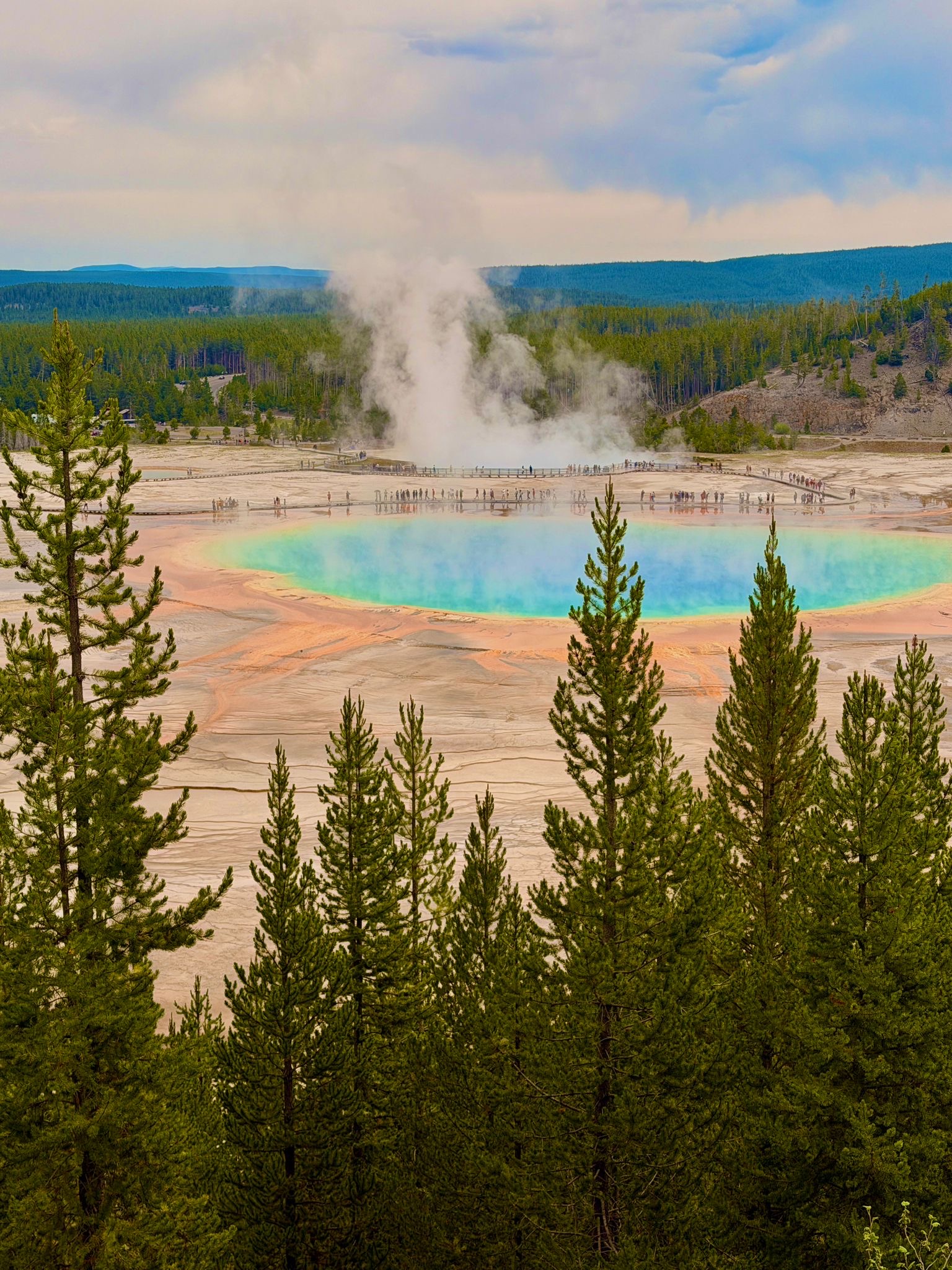
Nearby, we visited Jenny Lake and the overlook above the Snake River, then spent time hiking in the country between Jackson and Victor. Later, we drove around and entered Yellowstone through West Yellowstone, beginning a more familiar circuit through Old Faithful, Grand Prismatic, Yellowstone Lake, Hayden Valley and the canyon. The children were interested in the fact that we were driving inside a volcano. As we moved through the park, I tried to explain the caldera, pointing out sections of its rim and showing them on Google Maps and paper maps. It is one thing to tell someone that Yellowstone sits inside one of the largest volcanic systems on earth. It is another to show them that they have been driving across it for hours without reaching the other side.

The scale is difficult to comprehend because the landscape does not present itself as a single crater. It arrives as forests, rivers, lakes, valleys, geysers and long roads. You pass through it piece by piece, never quite able to hold the whole thing in your head. I explained the magma chamber, the ancient eruptions and the continuing movement beneath the ground. I pointed towards steaming hillsides and mineral terraces and tried to make the invisible machinery beneath us feel real. They listened, asked questions and then, quite often, fell asleep. That became part of the rhythm of the trip. I would begin explaining some geological or historical detail with the confidence of a man delivering essential information, glance into the rear-view mirror and find both children asleep against the windows.
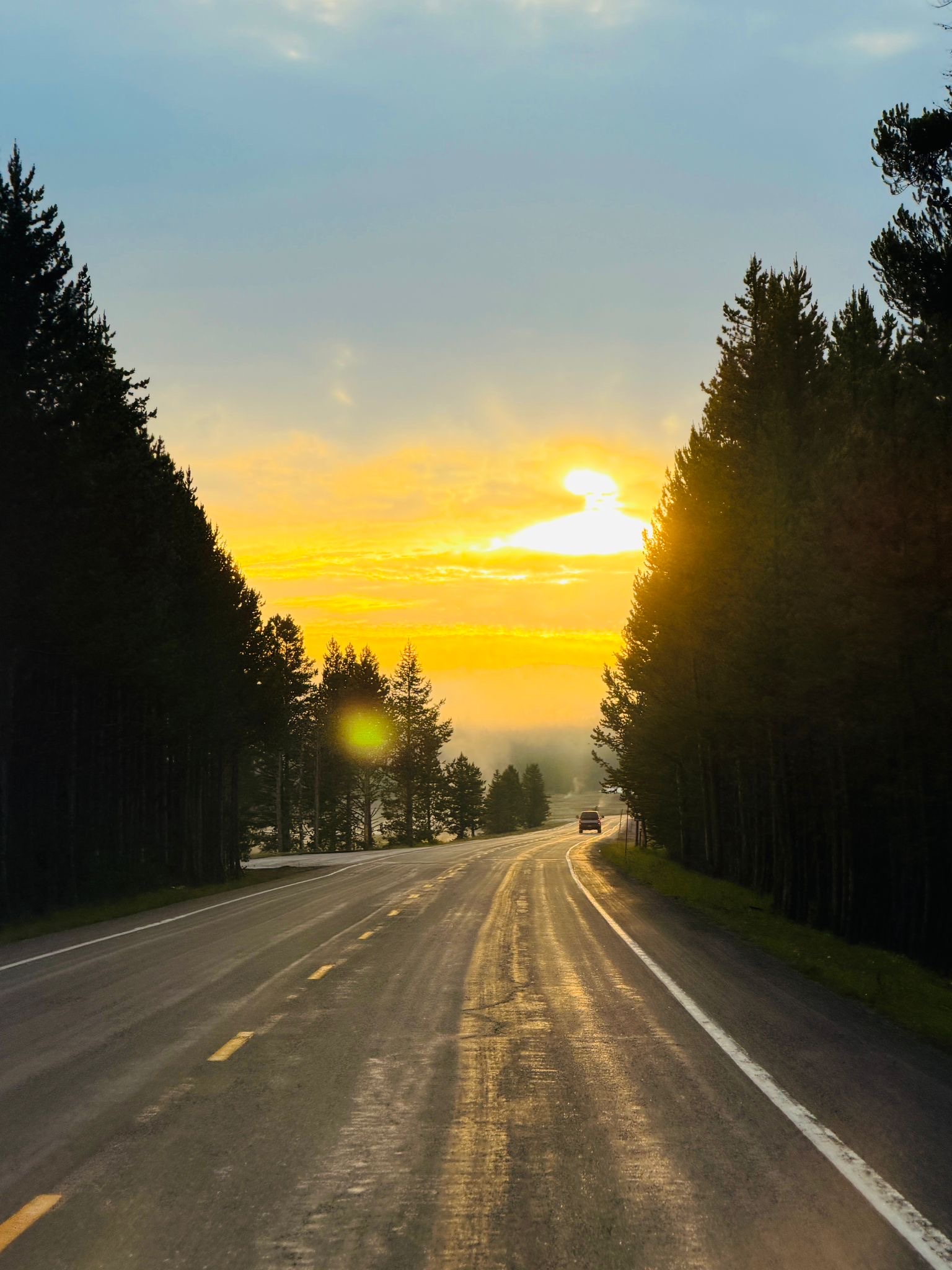
Our mornings began at four. To see Yellowstone properly in summer, you need to move before most people have left their beds. By first light, we were already in Hayden Valley, binoculars raised, searching the slopes and timber edges for grizzly bears. At that hour, the roads were quiet and the park still belonged largely to the animals. The light arrived slowly across the valley floor. Bison moved through the grass, and every dark shape near the timber demanded a second look through the binoculars. The mind begins playing tricks in country like that. A stump becomes a bear. A shadow becomes a wolf. A distant bison lying in the grass can occupy ten minutes of serious discussion before finally standing up and resolving the matter.

The forecasts had suggested temperatures in the mid-thirties, but we were fortunate. Most days remained overcast and rarely climbed beyond the high twenties. The cooler conditions kept the animals active for longer and gave us more time before the heat, traffic and crowds began to take over. At first light, the park felt almost empty. We walked along raised timber boardwalks above steaming mud and mineral-stained ground with barely another person in sight. The smell of sulphur hung over everything, sometimes so strong it turned the stomach. Steam moved across the path in slow sheets, briefly hiding the landscape before lifting again. The ground hissed, bubbled and breathed beneath us.

There are few places where the earth feels so visibly unfinished. The surface looks temporary, a thin crust stretched over heat and pressure. Water appears in impossible colours. Mud boils. Fumaroles breathe. Entire hillsides seem to be decomposing in front of you. The boardwalks are there for good reason. Wander a few steps in the wrong direction and what looks like solid ground may be little more than a fragile lid over boiling water.
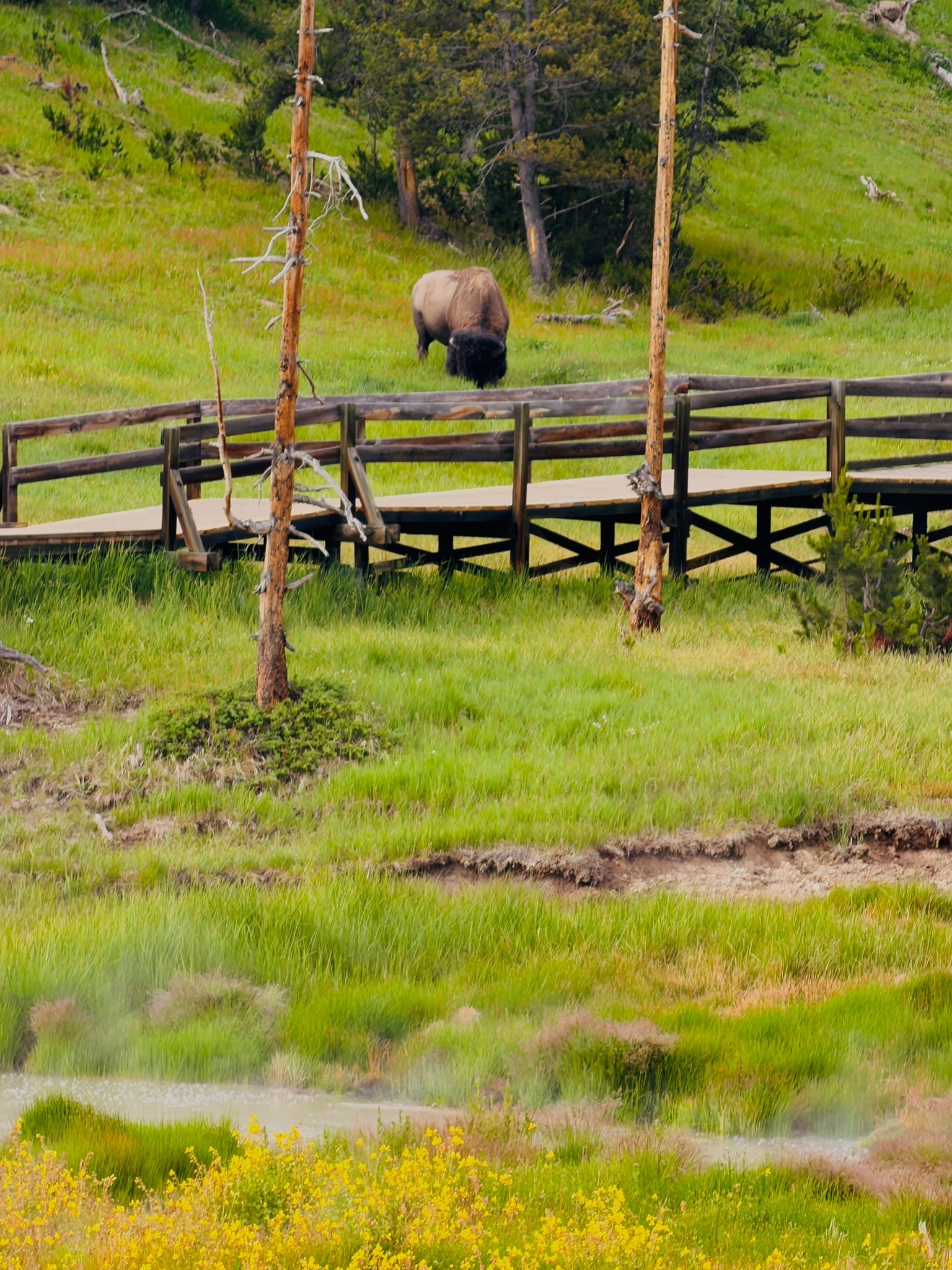
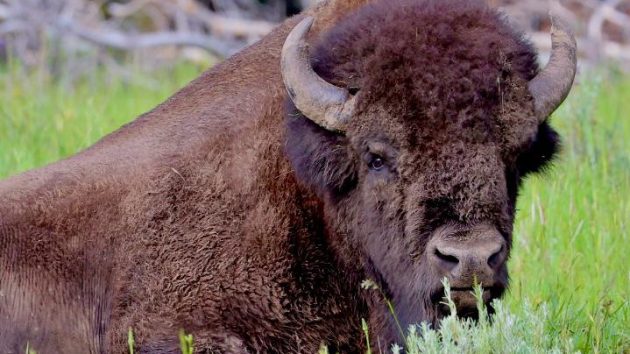
Our first close bison encounter came near one of those thermal areas. It moved beside the boardwalk with the complete indifference of an animal that had seen thousands of people and been impressed by none of them. The size of a bison is difficult to appreciate until one is close. Photographs flatten them. From only a short distance away, the weight of the shoulders, the thickness of the skull and the quiet authority with which they move become impossible to ignore. There is no hurry in them. They move as though the rest of the world will make way, which, generally, it does.

Later, we watched them walk between stopped vehicles, bringing traffic to a standstill while people leaned from windows and held up their phones. Some got out and moved far closer than any sensible person should. That part of Yellowstone never changes. The wildlife is extraordinary. The human response to it can be equally remarkable, though not always for the same reason. Every year, people are warned to keep their distance. Every year, someone seems to interpret a bison standing beside the road as an invitation to move closer for a better photograph.

The children loved the bison, elk, deer and the few moose we managed to find. They slept between sites, waking when something appeared beside the road or when we reached the next stop. Their days developed a rhythm of early excitement, midmorning exhaustion and sudden revival whenever an animal came into view. For me, the pleasure was not simply in seeing these things again. It was watching them see them for the first time. There is a particular expression children have when something exceeds whatever picture they had formed in their minds. It is not quite surprise. It is recognition mixed with disbelief. The animal, mountain or geyser is suddenly real, but larger and stranger than expected.
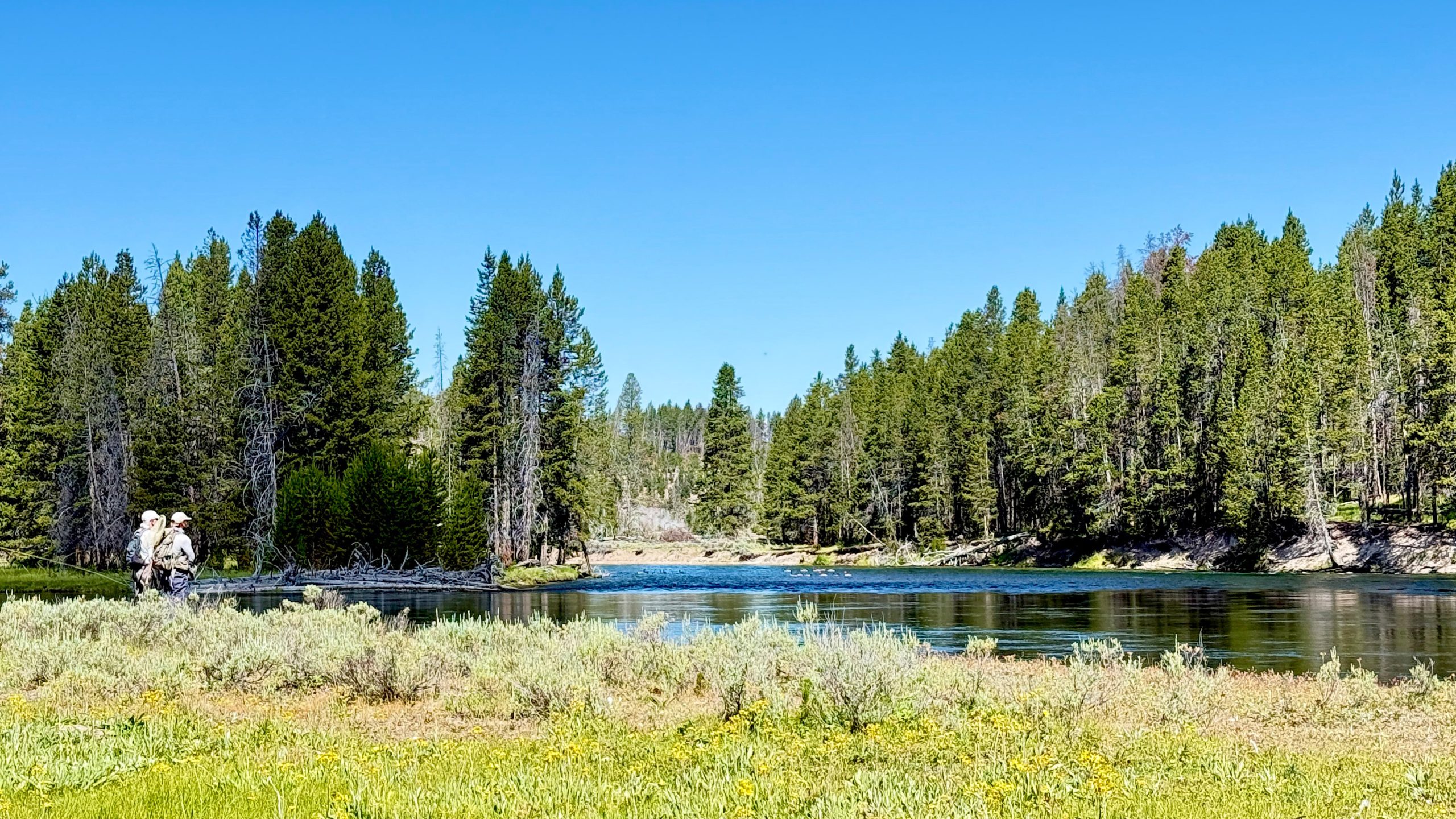
Before this trip, Yellowstone had been organised around opportunity. Which river was fishing well? Where were the cutthroat rising? How early could I reach the second meadow without running into a bear? There were still fish, of course, but they fitted around everything else. This time, the park itself was the point.

If we happened to pass a river and saw fish rising, it did not take long to pull over. I could be out of the car in shorts and sandals, vest on, net in one hand and rod in the other. I might catch a few fish and be back on the road within half an hour. Those brief sessions had their own appeal. There was no time to overthink them. You saw a rise, found somewhere safe to pull over and stepped into the river with whatever you already had rigged. A few casts, perhaps a cutthroat or two, and then the vest came off, the rod went back in the car and the journey continued.

There is a freedom in fishing without trying to build a day around it. You accept the water as you find it. There is no pressure to solve everything, no need to stay until the last rise. You are simply passing through and lucky enough to be holding a rod when something happens. There were also a handful of more serious sessions, when the fishing became the purpose and we walked some distance from the road to reach quieter water. For the most part, though, it happened only when it fitted comfortably with the rest of the day. That was new for me. In other years, everything else had been arranged around the temperament of trout.
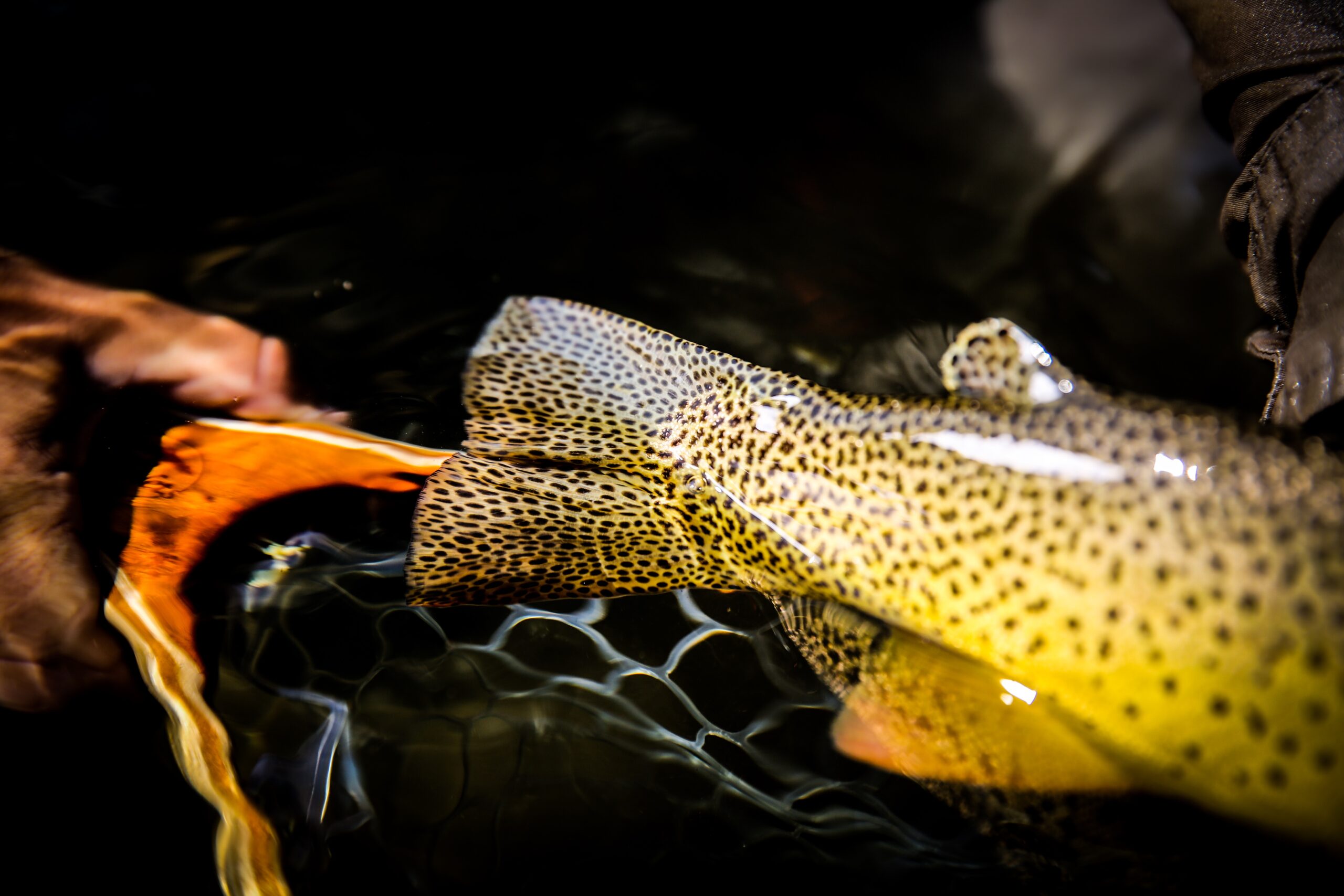
There is something special about standing in a river in Yellowstone, especially with your family nearby. It feels different from fishing with a mate who understands the country, knows the risks and is responsible for himself. When your children are with you in bear country, your attention stretches well beyond the water. You look over your shoulder more often. You listen harder. You notice the wind, the timber behind you, the smell of the air and any movement along the bank. All the senses seem to sharpen at once.

Bear encounters are not as common as people imagine, and bear spray, sound judgement and knowing how to respond make the risk manageable. But none of that entirely silences the older, more instinctive part of the brain that keeps rehearsing the worst possible outcome. You begin calculating distances without meaning to. How far are the children from the car? Which direction is the wind carrying our scent? How thick is the timber behind us? Where is the bear spray? Is it still clipped where it should be? It heightens the fishing rather than diminishing it. The current against your legs, the rise of a cutthroat, the sound of water over stone and the knowledge that you are standing in a genuinely wild place all seem more vivid. It makes you feel intensely alive.

We also did the things I had often passed by. We sat on bar stools and ate a classic American breakfast in one of the tourist places near Old Faithful. There were eggs, bacon, coffee and the familiar low hum of travellers discussing routes, weather and what they hoped to see. We waited for geysers, walked among thermal basins and stood with everyone else above the canyon and waterfalls. In other years, those places had often been something to move past on the way to a river. This time, we allowed them to become destinations in their own right.

Old Faithful is easy to dismiss because everyone knows it. Its eruption times are predicted, the seating fills and hundreds of cameras are raised before anything happens. Yet when the water finally surges into the air, it is still extraordinary. The familiarity of an image does not make the real thing ordinary. The same was true of the Grand Canyon of the Yellowstone. I had seen it before, photographed it and passed through with fishing gear waiting in the car. Standing there with the children, with no immediate need to hurry elsewhere, I understood how often purpose can narrow a place. You see what you came to see and overlook the rest. None of it was new to the world, but much of it was new to us as a family.

By ten in the morning, the park began to change. The empty boardwalks filled. Cars appeared from every direction. By the time we reached Grand Prismatic, we had to park hundreds of metres away and walk back towards the access points with crowds moving in both directions. The difference between dawn and late morning was extraordinary. Only a few hours earlier, we had been walking through thermal country with barely another person in sight. Now every car park was full, the roads were slowing and the quiet of the morning had been replaced by doors slamming, engines idling and people trying to work out where to go next.

At first light, Yellowstone feels enormous. By midday, it can feel strangely confined. A single animal beside the road can stop traffic for kilometres. One full car park pushes vehicles onto the shoulder, then farther along the road, until the landscape begins to look less like wilderness and more like an event everyone has arrived late for. When we left through West Yellowstone around midday, the line of incoming vehicles stretched from the entrance, through the traffic lights in town and beyond its outskirts. It was difficult to look at that line and imagine it as sustainable forever.

Still it remains one of the most extraordinary places on earth, but it is becoming increasingly clear that a place can be loved too much. Not through neglect or indifference, but through the sheer number of people who want to experience it. We were part of that number. My family had every right to see the park, just as the people waiting in those cars did. That is what makes the problem so difficult.

It is easy to complain about crowds when you are already inside the gate. It is easy to imagine that your reasons for being there are somehow more legitimate than everyone else’s. The angler believes he understands the rivers. The photographer believes he rises earlier and behaves better. The family has crossed the world to be there. The retired couple may have waited their whole lives. Everyone has a reason.

The challenge is not keeping people away. It is finding a way to let them in without slowly destroying the very experience they have come to find. Perhaps the answer begins with time: earlier mornings, longer stays, shuttle systems, fewer cars in the most congested places, and a willingness to accept that some landscapes cannot absorb unlimited access simply because demand exists.

Perhaps it also begins with the visitor. Move earlier. Stay longer. Walk farther. Give animals space. Accept that not every sight needs to be approached, photographed or converted into proof. Let other people experience the place without becoming part of their experience.

At dawn, those ideas feel possible. The roads are empty. Steam moves across the boardwalks. Bison graze without an audience. For a brief hour or two, Yellowstone appears untouched by the pressure gathering beyond the entrances. Then the sun rises, the cars arrive and the spell begins to thin.

That may be why first light has become the Yellowstone I remember most clearly from this trip. Not simply because the animals were active or the roads were quiet, but because it allowed us to see the park before it became an attraction again.

For years, Yellowstone had been a fishing place to me. This time, fishing became one small part of something larger. I still remember the cutthroat rising, the rivers slipping through meadow country and the familiar pull of wanting to stop at every piece of likely water. But I remember just as clearly the children waking when a bison appeared beside the road, standing again with my wife beneath the Tetons, steam crossing an empty boardwalk and four of us driving through the caldera before sunrise.

I had thought I knew Yellowstone because I knew its rivers. It took my family to show me how much of it I had been passing by.
 

The GVFFC newsletter

Stay connected with GVFFC

Enjoyed the read? Join us for fishing reports, stories from the river, trip news and more.

All subscribers are included in our monthly giveaway, with prizes including hand-tied flies, gear and gift vouchers.


By subscribing, you agree to receive the GVFFC email newsletter. Unsubscribe at any time.


At midnight on Monday, the Victorian trout season closed.

For most anglers, the date arrives with a familiar sense of finality. Rods are put away, waders are hung up to dry, and the stretches of river that have occupied our thoughts for months are suddenly left behind until spring. Another season is added to the ledger. Another opening day and another closing day pass into memory. Yet after a lifetime spent guiding on rivers, I have come to view the occasion a little differently. The river itself is not shutting down. In many ways, it is only now entering one of the most important periods of its year.

Over the coming weeks, brown trout throughout Victoria will move upstream towards the gravel beds where they will spawn. Fish that have spent the season spread throughout the system will gather in tributaries and headwaters, driven by instincts far older than any angler. The boats disappear. The foot traffic fades from the banks. The pressure of a long fishing season gradually lifts. For a few months, the river belongs almost entirely to itself again.

Perhaps because so much of modern life encourages us to believe that everything exists for our use, our enjoyment or our convenience. We photograph everything, measure everything and analyse everything. We track river levels by the hour, study weather forecasts days in advance and compare catches before we have even reached the car park. There is a tendency to view the natural world through the lens of what it can provide us. Yet every year the trout season closes and nature quietly reminds us that these rivers were never really ours in the first place. The fish continue their journey upstream. The river settles into winter. Life carries on perfectly well without our participation.

When I was younger, I struggled with that idea. Like most anglers, I always wanted one more day. One more hatch. One more opportunity. There was a time when the closing of the season felt frustrating, almost unfair. Age has a way of changing your perspective. These days I find myself appreciating the pauses almost as much as the activity. The older I become, the more I recognise that every worthwhile thing exists within a rhythm. There is a season for effort and a season for recovery. A season for activity and a season for stillness.

For guides, the end of the season brings its own peculiar transition. For much of the year my life is measured not by months but by rivers. The first Saturday in September arrives and suddenly everything begins moving again. Boats come out of storage. River levels become important. Weather forecasts become daily reading. Clients arrive from around Australia and beyond. Days fill with travel, guiding, teaching and all the variables that make fly fishing endlessly fascinating and occasionally maddening.

Then, almost overnight, it stops.

I have experienced that transition dozens of times and it still feels strange. One morning there is a drift boat to launch, a lesson to teach or a trip to prepare for. A few days later the phone becomes quieter, the calendar opens up and there is nowhere in particular you need to be. The river moves on without you. Part of the feeling is relief. Part of it is exhaustion. Yet there is always a small sense of disorientation as well. When a rhythm has governed most of your life for eight or nine months, its sudden absence leaves a noticeable space behind.

The first weeks of winter are usually spent attending to all the jobs that have patiently waited in the background. Boats need maintenance. Gear needs sorting. Thousands of photographs need organising. Emails need answering. Projects that have been pushed aside during the busy months finally receive attention. This year, however, one project sits above all the others.

After several years of work, my book is finally nearing completion.

What began as a simple idea gradually evolved into something much larger than I ever expected. Most weeks involved twenty or thirty hours of writing squeezed around guiding, travel and family commitments. Chapters were written late at night after long days on the water, during quiet afternoons between trips and in motel rooms scattered across Australia, New Zealand and the United States. There was never a dramatic moment where it suddenly felt finished. Instead, it grew slowly, one page and one season at a time.

As I worked through the final manuscript this autumn, something else began to dawn on me. Some of the earliest pieces had been written so long ago that they almost felt as though they belonged to somebody else. One chapter contains an observation about surgeon clients being accustomed to commanding operating theatres full of nurses rather than taking instruction from somebody half their age wearing sandals. I smiled when I read it again. Not because the observation was wrong, but because it inadvertently revealed when it had been written. Next month I turn fifty-four. The person who wrote those words was still in his twenties or early thirties. Reading some of those passages felt a little like opening an old photograph album and discovering details you had forgotten were there.

Throughout the editing process I kept encountering moments like that. A phrase here. An opinion there. A reference to a river that no longer fishes quite the same way. The book gradually became more than a collection of stories. It became a conversation across time between different versions of myself. Life moved on while the pages remained where they had always been, waiting to be revisited.

When I finally sat down and attempted to tally the hours, the figure surprised even me. Since last July, I estimate I have devoted somewhere between twelve hundred and twelve hundred and fifty hours to the manuscript. Spread across the calendar, that works out to roughly twenty-five hours every week for almost a year, the equivalent of about thirty full-time working weeks.

What the figure does not capture is the opportunity cost. During the first half of the fishing season, I deliberately turned down a number of guiding weeks so I could stay home and write. For the first time in thirty years, I found myself saying no to days on the river so I could spend time at a keyboard writing about them. That was not always an easy decision. Guiding is what I do. It is how the business operates and, in many respects, how I have organised much of my adult life. Yet there came a point where the book would either remain a project I talked about on drifts, or it would finally become a project I finished. Somewhere along the way, it ceased to be simply a business project and became a personal obligation.

Most of those twelve hundred hours will never be visible to a reader. They exist in deleted paragraphs, rewritten chapters, abandoned introductions and countless small decisions that nobody else will ever notice. They are hidden in late nights after long guiding days, quiet winter mornings, motel rooms, airport lounges and stolen hours between family commitments.

The illustrations are now underway, and the layout process will begin shortly. If all goes according to plan, the finished book should appear around Father’s Day. For the first time, the finish line is beginning to come into view. Reaching that point has prompted me to consider the path that led here and the surprisingly central role rivers have played in shaping it.

In a few days we will leave Australia and head for the American West. For the first time in many years, this trip is not primarily about fishing or hosting clients. It is first and foremost a family adventure. We will begin in California before travelling through Nevada, Utah, Wyoming, Montana and Idaho. There will be deserts and canyons, mountain ranges and national parks, small towns and long stretches of open road. My wife and children will experience much of it for the first time, and I suspect seeing familiar places through their eyes will be every bit as rewarding as visiting the places themselves.

It occurred to me that almost every major chapter of my life has been shaped in some way by rivers. Businesses were built beside them. Friendships emerged from them. Journeys began because of them. Some of our most memorable family holidays eventually found their way back to water. Even many of the people who now occupy important places in our lives first entered through a shared interest in rivers. Sometimes that feels deliberate. More often, it simply feels inevitable.

That thought has caused me to consider how much of my life has been spent following water. Not consciously at first, and certainly not according to any grand plan. Yet when I think about the major turning points in my life, waterways seem to appear with surprising regularity. The Goulburn. The Rubicon. The Delatite. The Jamieson. The Mataura. The Oreti. The Missouri. The Madison. The Yellowstone. Different countries, different landscapes and different cultures, yet somehow connected.

Most people divide their lives into decades, jobs, houses or cities. Increasingly, I find myself remembering periods of life through rivers. A flood. A drought. My first drift boat. The first season in New Zealand. The first Montana trip. Particular clients who became lifelong friends.

When I think about those periods, I rarely begin with the year itself. Instead, I begin with the water. I remember the drought years on the Goulburn. The seasons when willow grubs seemed to fall in their thousands from every tree. The first years rowing a drift boat when every day felt like an experiment. The early New Zealand seasons when we were still learning which valleys held fish and which simply held hope. Even family milestones seem attached to rivers. Places, journeys and memories gradually blur together until it becomes difficult to separate one from the other.

Years later, I still find those memories anchored to surprisingly small details. A bend where an evening hatch suddenly appeared. A gravel bar where an important conversation took place. A valley where a river turned unexpectedly from calm to whitewater. A quiet backwater where somebody finally landed a trout they had dreamed about for years. The details themselves may seem insignificant, but they become markers in time.

The longer I spend around rivers, the more similarities I notice between them. Current behaves the same way whether it is flowing beneath a willow tree in Victoria or a cottonwood in Montana. Trout still seek comfort, security and food. A seam remains a seam. An eddy remains an eddy. Good water still looks like good water. The details change, but the underlying language remains remarkably familiar.

Perhaps that familiarity explains why anglers travel. We often speak about chasing something different, but I suspect we are equally drawn by what feels recognisable. There is comfort in standing beside a river on the other side of the world and understanding what you are looking at. The same currents. The same possibilities. The same small mysteries. Geography changes. The fundamentals do not.

As I get older, I find that reassuring. The destinations change. The people change. The seasons change. Yet rivers continue flowing quietly through the background of our lives, connecting one chapter to the next. A river fished twenty years ago can suddenly return to memory because of a smell, a photograph or a familiar piece of water somewhere else. The thread is never entirely broken.

Over the coming weeks our attention will gradually shift from Australian rivers to American ones. There will be photographs, stories and, hopefully, a few observations worth sharing along the way. Beyond that, another New Zealand season waits on the horizon, followed by the familiar cycle beginning once again.

For now, though, the Goulburn is quiet. The boats are out of the water. The trout are moving upstream. Winter has arrived.

And somewhere beyond the horizon, another river is already beginning to call.

It always does.

Anthony Boliancu
Drift Boat Guide


Reflections from the final week on the Goulburn

By the final week of the trout season, the boat ramps on the Goulburn are generally quiet. The summer visitors have gone, the mornings are cold and even the regulars seem to choose their days more carefully. It is a considerable change from September, when anglers return after winter with new equipment, fresh leaders and all the optimism that comes with the beginning of another season.

I’ve always enjoyed these final days. There are usually a few trout still rising, particularly when the weather settles and the smaller autumn mayflies begin appearing. The river is often low and clear, making it possible to fish sections that were inaccessible during the heavier summer releases. There is little reason to hurry, and after months spent guiding, I find the absence of other boats rather pleasant.

Looking back, this has been an unusual season in several respects. In November, I experienced one of the busiest mornings I can remember on the Goulburn. Over the course of a couple of hours, four commercial rafts managed to get ahead of me. It seemed that every guiding operation in Victoria had chosen the same section of river on the same morning. Yet after returning from New Zealand in March, I did not encounter another commercial boat for the remainder of the season. Not one.

I have spent more than 150 days on the water, and there were other peculiarities. Perhaps the strangest was the almost complete absence of snakes. I saw only three throughout the season, all swimming across the river. None at the boat ramps, none along the banks and none during those occasions when I stepped out of the boat into somewhere that looked particularly promising for a snake. After so many years working on the Goulburn, I have become accustomed to seeing considerably more of them. I have no particular explanation for their absence, although I cannot say I was especially disappointed.

The fishing itself was inconsistent, with some excellent periods interrupted by days when the trout were remarkably difficult to find. There were occasions when conditions appeared almost perfect, yet we struggled to raise a fish. At other times, an unexpected hatch or a small change in river level transformed things within a matter of hours. I tend to remember individual days rather than the season as a whole, and several of those stand out for reasons that have little to do with how many trout we caught.

One involved a client I first met twenty-nine years earlier. He was travelling through Australia on his gap year when we originally fished together, and this season he returned with his daughter, who had recently finished high school. It was an extraordinary thing to consider. When I first met him, he was a young man travelling through a country on the other side of the world. Nearly three decades later, he was back on the same river with a daughter approaching the age he had been during that first visit.

There were moments during the day when I found myself thinking about how much had happened in the intervening years. He had established a career, raised a family and returned to a place that had evidently remained important to him. From my perspective, it was another day on a river I had scarcely left during those years. I have guided several generations of some families now, but encounters like that still catch me by surprise.

We also welcomed back a number of clients who had been absent for several seasons. Some had travelled with us extensively through New Zealand, Montana and Patagonia before gradually disappearing from the bookings. I had occasionally wondered what had become of them. There are plenty of reasons people stop travelling or fishing for a while, and it is not always appropriate to ask. Then a familiar name appears in an email or somebody telephones about another trip, and the conversation resumes with surprisingly little difficulty.

One of the more entertaining incidents involved a trout feeding on willow grubs. We had located the fish and were presenting a small imitation when it took the fly and everything promptly went wrong. The fish came unstuck, and I assumed that would be the end of our opportunity. Instead, it immediately resumed feeding in almost exactly the same position. We watched it for a while, made another presentation and hooked it again. This time we landed the trout and recovered both flies. I have seen some unusual behaviour from fish over the years, but I cannot remember many occasions when the same trout has given us two opportunities quite so obligingly.

There were memorable days away from the Goulburn as well. Perhaps my favourite day with a fly rod during the wider fishing year was spent alone on Montana’s Upper Madison, in the Slide section below Quake Lake. The river there runs through enormous boulders deposited during the 1959 earthquake, creating long stretches of turbulent water where the trout occupy the relatively quieter pockets between rocks. I spent the day casting large dry flies into those small areas, often finding fish in places where the current seemed almost too violent to hold them.

I saw no other anglers. The sound of the river was constant, and I had enough water ahead of me to keep walking for as long as I wanted. I caught some beautiful trout, but I particularly enjoyed being able to fish without considering anybody else’s timetable. After spending so much of my life helping other people catch fish, a full day devoted entirely to my own fishing is something I still appreciate enormously.

That Montana trip also provided a reminder of how fortunate I have been with the people who have travelled with us over the years. A difficult series of late withdrawals left me carrying considerably more financial risk than I had anticipated. Some clients became aware of the situation and offered assistance in ways they were under no obligation to provide. They did not make a fuss about it or expect recognition. They simply understood what had happened and wanted to help. I have not forgotten their generosity.

It would be easy to describe the past season entirely through fishing reports, river levels and the trout we caught. Those things occupy much of my attention while the season is underway. Yet when I look back, it is often the people and the more unusual incidents that I remember most clearly. A client returning after nearly thirty years, an old friend getting back in touch or a trout behaving in a way that leaves everyone in the boat laughing. They are difficult things to anticipate when we begin organising the next season’s bookings.

There are still a few days of fishing left before the winter closure. After that, the boats and trailers will need servicing, equipment will be cleaned and repaired, and the usual collection of administrative jobs will demand attention. I will be heading towards another Montana season before long, while preparations for New Zealand are already underway. We also have a family road trip approaching, and there is a manuscript occupying whatever time remains between everything else.

I suspect winter will pass quickly.

For now, I would like to squeeze in another drift or two. The Goulburn has been an unpredictable river this season, and there are still sections I would like to revisit before it closes. After more than 150 days on the water, I am tired enough to appreciate the prospect of a break, but not quite ready to put the oars away.

Ant