
Yellowstone at First Light
 For years, Yellowstone had been a fishing place to me. I knew it through the Lamar, Soda Butte and Slough Creek, through long days walking into isolated lakes and mornings spent searching for cutthroat in water that seemed almost too beautiful to spoil by wading. Some seasons I fished inside the park for twenty or twenty-five days. In others, only five or six. Either way, it was always one of the high points of the trip. I knew where to stop, where to walk, which stretches were worth the effort and which roads would be clogged by midmorning. I knew which valleys held their cold longest, where the bison tended to gather, and how quickly a quiet roadside pullout could become impossible once the traffic began.
I had spent first light in the Lamar Valley with a long lens, tripod and teleconverters, scanning the hillsides for bears and wolves before turning my attention back to the rivers. Wildlife had always been part of Yellowstone for me, but usually as an opening act. Once the light strengthened, the camera went away, the rod came out and the day reorganised itself around water. I thought I knew Yellowstone.
This time, I was seeing it through my children. We had been moving through the park and the surrounding country for almost two weeks. We entered first from the south, after driving through Grand Teton National Park and stopping at Schwabacher Landing, where my wife and I had been married years earlier. We stood there again with our children beneath the same mountains, looking across the water towards the Tetons. The scene was familiar, but not in the way I expected. Memory had held it still. Life had not.
Returning with the children changed the place. It was no longer simply the backdrop to an earlier part of our lives. The four of us were standing inside the same landscape years later, trying to reconcile memory with the people we had become. There is something strange about returning to a place that has carried such importance in your mind. You expect it to unlock the earlier version of yourself, but it rarely does. The mountains are still there. The reflections still gather in the same water. What has changed is the person looking at them. My wife and I were no longer the couple who had stood there alone. We had arrived with two nearly grown children, each seeing the place without the weight of our memories. To them, it was simply beautiful. To us, it was beautiful and crowded with time.
Nearby, we visited Jenny Lake and the overlook above the Snake River, then spent time hiking in the country between Jackson and Victor. Later, we drove around and entered Yellowstone through West Yellowstone, beginning a more familiar circuit through Old Faithful, Grand Prismatic, Yellowstone Lake, Hayden Valley and the canyon. The children were interested in the fact that we were driving inside a volcano. As we moved through the park, I tried to explain the caldera, pointing out sections of its rim and showing them on Google Maps and paper maps. It is one thing to tell someone that Yellowstone sits inside one of the largest volcanic systems on earth. It is another to show them that they have been driving across it for hours without reaching the other side.
The scale is difficult to comprehend because the landscape does not present itself as a single crater. It arrives as forests, rivers, lakes, valleys, geysers and long roads. You pass through it piece by piece, never quite able to hold the whole thing in your head. I explained the magma chamber, the ancient eruptions and the continuing movement beneath the ground. I pointed towards steaming hillsides and mineral terraces and tried to make the invisible machinery beneath us feel real. They listened, asked questions and then, quite often, fell asleep. That became part of the rhythm of the trip. I would begin explaining some geological or historical detail with the confidence of a man delivering essential information, glance into the rear-view mirror and find both children asleep against the windows.
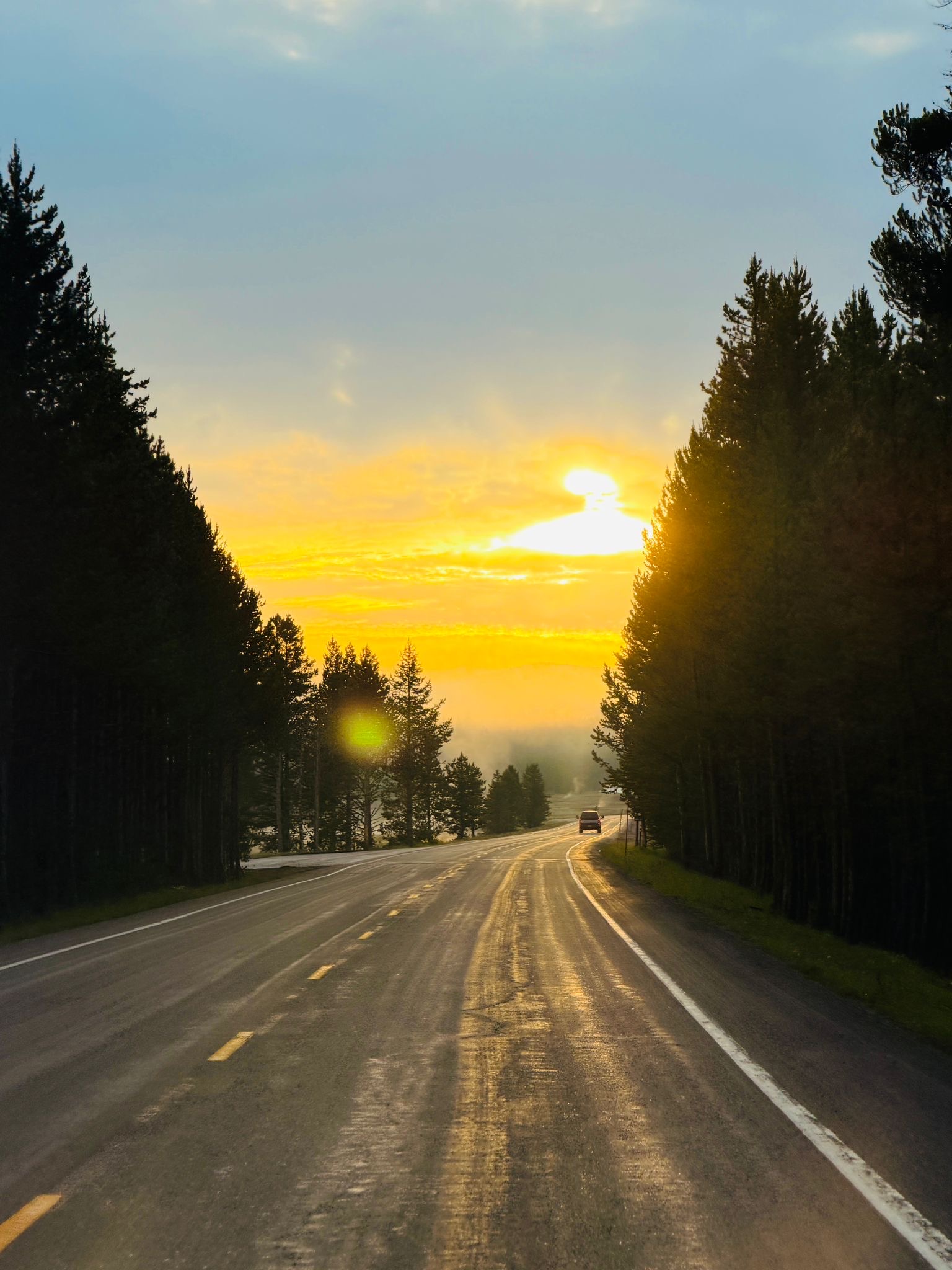
Our mornings began at four. To see Yellowstone properly in summer, you need to move before most people have left their beds. By first light, we were already in Hayden Valley, binoculars raised, searching the slopes and timber edges for grizzly bears. At that hour, the roads were quiet and the park still belonged largely to the animals. The light arrived slowly across the valley floor. Bison moved through the grass, and every dark shape near the timber demanded a second look through the binoculars. The mind begins playing tricks in country like that. A stump becomes a bear. A shadow becomes a wolf. A distant bison lying in the grass can occupy ten minutes of serious discussion before finally standing up and resolving the matter.
The forecasts had suggested temperatures in the mid-thirties, but we were fortunate. Most days remained overcast and rarely climbed beyond the high twenties. The cooler conditions kept the animals active for longer and gave us more time before the heat, traffic and crowds began to take over. At first light, the park felt almost empty. We walked along raised timber boardwalks above steaming mud and mineral-stained ground with barely another person in sight. The smell of sulphur hung over everything, sometimes so strong it turned the stomach. Steam moved across the path in slow sheets, briefly hiding the landscape before lifting again. The ground hissed, bubbled and breathed beneath us.
There are few places where the earth feels so visibly unfinished. The surface looks temporary, a thin crust stretched over heat and pressure. Water appears in impossible colours. Mud boils. Fumaroles breathe. Entire hillsides seem to be decomposing in front of you. The boardwalks are there for good reason. Wander a few steps in the wrong direction and what looks like solid ground may be little more than a fragile lid over boiling water.
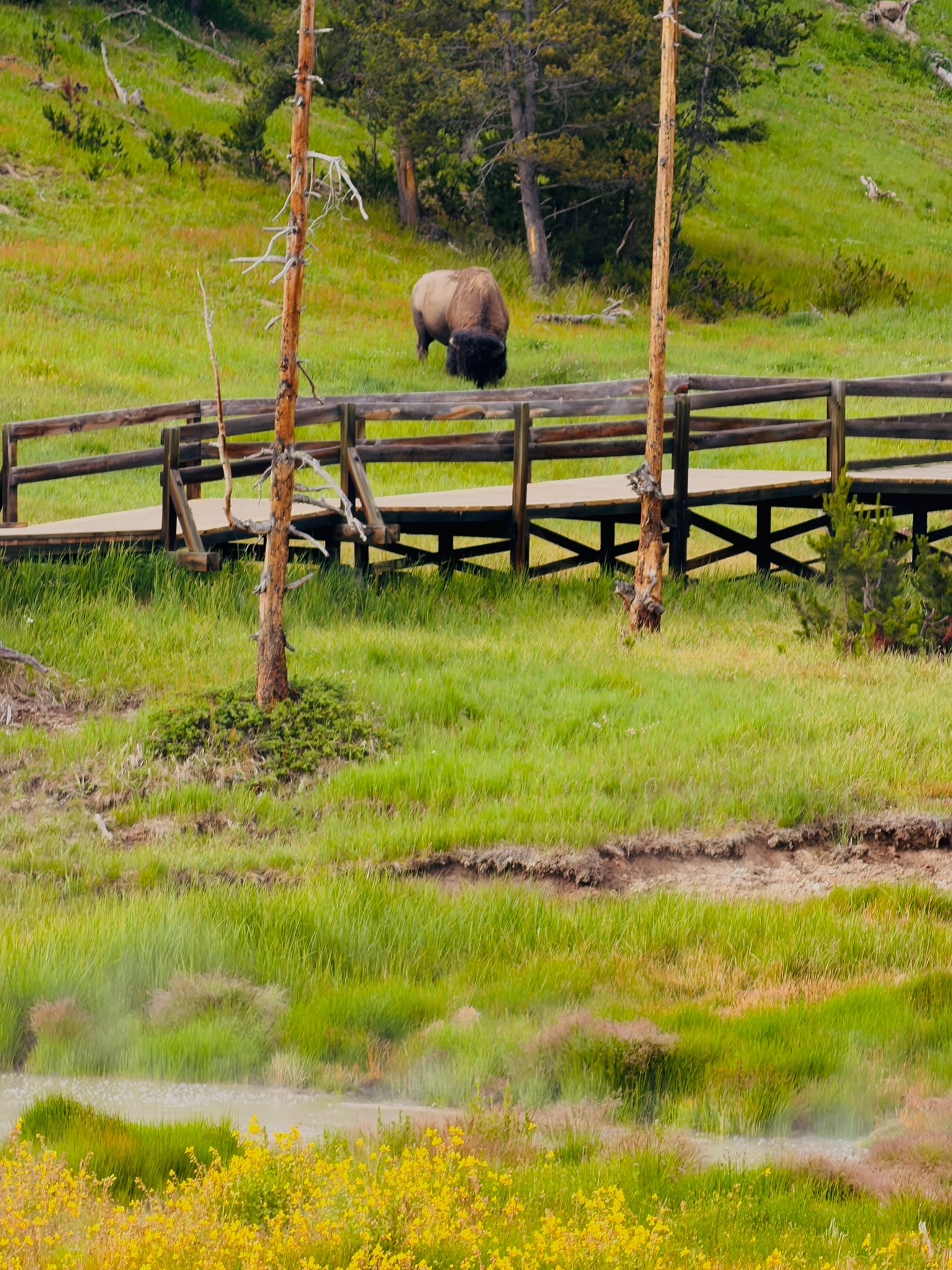
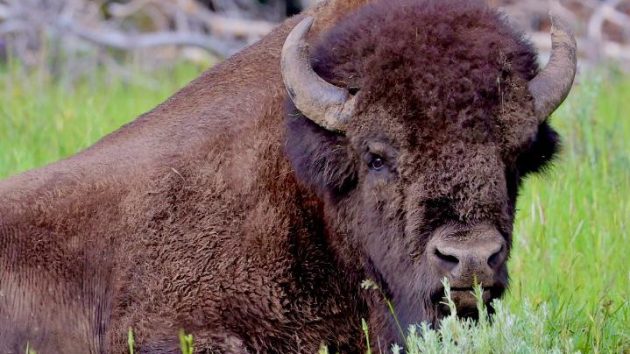
Our first close bison encounter came near one of those thermal areas. It moved beside the boardwalk with the complete indifference of an animal that had seen thousands of people and been impressed by none of them. The size of a bison is difficult to appreciate until one is close. Photographs flatten them. From only a short distance away, the weight of the shoulders, the thickness of the skull and the quiet authority with which they move become impossible to ignore. There is no hurry in them. They move as though the rest of the world will make way, which, generally, it does.
Later, we watched them walk between stopped vehicles, bringing traffic to a standstill while people leaned from windows and held up their phones. Some got out and moved far closer than any sensible person should. That part of Yellowstone never changes. The wildlife is extraordinary. The human response to it can be equally remarkable, though not always for the same reason. Every year, people are warned to keep their distance. Every year, someone seems to interpret a bison standing beside the road as an invitation to move closer for a better photograph.
The children loved the bison, elk, deer and the few moose we managed to find. They slept between sites, waking when something appeared beside the road or when we reached the next stop. Their days developed a rhythm of early excitement, midmorning exhaustion and sudden revival whenever an animal came into view. For me, the pleasure was not simply in seeing these things again. It was watching them see them for the first time. There is a particular expression children have when something exceeds whatever picture they had formed in their minds. It is not quite surprise. It is recognition mixed with disbelief. The animal, mountain or geyser is suddenly real, but larger and stranger than expected.
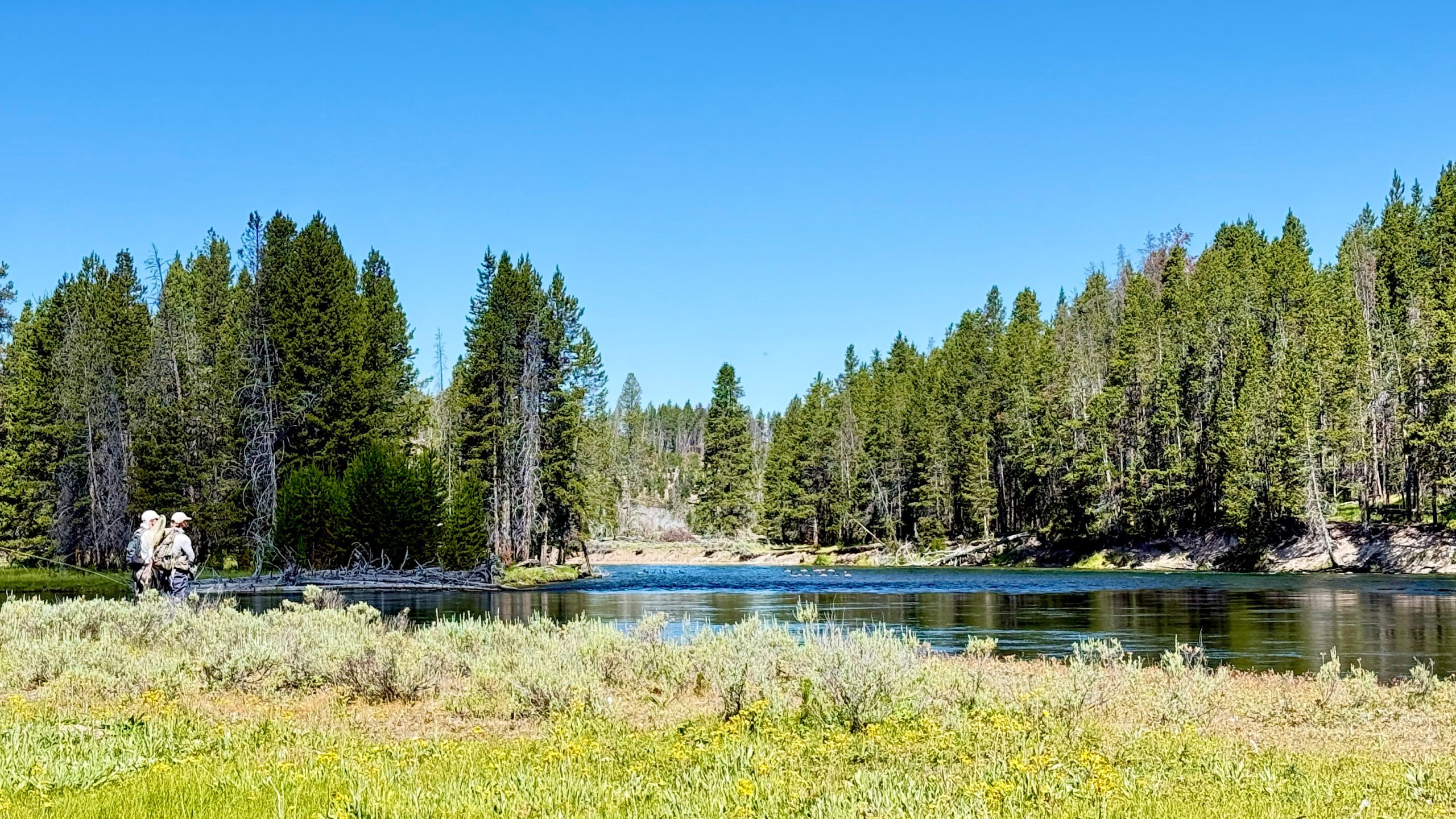
Before this trip, Yellowstone had been organised around opportunity. Which river was fishing well? Where were the cutthroat rising? How early could I reach the second meadow without running into a bear? There were still fish, of course, but they fitted around everything else. This time, the park itself was the point.
If we happened to pass a river and saw fish rising, it did not take long to pull over. I could be out of the car in shorts and sandals, vest on, net in one hand and rod in the other. I might catch a few fish and be back on the road within half an hour. Those brief sessions had their own appeal. There was no time to overthink them. You saw a rise, found somewhere safe to pull over and stepped into the river with whatever you already had rigged. A few casts, perhaps a cutthroat or two, and then the vest came off, the rod went back in the car and the journey continued.
There is a freedom in fishing without trying to build a day around it. You accept the water as you find it. There is no pressure to solve everything, no need to stay until the last rise. You are simply passing through and lucky enough to be holding a rod when something happens. There were also a handful of more serious sessions, when the fishing became the purpose and we walked some distance from the road to reach quieter water. For the most part, though, it happened only when it fitted comfortably with the rest of the day. That was new for me. In other years, everything else had been arranged around the temperament of trout.
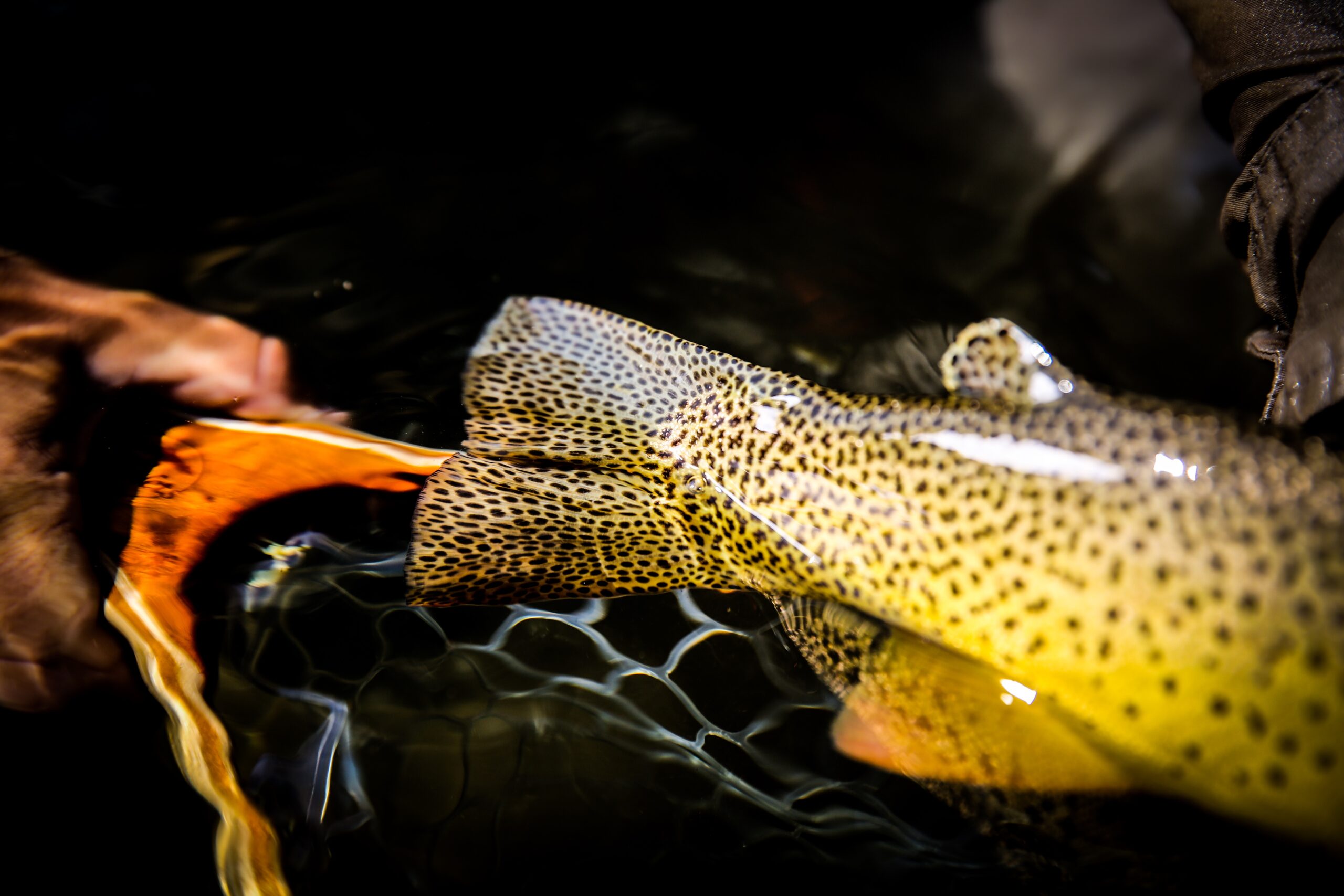
There is something special about standing in a river in Yellowstone, especially with your family nearby. It feels different from fishing with a mate who understands the country, knows the risks and is responsible for himself. When your children are with you in bear country, your attention stretches well beyond the water. You look over your shoulder more often. You listen harder. You notice the wind, the timber behind you, the smell of the air and any movement along the bank. All the senses seem to sharpen at once.
Bear encounters are not as common as people imagine, and bear spray, sound judgement and knowing how to respond make the risk manageable. But none of that entirely silences the older, more instinctive part of the brain that keeps rehearsing the worst possible outcome. You begin calculating distances without meaning to. How far are the children from the car? Which direction is the wind carrying our scent? How thick is the timber behind us? Where is the bear spray? Is it still clipped where it should be? It heightens the fishing rather than diminishing it. The current against your legs, the rise of a cutthroat, the sound of water over stone and the knowledge that you are standing in a genuinely wild place all seem more vivid. It makes you feel intensely alive.
We also did the things I had often passed by. We sat on bar stools and ate a classic American breakfast in one of the tourist places near Old Faithful. There were eggs, bacon, coffee and the familiar low hum of travellers discussing routes, weather and what they hoped to see. We waited for geysers, walked among thermal basins and stood with everyone else above the canyon and waterfalls. In other years, those places had often been something to move past on the way to a river. This time, we allowed them to become destinations in their own right.
Old Faithful is easy to dismiss because everyone knows it. Its eruption times are predicted, the seating fills and hundreds of cameras are raised before anything happens. Yet when the water finally surges into the air, it is still extraordinary. The familiarity of an image does not make the real thing ordinary. The same was true of the Grand Canyon of the Yellowstone. I had seen it before, photographed it and passed through with fishing gear waiting in the car. Standing there with the children, with no immediate need to hurry elsewhere, I understood how often purpose can narrow a place. You see what you came to see and overlook the rest. None of it was new to the world, but much of it was new to us as a family.
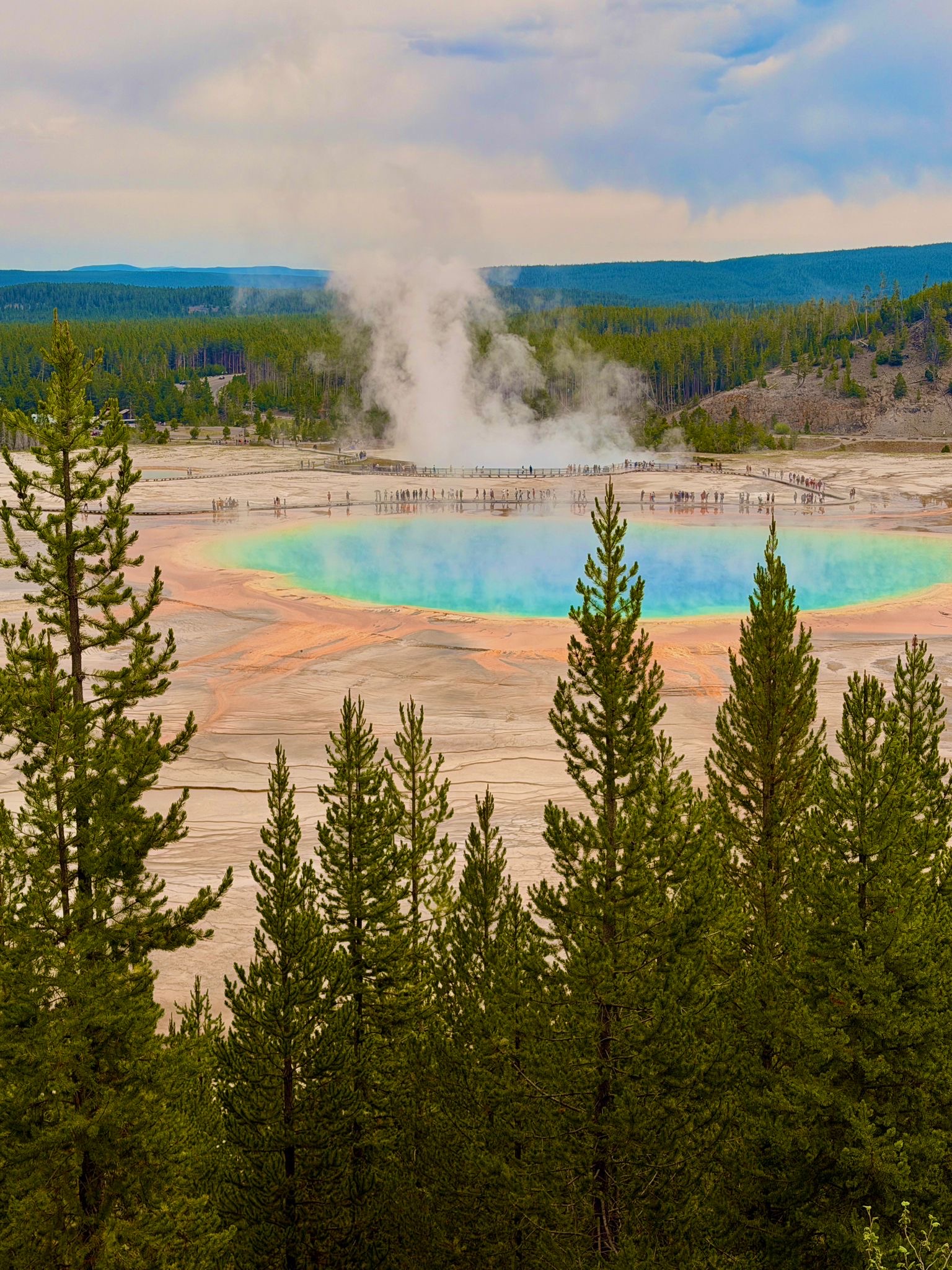
By ten in the morning, the park began to change. The empty boardwalks filled. Cars appeared from every direction. By the time we reached Grand Prismatic, we had to park hundreds of metres away and walk back towards the access points with crowds moving in both directions. The difference between dawn and late morning was extraordinary. Only a few hours earlier, we had been walking through thermal country with barely another person in sight. Now every car park was full, the roads were slowing and the quiet of the morning had been replaced by doors slamming, engines idling and people trying to work out where to go next.
At first light, Yellowstone feels enormous. By midday, it can feel strangely confined. A single animal beside the road can stop traffic for kilometres. One full car park pushes vehicles onto the shoulder, then farther along the road, until the landscape begins to look less like wilderness and more like an event everyone has arrived late for. When we left through West Yellowstone around midday, the line of incoming vehicles stretched from the entrance, through the traffic lights in town and beyond its outskirts. It was difficult to look at that line and imagine it as sustainable forever.
Still it remains one of the most extraordinary places on earth, but it is becoming increasingly clear that a place can be loved too much. Not through neglect or indifference, but through the sheer number of people who want to experience it. We were part of that number. My family had every right to see the park, just as the people waiting in those cars did. That is what makes the problem so difficult.
It is easy to complain about crowds when you are already inside the gate. It is easy to imagine that your reasons for being there are somehow more legitimate than everyone else’s. The angler believes he understands the rivers. The photographer believes he rises earlier and behaves better. The family has crossed the world to be there. The retired couple may have waited their whole lives. Everyone has a reason.
The challenge is not keeping people away. It is finding a way to let them in without slowly destroying the very experience they have come to find. Perhaps the answer begins with time: earlier mornings, longer stays, shuttle systems, fewer cars in the most congested places, and a willingness to accept that some landscapes cannot absorb unlimited access simply because demand exists.
Perhaps it also begins with the visitor. Move earlier. Stay longer. Walk farther. Give animals space. Accept that not every sight needs to be approached, photographed or converted into proof. Let other people experience the place without becoming part of their experience.
At dawn, those ideas feel possible. The roads are empty. Steam moves across the boardwalks. Bison graze without an audience. For a brief hour or two, Yellowstone appears untouched by the pressure gathering beyond the entrances. Then the sun rises, the cars arrive and the spell begins to thin.
That may be why first light has become the Yellowstone I remember most clearly from this trip. Not simply because the animals were active or the roads were quiet, but because it allowed us to see the park before it became an attraction again.
For years, Yellowstone had been a fishing place to me. This time, fishing became one small part of something larger. I still remember the cutthroat rising, the rivers slipping through meadow country and the familiar pull of wanting to stop at every piece of likely water. But I remember just as clearly the children waking when a bison appeared beside the road, standing again with my wife beneath the Tetons, steam crossing an empty boardwalk and four of us driving through the caldera before sunrise.
I had thought I knew Yellowstone because I knew its rivers. It took my family to show me how much of it I had been passing by.