
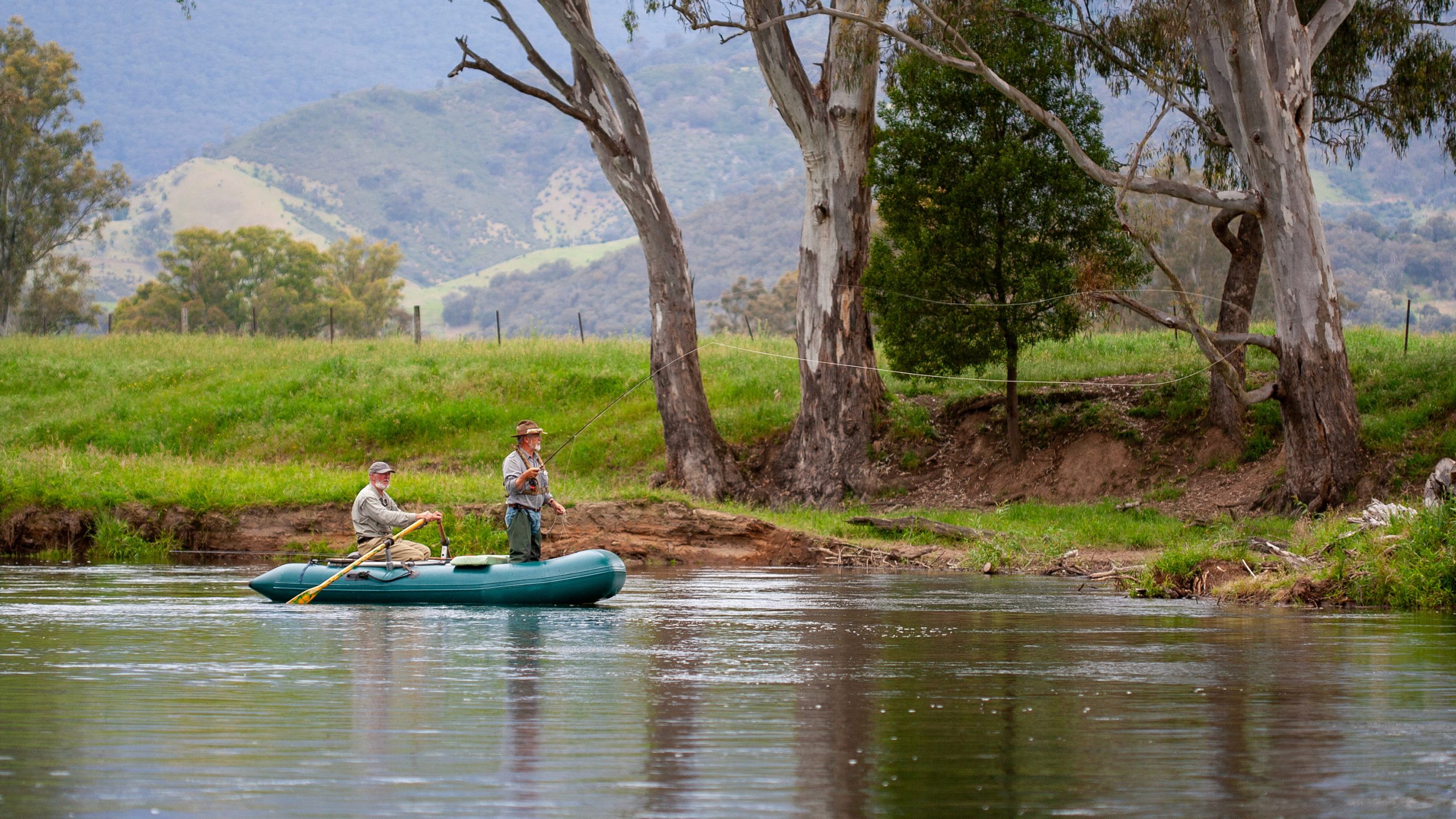
Thirty Years on the Goulburn
Some of the most important decisions I make during a day on the Goulburn are ones the client probably never notices. A change in the angle of the boat, an adjustment to our position against the current or a decision to leave a promising-looking run without fishing it. Sometimes we stop for twenty minutes to work on a trout that has risen only once. On other occasions, we pass half a dozen apparently good pools because something about the conditions suggests our time would be better spent elsewhere.
Much of this happens without discussion. The client is concentrating on fishing while I am watching the water ahead, thinking about the next bend and deciding where the boat needs to be. Occasionally someone asks why we have passed a particular piece of water, and explaining the decision becomes part of the day. More often, we simply continue downstream.
When I began drift boating the Goulburn in the mid 1990’s, I had considerably less experience on which to base those decisions. I knew the river reasonably well, understood the fundamentals of fly fishing and was enthusiastic about helping people catch trout. What I had not yet accumulated was the knowledge that comes from watching the same water behave differently through successive seasons, particularly when conditions are far from ideal.
Over the years I have seen floods remove entire sections of bank, watched gravel accumulate in previously productive runs and returned after winter to discover that familiar pieces of water no longer look quite the same. Irrigation releases can change the character of a section within days. A bank that fishes beautifully at one level may become almost useless at another, while rising water can bring trout into positions that were too shallow or exposed only a week earlier.
Those experiences gradually become part of the way you approach the river. I no longer look at a particular run simply as somewhere we have caught fish before. I consider the current flow, what has changed since the last time I drifted it, where the fish are likely to be holding and whether the conditions favour spending time there. Sometimes the assessment is wrong, of course. Rivers have a reliable way of exposing misplaced confidence.
There is also the practical business of rowing. A drift boat requires constant attention, particularly when moving through shallow or complicated water. You are looking ahead for submerged timber, changes in current, gravel bars and the places where a poor decision might leave you without enough room to recover. At the same time, you are positioning the boat to give the angler the best possible presentation. The two responsibilities do not always sit comfortably together.
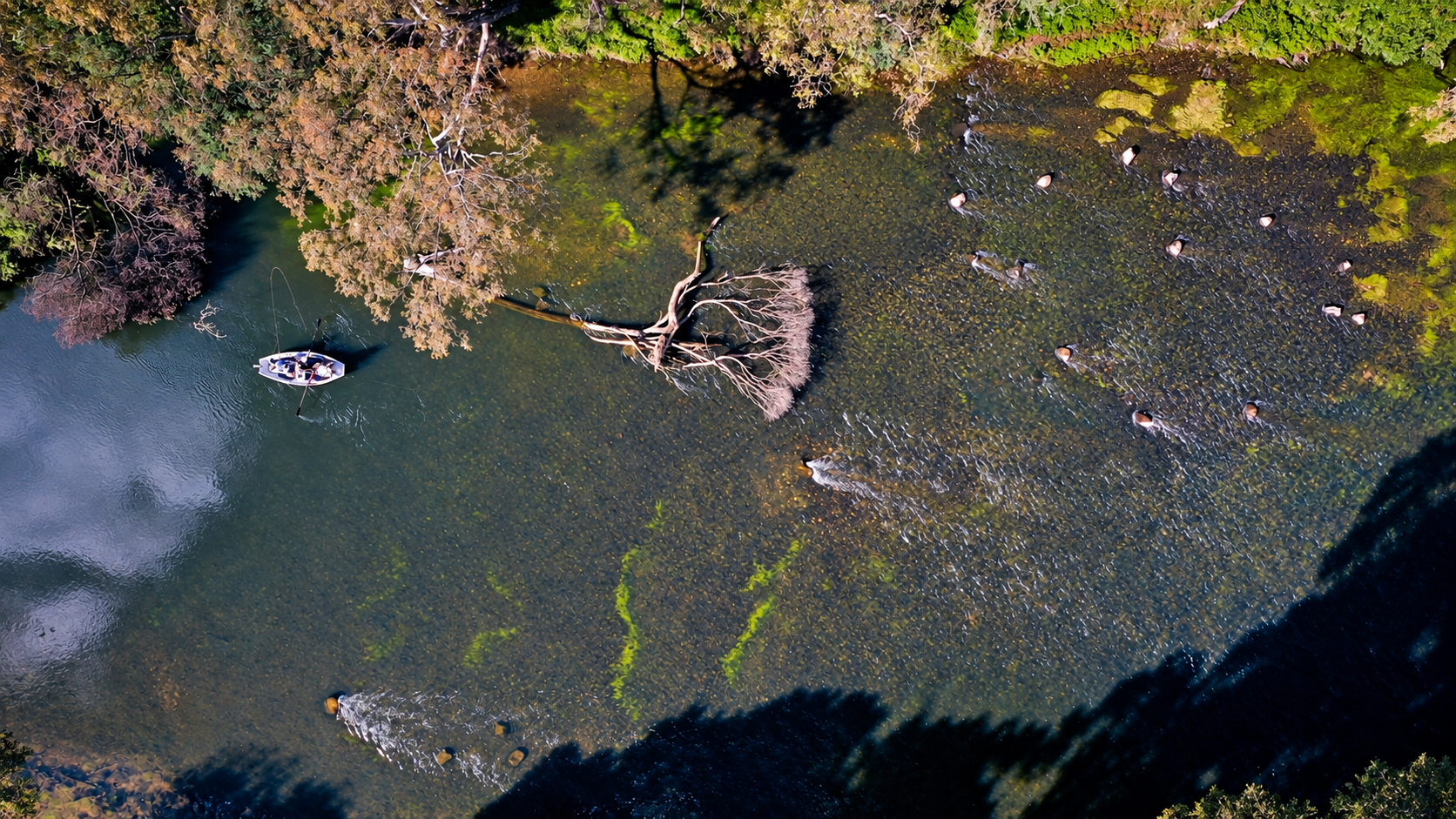
An inexperienced rower may recognise a problem only once the boat is approaching it. With familiarity, you begin noticing the signs from farther away. A change in the surface, a pressure line against a bank or the way current divides around an obstruction can tell you what is likely to happen before the potential difficulty becomes a reality. That extra time allows you to make small corrections rather than large, hurried ones.
I enjoy that part of guiding enormously. There is considerable satisfaction in moving a boat quietly through difficult water while keeping an angler in a useful casting position. When everything works properly, the person fishing may have little idea how much attention the rowing requires. That is generally the desired outcome.
The same accumulated experience affects how you work with clients. In my younger years, I probably measured the success of a guided day too heavily by the number and size of trout we caught. I wanted every client to have an exceptional day, and catching plenty of fish seemed the most obvious way to achieve that. I still want people to catch fish. Anyone suggesting that catching trout is unimportant to a guided fishing trip has probably forgotten why most clients booked in the first place.
But people arrive with different expectations, abilities and personalities, and the longer you guide, the better you become at recognising those differences. Some anglers are technically accomplished and are happy to spend an hour working on one difficult rising trout. Others are relatively inexperienced and would enjoy themselves much more covering water, practising their casting and having regular opportunities. Some want explanations throughout the day, while others prefer a little instruction followed by the chance to work things out for themselves.
There is no particular virtue in forcing everyone to fish the way I most enjoy fishing.
Reading the person in the boat is therefore almost as important as reading the water. I have learnt to recognise when somebody is becoming frustrated, when a little encouragement might help and when the sensible thing is to stop talking for a while. Occasionally a client needs a change of fly or a correction to their casting. Sometimes they need five minutes without another instruction.
I have also become less inclined to force a day that is not developing as expected. There are mornings when the river looks excellent, the water temperature is favourable and the insect activity suggests the fishing should be good, yet the trout remain remarkably difficult. In earlier years, I might have persisted too long, convinced that success was just around the next bend. These days I am more comfortable changing the approach, moving on, or acknowledging that the conditions are not producing what we anticipated.
There are also times when patience is the better decision. A good trout rising steadily in difficult water can occupy us for a considerable part of the day. If the client is enjoying the challenge, I am perfectly happy to remain there until we catch the fish, frighten it or decide we have learnt enough to drift away with a clear conscience. There is no reason to abandon a worthwhile opportunity simply because we have several kilometres of river left to cover.
One of the pleasures of guiding for so long has been the continuity of the people. Some clients have been fishing with us for decades. I have watched young anglers grow older, seen fathers return with sons and occasionally found myself guiding the next generation of a family whose first members came to us many years earlier. Those relationships give particular sections of the river associations that have little to do with their fishing qualities.
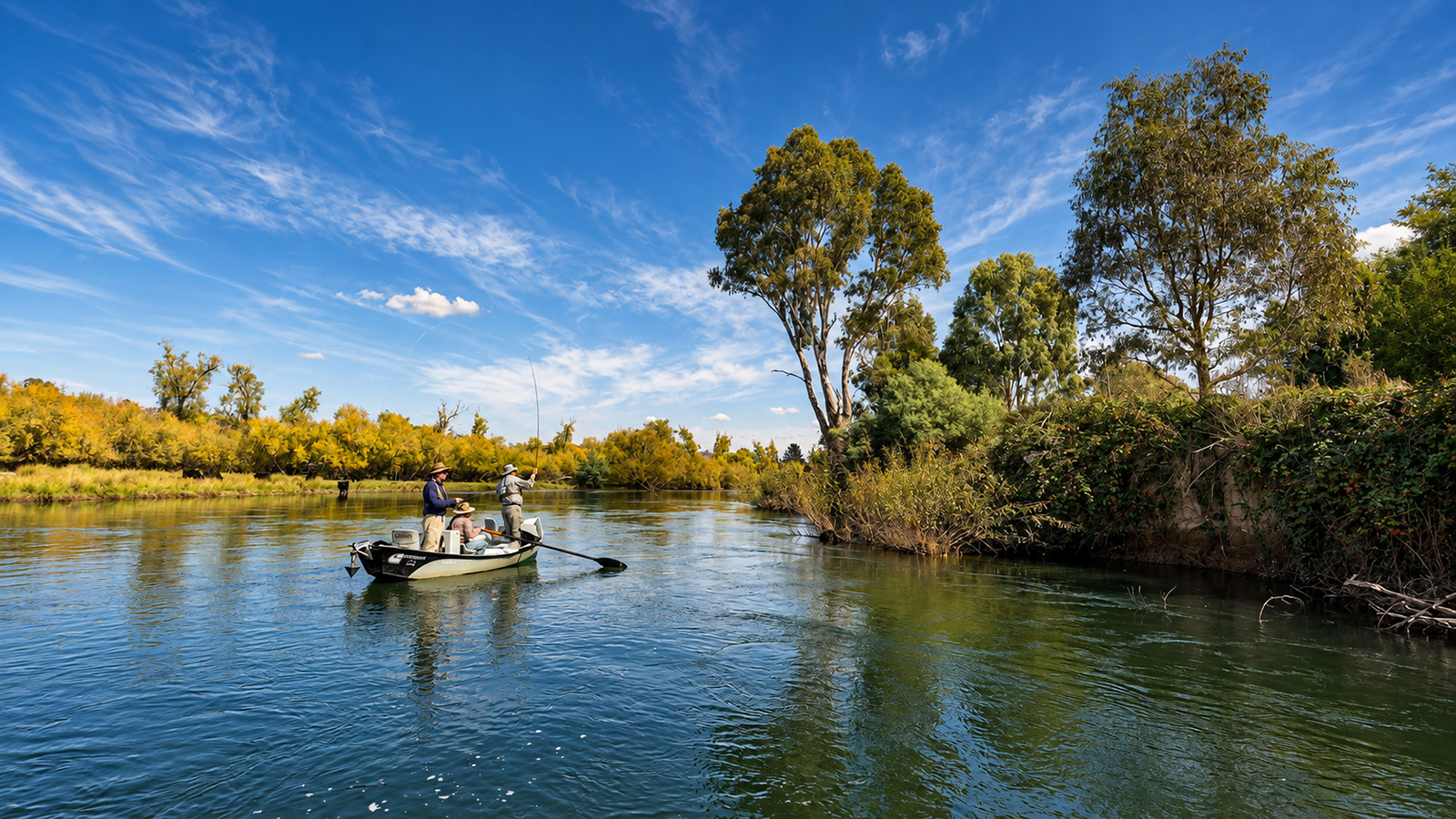
I can pass a bend and remember a conversation from twenty years ago, or a fish that somebody struggled with for most of an afternoon. Certain places remind me of clients who no longer fish, while others bring back days when everything seemed to go right. There are stretches where I can still picture people standing in the boat almost exactly where they were when something memorable happened.
The photographs taken at the end of those days usually show the trout. They rarely capture much of what happened around them. The long conversations, the difficult casting, the missed opportunities and the occasional moments when everyone stops fishing to watch something happening along the river are harder to preserve. Yet those are often the details people remember when we meet again years later.
None of this means that experience makes somebody infallible. I still make poor decisions, misjudge hatches and occasionally spend too long fishing water that should have been abandoned much earlier. There are younger guides who recognise things I might overlook, and I am always interested in seeing how other people approach familiar problems. The river provides enough variation to make complete certainty rather difficult to sustain.
What experience does provide is a much larger collection of situations against which to compare the one unfolding in front of you. After enough seasons, you have seen similar conditions before, even if the circumstances are never exactly the same. You recognise when something is unusual, when a familiar pattern may be developing and when it would be sensible to reconsider your first assessment.
I still find the actual fishing as absorbing as I did when we began. A large brown rising beneath a willow, an unexpected mayfly hatch or the sight of a trout moving confidently towards a well-presented dry fly can occupy my attention just as completely now as it did years ago. I have become no less interested in catching trout, although I am probably more comfortable accepting that some days will not produce the results we would like.
At the end of a drift, I still think about the opportunities we missed and the decisions I might have made differently. Occasionally I will return to the same section the following morning because something about the previous day has been bothering me. A fish we couldn’t work out, an unexpected change in current or a piece of water that appeared more promising than the results suggested.
There is usually something worth another look.
After more than thirty years on the Goulburn, I know a great deal more about the river than I did when we launched our first drift boats. I also have a considerably better understanding of how quickly familiar circumstances can change, and how much judgement is involved in deciding what to do when they do.
Tomorrow I will probably drift a section I have fished thousands of times. I will recognise the bends, remember where the better fish have been holding and have a reasonable idea of how I want to approach the day.
Then we will launch, have a look at the water and see how much of that still applies.
Ant