
Yellowstone and the Upper Madison | Summer 2025
By Anthony Boliancu
Leaving Dillon, we travelled through the open country around Twin Bridges before climbing towards Virginia City and dropping into Ennis. We stopped for lunch and a wander through the fly shops, which is not necessarily the quickest way to get a group of anglers to their next accommodation. There is always another fly to inspect, another river report to ask about and something on the wall that somebody suddenly decides they need.
Beyond Ennis, the Madison became our companion for much of the drive. Boats moved through long riffles and boulder gardens while the road carried us upstream towards water we would soon be fishing. It is a very good drive for an angler, although it does make you question the decision to spend the day travelling. Every few minutes there is somewhere else you would quite happily stop.
We eventually crossed into Idaho and settled into our base near Henrys Lake. The house stood back from the road among lodgepole pines and open grassland, with fresh moose tracks around the property and a small creek holding trout beneath its banks. After the dry country around Dillon, the setting felt different again. Mornings brought coffee on the deck, deer feeding in the frost and thin cloud stretching across the distant peaks.
There was still plenty of fishing ahead, but we had reached the final base of the journey. From here, the days would take us between the Madison, the lakes and Yellowstone itself. We could spend one outing concentrating on a small patch of moving water and another looking across a valley so large that the river seemed almost incidental to the view.
The Upper Madison: Plenty to Keep You Occupied
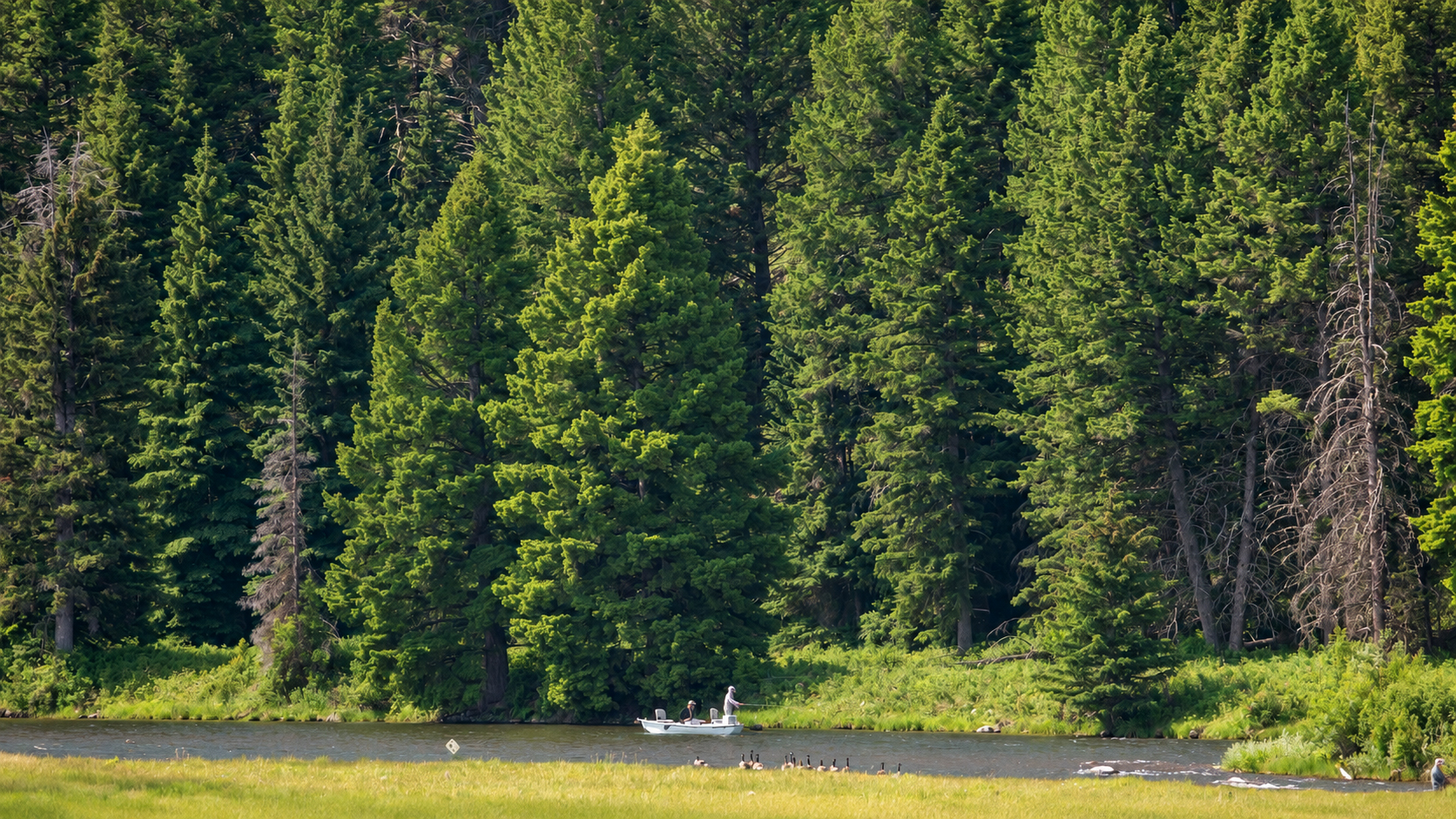
The Madison below Lyons Bridge is a different proposition from the long, smooth glides we had fished on the Missouri. There are broad gravel runs, submerged boulders and pockets of softer water among the current. At first glance, much of it looks capable of holding a trout. The task is deciding which bit deserves the next cast. myfwp.mt.gov
I enjoy that sort of fishing. A boulder divides the current, a small pocket forms behind it, and for a short distance there is somewhere to put the fly. Then you are looking at the next piece of water. You still need a useful presentation, but there is a different pace to the decisions. Rather than spending a long time studying one steady riser, you can find yourself continually reading new water.
The trout we encountered were often willing to move for a dry fly. That did not make every cast productive, but it kept the fishing lively. There is considerable pleasure in putting a fly into a likely pocket and seeing a fish appear from water that had shown no sign of holding anything.
On the earlier departures, PMDs and caddis supplied much of the surface activity. Spinner falls gave us fish to concentrate on in the mornings, while egg-laying caddis could gather in impressive numbers towards evening. By the later July visits, hoppers and spruce moths were becoming increasingly useful. The fishing changed with them. Some of the takes on larger dries were emphatic enough to remove any doubt about whether the fish had eaten.
It is one of the advantages of spending several weeks in the region. You see familiar water offer different sorts of fishing as summer progresses. A stretch that had occupied us with small insects earlier could later have us casting something much more substantial. The river remained recognisable. What we were watching for had changed.
The Slide
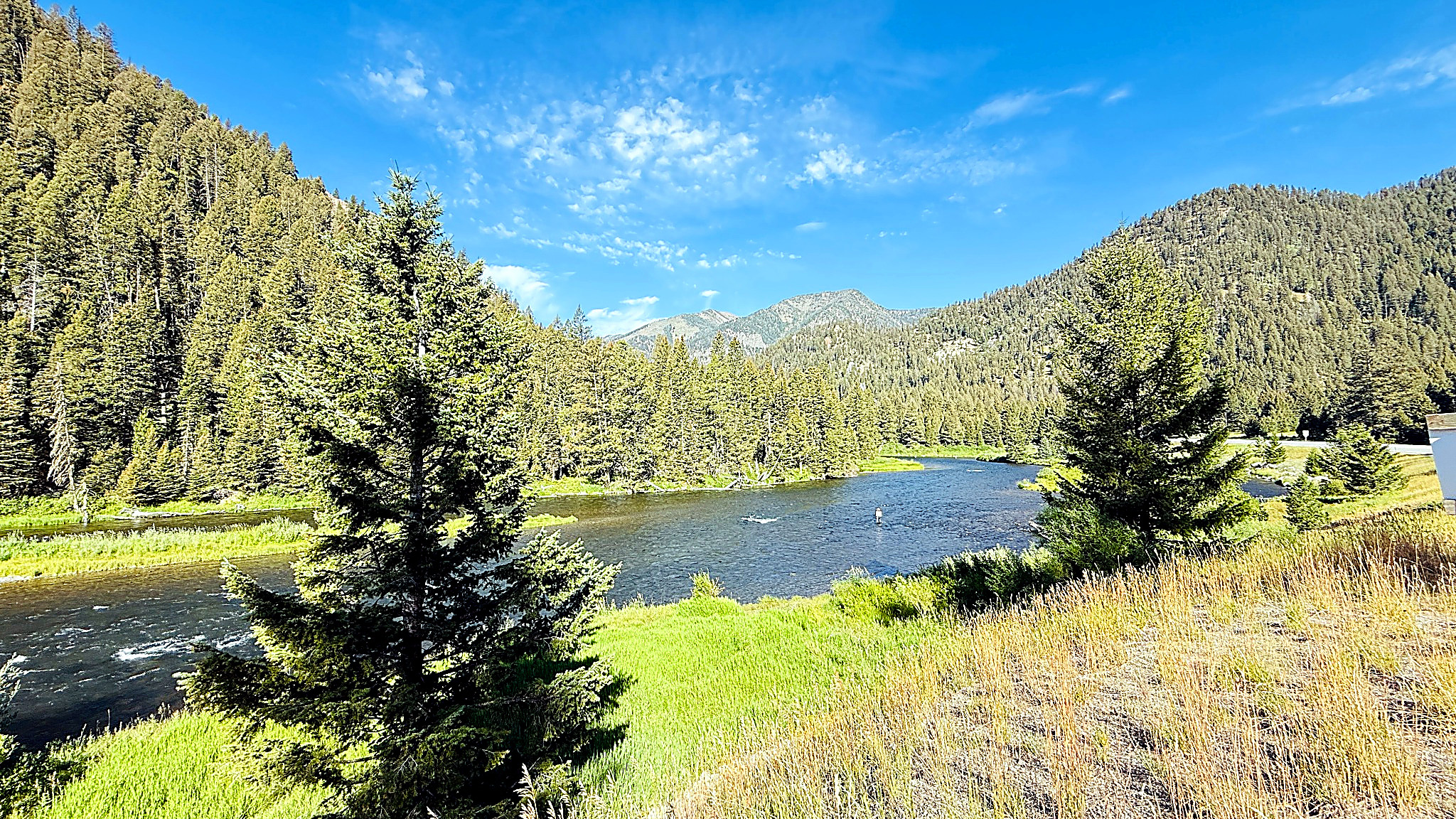
Farther upstream, below Quake Lake, the Madison becomes much more demanding. In the Slide, water pushes through enormous boulders and deep slots, with small pockets and quieter edges among the turbulence. It is compelling water to look at, but the fishing is only part of what requires your attention.
During one of my own days there, while the guests were fishing with their guides, I worked big rubber-legged Chernobyl patterns through the pockets. There were fish in places that seemed barely large enough to offer shelter from the current. Some were tucked into quiet edges, while others appeared from tiny pieces of fast water that were easy to overlook.
The contrast was striking: a great deal of river rushing past, and a trout finding enough room to feed in one small part of it. You could become quite absorbed in those pockets. The difficulty was making sure that interest in the fishing did not distract from the water around them.
I have spent enough of my working life on rivers to take that distinction seriously. The Slide is not a place to become casual about footing, current or where a mistake might put you. Good fishing does not make difficult water less dangerous.
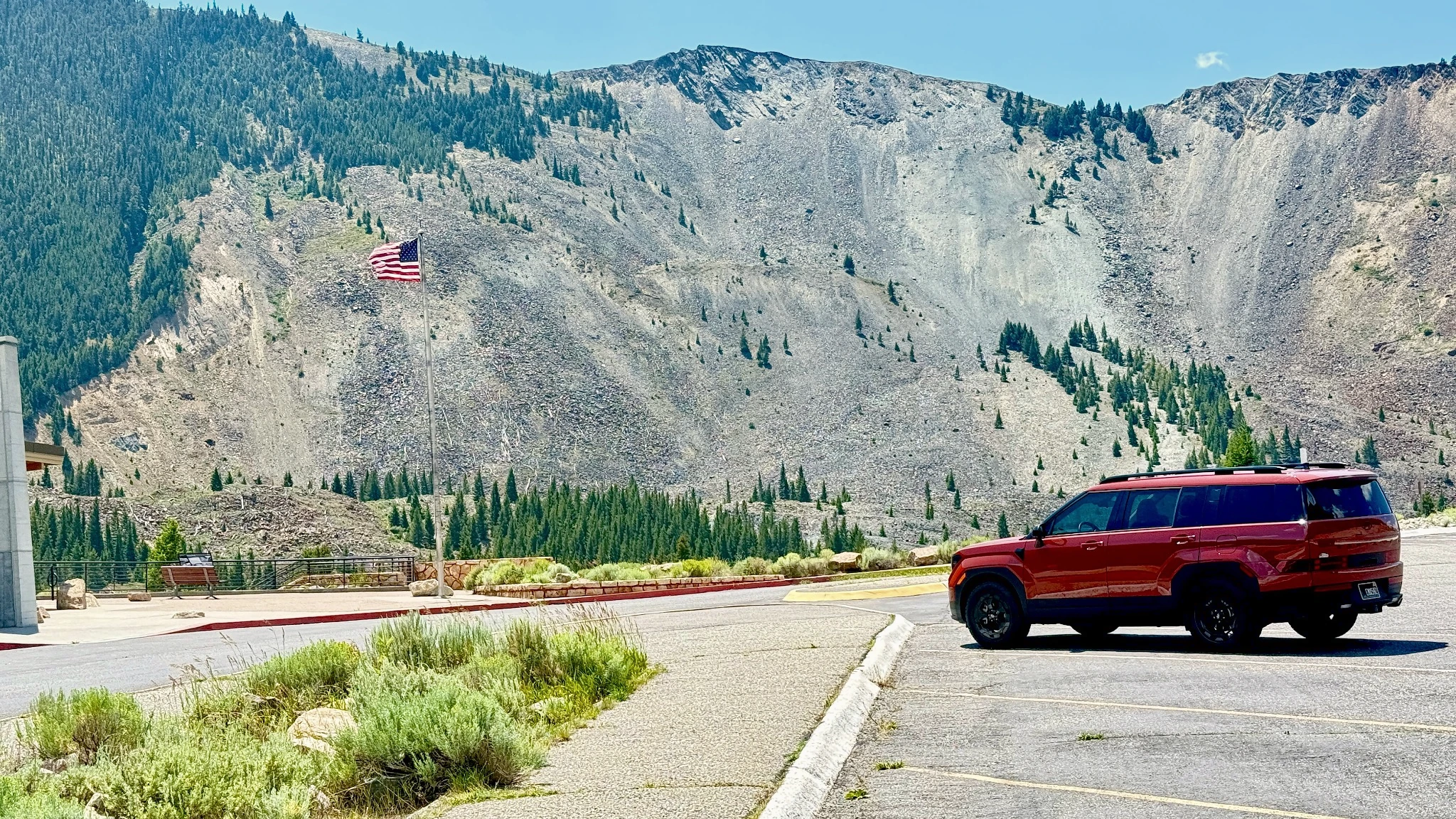
Before fishing there, we visited the Earthquake Lake Visitor Centre. In August 1959, an earthquake triggered the enormous landslide that blocked the Madison, buried part of the camping area and caused the river to back up into what became Quake Lake. Looking across the scar after reading the accounts of that night gives the landscape a significance that has little to do with trout.
It is worth taking the time to understand what happened. Otherwise, you can drive past, admire the rugged country and give very little thought to how recently it acquired its present shape. We were there to fish, but the lake and the broken mountainside deserved more than a passing glance from the vehicle.
The Lakes and the Water Between Them
Hebgen and Quake gave us another change of pace. With enough light and a little ripple, we could pick out trout moving through the shallows and begin following individual fish. Callibaetis spinner falls brought steady surface feeding, and spruce moths also gave us reasons to keep a dry fly on the water. These lakes offer a very different dry-fly experience from the current and boulders below. Blue Ribbon Flies
On a river, you spend much of your time arranging for the current to carry the fly towards a fish. On the lakes, the fish is often doing the travelling. You watch where it rises, look for it again and try to work out where the next opportunity will be. A cast to where it was a few seconds ago can be beautifully executed and completely useless.
I find that fishing absorbing. You can have a substantial trout moving in clear water, feeding quietly enough that somebody looking elsewhere would never know it was there. Then it changes direction, refuses or disappears into water where you can no longer follow it. The lake may look calm, but there is plenty happening in the angler’s head.
The lack of current changes the whole experience. There is time to watch, but that does not necessarily make the decisions easier. You still have to put the fly somewhere the fish will find it, without doing something that persuades it to leave. After the pace of the Madison, that more deliberate fishing was a welcome contrast.
The stretch of Madison between Hebgen and Quake also provided some lovely opportunities. This water is outside Yellowstone National Park, although it was part of the same final leg for us. In the softer sections, PMDs, caddis and midges brought trout up in shallow water where we could see much of what they were doing. National Park Service
It is remarkable how little depth a decent trout sometimes needs. Some of the fish fed in water barely sufficient to cover their backs, with every movement visible. After looking into deep green slots in the Slide, here we were studying trout in the margins and trying to make a fly drift through water that scarcely reached our ankles. You do not have to travel far around here to find yourself doing something quite different.
Into Yellowstone
Across the departures, we made several visits into Yellowstone, combining fishing with drives and time spent looking at the park itself. I like that mixture. Travelling this far and treating everything beyond the next trout as an interruption would be a fairly narrow way to experience the place.
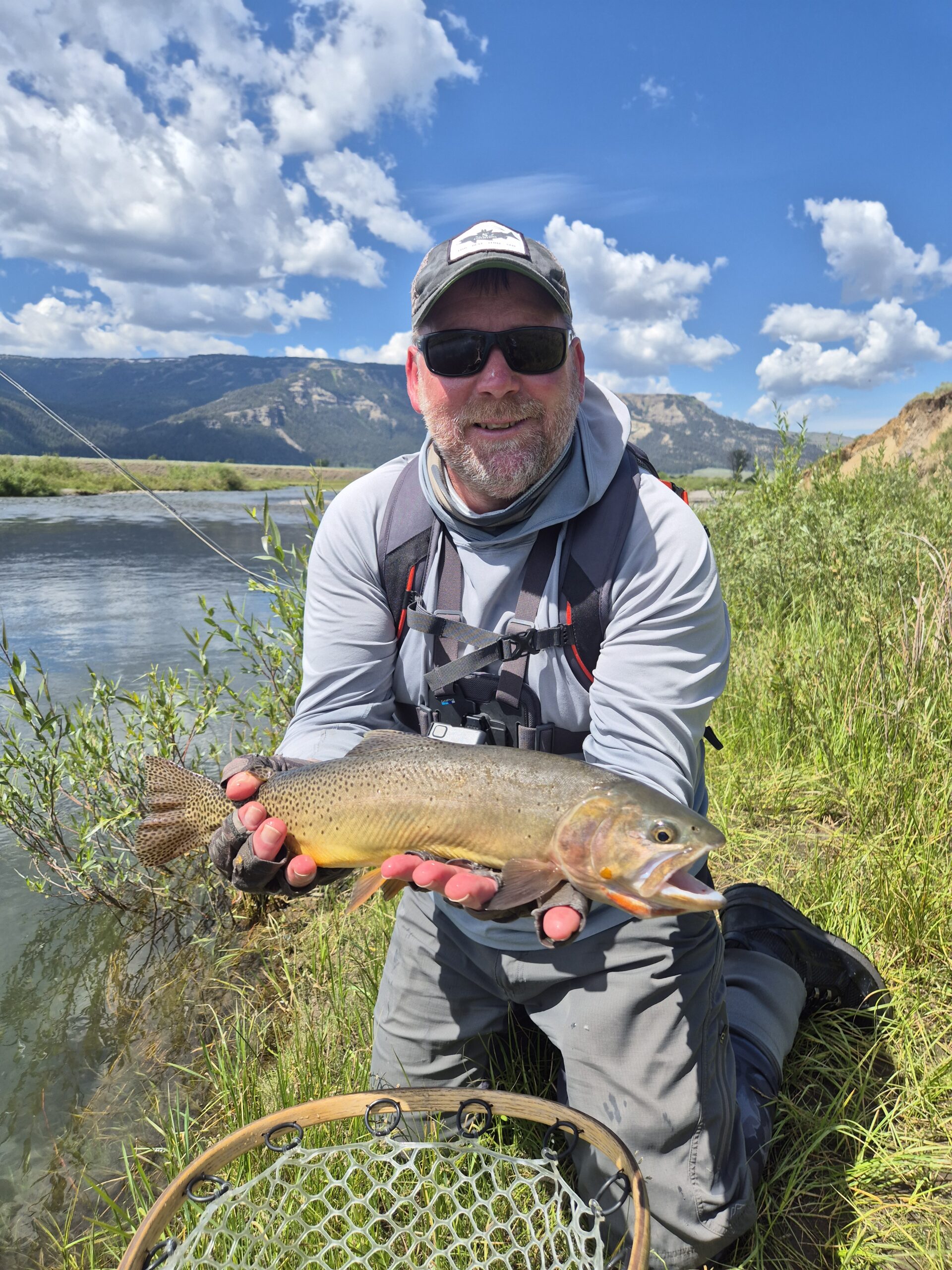
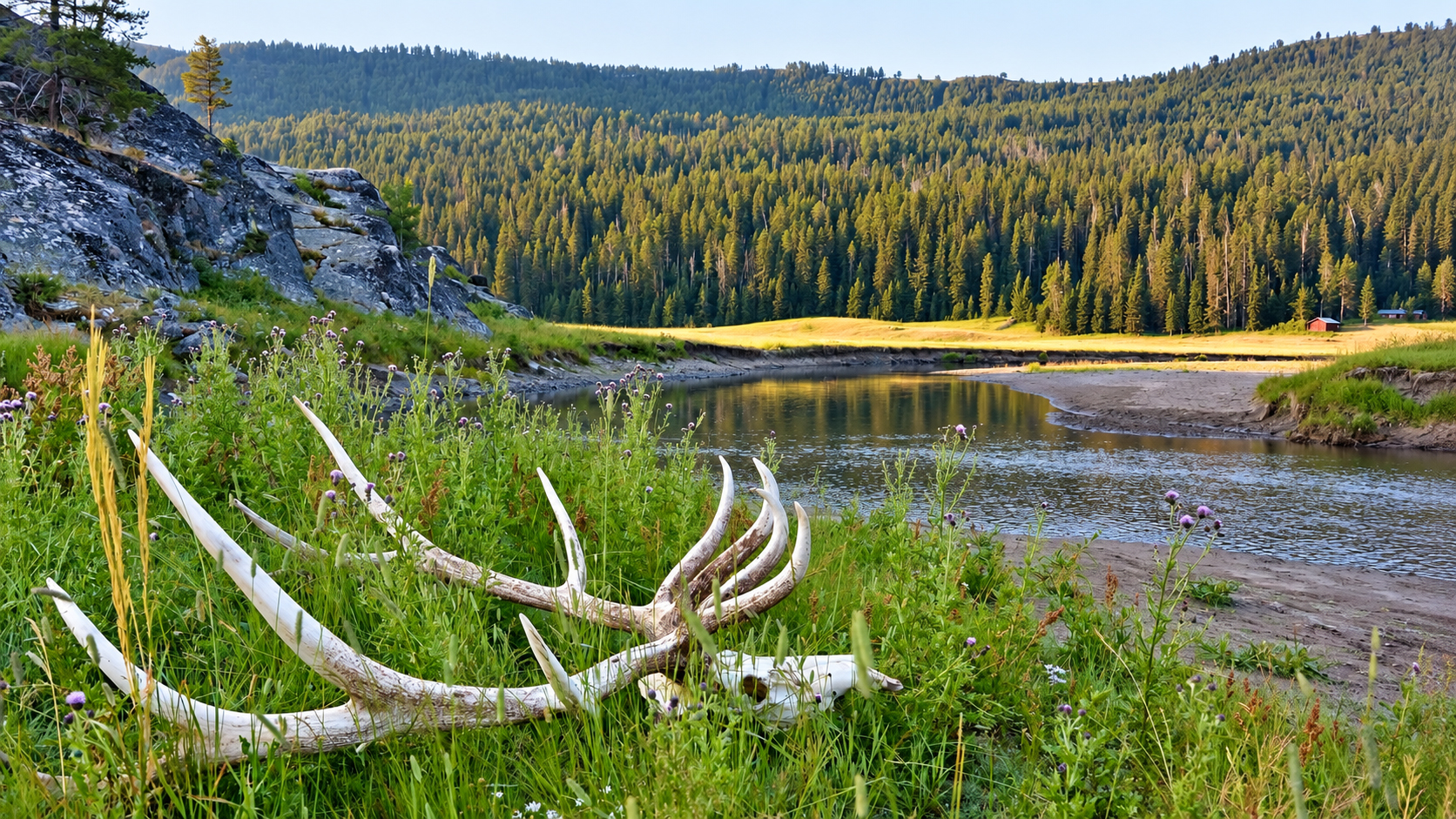
The Lamar Valley, Soda Butte and Slough Creek offer a setting quite different from the country around our earlier fishing bases. There are open meadows, distant mountains and bison in the surrounding landscape. The river or creek still occupies your attention once you begin fishing, but every so often you look up and remember where you are.
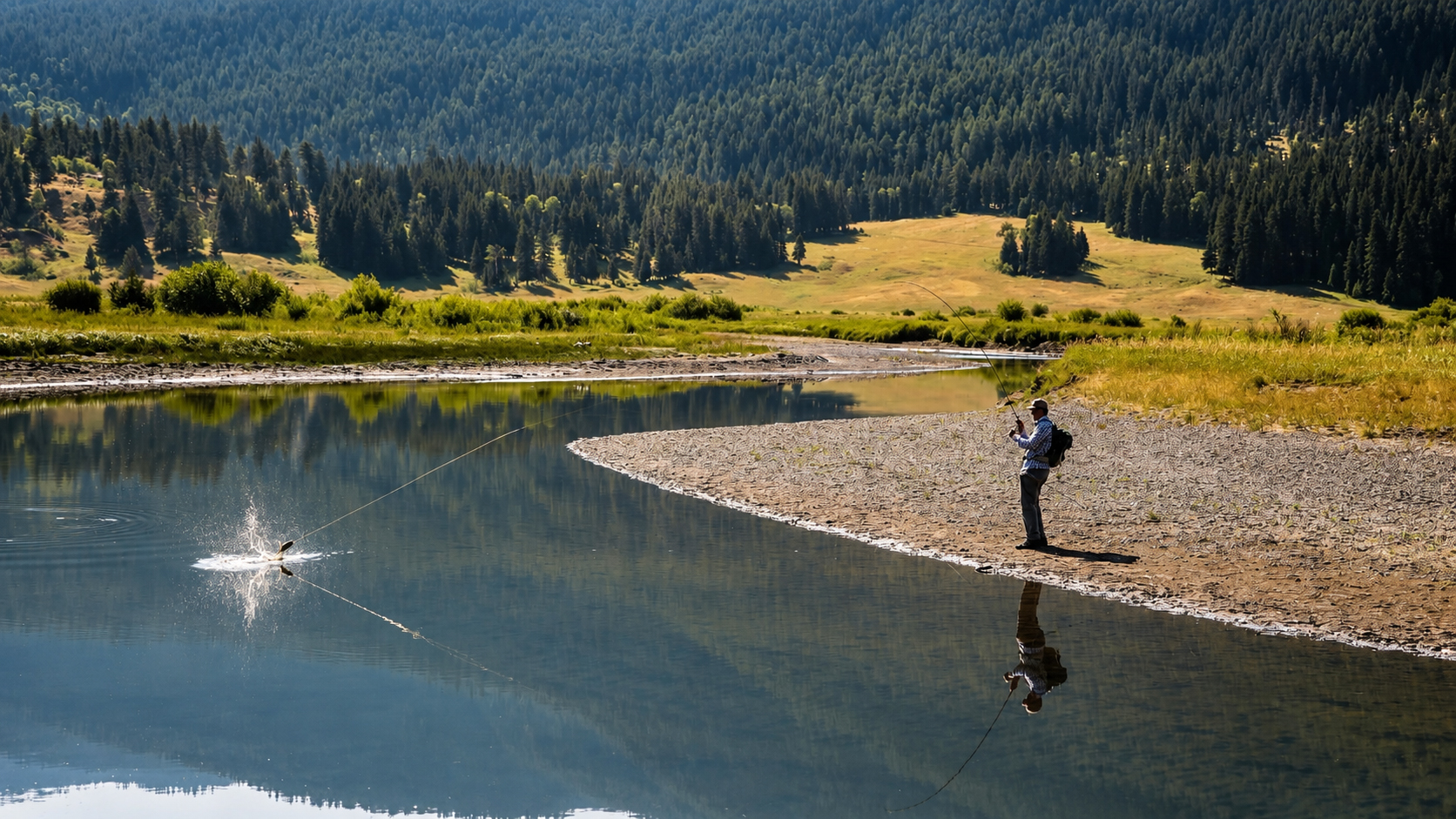
On meadow water, you have time to watch a fish properly. You can study where it feeds, how often it rises and whether it stays in one place or moves between opportunities. There is no boat carrying you beyond it while you decide what to do. That can make the fishing feel wonderfully unhurried, right up until you make the cast and discover that you are rather more impatient than the trout.
The cutthroat takes are part of the pleasure. A fish can rise towards the fly with such apparent lack of urgency that you have time to watch the whole thing developing. Unfortunately, having time to see it does not always mean having the restraint to let it finish. The rod lifts, the fly disappears before the fish has taken it, and you are left looking at a perfectly good opportunity that you have managed to remove.
Those slow rises stayed with me. After the more aggressive takes we had encountered elsewhere, they required another adjustment. You had to let the fish complete what it had started. It sounds straightforward when you explain it over dinner.
There was also a distant grizzly sighting, the bear feeding near a partly buried carcass. It changed our awareness of the country around us immediately. Until then, bears had been something we knew could be there. Seeing one occupied with a carcass made that knowledge considerably less abstract.
Bear spray belongs within reach in this country, but so does an awareness of what is happening beyond the water. The park’s advice about keeping your distance, avoiding carcasses and making your presence known while walking is practical advice, not something to put aside once you find a rising fish. National Park Service
The fishing can absorb you completely. Yellowstone gives you good reasons to look up occasionally.
Leaving the Rods Alone for a While
Our sightseeing took us around the South Loop, past geysers, mud pots and hot springs, and eventually to the Lower Falls of the Yellowstone. These are places you have seen in photographs for years. That familiarity does very little to prepare you for standing in front of them.
At Artist Point we joined visitors from all over the world looking into the canyon. There was nothing exclusive about the experience, nor did there need to be. We were tourists too, however much fishing gear we had brought with us. For a while, nobody in our group had much to add to the view.
I am glad we leave room for that part of the journey. A day with no fish in it is not automatically a day lost from a fishing trip. We had spent plenty of time concentrating on small things: a fly, a rise, a patch of current. It was good to stand somewhere that required us to take in considerably more.
The park also gave the trip a different ending from simply moving to another trout river. We were still fishing, but the days included wildlife, unfamiliar landscapes and places that would have justified a visit even without a rod in the vehicle. By then, everyone had enough fishing behind them to enjoy that without feeling they were missing out.
Around the Table
Evenings took us to familiar places around Last Chance and West Yellowstone. At TroutHunter we ate exceptionally well, including elk medallions, good beer and desserts that were not designed around restraint. We also visited the Buffalo Bar and Hank’s Chop Shop, where anglers and other travellers filled the rooms after their respective days outdoors.
Those meals were part of the trip, not simply something fitted in between fishing and sleep. After days spread across different water, there was plenty to talk about. Someone had been watching cruising fish on a lake, someone else had fished the Madison, and the park supplied subjects that had nothing to do with flies or leaders.
By this stage, the group was comfortable together. The introductory conversations were long behind us. We had shared enough days, meals and missed opportunities that there was little need to work at the company. People could talk at length or sit quietly without anybody feeling obliged to fill the gap.
That is one of the things I enjoy about a trip of this length. The first few days contain a certain amount of anticipation and adjustment. By the final leg, people know one another, have settled into the travelling and can spend more of their attention on where they are. There is still plenty of enthusiasm, but less of the feeling that everything needs to happen at once.
The tiredness was real too. We had fished a lot, travelled through several regions and spent most of our days outdoors. A comfortable seat and a proper meal had become important parts of the evening. Nobody needed persuading of their value.
The Last Few Days
The approach of the end is noticeable even when nobody makes much of it. You begin thinking about the remaining fishing differently because there is less of it ahead. After unpacking at three bases, the next proper pack is for the journey home rather than another river.
I like this final region because it does not merely repeat what has come before. The Madison gives us fast water and pockets among the boulders. The lakes ask us to follow moving fish rather than drifting flies. Yellowstone adds meadow streams, cutthroat and an extraordinary amount to notice beyond the fishing.
Looking back across the whole trip, there is no single kind of day that represents it. The tiny flies and long drifts on the Missouri belong to the same journey as the weighted rigs on the Beaverhead, the Ruby trout lifting a fly on its snout and a slow cutthroat rise in Yellowstone. That variety is a large part of why I keep bringing people here.
The final dispatch will look more closely at what these trips mean after everyone has gone home. For now, I am happy to leave this leg with the fishing and the company: cold mornings at the house, trout appearing beneath dry flies and dinner with people who, only a short time earlier, had been arriving in Bozeman wondering what lay ahead.
By the end, there was considerably more to remember than we could fit into one evening’s conversation.
Ant