
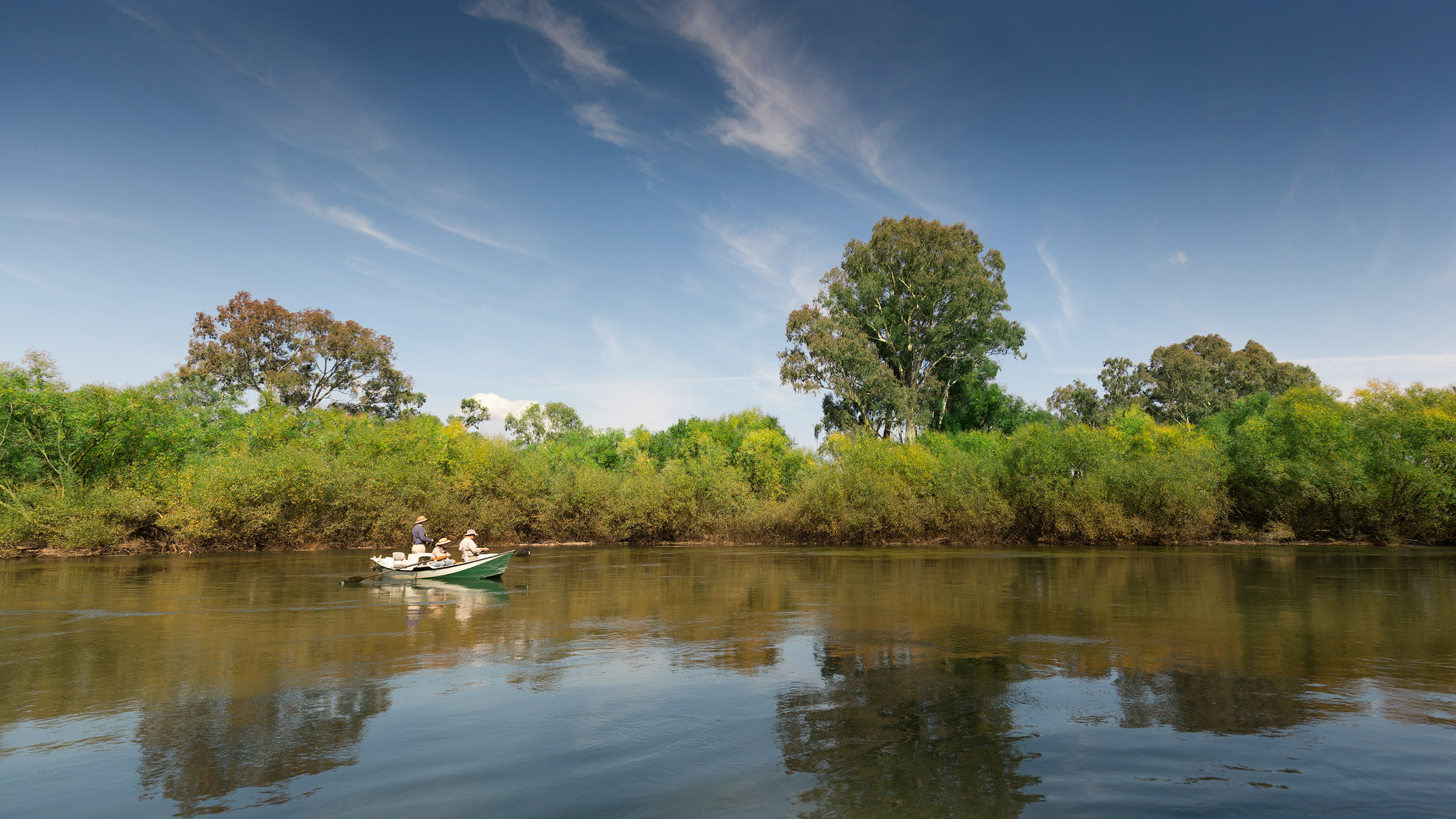
Late May on the Goulburn
By the third week of May, there are noticeably fewer anglers along the Goulburn. The opening-weekend crowds are a distant memory, the summer visitors have largely disappeared and even the regulars seem to become more selective about which days they spend on the water. Football has reclaimed the weekends, the mornings are cold enough to make getting out of bed a less attractive proposition, and the prospect of standing in a river for several hours no longer holds quite the same appeal it did in November.
For those of us still fishing, however, May can be a particularly enjoyable time. The river is generally lower, the water often exceptionally clear and the trout can feed steadily through the warmer part of the day. There is less of the frantic activity associated with the summer hatches, but the fishing can be wonderfully absorbing. A good fish rising repeatedly in a quiet pool is reason enough to spend a considerable amount of time in one place, particularly when there is nobody else waiting to fish it.
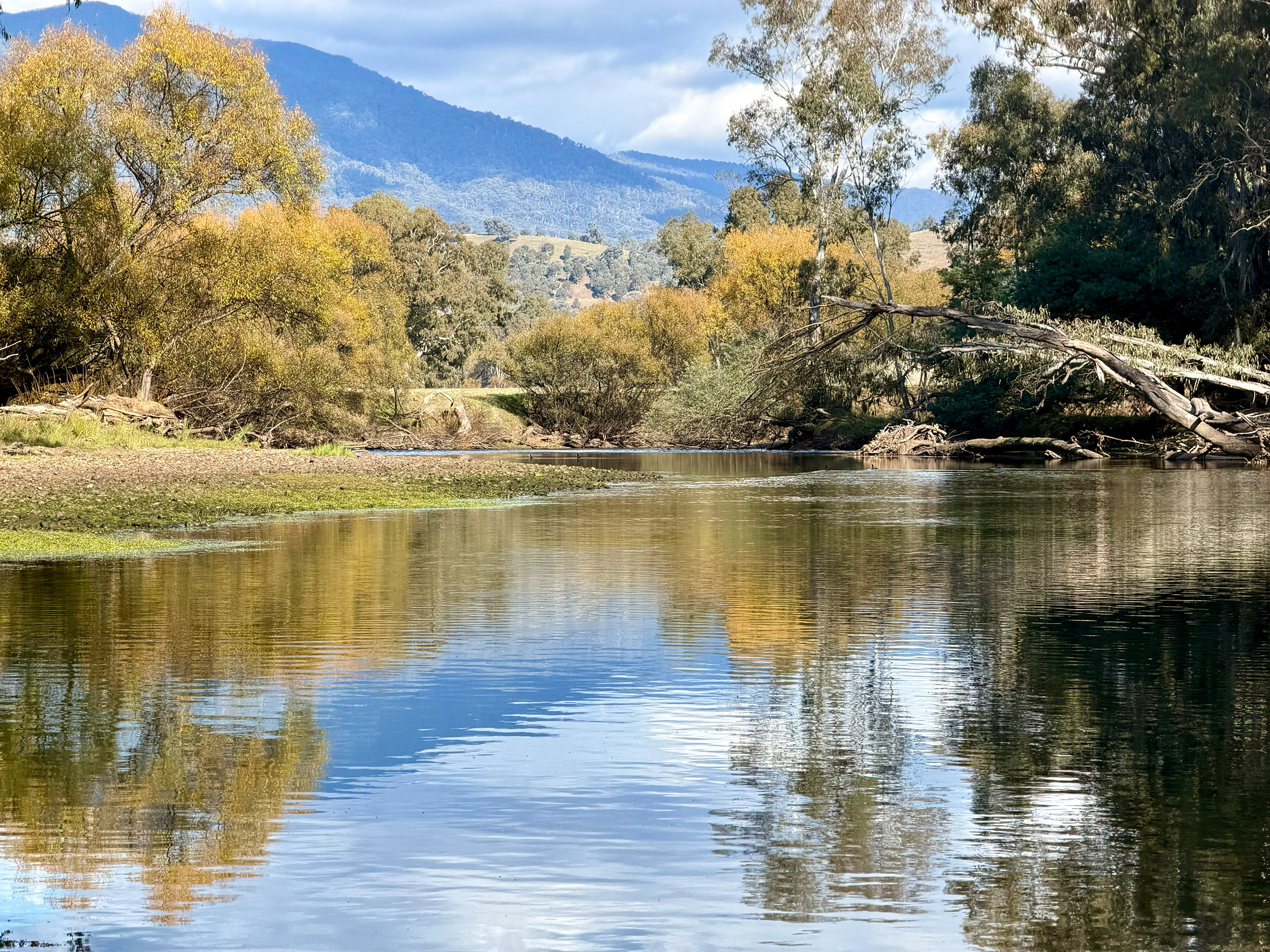
The change in the river is usually well underway by this stage. As irrigation demand declines, releases from Lake Eildon often begin falling towards their winter levels. Gravel bars that spent summer beneath several feet of water become visible again, while long runs and glides gradually regain the appearance they had before the heavier releases. Some of the aquatic vegetation that developed through the warmer months begins thinning, and the current lines become easier to distinguish as the river settles.
These changes affect where trout hold and feed. Water that provided excellent cover during the higher flows may become too shallow or exposed, while seams and runs that were difficult to fish through summer become accessible again. The fish gradually adjust to those conditions, often occupying positions that allow them to intercept drifting food without expending unnecessary energy against the current. On the clearer days, some can be watched for considerable periods, holding close to the bottom before moving briefly into a feeding lane.
May is also a month when the insects become smaller and less conspicuous. The large terrestrial insects that occupied so much of our attention through summer have mostly disappeared, although the occasional beetle or cricket can still find its way onto the water. Midges become increasingly important, along with small mayflies such as Baetis, which can produce surprisingly good hatches when conditions are suitable.
On a calm afternoon, a modest emergence of these little mayflies can bring trout into the slower water. The first indication may be a single rise in the tail of a pool, followed a few minutes later by another farther upstream. Eventually several fish may begin feeding, although the activity rarely announces itself with the enthusiasm of the larger spring and summer hatches. Sometimes the rises are little more than dimples, barely disturbing the surface as the trout take insects sitting low in the film.
This is fishing that rewards a careful approach. Longer leaders, fine tippet and sparse imitations become increasingly useful, particularly when the fish are feeding in flat water. A trout that has been rising confidently for half an hour may ignore a fly that drags only slightly across the current. It may also refuse a perfectly respectable imitation simply because it is sitting too high on the surface or differs from the natural insects in some small but important way.
I have always enjoyed that sort of problem. There is something satisfying about finding a good fish, watching it long enough to understand its feeding rhythm and gradually working towards a presentation that it will accept. On some occasions the answer is straightforward. On others, a fish may occupy most of an afternoon without ever coming to the net. Either outcome can make for interesting fishing, provided the angler is prepared to give the trout the attention it deserves.
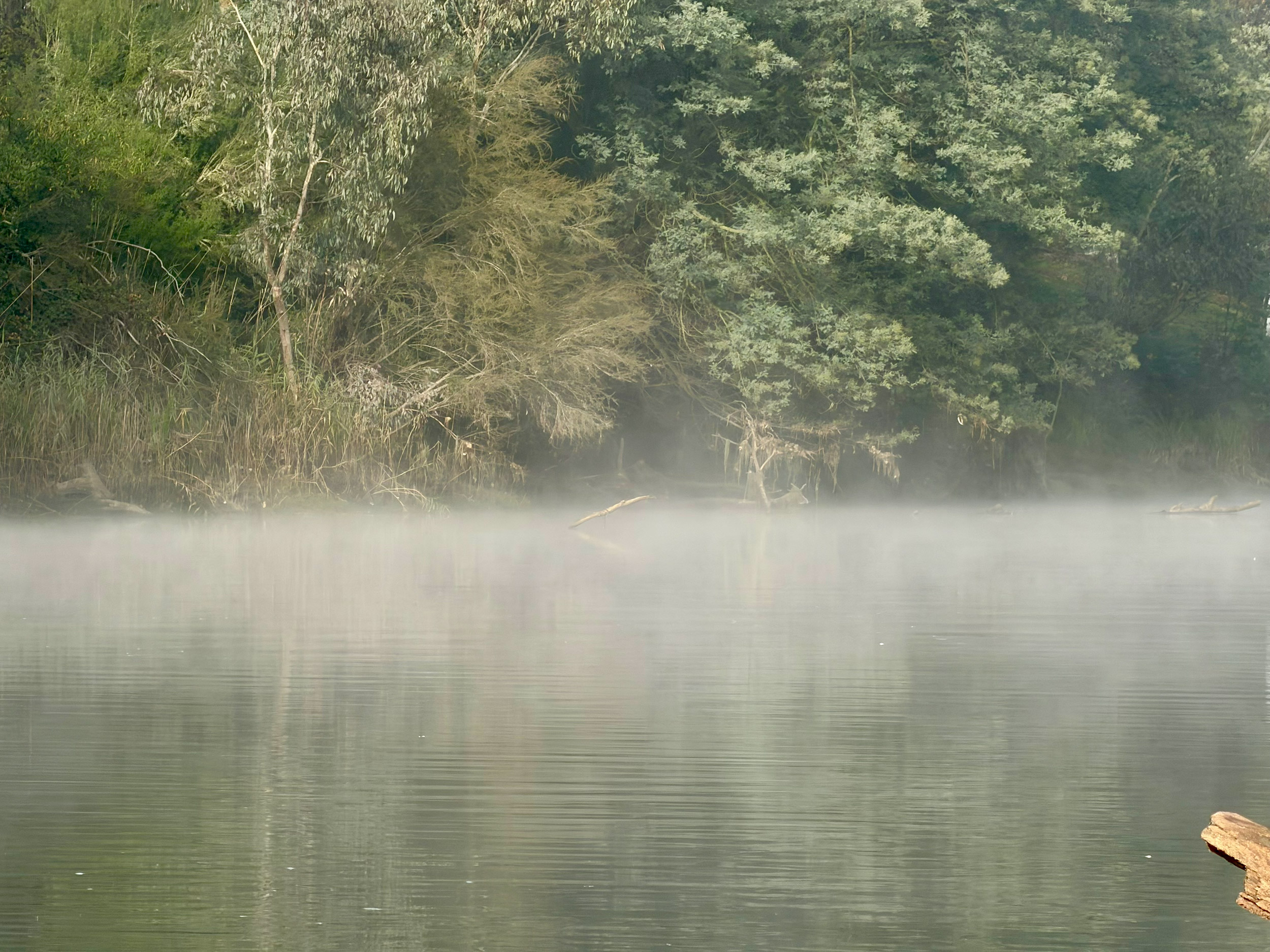
The atmosphere along the river adds considerably to the appeal. On clear mornings, frost settles across the surrounding paddocks and mist often hangs over the water until the sun reaches the valley floor. The willows have begun shedding their leaves, which collect along the edges of backwaters and occasionally drift through the same feeding lanes we are trying to fish. Cattle stand quietly in the colder paddocks, while wedge-tailed eagles circle above the valley or sit watching from the larger trees.
There is a different quality to the light at this time of year. Shadows reach across the river earlier, and even during fine weather the warmth begins disappearing well before evening. By midafternoon, the temperature can be falling quickly enough that the prospect of a hot shower and a decent meal becomes increasingly attractive. Nevertheless, a trout rising steadily beneath an overhanging willow has a remarkable ability to persuade people to remain on the river longer than they intended.
The approaching spawning season also deserves consideration. By late autumn, some brown trout are beginning to develop their spawning colours, and their behaviour may change as they prepare for winter. As the season progresses, it becomes increasingly important to avoid disturbing fish gathering in spawning areas or occupying suitable gravel. The annual closure of the trout waters exists to protect this part of their life cycle, and it is something I have always regarded as essential to the long-term health of our fisheries.
For guides, the final weeks bring a mixture of satisfaction and fatigue. After months spent preparing boats, guiding clients, watching weather forecasts and organising the countless small details that make up a day on the river, the prospect of a break is not entirely unwelcome. There are mornings when the cold makes another day at the oars considerably less appealing than it would have been six months earlier. Yet once the boat is launched and the river begins moving beneath us, I generally find myself enjoying the day as much as ever.
The past season has provided some exceptional fishing, although not always consistently. There have been periods when the trout were difficult to find and others when a favourable change in conditions produced several memorable days in succession. Looking back, I tend to remember particular sessions rather than an uninterrupted run of good fishing. A worthwhile hatch, an unexpectedly large trout or an afternoon when everything came together after a difficult morning. Vignettes rather than sustained glory, perhaps, but there have been enough of them to make the season memorable.
That variability is something I have become accustomed to after so many years on the Goulburn. It is tempting to judge an entire season by its strongest or weakest periods, but neither gives a particularly complete picture. Water levels, fish populations, insect activity and weather rarely align perfectly for months at a time. The better days can arrive unexpectedly, and a section that appeared almost empty during one drift may produce excellent fishing the next time we visit.
Once the river closes, there will still be plenty to do. Boats and trailers need servicing, equipment requires attention and preparations for the following season begin almost immediately. Winter is also a useful time for teaching. Without the distraction of trying to catch trout, anglers can concentrate on casting, line control, knots and the other fundamentals that are sometimes neglected once they reach the river.
Much of my attention will also turn towards the coming Montana season, while preparations for another New Zealand summer continue in the background. The book I have been working on is approaching completion, although there are still illustrations, editing and the inevitable collection of final details to attend to. Between those commitments, I doubt winter will be particularly quiet.
For now, though, there is still some fishing to be done. A few more drifts, perhaps another worthwhile mayfly hatch and the chance to spend time on sections of river that will soon be closed for the spawning season.
I particularly enjoy the final afternoons when the weather remains settled and there is no reason to hurry. The river is quiet, the light is beginning to soften and occasionally a trout rises in a place that deserves a closer look. We might have spent most of the day fishing already, but there is usually time for one more cast.
At least until the fish stops rising.
Ant