
Goulburn Valley fishing report – Friday 25 September 2026
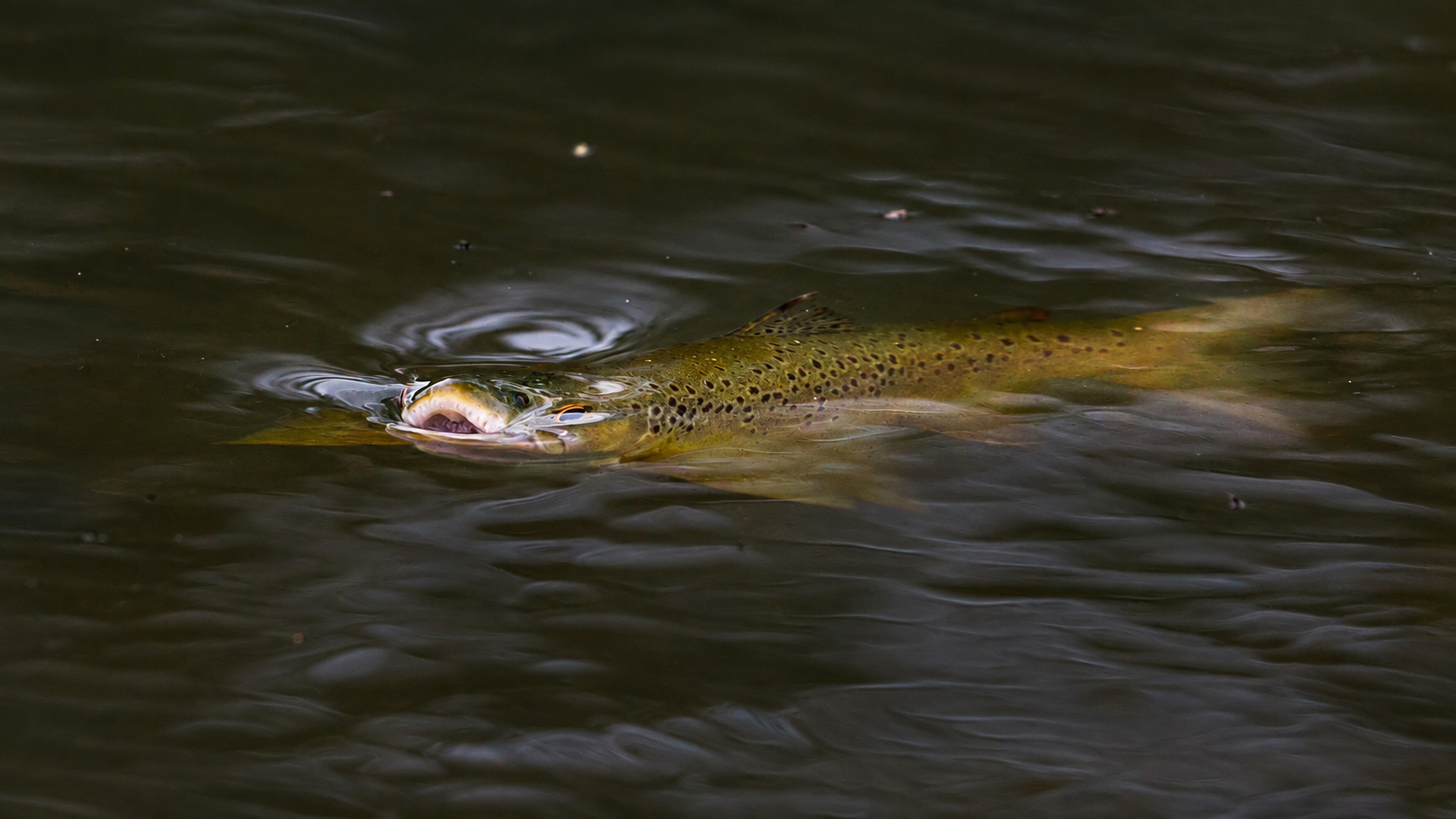
With the Grand Final long weekend underway, here’s an update after two full days of drift boating on Wednesday and Thursday. I fished with a father-and-son team across several parts of the Goulburn, finishing Thursday with five fish in the net and around twenty hits or follows on streamers. In the clear water, we could often watch the whole encounter unfold.
We also sighted around twenty platypus on Thursday alone, some within a couple of rod lengths of the boat. Between watching flies, looking for fish and having platypus surface alongside us, there was plenty to keep everyone occupied.
The river is rising gradually, insect activity is building and the willows are filling out. Fish are still thinly distributed through the stretches we’re covering, but the past two days have given us a better picture of how to approach the fishing, along with some good reasons to get out.
Streamers have been the best option
Wednesday was warmer, with less water in the river, and the fishing was challenging. Thursday’s increase gave several runs more depth and made manoeuvring the boat across the shallow gravel bars noticeably easier.
Fishing streamers has been our most productive approach, and also the most exciting. In the clear water, you can track the fly from the moment it lands all the way back to the rod. Sometimes a fish appears behind it and follows without committing. Sometimes there’s a sudden flash and a hit. It’s extremely exciting and almost entirely visual – quite different from the picture many people have of retrieving a submerged fly through a lake. You see the approach, the hesitation, the change of direction and, sometimes, the take. There’s much more to the day than the final tally in the net.
Thursday’s five landed fish came from around twenty hits or follows. There was enough interaction to keep us experimenting and paying attention, but those numbers also need some context. Two or three years ago, a day fishing this way could quite readily produce a dozen to fifteen fish, with forty or fifty follows, bumps, hits or looks along the way.
To me, that comparison points to substantially fewer fish in the river. We’re still finding opportunities, but we’re covering plenty of water to find them.
With fish spread out, streamers let us search successive banks and runs while watching how the trout respond. The interest doesn’t always turn into a hooked fish, but each follow gives us something to work with.
I first walked into Kelly Galloup’s Slide Inn in Montana in 2010, after an American friend made me promise I’d stop by. I came away with a bunch of new flies and some fresh ideas for fishing the Goulburn. We spent a few weeks experimenting between summer dry-fly sessions in Idaho. While the timing wasn’t ideal for streamer fishing, those early outings changed how we approached our home waters. We’ve been refining that approach ever since.
I’ve recently put together half a dozen outfits covering three different systems, with line and fly combinations suited to different water levels and presentations. They’ll allow us to get the best out of the conditions as they change over the coming months. If you’ve been interested in trying a day of streamer fishing from the boat, this is a good opportunity to get a feel for it.
There are rising fish, too
On Thursday, I bumped into GVFFC founder and my former business partner, David Pickering, at the boat ramp at the top end of Breakaway. He was fishing with our guide Chad and drifting down towards Alexandra. They found a few fish rising throughout the day. Their best was a rainbow of around three pounds, which took about an hour of attention and several fly changes before it finally ate the fly.
There are opportunities on the dry fly, but they’ve been scattered. At present, I’d come prepared to search with streamers and stop when a rising fish gives you a reason to change.
When that happens, take a moment to watch. Where is it feeding? How often does it rise? What is the current doing between you and the fish? David and Chad’s rainbow was a reminder of how much patience can matter once you’ve found a worthwhile trout.
A lot of the rising fish we’ve found have been in mirror-like water, where stealth and presentation are paramount. Don’t be afraid to extend your leader and go finer with the tippet when the fly and fish warrant it. A 10–12-foot leader down to 5X is a useful starting point, but we’ve gone longer and as fine as 6X to tempt fish in the slower pools.
In the boat, it’s handy to have several rods rigged for different situations so we can swap methods quickly. When wading, you need to be more proactive about making those adjustments yourself. Take the time to alter your leader or tippet rather than persevering with a setup that isn’t giving you the presentation you need.
The river is coming up
Heading into the long weekend, releases from Eildon are forecast to continue their gradual rise. They were around 800 ML/day on Wednesday just gone, to approximately 1,100 ML/day yesterday, with 1,300 ML/day forecast for today, Friday.
These small increases make a noticeable difference at the lower end of the flow range. They put more water over the gravel bars, give us additional clearance for the boat and open up more room for fish to hold and feed. A little extra depth can make an exposed run feel considerably more comfortable for a trout.
The release forecast issued at 10 am on 23 September sets out the following:
| Date | Forecast release |
|---|---|
| Friday 25 September | 1,300 ML/day |
| Saturday 26 September | 1,450 ML/day |
| Sunday 27 September | 1,500 ML/day |
These are releases from Lake Eildon, rather than measurements at every point downstream. Changes take time to travel through the river, and actual releases can vary from the forecast. Check the latest Goulburn–Murray Water release forecast before heading out.
Significant rain could change the picture and see releases reduced again. We’re not yet into the main summer irrigation period, but the river is beginning to have that feel about it, with releases edging upwards.
With the lake lower than we’d like, my hope is that summer flows remain moderate – around the 3,000- 5,000 ML/day mark for much of the main season – rather than reaching the much higher levels we sometimes see. That’s a hope from a fishing perspective, rather than a release forecast. We’ll follow the actual operating updates as the season develops.
A note for anyone rowing below Gilmore’s Bridge
There are two dangerous shallow runs over gravel bars below Gilmore’s Bridge where the current sweeps hard from left to right, pushing boats towards the willows.
The difficulty is that the water on the left can be too shallow to get an effective stroke with the left oar, just when you need it to counter the current. A boat can be swept into the trees before the rower has much opportunity to recover.
The first of the two is particularly awkward late in the day, when the low sun can obscure your view on the approach and through the run. Discretion is the better part of valour here. If you’re unfamiliar with these passages at the current levels, stop well upstream and inspect them. My preference would be to walk the boat through where the footing, depth and current allow that to be done safely, rather than commit to rowing through without a clear line.
I know most readers won’t be rowing this stretch themselves, but if you are and would like a heads-up, drop me a line. I can send Google Maps pins identifying the two locations.
We’ve drifted the upper river several times since opening, along with stretches around Breakaway and Alexandra. This week was our first drift below Thornton. We waited until the river had risen enough to give us more room to pass wading anglers without disturbing their fishing.
Despite plenty of traffic crossing the bridges, we saw only four or five anglers along roughly fifteen kilometres of river.
The insects are the early arrivals
The insect activity is what feels particularly advanced for September. Across Wednesday and Thursday, I saw an extraordinary number of dragonflies – possibly more than I can remember seeing in any comparable 24 hour period. There have also been large numbers of grannoms.
Those two stand out as perhaps a month ahead of what I’d normally expect. Mayflies have been sparse during these sessions, with only a sprinkling of other caddis. Earlier in the week we saw some spinner falls, and beetles have been landing on us in the boat.
The willows are closer to their usual schedule, perhaps a week early. They’re putting on leaf quickly, and I’d expect them to look fully bushy within another five days or so.
It’s an interesting combination: a familiar spring change along the banks, with some insects appearing unusually early and in remarkable numbers. That gives us plenty to watch over the next few weeks, although abundant insects don’t automatically mean trout rising everywhere.
A cooler change for the weekend
The forecast we’re working from has Alexandra reaching 23°C today (feels warmer than that), followed by 18°C on Saturday and 16°C on Sunday. Saturday brings showers and a southerly change, with 1–5 mm indicated.
Monday and Tuesday look mostly dry, with tops of 18–19°C. Farther ahead, the forecast shows showers on Wednesday 30 September, followed by 10–20 mm on Thursday 1 October and 5–10 mm on Friday 2 October.
Those later rainfall totals are still several days away and may change. If the rain arrives across the catchments, we’ll need to reassess the smaller rivers.
The cooler spell may interrupt some of the insect activity, but it will be interesting to see what happens when the next run of warmer days arrives.
Finding fish remains the challenge
On the way home, I ran into a former local guide while getting fuel, and we had a lengthy chat about what we’d both been seeing.
He’d spent a week camping and fishing here, wading, stalking the edges and backwaters, and working through the runs and pools. He’d found very few fish away from the areas immediately around the access points and bridges where trout had been stocked for opening.
Nearly all the fish being caught in those areas were rainbows, which was consistent with his impression that the recent stocking was providing much of the activity.
I’ve also had a report passed on from an angler with Australian team experience who struggled to locate fish away from those main access areas.
These are observations from particular anglers and stretches, rather than a population survey, but they agree with the amount of searching we’re doing and the difference we’re seeing compared with a few years ago.
It’s worth knowing that before a visit. Good-looking water won’t necessarily hold the number of fish you remember from earlier years. Moving, exploring and making the most of the fish you locate are all important at present.
The boat gives us options through the quiet stretches. We can cover more water, reach places that are difficult from the bank and stop when we find something worth working on. The clear water also makes that search absorbing: even a fish that follows and turns away can teach you something.
There’s plenty happening beyond the trout, too. We’ve been seeing azure kingfishers along the river, and Thursday’s platypus encounters were exceptional. Having one surface close enough to watch it properly, then quietly disappear again, is a lovely interruption to a day’s fishing. Seeing so many, along with the kingfishers and everything else happening around us, made it a memorable outing.
Keep an eye on the smaller streams
The smaller rivers may offer some of the more interesting opportunities over the coming weeks.
The figures I’ve been looking at put Lake Eildon at around 61% of capacity, with combined inflows of roughly 2,000 ML/day. That doesn’t tell us the condition of every tributary, but it gives us a reason to check rivers we might ordinarily expect to be running higher at this point in spring.
On the Rubicon, we often associate the first reliable dry-fly fishing with November. During some of the drought years, however, we were fishing dries from opening day, with insect activity seemingly brought forward by as much as two months.
If suitable flows persist and another warm spell follows this change, there could be worthwhile small-stream fishing well before the usual calendar suggests.
Start looking now. Check the individual river, spend a few minutes watching the quieter water and let what you find guide your approach. Next week’s rain may change the picture, so stay flexible.
Looking towards summer
Our recent Montana trip is still in the back of my mind. It was among the hottest, driest visits I can remember. By mid-July, a number of rivers were facing restrictions on fishing hours, with some closures following as heat, low flows and water temperatures became increasingly difficult.
Basing our fishing around tailwaters gave us access to good fishing despite those wider problems. Even so, it reinforced my feeling that June through to around mid-July is becoming the better window for the variety of fishing we want to do there. Later summer can still produce excellent fishing, but I’m increasingly reluctant to assume we’ll have the same range of options.
That experience doesn’t predict our summer, and early dragonflies don’t tell us exactly what February will bring. I’m sharing these observations because they’re worth keeping in mind as we decide where and when to fish.
I’m optimistic about the Goulburn over the next few months. Last November, December and January produced some exceptional sessions, and there is potential for very good fishing again as food becomes more available and the flows give us more water to work with. How consistently that happens will also depend on the fish available in each stretch.
Although Eildon at around 61% is lower than we’d like, my assessment is that there is ample stored water to carry the Goulburn through this summer with cold releases and good fishing opportunities. The longer-term concern is what happens if we don’t receive adequate rain next winter and spring to replenish it.
We’ll continue watching river temperatures and releases. Very hot air temperatures may also influence the hours we choose to spend on the water, particularly in January and through February, even when the river itself remains cold.
The smaller streams may offer their best opportunities earlier, with the Goulburn becoming increasingly important as summer progresses. Beyond that, I’m also looking forward to the fishing that March, April and May can bring.
Come for a drift
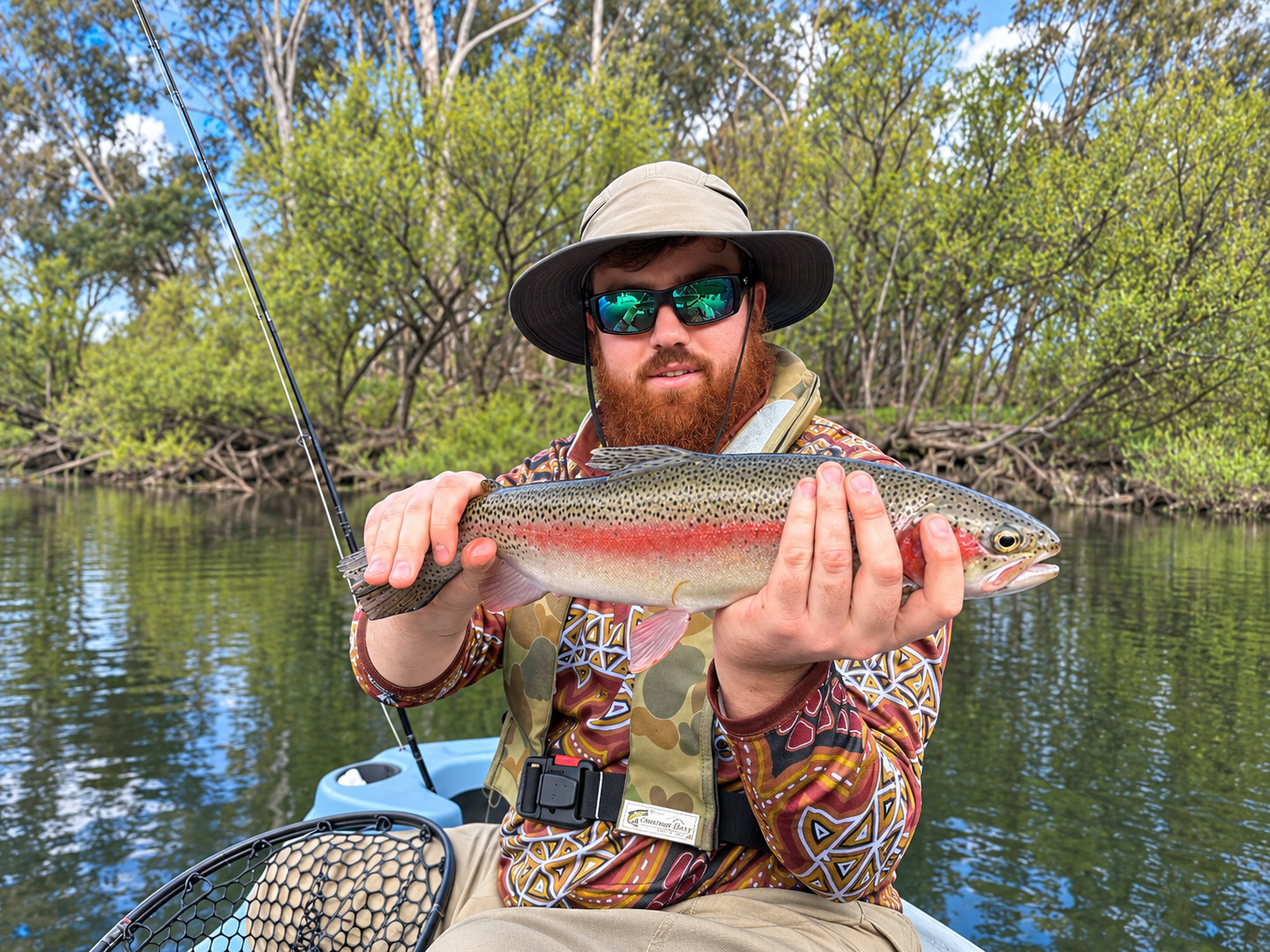
We have multiple boats on the river most days and more capacity for local bookings this season. Whether you’re considering a half-day drift, a full day or a few days fishing and staying locally, you’re welcome to get in touch.
If the streamer fishing appeals, let me know. The outfits are ready, the water is clear, and watching a trout appear behind your fly adds another dimension to the day. It’s also a lot of fun and can easily replace a cardio gym session if you’re worried about a ‘sedentary’ day of drifting in the boat.
We’ll give you an honest account of the conditions and help choose an outing that suits your experience. Short-notice enquiries are welcome too – if a day opens up at your end, it’s always worth asking.
Enquire about a drift-boat day
Enjoy the long weekend, whether you’re watching the football, heading for the river or fitting in a bit of both.
Tight lines,
Ant
Goulburn Valley Fly Fishing Centre
03 5773 2513 | 0418 995 611
gvflyfishing@gmail.com