
Goulburn River Fishing Report
A very different river, and a few days best avoided
Tuesday 10 November 2026
The Goulburn has changed dramatically since my last report, and unfortunately not for the better, at least from a fishing perspective.
We knew the river was due to rise, but yesterday’s increase was substantial. The morning began with releases reported around 5,000–5,500 ML/day, and as the higher water arrived, we were dealing with something closer to 8,000–8,500 ML/day. That is an enormous change in a relatively short period, particularly after the lower flows we had been fishing earlier in the month.
The increased volume has brought a great deal of material into the river. Leaves, seed pods, twigs and branches were moving downstream almost continuously. There were much larger pieces of timber too, including entire trees that appeared to have travelled considerable distances. Some had been dislodged as the rising water reached new ground; others may have been lying along the banks since earlier storms, waiting for enough water to carry them away.
More concerning was the current itself. Several corners were carrying exceptionally heavy, pushy water, with strong boils, reversing currents and whirlpools in places where the river had been considerably more manageable only days earlier. We were extremely cautious, and still managed to do what we had set out to do, but there were several reminders of how easily an inattentive boat operator could get into trouble. This is not the time for anyone unfamiliar with the Goulburn to be experimenting with a drift boat or attempting any ambitious wading.
Interestingly, the water was still reasonably clear, particularly upstream of Breakaway. It carried some of that familiar colour associated with a substantial rise, but visibility was not the main problem. The volume, velocity and floating debris were much more significant. Even when we found fish, keeping a fly visible and getting a clean drift through all the material on the surface was difficult.
Finding fish in newly flooded ground
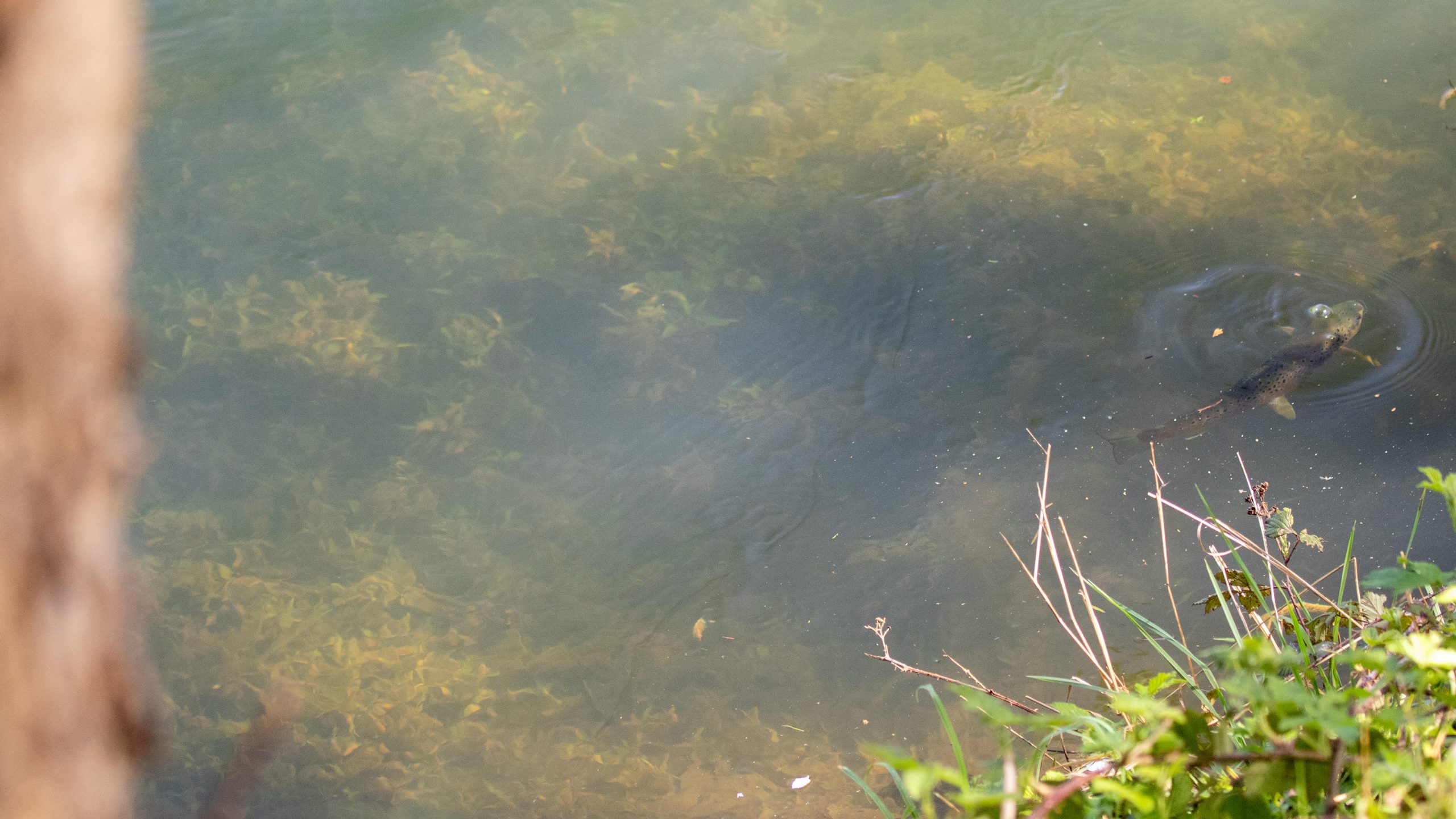
The encouraging thing yesterday was seeing trout move into water that had only recently become available to them.
We entered a couple of bays I hadn’t been able to fish properly for several seasons. In one, we quietly moved onto a shallow weed bed, perhaps eighteen inches deep, and settled down to watch a shaded corner that looked particularly promising.
We had been sitting there for about ten minutes when something caught my attention out of the corner of my eye. I looked down and found a trout almost directly beside the boat, moving slowly across the weed. We were so close that all we could do was remain still and allow it to pass.
Another fish appeared and moved into the shaded water we had been watching. It was a small area, perhaps the size of a billiard table, but it offered shelter from the main current. A few minutes later a larger rainbow arrived and pushed the brown out of position. Both fish moved away from the boat and disappeared towards the river.
It was fascinating to watch. Trout establish themselves around the water available to them, with larger or more assertive fish occupying preferred positions. When the river rises this dramatically, much of that arrangement has to begin again. New water becomes available, familiar lies change and fish start moving about in search of somewhere comfortable.
We quietly rowed back about ten metres, anchored on the shallow weed out of the main flow and began watching the area again. Eventually the fish returned. Over the next forty-five minutes we had several opportunities, but could never quite get everything to line up. Sometimes the cast wasn’t right. On one occasion we made a good presentation, only for the trout to swim a foot to the wrong side of the fly without seeing it.
After another long spell without a sighting, we decided to move into the shaded water for a better viewing angle. It’s a last-chance move but getting yourself into the same light as the fish, allows the eyes to adjust more acutely and often this makes all the difference. It seemed a sensible idea until we rowed almost directly over the fish. That was the end of that.
We had another good opportunity in a large reversing bubble line, where a trout was feeding well away from the main current in deep water. We initially tried a larger dry fly without success, then moved the boat away and rebuilt the leader with fresh 5X tippet and a much smaller pattern. The fish ate it on the first drift.
It was a lovely brown, safely netted and released, and a good reminder that even when the river is difficult, a feeding trout can still be caught if you can find it and make a suitable presentation. To add insult to injury, we were rowing into the little bay containing the take-out ramp when we passed almost directly over another trout of around three pounds, sitting quietly in the sheltered water. We had spent the entire day searching, and there was another fish virtually beneath us.
Very little happening in the main river
What we did not see yesterday was equally important. We didn’t find a single trout rising in the main runs, or feeding along the grassy edges where we would ordinarily expect fish to begin looking for terrestrials. We saw a few caddis and mayfly spinners, along with some adult dobsonflies involved in egg-laying activity, but there was very little meaningful hatch activity.
I also heard a few cicadas late in the day, which is encouraging for what lies ahead, but we are not yet seeing the numbers of larger terrestrials that can make high-water fishing so productive. At more suitable times of year, heavy flows can create wonderful opportunities along newly flooded banks. Grasshoppers, beetles, cicadas and other land-based insects can bring large trout into remarkably shallow water. At present, however, much of that food supply has yet to develop.
My advice for the next few days is straightforward: if you’re travelling to the district specifically to fish, don’t plan your trip around the Goulburn.
The smaller streams are the better option at present, provided conditions are suitable. I won’t name particular locations in a public report. Some of these fisheries are small, relatively fragile places that cannot absorb large numbers of visiting anglers, especially when the main river becomes difficult. I’m happy to discuss general options privately with people planning a visit. But this belt of hot weather should make the smaller rivers fish very well.
For those looking to fish the Goulburn itself on foot, I would regroup and reassess from Monday onwards. Even though GMW forecasts a reduction in releases from Thursday, five or six thousand megalitres a day will still be moving through the system. A lower number on the release forecast does not automatically mean good fishing or safe wading. The fish need time to establish themselves in the new conditions and we need enough suitable water to fish effectively. There is no sense pretending the fishing is better than it is simply because the weather looks pleasant.
Tight lines,
Anthony
GMW published releases + forecast
Upper Goulburn · Eildon flow and releases
Lake Eildon releases reported for 8–9 November and GMW’s published outlook through Friday 13 November.
Lake Eildon release trend
MEGALITRES PER DAY · GMW BULLETIN 9 NOVEMBER
■ Reported ■ Forecast
Sun 8
5,500
Mon 9
8,000
Tue 10
8,500
Wed 11
8,500
Thu 12
8,000
Fri 13
6,500
GMW reports a rise from 5,500 to 8,000 ML/day between Sunday and Monday, with 8,500 ML/day forecast for Tuesday and Wednesday. The forecast then eases towards 6,500 ML/day by Friday. Values are releases from Lake Eildon, not measured flows at downstream locations.
GMW update · 8:30 am Monday 9 November
Lake Eildon release outlook
The revised GMW schedule confirms Monday’s substantial increase and forecasts releases remaining high until Thursday, before easing on Friday.
| Date | Release | Trend |
|---|---|---|
| Sun 8 Nov | 5,500 ML/day reported | — |
| Mon 9 Nov | 8,000 ML/day reported | ↑ Sharp rise |
| Tue 10 Nov | 8,500 ML/day forecast | ↑ Rise |
| Wed 11 Nov | 8,500 ML/day forecast | → Steady |
| Thu 12 Nov | 8,000 ML/day forecast | ↓ Dropping |
| Fri 13 Nov | 6,500 ML/day forecast | ↓ Dropping |
Source: Goulburn–Murray Water, Lake Eildon release summary, updated 9 November 2026. Forecast releases may vary without notice. These figures do not describe instantaneous downstream river flows.
Alexandra forecast · 10–15 November
Weather and the fishing outlook
A generally mild-to-warm forecast is of little consolation on the main river while releases are this high. The figures below are from the Bureau of Meteorology forecast available when this report was prepared; check for updates before travelling.
| Day | Weather and wind | Min–max | Rain chance | GVFFC assessment |
|---|---|---|---|---|
| Tue 10 Nov | Partly cloudy; possible late shower or storm | 8–27°C | 30% | Avoid main river |
| Wed 11 Nov | Mostly sunny; southerly 15–25 km/h | 11–25°C | 20% | Avoid main river |
| Thu 12 Nov | Sunny; southerly 20–30 km/h | 7–27°C | 0% | Avoid main river |
| Fri 13 Nov | Partly cloudy; possible late shower | 9–29°C | 40% | Assess again; still high |
| Sat 14 Nov | Showers possible; check latest wind forecast | 12–26°C | 60% | Smaller streams preferred |
| Sun 15 Nov | Partly cloudy; possible shower | 11–23°C | 30% | Smaller streams preferred |
Weather: Bureau of Meteorology, Alexandra, forecast available during preparation on 9 November. Later forecasts and warnings may differ.
What that means for the next few days
If you have the flexibility to choose your fishing days, I would leave the main Goulburn alone for the rest of this week and over the weekend. The fish are clearly making use of fresh margins, but we are finding very little activity in the main current, and there is still substantial timber and debris moving through the system. Even experienced drift-boat operators need to be particularly cautious in these conditions. A planned reduction on Friday does not mean the river will suddenly become easy to fish. It will still be high.
My preference is to look at the smaller streams, without concentrating pressure on any one of them. Give other anglers space. If you are unsure where to go, call and we can discuss suitable options without broadcasting sensitive small fisheries to the entire internet.
The only thing that would affect my planning is if this forecasted warm weather kicks off the cicadas. If this happens, a drift boat trip might well be worth considering.
I’m back out on Friday and we have a fly fishing workshop running this weekend, so we’ll schedule our next Goulburn report for Sunday 15 November, when we should have a clearer picture of how the river is settling. We may even have those elusive cicadas getting about by then.
One final point: on a river changing this quickly, an early recorded release figure may no longer describe the water you encounter several hours later. Anyone planning to boat or wade should check the latest official release advice, gauge information and any warnings immediately before going, and be prepared to abandon the plan if it looks unsafe.
For now, there are better ways to spend a fishing day than pushing through eight thousand-odd megalitres of unsettled water simply because the Goulburn is the best river in the region.