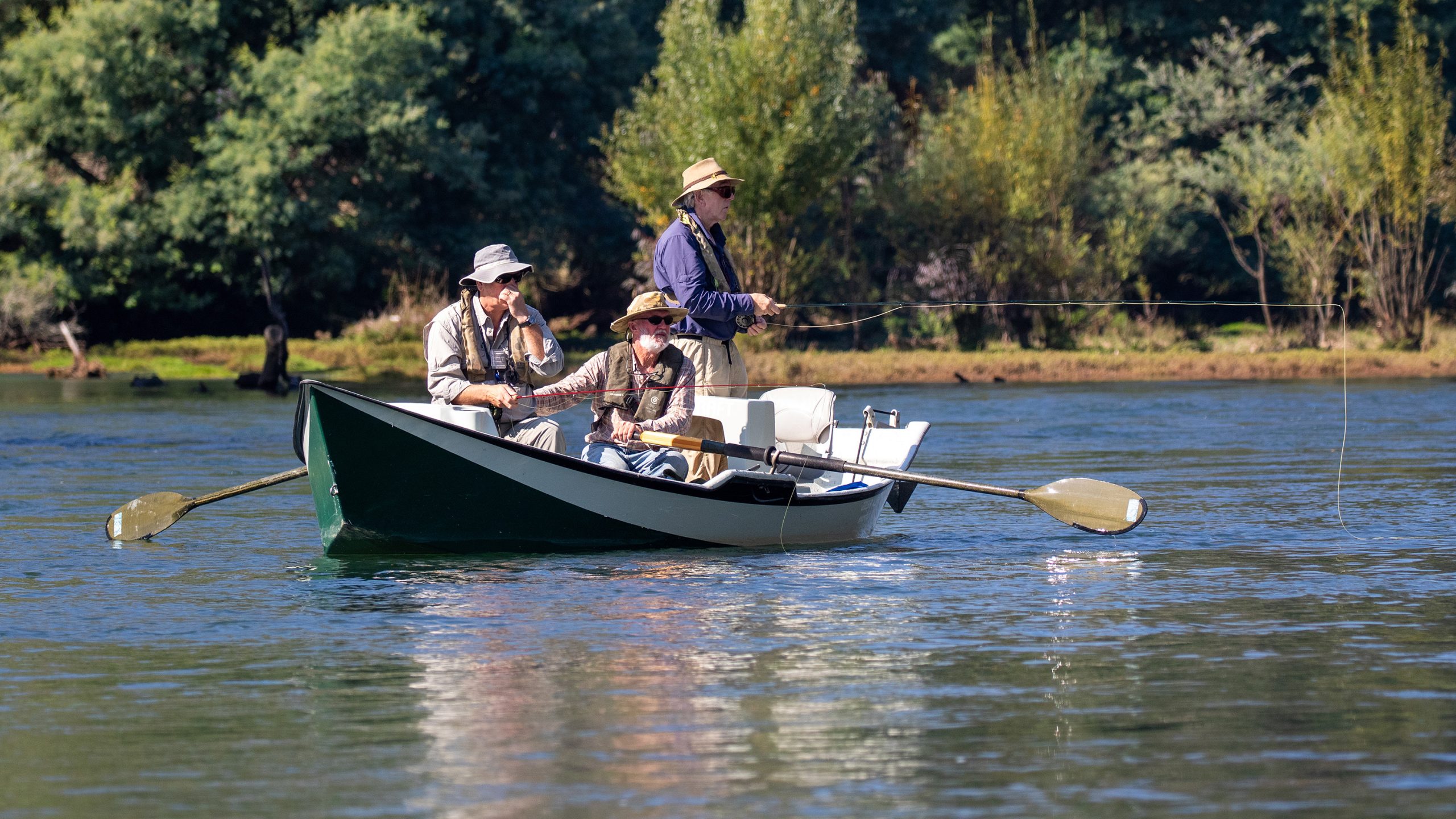
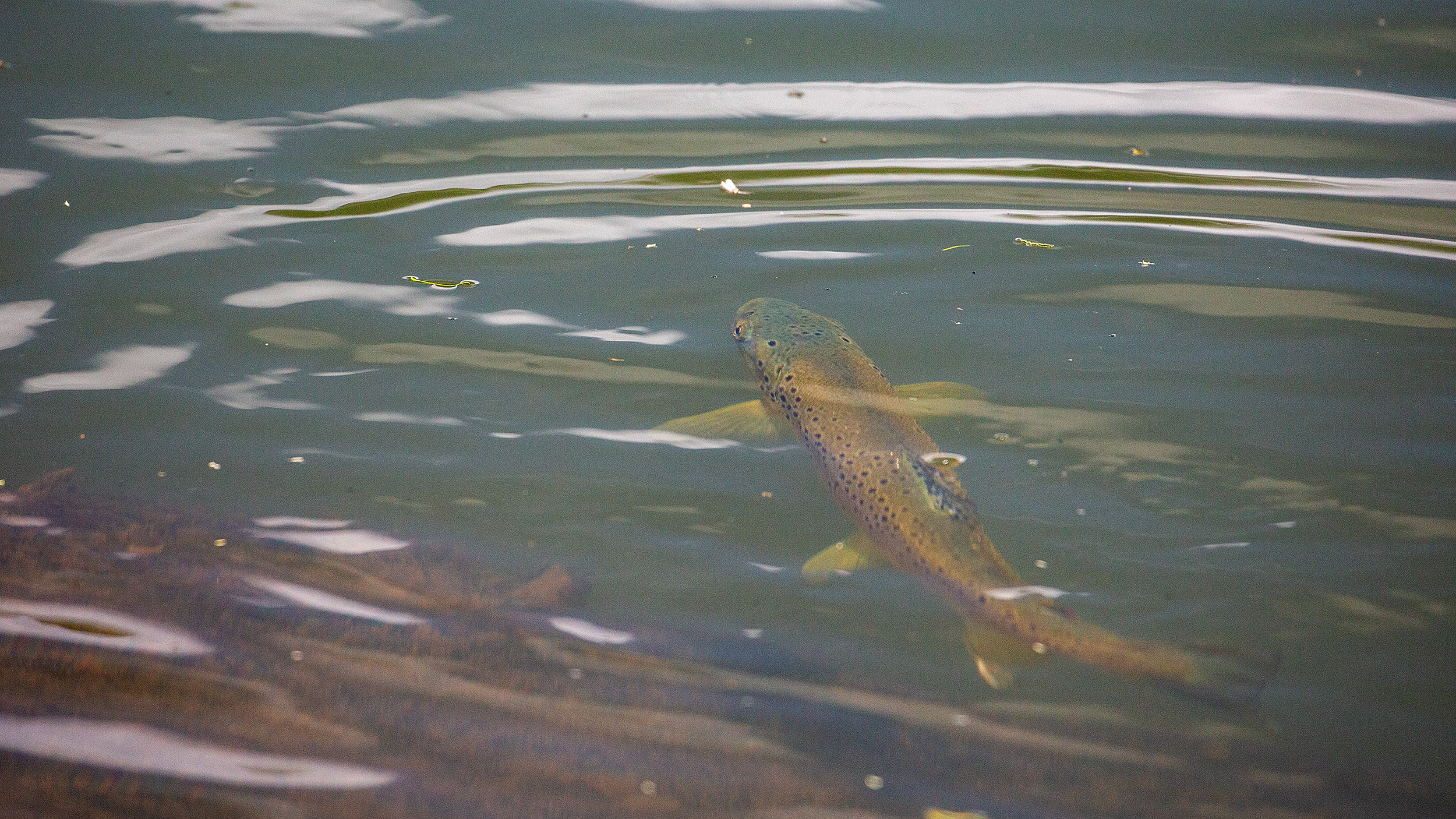
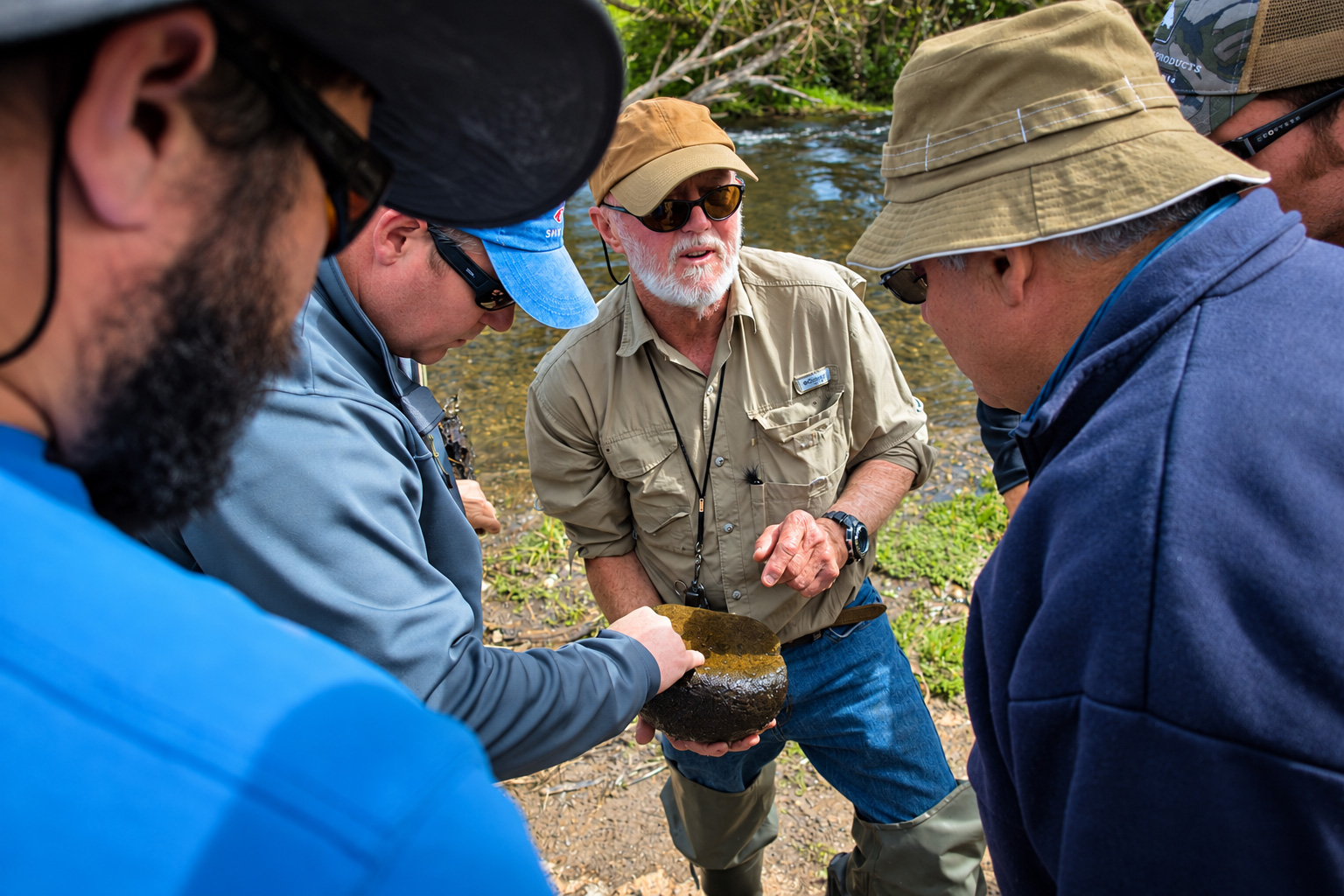
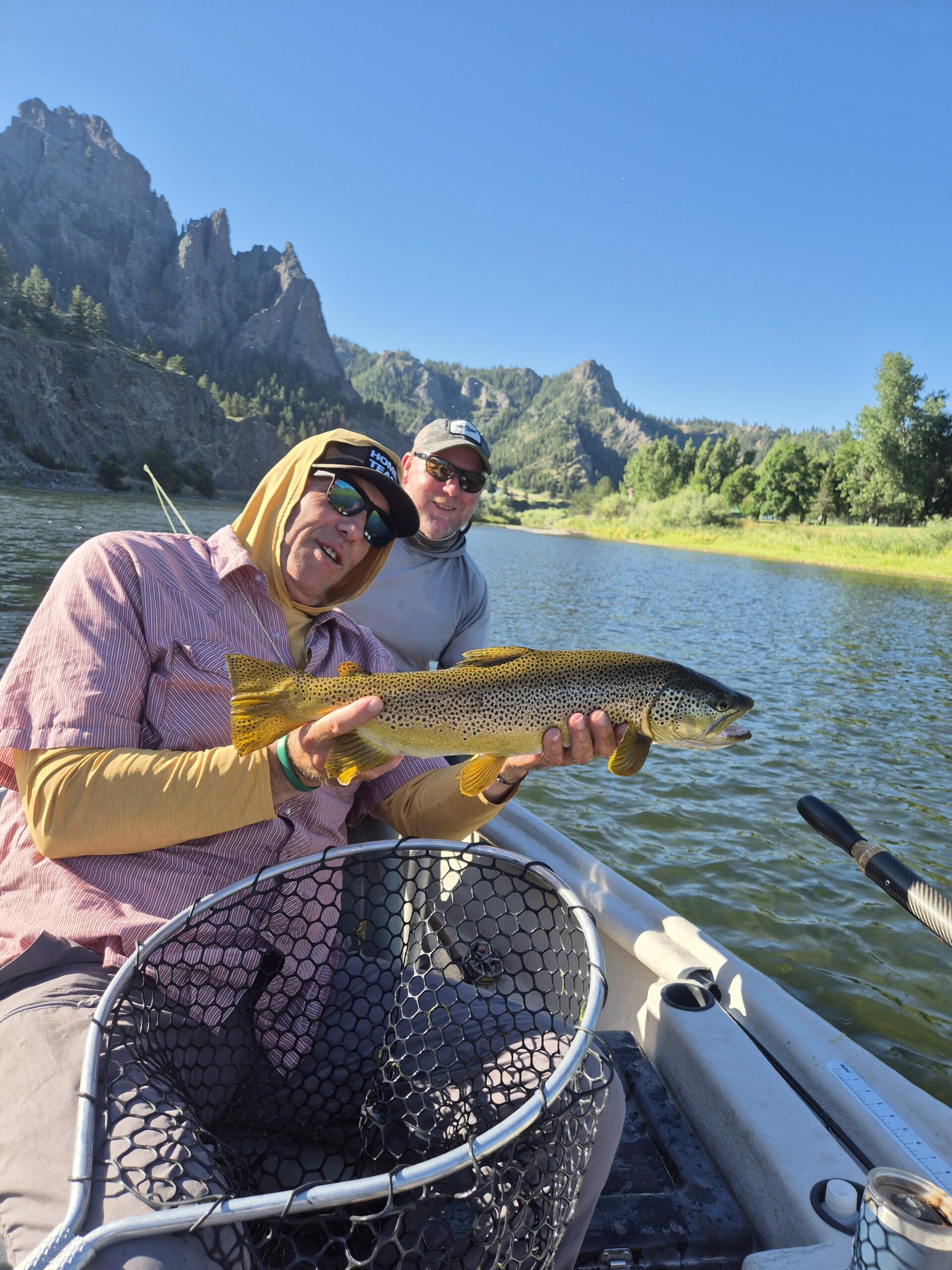
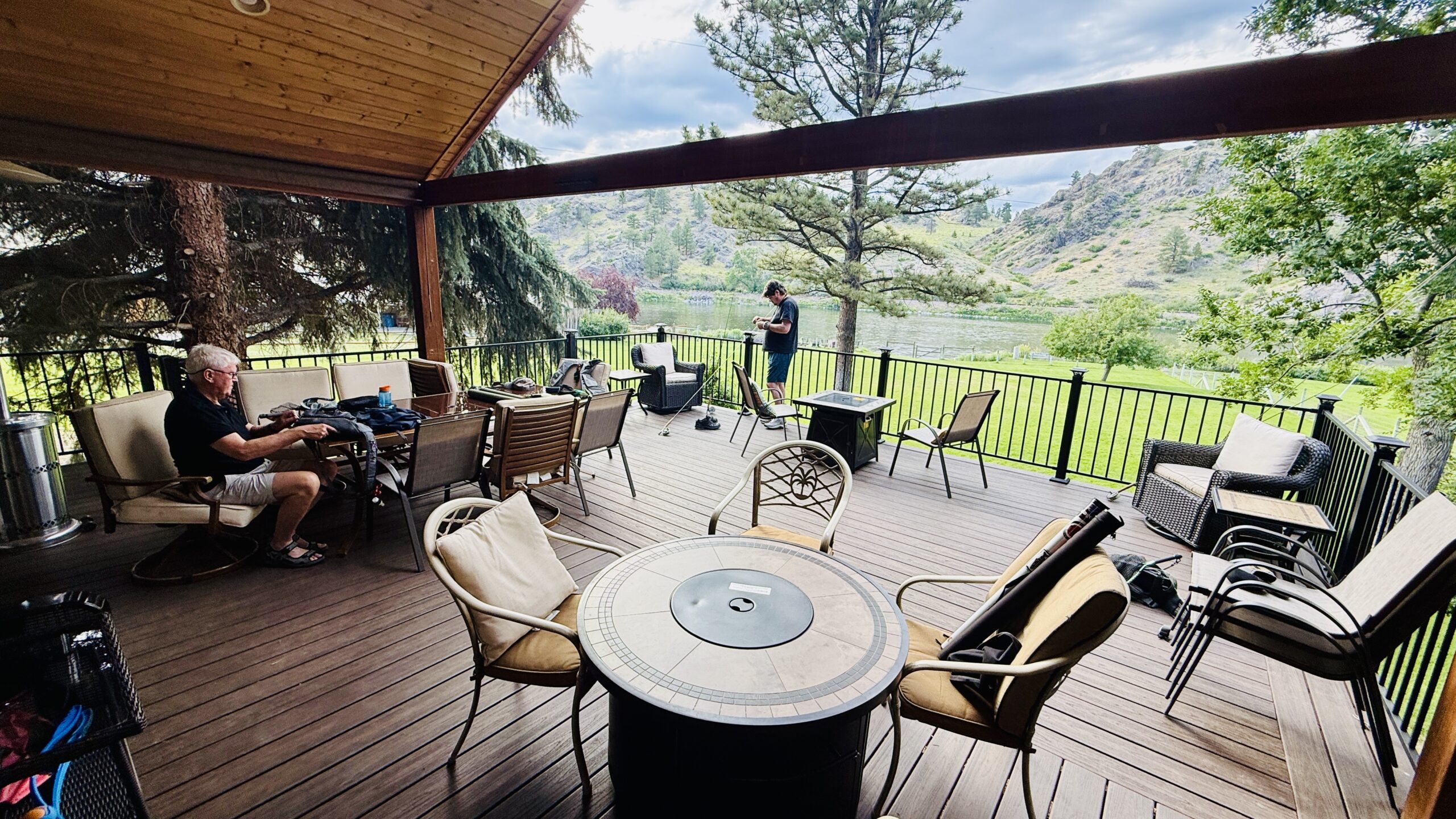
I’m writing this from the porch of a cabin in Montana. The sun has dropped behind the hills, a few swallows are still working the evening air, and somewhere downstream somebody is probably convincing themselves there is time for one last fish. I’ve spent enough evenings doing exactly that to recognise the temptation. Tonight, though, I’m happy to sit here. We have been travelling and fishing for nearly a month, and there is plenty to think about without assembling another rod.
Our days have taken us across the Missouri, the Madison, the Yellowstone and smaller waters in between. Coffee just after daylight, long drifts, lunch when we get around to it and the day’s stories over dinner have become familiar routines. Each evening brings another discussion about where to fish tomorrow. After a while, it becomes difficult to remember what was occupying so much of your attention before you left home.
I’ve been making these journeys for years, organising and hosting rather than guiding. The local guides look after the fishing, and they do it very well. Besides, I would rather avoid testing American immigration law as I would like to keep returning here in the years to come. My part involves arranging the accommodation, transport and fishing, then sharing the journey with a small group of anglers. Many return regularly, and over time the distinction between clients and friends becomes less important than the fact that we enjoy being here together.
Exchanging an Australian winter for an American summer is an arrangement I have found very little reason to reconsider. There are remarkable rivers, people I look forward to seeing and places that have become familiar through repeated visits. Yet one of the unexpected consequences of spending so much time away is how often my thoughts return to Australia. I can spend the day thoroughly occupied by a Montana river and finish it wondering about home.
Distance seems to make room for that. At home, there are bookings to organise, bills to pay, emails to answer and the next thing that needs doing. You can be completely involved in the daily business of living somewhere without spending much time considering the place itself. Away from it, with a little space around the usual obligations, I find myself thinking about things that would otherwise remain at the edge of my attention.
What comes to mind is not necessarily the Australia being argued over on television or in the comments beneath a news article. It is the country I know through the people I spend time with, the communities I have lived in and the work that has occupied most of my adult life. My affection for it has never depended on believing we get everything right. But I do find myself wondering about changes that are harder to describe than a new housing estate or a road that has become busier.
The Australia I remember growing up in felt more certain of itself. There seemed to be a stronger expectation that, despite our differences, most people were broadly working towards something shared. Communities felt more connected, institutions seemed more trusted and the future appeared less uncertain. That is how I remember it, which is an important qualification. I was younger, knew less and had considerably fewer things to worry about. Some of what I recall as confidence in the country may simply have been confidence in the life ahead of me.
I’m conscious of that when these conversations come up. Every generation seems to reach an age when it begins comparing the present with a version of the past that has become easier to like. I don’t want to mistake familiarity for virtue or assume something was better simply because I understood it. Equally, I don’t think every concern about change can be dismissed as nostalgia. There can be things worth keeping without wanting to put the whole country back where it was.
Over the past few years, I have found myself having versions of this conversation with people whose lives are quite different from one another: doctors, tradesmen, farmers, teachers, business owners and retirees. They do not all identify the same problems, and they certainly do not agree about the answers. But I keep hearing a similar uncertainty about where we are heading and how we arrived here. I find that worth listening to, even when I’m not convinced by the explanation that follows.
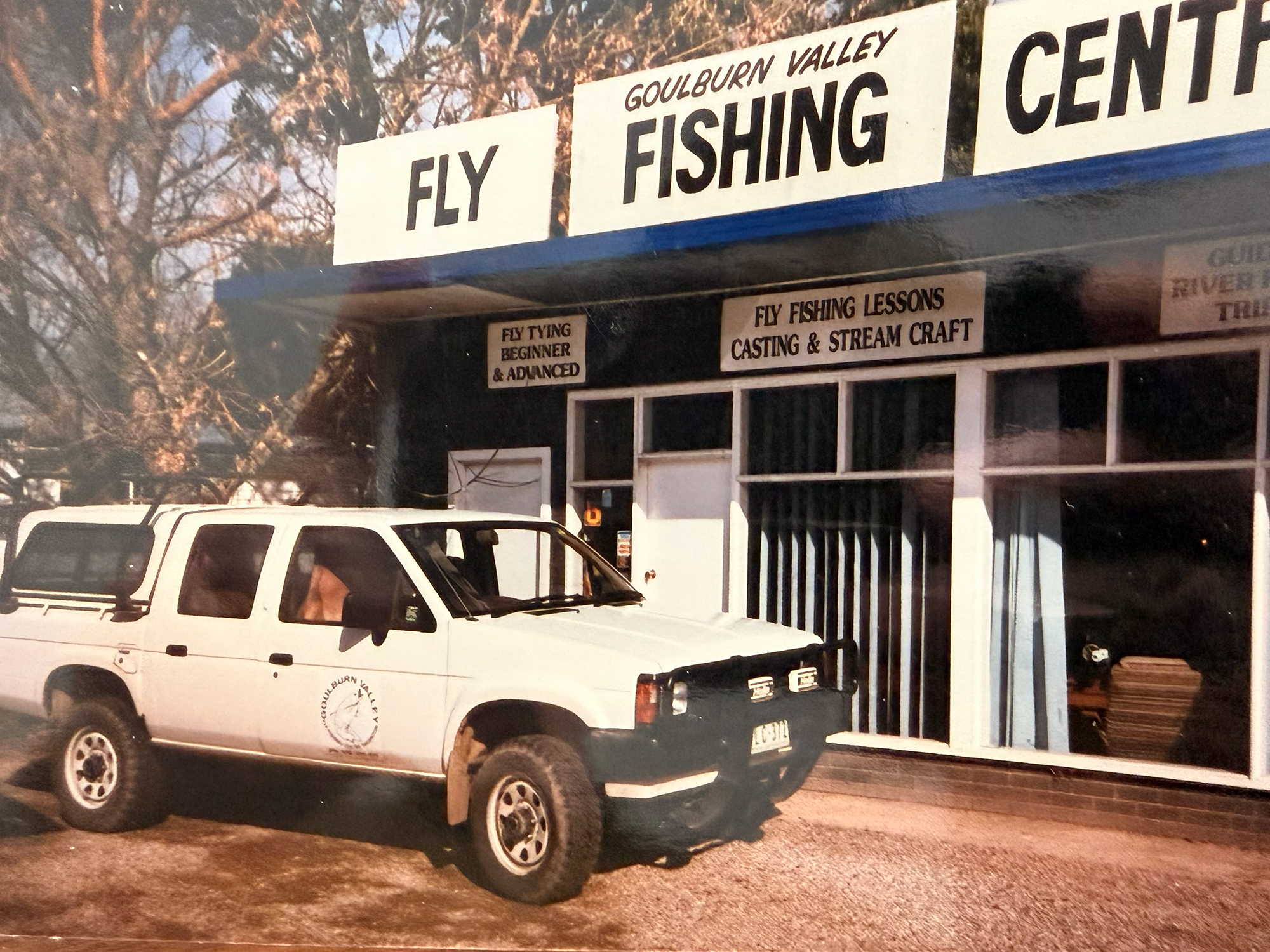
Spending years on the same rivers makes you aware of how much can change before you properly register it. A bank gives way, a gravel bar builds, timber shifts and the current begins favouring another channel. You adjust where you stand or how you row and carry on. Then an old photograph shows you how different the place has become. What felt like a succession of small adjustments has amounted to something considerable. A country is more complicated than a river, but I recognise something of that experience when people talk about home.
The comparison does not tell me which changes are good or bad, let alone what should be done about them. It simply reminds me to look carefully before deciding I understand what has happened. Guiding has made me less comfortable with certainty than I was when I started. A convincing explanation of the fishing can survive right up until the next cast proves it wrong. Experience helps, but only while you remain willing to notice what does not fit your explanation.
The conversations have taught me much the same thing. Thirty years in a boat gives you time with people whose knowledge extends well beyond your own. Someone arrives to learn about fishing and, over the course of the day, you discover that they understand something you have barely considered. Their experience may not settle your opinion, but it can make it harder to hold quite so confidently. I have come to value that more than the satisfaction of finding somebody who agrees with me.
That is part of what I want Between Casts to make room for. There will always be fishing, but a life built around rivers brings you into contact with far more than fish. Travel, history, books, friendship and the places people come from all find their way into the conversation. Occasionally the writing will follow those interests into larger questions about Australia and the society we are making together. I would rather allow that curiosity than pretend every thought worth writing down has to end with a trout.
I don’t expect to resolve much from a cabin porch, and being a long way from home does not automatically make my view of it clearer. Distance can simplify things as easily as it can help us see them. But it does give me time to consider what I value, what concerns me and what I might have been taking for granted. Writing some of it down seems worthwhile, particularly if it begins a conversation rather than trying to finish one.
The last of the light has nearly gone now. Tomorrow we will be back at the boats, thinking about wind, insects and how to persuade a trout to eat something we have tied to a leader. There will be plenty to occupy us. Tonight, though, I’m content to leave the fishing until morning and sit with these thoughts of home. I have come a long way to be beside this river. It is curious how often it brings me back to Australia.
There is a change I’ve watched countless times over thirty years of teaching fly fishing. A child arrives full of movement and questions, hurrying along the bank, throwing sticks into the water and wanting to know how many fish we’re going to catch before the rod is even assembled. There is plenty of enthusiasm, although not all of it is immediately useful to the fishing. Everything needs to happen now.
Then something catches their attention. It might be a trout holding beneath an undercut bank or the small disturbance left by a fish taking an insect. Sometimes it happens while we’re sorting out another tangle and they notice something in the water beside us. The child who has been moving constantly begins standing still. They watch a little longer before making the next cast. The questions continue, but now they are about what is happening in front of them.
It rarely happens all at once, and there is no reliable timetable. Some children settle into it quickly. Others need most of the day. But I’ve seen that change often enough to recognise it when it begins. Their attention has found something to fix on.
We’ve taught hundreds of children over the years, through family outings, beginner workshops and afternoons on the Goulburn. Some arrive already obsessed with fishing. Others have clearly been brought along by a parent who is considerably more enthusiastic about the idea than they are. They may be impatient, shy or unsure what they are supposed to enjoy about standing beside water while somebody explains a fly rod. That is a perfectly reasonable starting point. Most of us have been taken somewhere we weren’t convinced we wanted to go.
What interests me is how often that reluctance gives way to curiosity. A teenager who would rather have been elsewhere starts asking about insects. A child who has spent half an hour complaining about casting becomes difficult to persuade away from the river once fish begin rising. Nothing particularly dramatic has happened. They have simply found something worth paying attention to, and the next question follows from the last thing they noticed.
It is easy to turn a discussion like this into a complaint about phones. I don’t think that gets us very far. Children haven’t chosen the world they are growing up in, and blaming them for being interested in what is constantly offered to them seems unfair. Phones, games and social media are part of their lives. What I think matters is giving them other experiences as well, particularly ones that require them to be involved rather than simply watch.
Fishing certainly requires involvement. The wind changes while you are casting. A trout refuses the fly you thought was right. Rain arrives before you are ready for it, and a knot that looked straightforward when somebody demonstrated it becomes surprisingly difficult in your own fingers. You have to deal with what is happening, often with cold hands and a piece of grass caught somewhere in the leader. The satisfaction comes when you finally make something work.
There is useful feedback in all of that. A rushed cast can leave the line tangled. A careless approach sends a visible fish away. Slow down, look properly and make a better attempt, and sometimes the result changes. Children begin making those adjustments because they want another chance at a fish. You can tell somebody to be patient as often as you like, but it means considerably more when they discover a reason to wait.
I wouldn’t suggest children have a monopoly on impatience. I’ve spent enough time with adults holding fly rods to know better. Experience doesn’t prevent us from rushing a cast, striking too early or deciding that the trout ought to have eaten by now. One of the pleasures of teaching children is being reminded how much concentration the things we now do automatically once required.
One of the unexpected privileges of staying in this job for so long is seeing former junior clients return with children of their own. I remember some of them learning to cast on the lawns outside the lodge, or trying to work out where a fish might sit in a piece of moving water. Years later, they are standing beside the same river as parents, helping another beginner get started. The children I once taught are now doing the encouraging and untangling.
Those visits mean a great deal to me. Whatever else they remember from their early fishing, enough of it stayed with them that they wanted to bring their own children back. The fish were part of it, of course. They still are. But the return suggests that something about the whole experience was worth passing on.
Confidence is another thing I notice developing through the small tasks of a fishing day. A child ties a knot without needing help, spots a trout before anyone points it out or gets a cast into the right place after several failed attempts. None of those achievements needs to look impressive to an experienced angler. The person doing it knows what was difficult and knows they have just managed it.
I’ve watched quiet children become more assured over the course of an afternoon. They begin making decisions rather than waiting for every instruction. They look at the water, choose somewhere to cast and have a go. The change is often modest, but it is theirs. There is a difference between being told you are doing well and realising that you can do something you couldn’t manage earlier.
The difficult parts belong to the day too. There are tangles, missed fish and periods when very little happens. Nobody enjoys all of it. But a child can be frustrated by a cast, work out what went wrong and try again without the whole afternoon becoming a failure. Sometimes the next attempt works. Sometimes we put the rod down for a while and look at something else. There is more to a river, and fly fishing, than the next trout.
That wider interest often develops as the day goes on. At first, every question concerns catching a fish. Later, a dragonfly hovering over the slow water becomes worth watching. So does a caddis drifting past, the mist lifting or a change in the sound of the current against the boat. They begin noticing things they walked past earlier. The river hasn’t suddenly acquired more life; they are seeing more of what was already there.
I like that part of teaching. You don’t have to explain everything or supply a name for every insect before it can be interesting. Sometimes it is enough to stop and watch together. A mayfly drifting down a seam gives a child something to follow, and a trout rising beneath it connects two things they might previously have considered separately. The questions then come quite naturally.
Looking through old photographs, I find plenty of evidence of those absorbed afternoons. There are boys of twelve standing in the Goulburn with rods in their hands, concentrating on the water in front of them. One happens to be my son. Others belong to families I’ve known for years. Their attention is fixed somewhere beyond the photograph, on a fly, a current or a fish that the camera has not recorded.
What strikes me now is the look on their faces. They are busy with something that matters to them at that moment. There is no need to explain the value of being outdoors or ask them to appreciate the setting. They are already involved.
The photographs also remind me how much of a fishing day happens around the actual fishing. There is lunch beside the river, someone helping with a tangle, wet boots at the end of the afternoon and the quiet stretches when the boat carries everybody downstream. A cup of soup on a cold day can remain in the memory long after the fly pattern has disappeared. So can the person who sat beside you while you worked something out.
Those are ordinary moments while they are happening. Nobody announces that a family memory is being made. You are trying to get the line free, keep everyone comfortable or decide whether there is time to fish another bend. Only later do some of those details become important. The person helping, the sound of the oars, the size the river seemed when you were small: all can stay with you.
I don’t expect every child I teach to become a committed fly fisher. They don’t need to. Some will return regularly; others will find different interests. A few hours outdoors do not have to become a lifelong pursuit to have been worthwhile. There is value in learning something awkward, becoming interested in an unfamiliar place and spending a day with people who have time to help.
As I get older, I find myself thinking more about that last part. Taking children fishing makes room for time together that can be difficult to find in an ordinary week. There is a shared task, but also room for conversation, questions and stretches when nobody needs to say much. You can concentrate on the same patch of water without having to make the afternoon into a lesson about anything larger.
The fish still matter. A child who has come hoping to catch a trout is entitled to care very much about catching one, and I am usually just as keen to see it happen. But I’ve watched enough good days unfold to know that the value doesn’t all disappear when the fish refuse to cooperate. There can still be a first decent cast, a trout spotted in clear water or an hour spent completely absorbed in something new.
Years later, they may remember the catch. They may remember walking through wet grass, sharing lunch or drifting beneath the river gums with someone they trusted on the oars. Some will eventually return with children of their own, giving another generation the chance to make those discoveries. I’ve been fortunate enough to see that happen, and it is one of the best parts of having stayed on the same river for so long.
For me, that is a good reason to take children fishing. They don’t need to leave as experts, and the day doesn’t need to produce a remarkable trout. It can simply give them somewhere they enjoyed being, something they learned to do and people they remember being there with. That is plenty to bring home from a river.
By the time we were finishing our last week in March of 2020 in New Zealand, the news had begun to intrude upon the ordinary business of guiding. Every few days another country announced restrictions, international flights were being cancelled and there was growing uncertainty about how far the virus would spread. We were still doing what we had travelled there to do, taking clients fishing, watching the weather and moving between rivers, but conversations increasingly wandered towards what was happening elsewhere. It was difficult to know how seriously to take any of it. The restrictions being discussed seemed extraordinary at the time, and I suspect most of us assumed that whatever disruption lay ahead would be relatively short-lived.
We finished the season and returned to Australia. Within weeks, international travel had become almost impossible, and the prospect of returning to New Zealand the following summer disappeared. There were bookings to rearrange, clients to contact and plans that had to be abandoned or postponed. Initially, the conversations were largely about dates. Perhaps the following January would work. Perhaps the borders would reopen sooner than expected. There was little point making firm arrangements while the situation remained so uncertain, but neither did anyone particularly want to accept that an entire season might be lost.
Eventually one season became two, and then the absence began extending into a third summer. For a business that had been taking anglers to Southland since 2000, it was a peculiar interruption. We had become accustomed to spending a substantial part of every Australian summer across the Tasman. By late spring, preparations would normally be well underway. Guides would be organising equipment, clients would be discussing flights and accommodation, and the familiar conversations about river levels, summer weather and likely fishing conditions would begin. Without those preparations, the months seemed strangely open. There was still plenty of work in Australia, but a part of the year that had acquired its own established routine was missing.
The clients were in much the same position. Some had been travelling with us for years and knew the Southland rivers almost as well as we did. Others were preparing for their first visit and had spent months looking forward to fishing places they had previously known only through photographs and other people’s accounts. The uncertainty was especially difficult for those who had organised other parts of their lives around the trip. Leave had been arranged, flights booked and, in some cases, family travel planned around the fishing. We kept in touch, rearranged what we could and waited for circumstances to improve. After a while, even talking about the next season began to feel rather speculative.
When the opportunity finally came to return for the 2022–23 season, conditions in Australia provided another reason to head across early. Much of Victoria was dealing with the effects of significant flooding. The Goulburn and several of its tributaries were carrying heavy, discoloured water, and familiar stretches of river had become difficult or impossible to fish. Access tracks were damaged, sections of bank had disappeared and there was little certainty about when the main river would return to something resembling normal conditions. At the same time, reports from Southland suggested an unusually warm start to summer, with relatively stable rivers and excellent visibility.
We decided to go across before the main hosted season began and spend some time fishing for ourselves. It was an opportunity to look at the rivers, see how the country had changed during our absence and return to the routines we had followed for so many years. There was work to be done before clients began arriving, but it was also a chance to enjoy a few days without the responsibilities that normally accompany a full guiding schedule.
Our usual accommodation at Dunrobin was still undergoing renovations, so we began the trip based in Te Anau. That gave us convenient access to the Waiau, Eglinton and surrounding rivers, country I knew well but had not visited for several seasons. It was a slightly different arrangement from our usual one, although after so long away I doubt any of us was particularly concerned about where we were sleeping. We had rods, transport and a selection of rivers in good condition. That was enough to begin with.
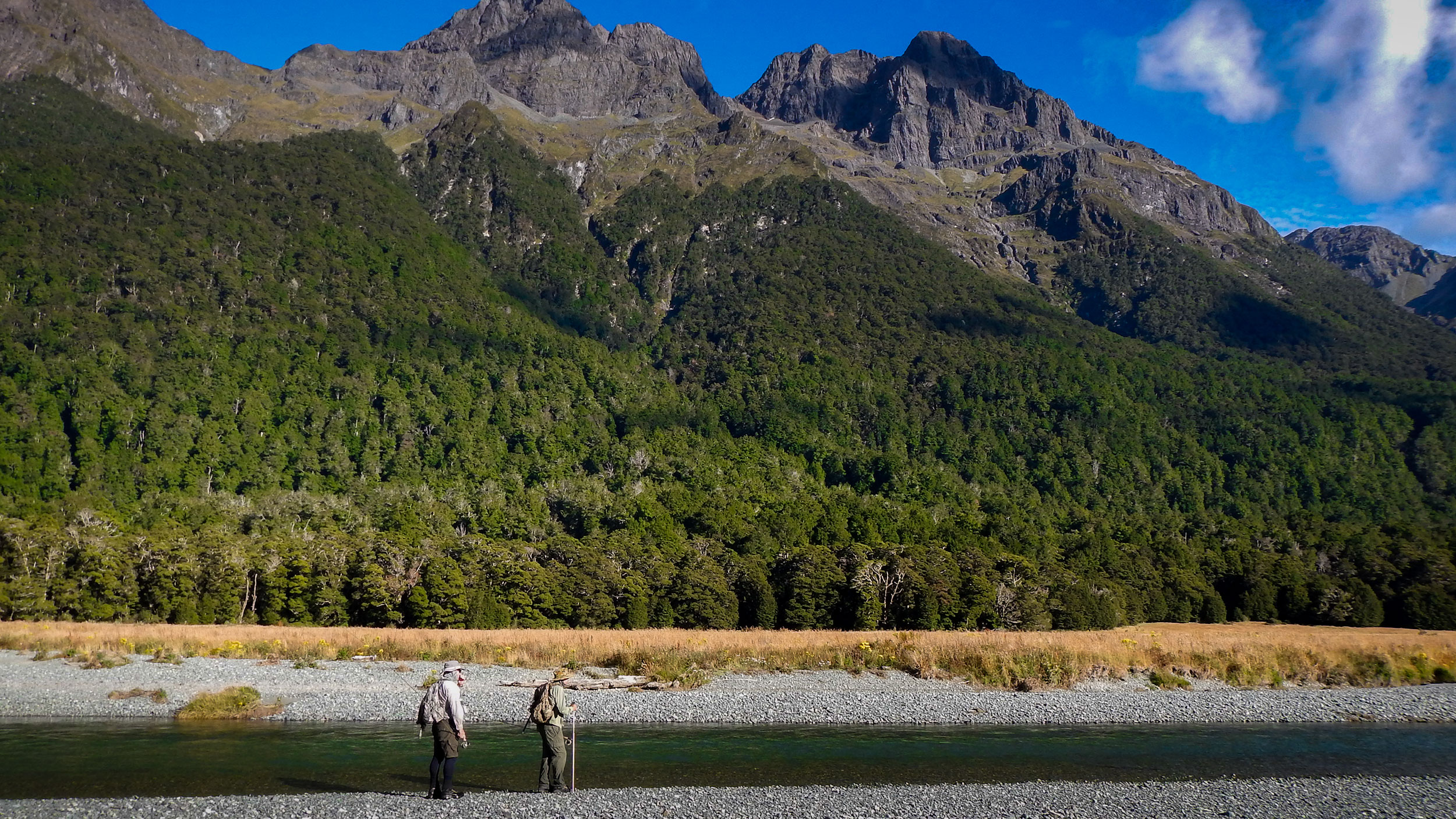
There is a particular familiarity to fishing Southland that returns quickly once you are standing beside one of its rivers. The water is often clear enough that you can see individual stones across much of a run, although the surface reflection and the angle of the light can make the same piece of water almost impossible to read from another position. The banks are frequently open, with long stretches of grass, gravel and low vegetation offering little concealment. You become conscious of your outline against the sky and the way your movement is carried through the water. There are places where the first reasonable opportunity to cast comes only after several minutes spent deciding how to approach.
On our first days back, those habits returned almost without effort. We found ourselves walking slowly along the banks, looking into the likely water before approaching it, using the available light and adjusting our position whenever a reflection made the bottom difficult to see. A trout holding beneath an undercut bank might remain almost invisible until it shifted slightly into the current. Another would appear quite clearly against the pale gravel, only to disappear the moment a cloud passed overhead. After years of guiding this sort of water, much of the process becomes instinctive, but it was still a pleasure to find ourselves doing it again.
The fishing was good. We encountered brown trout holding in familiar positions, feeding beneath banks, moving through the shallower glides and occasionally rising to insects drifting along the surface. There were enough opportunities to remind us what we had missed, but not so many that the fish required little thought. We still had to work out the correct approach, choose the presentation and occasionally stand watching a fish for considerably longer than we spent casting to it. Some refused. Others moved confidently to the fly. After the uncertainties of the preceding years, there was something particularly satisfying about having our attention occupied by problems as familiar as those.
I was also reminded how physically different wade fishing in New Zealand feels from spending most of the year rowing drift boats on the Goulburn. On the larger river at home, much of my day is spent watching ahead, thinking about current, positioning the boat and deciding where clients should cast. In Southland, the process is slower and more deliberate. You may spend twenty minutes walking before locating a fish, then another twenty working out the best way to approach it. Once you begin fishing, you are responsible for your own position in the water and for every movement you make. There is no boat to reposition, and a poor decision can mean starting the search again somewhere farther upstream.
The Eglinton provided one of the more memorable incidents of that early visit, although it had nothing to do with trout. One afternoon we encountered a deer attempting to cross the river. Its hindquarters appeared badly injured, and from the way it moved we suspected it had suffered a serious pelvic injury. The crossing looked almost impossible. The animal was struggling to maintain its balance, and the current was strong enough that we expected it to lose its footing and be swept downstream.
Instead, it continued fighting its way across. We watched it struggle through the deeper water, sometimes appearing almost stationary against the current before managing another little piece of progress. There was nothing we could usefully do from where we stood. Eventually, against our expectations, it reached the opposite bank and disappeared into the grass. I can still picture the three of us watching that last part of the crossing, waiting to see whether it would manage to pull itself clear. We never knew what happened afterwards.
Incidents like that are part of spending so much time outdoors. You occasionally witness something that would otherwise pass entirely unnoticed, and there is no particular reason for it to fit comfortably into the day you had planned. We had gone to the Eglinton to fish. By the time we left, I remember the deer more clearly than any trout we encountered.
Some of the evenings around Te Anau were particularly enjoyable. We would have an early dinner, then head back towards the Waiau to fish through the last few hours of daylight. The river has always held considerable appeal for me, particularly when caddis and mayflies begin appearing over its slower water. Trout that have remained relatively inconspicuous during the day can begin rising steadily as the light fades, often in areas where their positions become difficult to determine once the surface loses its reflections.
There is an interesting adjustment required when fishing towards darkness. Early in the evening you can usually see enough of the water to identify the better feeding lanes and perhaps watch individual fish moving beneath the surface. Later, the rises become easier to hear than to see. The fly itself may be difficult to follow, and you begin relying more heavily on where you expect it to be, the behaviour of the leader and the faint disturbances made by feeding trout. When everything comes together, it can be exceptional fishing. You may find yourself reluctant to leave even after the light has deteriorated to the point where tying on another fly becomes an unpleasant exercise.
Not everybody wanted to spend the evening that way. Some preferred to finish at a sensible hour, have dinner and enjoy a drink rather than venture out again. I can understand that perfectly well. A full day walking rivers is tiring enough without adding another session after dark. But I have always enjoyed those late hours, particularly on rivers where the fishing can change so much during the final part of the day. Several of the people who chose to stay out spoke about those evenings long afterwards.
Eventually we returned south towards Dunrobin and the farmhouse that has served as our New Zealand base for so many seasons. The Aparima runs through the valley below the property, close enough that the river is part of the everyday view. It is a practical place from which to run the operation, but after more than two decades of returning, it has become considerably more familiar than most accommodation I use while travelling. There are roads I can drive almost without thinking, sections of river that bring particular clients to mind and stretches of farmland whose fences, gates and access points I have known for years.
I am conscious that most people encounter accommodation like this for only a week. They arrive, unpack, fish for six days and eventually leave with a collection of photographs and memories attached to the place. For those of us who return to work there season after season, the relationship develops differently. The same rooms, roads and surrounding hills become part of an annual routine. The rivers acquire histories that are not necessarily apparent to somebody visiting for the first time. I can walk into a particular run on the Aparima or Waiau and remember fishing it with someone years earlier, sometimes recalling the conversation more clearly than the trout we caught.
The return also meant seeing people we had not worked alongside for several summers. One of the pleasures of running the same operation over many years is that the relationships extend well beyond the formal business of arranging guiding days. Clients become familiar with the guides, guides get to know returning clients, and friendships develop among people who might otherwise never have met. Some anglers have been coming with us for so long that their arrival feels less like the beginning of a new booking than the continuation of an earlier visit.
By the time the main season began, the familiar activity had returned. Clients were arriving through Queenstown, vehicles were being loaded and guides were discussing weather and fishing conditions before heading out for the day. Decisions about which river to fish were once again occupying a considerable amount of our attention. There were lunches to organise, equipment to sort and the usual small problems that accompany moving several people between different catchments. None of it was particularly glamorous, and much of it would have seemed thoroughly ordinary in any season before 2020. After the long interruption, I was pleased to have those practical concerns back.
The fishing changed steadily as summer progressed. Southland had experienced a dry beginning to the season, and water levels continued falling through many of the rivers. By late summer, some were exceptionally low and clear. The famous waters, particularly the Mataura and Oreti, attracted considerable attention around the sections still producing consistent fishing. That was hardly surprising. Visiting anglers naturally gravitate towards the rivers they know by reputation, and modern fishing reports allow information about productive stretches to travel quickly.
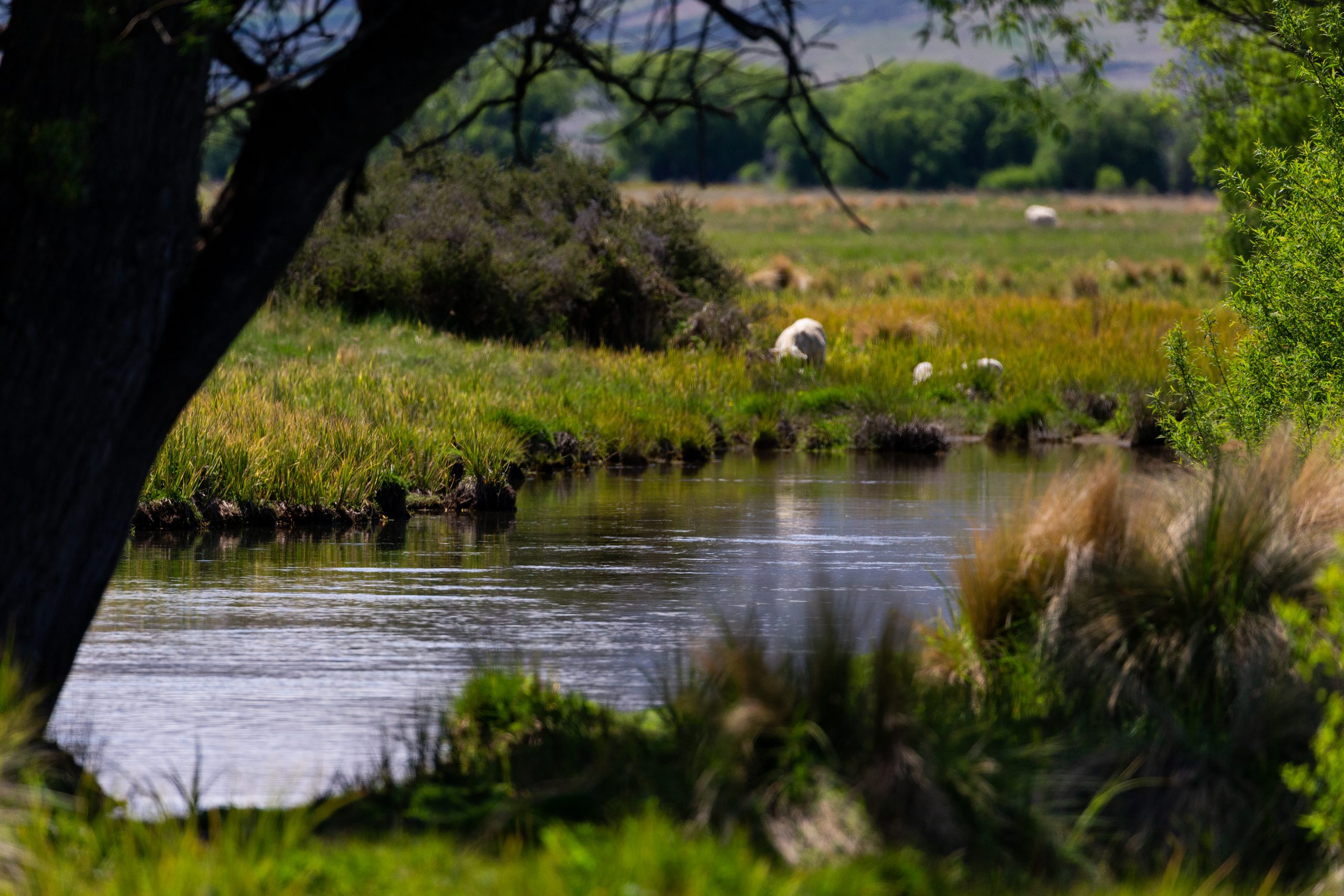
There is still remarkable fishing available on those larger rivers, but conditions sometimes favour a less obvious approach. Over the years we have spent an enormous amount of time exploring the smaller streams that wind through the Southland farmland, including creeks that barely look substantial enough to hold trout when viewed from a passing vehicle. Some are little more than narrow channels between grassy banks. Others open into surprisingly long glides or deeper bends where the outside bank has been gradually undercut by the current.
In a dry season, that sort of water can be particularly interesting. The trout may be widely spaced, with long sections offering little reason for a fish to remain. A shallow run might lead into a bend with just enough depth, cover and current to provide a comfortable lie. Several hundred metres farther upstream, another piece of water may offer similar conditions. The challenge is not necessarily persuading fish to eat once you have found them. It is locating them without disturbing the few places where they are likely to be holding.
That becomes a different kind of fishing from covering long stretches of a river and expecting regular opportunities. You walk, stop, look and walk again. Sometimes the best view comes from well above the water. Sometimes a slight change in the sun’s angle reveals a trout that was invisible only moments earlier. The fish may be stationary against the current or moving slowly through a feeding lane, and a good deal of the work involves deciding whether it is actually feeding before attempting a cast.
Low, clear water exposes poor approaches very quickly. A careless step can send a fish disappearing beneath the nearest bank long before the angler has seen it. Standing too close to the river creates a silhouette that may be obvious to a trout several metres away. Even a well-presented fly can be refused if the fish has already become suspicious. By late summer, when the water has been low for weeks and the trout have encountered other anglers, the margin for error can become very small.
There were plenty of occasions when we had to spend considerable time on one fish. A trout might be feeding steadily but occupying a position that made a conventional upstream presentation difficult. Another would be holding beneath an undercut bank, where the fly needed to drift extremely close to the grass without catching it. Sometimes we had to wait for a fish to move into a more favourable position before casting at all. Those are the problems I particularly enjoy in New Zealand. They require the angler to understand the fish and the surrounding current rather than simply rely on a particular fly pattern.
I have never been particularly convinced by the idea that New Zealand trout are inherently more intelligent than trout elsewhere. Their environment often makes them more difficult to catch. Clear water, limited cover and the spacing of fish through long stretches of river place greater importance on finding the correct approach. A fish that sees you before you see it is unlikely to offer a fair opportunity, no matter how carefully you choose the fly afterwards. By contrast, a trout approached properly may respond with surprising confidence to a relatively straightforward imitation.
The smaller streams provided some of our most memorable fishing during that season, although they rarely attract the same attention as the famous rivers. There is something appealing about arriving beside water that appears almost insignificant, walking a short distance and discovering a substantial brown trout feeding beneath the grass. The surrounding landscape may be ordinary farmland, with fences, paddocks and distant hills rather than dramatic alpine scenery. Yet once you find a good fish and begin working out how to catch it, the size of the river becomes almost irrelevant.
That is one of the reasons I have always enjoyed guiding in Southland. The range of water is extraordinary, and there are often several different approaches available on the same day. Conditions on one river may be unsuitable while another, only a relatively short drive away, is fishing beautifully. A larger river may provide excellent afternoon hatches, while a small creek can offer a day spent stalking individual trout. There is considerable value in knowing those alternatives and being able to move between them without feeling obliged to fish a particular river simply because it has a famous name.
The work is not without its frustrations, of course. There are days when the wind makes spotting trout difficult, when a change in light removes the advantage of clear water or when an apparently promising stretch produces very little. Fish can refuse well-presented flies, and occasionally an entire morning is spent walking past water that should hold trout but does not appear to contain any. A guide still has to make decisions about when to persist and when to move. In some ways, those decisions are more important in New Zealand than almost anywhere else I have worked, simply because the fish can be so widely dispersed.
What I enjoy is watching clients gradually adapt to that style of fishing. On the first morning, some are inclined to cast at every likely piece of water, particularly if they have spent most of their fishing lives on rivers where trout are difficult to see. After a day or two, they begin looking more carefully. They understand why the guide sometimes walks past a beautiful run without making a cast, or why everyone may spend ten minutes staring into a small patch of water before deciding whether a dark shape is actually a fish. Their approach becomes quieter, and the time spent observing begins to occupy as much of the day as the casting.
There are also plenty of moments away from the water that become part of a season. Guides discussing the following day’s weather over breakfast. Wet waders drying outside the farmhouse. Someone sorting flies at the table while another looks through photographs from the afternoon. Clients returning tired but pleased after a long day walking. Dinner conversations that begin with an account of a particular fish and eventually wander towards families, work, travel and whatever else people have brought with them from home.
Those routines had been absent for several years, and it was good to have them back. I had missed the company of the guides and clients, but also the familiarity of the work itself. There is a particular satisfaction in organising a day properly, choosing suitable water and watching people return having enjoyed themselves. It does not require extraordinary fishing every time. Sometimes a difficult day that produces one memorable trout is enough. At other times the hatches are generous and everyone comes home with more stories than they can comfortably fit into dinner.
As the season progressed towards autumn, the days began shortening and the character of the valleys gradually changed. The mornings became cooler, the light arrived at a different angle and the urgency of midsummer began to fade. Some of the smaller rivers remained very low, while others continued providing good fishing through the final weeks. We were once again approaching the familiar task of finishing a New Zealand season, packing equipment, sorting accommodation and preparing to return to Australia.
That final period has always carried a mixture of satisfaction and reluctance. After several months away, there are things at home that need attention and people I am looking forward to seeing. At the same time, I know that certain rivers will remain in excellent condition after we leave, and there is usually at least one stretch of water I would have liked another day to explore. It has never been easy to arrive in Southland with enough time to fish everything that interests me.
The difference that year was the knowledge that we had returned at all. For several seasons, the normal assumption that we would be back the following summer had proved unreliable. We had postponed trips, watched the calendar move on and tried to make plans while having little control over whether they could proceed. By the end of the 2022–23 season, the familiar routines of guiding, travelling and hosting anglers in New Zealand were operating again. We could talk about the following summer with some confidence, something that had been missing for a surprisingly long time.
I still remember the injured deer in the Eglinton, the late evenings on the Waiau and several of the better trout we encountered on the smaller streams. I remember the pleasure of seeing familiar faces again and the satisfaction of watching clients settle back into fishing rivers they had missed for years. There were plenty of good days, along with the usual difficult ones, and enough variety to remind me that no two New Zealand seasons are ever particularly alike.
But when I think about that first return, I often come back to the drive towards Dunrobin. The farmhouse, the surrounding hills and the Aparima running through the valley below were all familiar. We had made the same journey so many times that there was little about it we needed to discover. After several summers away, I found myself looking across the river country again and thinking about the ordinary questions that would occupy us the following morning.
What would the weather do? Which rivers were in good condition? Where should we begin?
Experience, reputation, local knowledge and the questions worth asking before you book.
Choosing a fly fishing guide has become considerably easier in one respect and more difficult in another. Thirty years ago, you generally found a guide through a fly shop, a fishing club, a magazine article or the recommendation of somebody you trusted. Today, a search of almost any well-known trout river will produce an assortment of professional-looking websites, impressive photographs, enthusiastic testimonials and operators promising an unforgettable experience. There is certainly more choice, but distinguishing between those choices can be surprisingly difficult.
A photograph of a large brown trout tells you that somebody caught a large brown trout. It doesn’t necessarily tell you who found it, how the fishing was conducted or what the rest of the day was like. An attractive website might belong to somebody with decades of professional experience or someone who has only recently begun taking paying clients. Both could provide an excellent day, but their knowledge, experience and ability to manage difficult conditions may be quite different. Unfortunately, the websites themselves rarely make those distinctions clear.
I have spent more than thirty years guiding, much of it on the Goulburn, and have also been fortunate enough to fish with guides across Australia, New Zealand and America. I’ve learned a great deal from watching other people work, including some considerably younger than me. I’ve encountered outstanding guides whose names would mean little to most anglers, and others with considerable reputations whose approach didn’t particularly suit my fishing. It has made me more interested in what I would ask before booking somebody myself, particularly when the fishing involves unfamiliar water, a substantial financial commitment or placing my safety in another person’s hands.
There isn’t a single formula for choosing the right guide. Much depends on what you want from the day. But there are ways of looking beyond the photographs and promises to establish whether somebody is likely to be a good fit.
Experience: Years in Business or Days on the Water?
The first question I would ask is how much guiding the person has actually done, particularly on the river I intend to fish. This is not quite the same as asking how long they have been a guide. Someone might have started guiding fifteen years ago but worked only a handful of weekends each season. Another may have been guiding for six years and spent well over a hundred days annually on the water. Both can legitimately describe themselves as experienced, but their working histories are very different.
The distinction becomes even more important with drift boats. Someone who has personally completed several thousand drifts on a particular river has accumulated an enormous amount of practical information. They have watched that water through changing seasons, floods, droughts, different flow levels and countless variations in weather. They have seen how trout respond when water rises or falls, which banks produce under particular conditions and how the behaviour of the current changes as water moves through different sections over the course of many seasons.
Consider the difference between somebody who has completed 100 drifts on a river and another who has completed 5,000. It isn’t simply a matter of one having fifty times as many trips behind them. Those additional days represent thousands of decisions about boat positioning, water selection, weather, client ability and safety. They include days when the fishing was extraordinary and many more when very little happened as expected. Much of what experienced guides know was learned during the latter, when they had to work out why the river wasn’t behaving as anticipated.
None of this means the guide with 5,000 drifts is automatically the better teacher, the more enjoyable companion or even the more successful angler. Nor does it mean an enthusiastic newcomer shouldn’t be given an opportunity. Everybody begins somewhere, and I have met young guides with remarkable judgement and ability. But if I were paying for a drift on an unfamiliar river, I would certainly want to know the difference. It is information I would consider more useful than the age of the business or the number of photographs on its website.
It is also worth distinguishing the experience of the business from that of the person who will guide you. A company may have operated for thirty years while employing somebody who joined last summer. Conversely, a newly established business might be run by a guide with twenty years of experience working for other outfitters. Neither arrangement is inherently a problem, provided you know whose experience you are purchasing.
Drift Boat vs Raft: Does the Boat Matter?
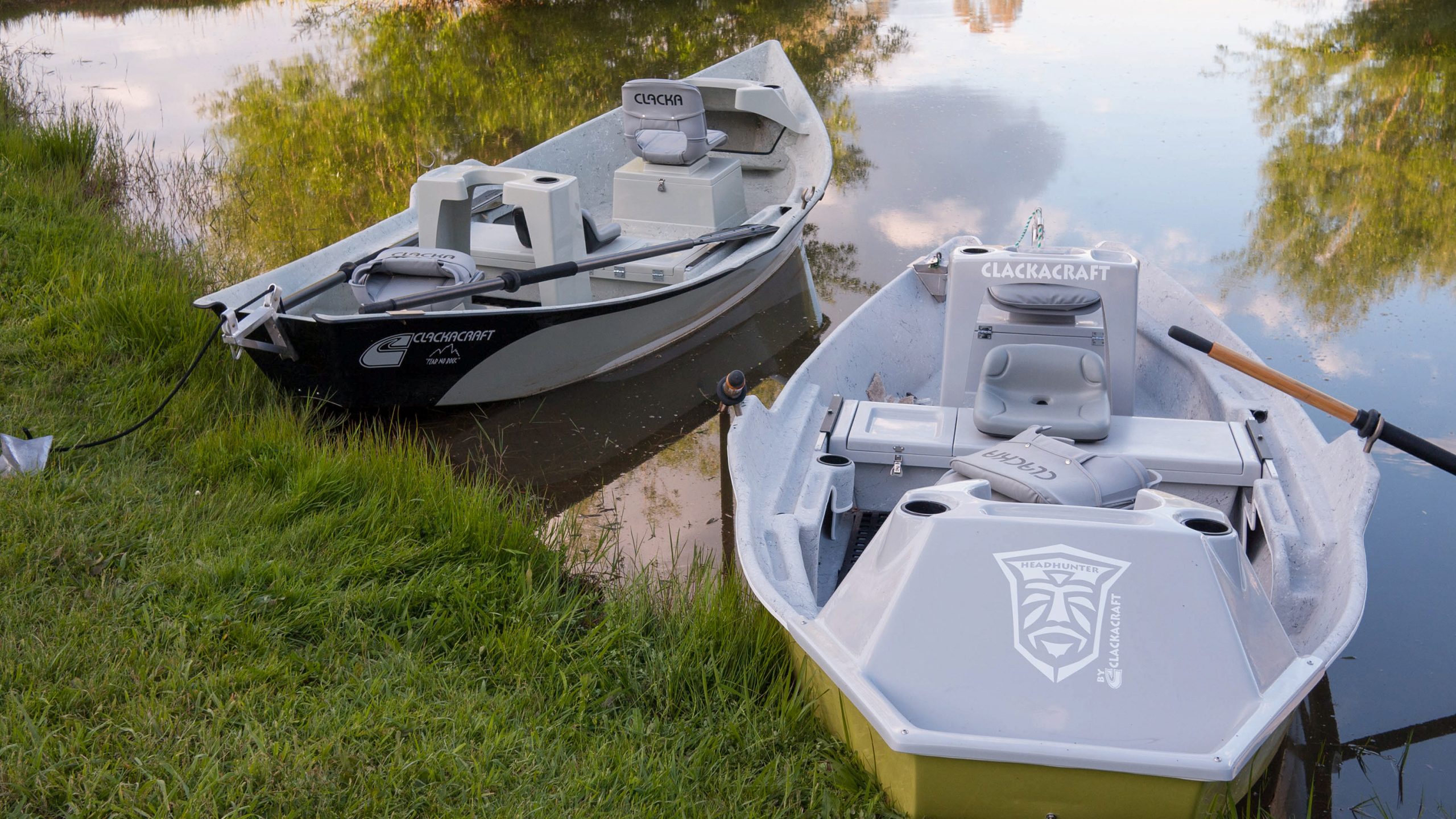
Another consideration that rarely receives much attention when people compare guides is the boat itself. Most advertisements simply describe a guided float trip, often without explaining what sort of vessel will be used. Yet there is an enormous difference between spending eight hours fishing from an inflatable raft and doing the same from a purpose-built fibreglass drift boat. Having spent much of my working life rowing both, I have definite views about their respective merits, particularly on the sort of tailwater rivers we fish in Australia.
The first distinction is safety. Rafts are remarkably forgiving vessels. Their inflatable chambers provide substantial positive buoyancy, and their flexible construction allows them to absorb impacts and bounce away from rocks and other obstacles that might cause serious problems for a rigid hull. They are particularly well suited to whitewater and can tolerate a degree of mishandling that would be considerably more consequential in a fibreglass drift boat. Neither vessel is immune to accidents, but I would generally regard a properly equipped raft as the more forgiving choice for a relatively inexperienced rower on our local rivers.
Fibreglass drift boats are a different proposition. They are rigid, responsive and remarkably precise in capable hands, but they can be extraordinarily unforgiving when somebody makes a serious mistake. A poorly judged angle against an obstruction or a strong current pressing against the hull can develop into a dangerous situation very quickly. They demand anticipation, sound judgement and sufficient experience to recognise trouble before the boat reaches it. A guide who is still learning those skills has a considerably smaller margin for error than they might have in an inflatable raft.
Where the fibreglass drift boat comes into its own is the fishing. On a tailwater such as the Goulburn, there is simply no comparison in my experience. A properly designed boat can be held against strong current, positioned accurately around feeding fish and controlled with a precision that an inflatable raft struggles to match. For the angler, that translates into more useful casts, better presentations and less time dealing with the limitations of the vessel. Proper seating, solid floors, footrests and secure places to stand also make a substantial difference over a full day. Depending on their design, rafts can leave passengers feeling exposed or perched on inflatable tubes, and self-bailing floors can mean spending much of the day with wet feet.
We began floating the Goulburn in inflatable rafts in 1994, and they served us very well for years. I still own two, both perfectly serviceable, but they remain rolled up and packed away in the shed. There isn’t a day of the season, nor a particular set of conditions on the Goulburn, when I would choose one over a properly designed fibreglass drift boat. For rowing precision, boat positioning and the comfort of the people fishing, the difference is simply too great. That is a judgement based on the fishing we do and the water we know, rather than a suggestion that rafts have no legitimate place elsewhere.
There is also a considerable difference in cost and availability. An inflatable raft can be purchased and, when the model is in stock and freight arrangements cooperate, landed in Australia by air within a week or so. In my experience, a commercially equipped raft can generally be landed for around a third of the cost of an imported fibreglass drift boat. An American-made fibreglass boat is a much more substantial investment. By the time sea freight, import charges, GST and equipment are accounted for, a new boat can realistically cost A$40,000–$50,000 landed and ready for commercial use. I generally allow as much as twelve months for ordering and importing one. That doesn’t make it a better boat simply because it is expensive, but it helps explain why operators make different choices about the vessels they use.
Not all drift boats are alike, either. American manufacturers produce different hull designs intended for different rivers and styles of fishing, and there are considerable variations in construction, seating, handling and suitability. Rivers such as the Goulburn, Swampy Plain and Tumut each present their own demands, and choosing a boat that works well across them involves more consideration than simply buying a recognisable American brand.
If you’re considering a guided float, I would ask what sort of boat will be used, whether it suits the river and how much experience the guide has operating it. A raft is generally more forgiving of the person rowing it. A purpose-built fibreglass drift boat is, in my experience, considerably better for the person fishing from it on these rivers. The experience of the guide determines whether you receive the full benefit of that difference.
Full-Time Guiding and the Value of Recent Experience
There is another distinction between somebody who guides as their principal occupation and someone who does it occasionally alongside other work. I have known excellent part-time guides, including anglers whose technical ability would embarrass plenty of professionals. Some deliberately limit their guiding because they enjoy their other careers or prefer working during particular fishing periods. Being part-time is not a criticism, and being full-time is certainly no guarantee of excellence.
Nevertheless, regular professional guiding develops skills that recreational fishing alone does not. A guide working four or five days a week spends those days making decisions for other people. They learn to manage beginners, experienced anglers, changing weather, difficult personalities and the inevitable complications of commercial trips. They also develop a continuous understanding of conditions. Someone who guided the river yesterday, the day before and several times during the previous week is likely to have a different view of what is happening from somebody whose last outing was a fortnight ago.
This becomes particularly valuable when the fishing is difficult. It is relatively straightforward to appear knowledgeable when trout are rising everywhere and almost any reasonable presentation produces a result. The more revealing test comes during a succession of difficult days, when the obvious methods are producing little and clients are becoming frustrated. A guide who works regularly has more opportunities to develop the judgement, patience and adaptability required to manage those situations.
Someone guiding ten or fifteen days a season may be a very capable angler, but they are not accumulating the same professional experience as somebody who works a hundred or more days annually. That difference deserves consideration, particularly when operating boats or taking inexperienced clients into challenging water. I would therefore ask how many days somebody guides during a normal season, how recently they have been on the water and how familiar they are with the conditions likely to occur during my booking.
Is a Guide Who Is Difficult to Book Worth Waiting For?
Availability is something I pay attention to when arranging guided fishing for myself. A guide who is consistently busy, particularly with returning clients, is worth investigating. Good guides often develop a following, and their regular customers tend to arrange dates well ahead of time. Some of the best people I have fished with are difficult to secure at short notice, especially during the periods when their rivers are fishing well.
There is a practical reason for this. A busy guide may spend most daylight hours on the river, often somewhere without reliable telephone reception. By the time they have finished guiding, recovered the vehicle, cleaned the equipment and prepared for the following day, the ordinary working day has disappeared. It isn’t unusual for enquiries to be returned in the evening or handled by somebody else while the guide is working.
I wouldn’t take that observation too far. Someone answering the telephone immediately might have finished early, be enjoying a scheduled day off or employ somebody specifically to manage bookings. Likewise, somebody who never returns calls may simply be poorly organised. Being difficult to contact is not a professional qualification.
What I would pay attention to is the pattern. Is the guide regularly booked ahead? Do clients return season after season? Are popular dates already committed, or is the business simply unreliable about communicating? A full diary is worth investigating, but so is an operator’s willingness to answer questions and make clear arrangements once contact has been established.
If there is a particular guide you want, I would rather arrange the trip around a date when that person is available than assume another guide from the same business will provide an identical experience. They may be equally capable, but their approach and personality will almost certainly be different. If somebody else is being assigned to the booking, you should know that before committing.
Decide What Sort of Fishing You Actually Want
One of the most useful things a prospective client can do is establish what they want from the experience. It sounds obvious, but people frequently book guided fishing without giving it much thought. Most people want a good day, perhaps a decent trout and preferably a few. Those are reasonable ambitions, but they don’t tell the guide very much about what would make the day satisfying.
There is an enormous difference between spending a day fishing squirmy worms beneath an indicator and stalking individual trout with small dry flies. While both can be productive, they offer quite different experiences. Some anglers enjoy covering water, casting continuously and catching as many trout as possible. Others would happily spend an hour working on a single fish they can see feeding. A guide may have a strong preference for one approach, and that can influence the day considerably.
I would ask a prospective guide what they particularly enjoy guiding. The answer can be revealing. Someone who becomes enthusiastic discussing technical dry-fly fishing is likely to approach a river differently from somebody who specialises in deep nymphing, streamer fishing or searching with large attractor patterns. There is nothing wrong with having a speciality. In fact, it can be an excellent reason to book somebody, provided that speciality matches what you want.
You should also be realistic about the conditions. If you particularly want to fish dry flies, explain that before booking and ask whether the proposed time of year is suitable. A thoughtful guide might recommend a different month, another river or a particular period of the day. I would regard that as encouraging. Somebody who promises exceptional fishing at any time, regardless of flows, weather or insect activity, deserves a few more questions.
Your experience matters too. Tell the guide how long you have been fishing, what you are comfortable with and whether there are techniques you want to improve or avoid altogether. Did we mention squirmy works already? There is no advantage in exaggerating your ability. Guides encounter beginners regularly, and most would much rather know where to start than discover halfway through the morning that the person they expected to cast forty feet comfortably is struggling at twenty.
Safety, Judgement and the Questions People Forget
Safety deserves more attention than it usually receives when people compare guiding services. Most clients understandably concentrate on the fishing. They look at photographs, check prices and consider which river they would prefer. Relatively few begin by asking how experienced the guide is at operating a boat in difficult water, whether the business conducts safety training or what arrangements exist if something goes wrong.
On a substantial river, particularly one subject to rapidly changing flows, I would consider those questions essential. A drift boat is an excellent fishing platform, but it remains a vessel operating in moving water. Its safety depends heavily on the competence and judgement of the person rowing it. An experienced operator looks beyond the next fishing opportunity, anticipating bends, obstructions, pressure lines and places where a change in current could cause trouble.
Much of that work is invisible to the person fishing. While an angler is concentrating on a rising trout along the bank, the guide may be watching a difficult corner farther downstream, deciding whether there is enough room to stop or whether the boat needs to move towards the opposite bank. The best decisions often attract no attention because nothing happens. The boat passes safely through the section and the fishing continues.
That is also why there is a considerable difference between being able to row a drift boat and being ready to guide paying clients from one. Recreational rowing provides valuable experience, but commercial guiding adds an extra level of responsibility for the people in the boat. A guide needs sufficient familiarity with both the vessel and the river to recognise hazards early, make decisions under pressure and respond appropriately when something unexpected happens. Being able to negotiate a familiar stretch in favourable conditions is not the same as possessing the judgement required across a full range of river conditions.
I would ask how long a guide has been operating drift boats commercially, how familiar they are with the river at different heights and what happens if the weather or flows make the intended trip unsuitable. Do they have alternative sections available? Will they postpone or cancel when necessary? What emergency equipment do they carry, and what arrangements exist for communication and assistance? I would also be interested in whether they have been involved in any serious boating incidents and what they learned from them.
Rolling a boat is not necessarily the result of poor judgement. Accidents can happen even to experienced people, and a guide’s response to an incident can sometimes be more revealing than the incident alone. Nevertheless, I would want to understand that history before setting out on a large, fast river such as the Goulburn, particularly if I were putting inexperienced anglers or members of my family in the boat.
Licensing, insurance and safety documentation remain important, but they should not be confused with proof of practical competence. They establish aspects of compliance and preparation. They don’t tell you how well somebody reads a trout stream, whether they can teach a beginner or how skilfully they will manage a difficult afternoon.
Comparing Price and What You Actually Receive
Guided fishing varies considerably in price, and comparing advertised rates can be misleading unless you understand what is included. A full day might mean eight hours on the river with lunch and equipment supplied, or a shorter period that includes travel to and from the fishing. Some operators charge by the boat, others by the person. Private-water fees, vehicle shuttles, licences, equipment and other expenses may or may not be included.
I would want a clear account of what I was purchasing before paying a deposit. How many anglers will share the guide? Who supplies the equipment and flies? Is lunch included? How many hours are spent fishing? What happens if the river becomes unfishable, and what are the cancellation arrangements? For overseas trips, these questions extend to accommodation standards, room sharing, transport, meals, guide ratios and whether every advertised fishing day is fully guided.
A lower price can represent excellent value, particularly when a capable guide is establishing a business or working independently with modest overheads. A higher price might reflect greater experience, private access, better equipment or more comprehensive arrangements. It might also simply be a higher price. Neither tells the whole story.
The sensible comparison is between what each operator will actually provide, the experience of the person delivering it and the suitability of the fishing for your needs. A guide who costs a little more but gives you precisely the sort of day you wanted may be considerably better value than a cheaper alternative whose methods or arrangements don’t suit you. The reverse can be equally true.
Reputation, Returning Clients and the Evidence Behind Reviews
Recommendations remain one of the best ways to find a guide, particularly when they come from somebody who has actually fished with that person. I would place more weight on a detailed account from an experienced angler I trust than on a collection of anonymous five-star reviews. The useful questions are not simply whether they caught fish or enjoyed themselves, but how the guide worked, how well they communicated and what happened when the fishing became difficult.
Returning clients are worth paying attention to as well. When people repeatedly choose to spend their limited fishing time and money with the same guide, it suggests the relationship is delivering something they value. That might be exceptional fishing, good instruction, easy company or simply confidence that the arrangements will be handled properly. Whatever the reason, repeat bookings over many seasons are useful evidence of customer satisfaction.
Reviews should still be considered carefully. A glowing account written after an extraordinary hatch may tell you relatively little about the guide’s ability. Conversely, an unhappy client who caught no fish may have experienced competent guiding under very difficult conditions. Look for recurring observations about preparation, patience, communication, safety and whether the guide made a genuine effort to meet the client’s expectations.
I would also pay attention to how the guide treats the fishery. A professional operator earns a living from access to rivers and trout, and that brings responsibilities beyond the immediate interests of the paying client. Does the guide handle fish carefully, respect landholders and access arrangements, and recognise when temperatures or other environmental conditions make fishing inappropriate? Are they considerate towards other anglers? On smaller, vulnerable fisheries, do they exercise discretion about locations and fishing pressure? Those things tell you something about the person you are entrusting with your day.
The Person You’ll Spend the Day With
Finally, there is personality. You may spend eight hours in a drift boat with somebody, or several consecutive days together on an overseas trip. During that time you will discover whether conversation comes easily, whether their sense of humour suits you and how they behave when things don’t go according to plan. These qualities are difficult to measure, but they can influence your enjoyment enormously.
Some guides are naturally enthusiastic and talkative. Others are quieter, offering instruction when necessary and otherwise allowing the fishing to occupy the day. A beginner may appreciate frequent encouragement, while an experienced angler might prefer a guide who can position the boat well and leave them to concentrate. Neither approach is necessarily superior. The important thing is finding somebody whose temperament and way of working suit what you want.
A telephone conversation before booking can help. Pay attention to whether the guide asks about your experience, preferred fishing methods and expectations. Notice whether they listen to the answers. Someone who seems genuinely interested in understanding what you want is more likely to plan the day around you than somebody who spends the entire conversation describing their own accomplishments.
I would also be wary of guarantees. No guide can promise that trout will feed, that the weather will cooperate or that a river will remain in suitable condition. They can promise to prepare properly, communicate honestly, make sensible decisions and give you their best professional effort. Those are things within their control. The fish have never been particularly interested in the arrangements we make on their behalf.
Ten Questions Worth Asking Before You Book
You don’t need to conduct an interrogation, but a few sensible questions will often tell you more than an hour spent comparing websites.
How long have you guided professionally, and how many days do you guide during a typical season? This helps distinguish actual working experience from years merely holding a guiding qualification or operating a business.
Approximately how many days or drifts have you personally completed on the river I want to fish? For drift-boat fishing in particular, this is one of the most useful measures of local experience.
Will you be guiding me yourself, or will somebody else be assigned to the booking? If another guide is involved, ask about their experience and preferred fishing methods.
What sort of fishing do you specialise in, and is it suitable for what I want to do? Explain whether you prefer dry flies, nymphing, stalking fish, learning techniques or simply covering water.
How recently have you fished this river, and what conditions should I expect at that time of year? Recent knowledge can be as important as accumulated experience.
If we’re floating, what type of boat will we use, and why is it suited to this river? Ask about seating, comfort, fishing positions and the guide’s experience operating that vessel.
What safety arrangements, permissions and insurance apply, and what happens if conditions deteriorate? A professional operator should be comfortable discussing these matters.
If you belong to a professional guides association, what does your membership level actually certify? Ask what documentation has been checked and whether any practical guiding or boat-handling assessment is involved.
What is included in the price, how much time will we spend fishing, and what are the cancellation arrangements? Establish exactly what you’re purchasing before paying a deposit.
Can you provide a reference from someone who has fished with you, preferably more than once? An established client can often tell you more about the experience than a promotional description.
You may not need to ask every question. Some will already be answered clearly on the operator’s website, while others may emerge naturally during a conversation. What matters is having enough information to make a considered decision.
Making the Choice
After thirty years, I remain convinced that experience matters enormously, particularly on unfamiliar or technically demanding water. But experience needs to be considered properly. The number of years a business has existed is not the same as the number of years an individual has guided. A person’s fishing ability is not necessarily evidence of their teaching ability, and an impressive website tells you very little about their competence with a drift boat. Even a long professional career does not guarantee that somebody will be enjoyable company.
I would begin with the things that can reasonably be established: actual days guiding, familiarity with the particular river, recent experience, reputation, and the ability to provide the style of fishing you want. If the trip involves floating, the suitability of the boat and the guide’s experience operating it deserve consideration as well.
Then I would consider the person. How do they communicate? Are they interested in your expectations? Do they seem comfortable acknowledging that conditions may not be favourable? Are they prepared to recommend another date or approach if that would give you a better experience?
There are many excellent guides working across Australia and overseas, from long-established professionals to younger people developing their own reputations. Some are exceptionally difficult to book, while others may have an opening at precisely the right time. The aim is not to find the guide with the grandest claims, the most impressive photographs or the longest list of affiliations, but somebody whose experience, judgement and manner give you confidence in the day you are purchasing.
A little research and a proper conversation before booking can save considerable disappointment. More importantly, they can help you find somebody whose knowledge will leave you a better angler, and whose company you’ll be happy to share for the day.
Ant
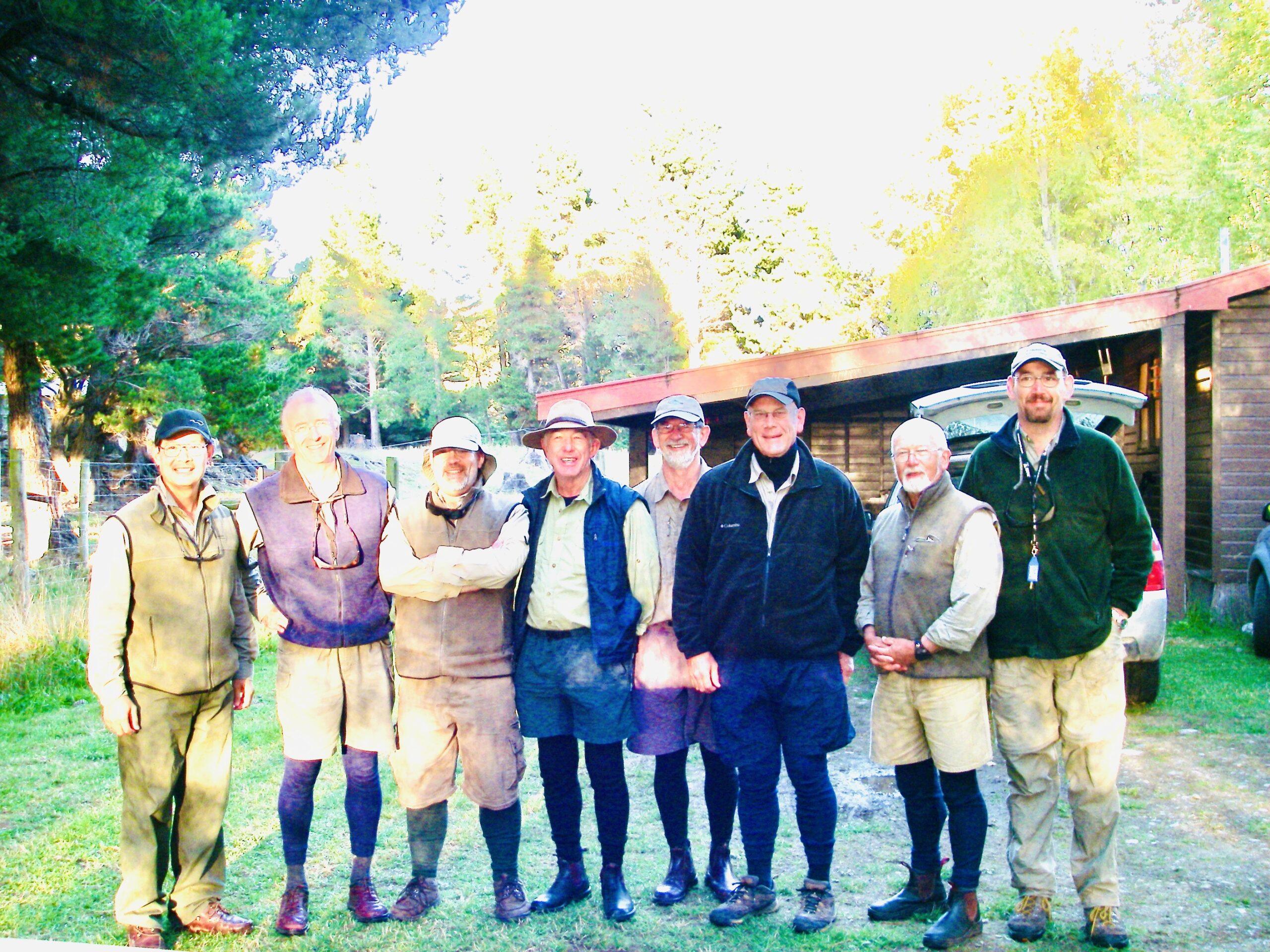
Anthony (the author) with his mentors and business partners David Pickering (centre) and Geoff Hall (right), on the deck of the lodge in 2005.
At first glance, that seems reasonable enough. Rods, flies, currents and rising fish are the visible parts of the sport. If somebody unfamiliar with fly fishing watches a drift boat slide quietly down a river at dusk, they naturally assume the entire exercise revolves around catching fish.
And of course, the fish matter enormously.
Even after thirty years on rivers, I still feel that small lift of anticipation before a cast into a difficult lie. There are mornings when the river seems alive with possibility and evenings when fading light, drifting insects and the quiet confidence of rising trout create moments that remain deeply satisfying no matter how many seasons pass. The challenge never completely disappears.
Yet the longer I spend around rivers, the more convinced I become that many anglers are searching for something slightly harder to describe. If catching fish alone were the entire story, most people would eventually move on to easier pursuits. There are certainly easier ways to catch fish. You can troll lakes, soak bait or cast lures. Modern electronics can reveal structure, depth and fish locations with astonishing precision. Yet countless people continue choosing a method that often involves standing in cold water, learning difficult skills and spending long periods observing insects and currents before making a single cast.
Something else is happening there.
That thought has stayed with me more and more as I’ve grown older.
I still remember the first trout I caught on fly quite clearly, though not because it was particularly large. What stayed with me was the feeling of entering a different world for the first time. The concentration required. The movement of current around my legs. The strange silence that settles over a river late in the day. The growing awareness that water is never truly still, even when it appears calm from a distance.
Looking back, I think that was the moment the river itself became important. The fish simply opened the door.
Fly fishing teaches observation slowly. At first, beginners understandably focus on mechanics. Casting. Knots. Fly selection. Line control. Like learning any new skill, there is a tendency to become consumed by technique. Over time, however, attention begins shifting outward. You start noticing weather patterns more carefully. The direction of wind. Tiny insects gathering beneath overhanging branches. Shadows moving across riffles. The subtle difference between water that merely looks good and water that actually holds fish.
Eventually the river begins teaching lessons that have very little to do with trout.
Patience, for one.
Modern life encourages speed, immediate outcomes and constant stimulation. Rivers tend to resist all of that. Some days they humble you completely. Conditions that appear perfect may fish terribly, while difficult days occasionally transform without warning during the final hour of light. There is no controlling that uncertainty. Only learning to work within it.
Perhaps that is one reason rivers remain so valuable. They remind us that not everything can be hurried.
Over the years I have watched countless people arrive at rivers carrying far more than fly rods and waders. Some are exhausted from work. Some are quietly grieving. Some are recently retired and trying to rediscover rhythm in their lives after decades of responsibility. Some are navigating illness. Some are processing family difficulties. Some simply need space away from phones, meetings, traffic and noise.
The river rarely solves any of those problems directly. But it changes the pace at which people think.
That matters.
One of the great misconceptions about fly fishing is that it is an elitist or overly technical pursuit. Certainly, there are technical aspects to the sport. Fly casting takes practice. Reading water takes time. Rivers reward accumulated experience. Yet at its heart, fly fishing remains surprisingly simple.
You stand in moving water and pay attention.
That is really where it begins.
Somewhere along the way, many anglers realise the river itself has become just as important as the fish living within it. The places start mattering deeply. Certain bends become tied to memory. Particular stretches of water become inseparable from people, seasons and moments in life.
I can still drift sections of the Goulburn and remember conversations from twenty years ago almost exactly where they occurred. An older client speaking quietly about retirement while rain moved across the hills upstream. A father watching his son row a drift boat for the first time. A mayfly hatch appearing unexpectedly during difficult conditions. The shared silence that sometimes settles over a boat late in the afternoon when everybody realises they are exactly where they want to be.
Those moments become part of the river too.
The river remembers in its own way. Or perhaps we simply leave small pieces of ourselves behind.
I have experienced the same feeling elsewhere. There are sections of the Waiau River in Southland where I can still picture clients from years ago stalking trout along particular banks. Certain bends on the Missouri River in Montana instantly bring back conversations, laughter and shared experiences from previous seasons. I can drive through Paradise Valley or cross the Henry’s Fork and immediately feel old memories resurfacing.
The fish are part of those memories.
But only part.
What stays longest are usually the people.
Perhaps that is why many anglers become increasingly reflective as they get older. The obsession with proving oneself softens slightly. Fish numbers matter a little less than they once did. Atmosphere matters more.
You begin noticing things younger anglers often rush past: steam lifting from cold water at dawn, the sound of current against the hull of a drift boat, the smell of eucalyptus after rain along the Goulburn, a wedge-tailed eagle circling above a valley, and light changing on distant hills during the final hour of the day.
These details quietly accumulate over years until they become inseparable from the fishing itself.
Travel deepens the feeling even further. Some of my strongest memories from Montana and New Zealand are not individual fish at all. They are moments between the fishing. Crossing Wyoming at sunrise beneath enormous skies. Coffee before daylight in a small Montana town. Snow appearing unexpectedly on distant mountains during summer. Watching clients see Yellowstone National Park for the first time. Wind moving through Paradise Valley late in the evening.
Those places carry emotional weight because they become connected to experience, memory and friendship.
And perhaps that is another reason people keep returning to rivers. Fly fishing rarely remains a solitary pursuit for very long. Over the decades I have watched lifelong friendships emerge through rivers. Complete strangers sharing a drift boat in New Zealand later travelling together overseas. Fathers bringing sons. Grandparents introducing grandchildren to fly rods. Clients who initially came to learn how to cast eventually returning year after year simply because they love the atmosphere surrounding the experience.
Fishing creates its own strange little communities. Not loud ones. Usually quiet ones. People connected by weather, water and accumulated time outdoors.
The older I get, the more grateful I become for that continuity. For familiar rivers. For old clients. For guides and friends scattered across different parts of the world. For the privilege of making a life outdoors. And for the understanding that fly fishing has always been about far more than trout alone.
The fish draw us in initially. But they are rarely the only reason we stay.
What keeps people returning to rivers, I suspect, is something much harder to market neatly. A search for stillness. Perspective. Meaning. Connection to landscape. Connection to memory. Connection to earlier versions of ourselves.
Or perhaps simply the growing realisation that time spent outdoors—properly outdoors, immersed in weather, current and changing light—remains one of the few experiences in modern life that still feels genuinely restorative.
Rivers ask very little from us in the end.
Mostly attention.
And perhaps that is why, despite all the changes in the world around us, people continue returning to them generation after generation.
Because somewhere beside moving water, many of us become slightly more aware of what actually matters.


 There is a change I’ve watched countless times over thirty years of teaching fly fishing. A child arrives full of movement and questions, hurrying along the bank, throwing sticks into the water and wanting to know how many fish we’re going to catch before the rod is even assembled. There is plenty of enthusiasm, although not all of it is immediately useful to the fishing. Everything needs to happen now.