Tag: Montana

We knew the day would be different when the fishing guides began leaving before breakfast with rafts instead of drift boats.

From our accommodation outside Bozeman, I watched them pulling onto the road one after another, coolers strapped down, paddles laid across trailers, friends already crowded into vehicles. These were men I was used to seeing leave early with rods rigged, lunches packed and a working day ahead of them. That morning there was none of the usual purpose. No one was studying the weather or worrying about where the fish might be holding. The rafts were not being taken out to earn a living. They were being taken out to drink beer, float the river and spend the day with friends and family. Work had been put aside. The water belonged to everyone.

By the time we left for Ennis, the sun was already clear and bright, though the morning still carried a little of the coolness that lingers in the valleys before the heat settles in. The drive across from Bozeman gave us the usual wide Montana distances, the road unspooling through open country with mountains rising beyond it. Gradually the traffic thickened. More pickups appeared, then flags, then families packed into cars with folding chairs, coolers and children dressed in red, white and blue. Long before we reached town, it was obvious that subtlety had not been invited.

It was the Fourth of July in America’s two-hundred-and-fiftieth year, and the anniversary was everywhere. The number 250 appeared on shirts, hats, stickers and shop displays. Walmart had entire racks devoted to it. Cars carried decals. Families wore matching slogans. What might ordinarily have been a national celebration had taken on the atmosphere of a milestone people had been waiting for all their lives.
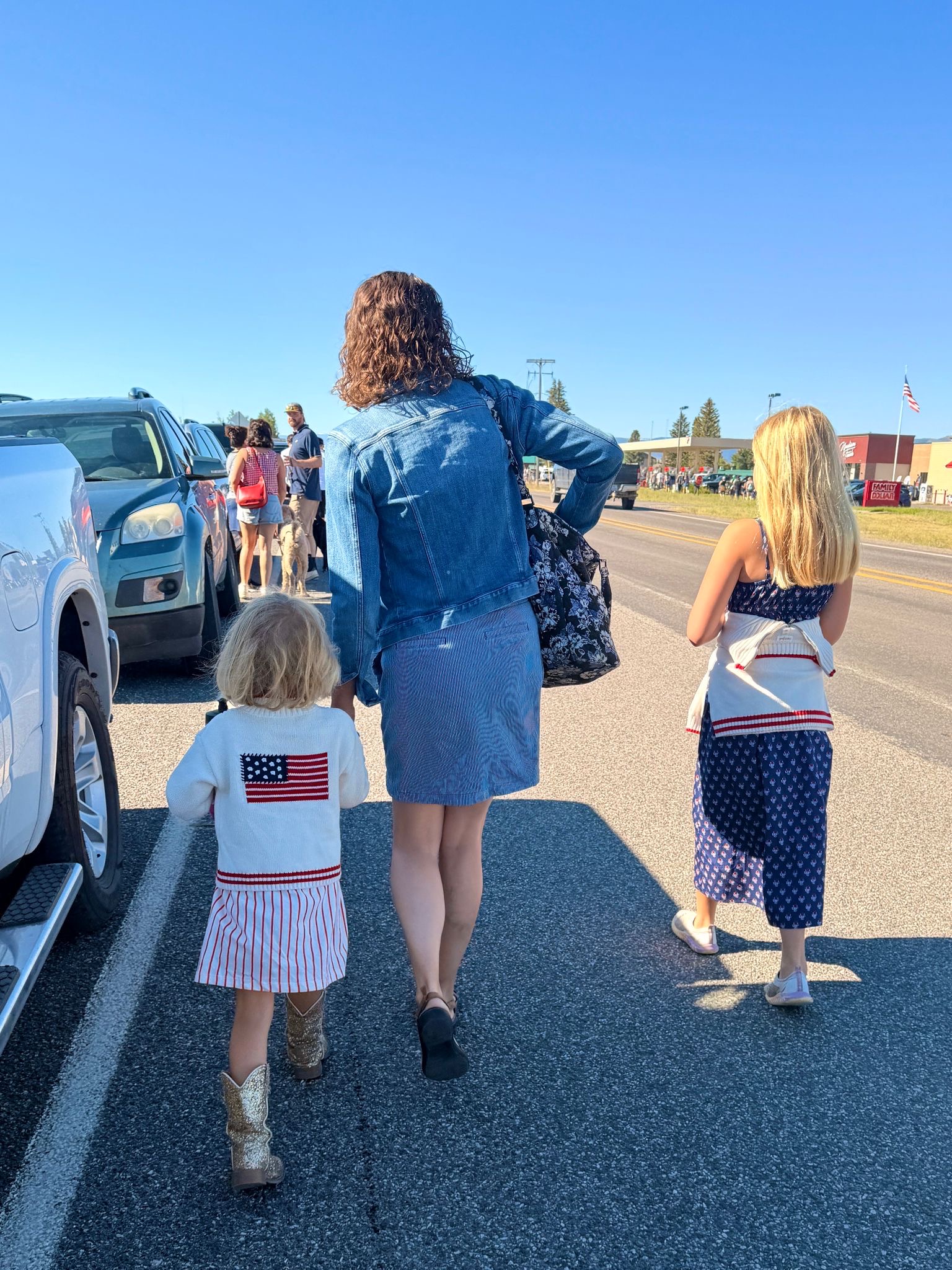
We arrived early and still had to park almost a kilometre out of town. Hundreds of people were walking in from every direction, carrying chairs, dragging small wagons and balancing drinks and children. Dogs trotted beside them. Families called to one another across the road. Strangers fell into step and started talking as though they had arranged to meet.

My wife and children simply entered into it. They had none of my reservations. To them it was colourful, loud and fun. They were happy to be swept along with the crowd. I was more cautious.

Australians are not especially comfortable with overt patriotism. We tend to prefer ours disguised as sport, complaint or a barbecue. Too much enthusiasm makes us suspicious. Public declarations of national greatness can feel faintly embarrassing, and anything involving flags, anthems and solemn speeches risks setting off an instinct to retreat into irony. We are more comfortable making fun of ourselves than standing still while someone tells us what the nation means. Ennis gave me little room to hide.
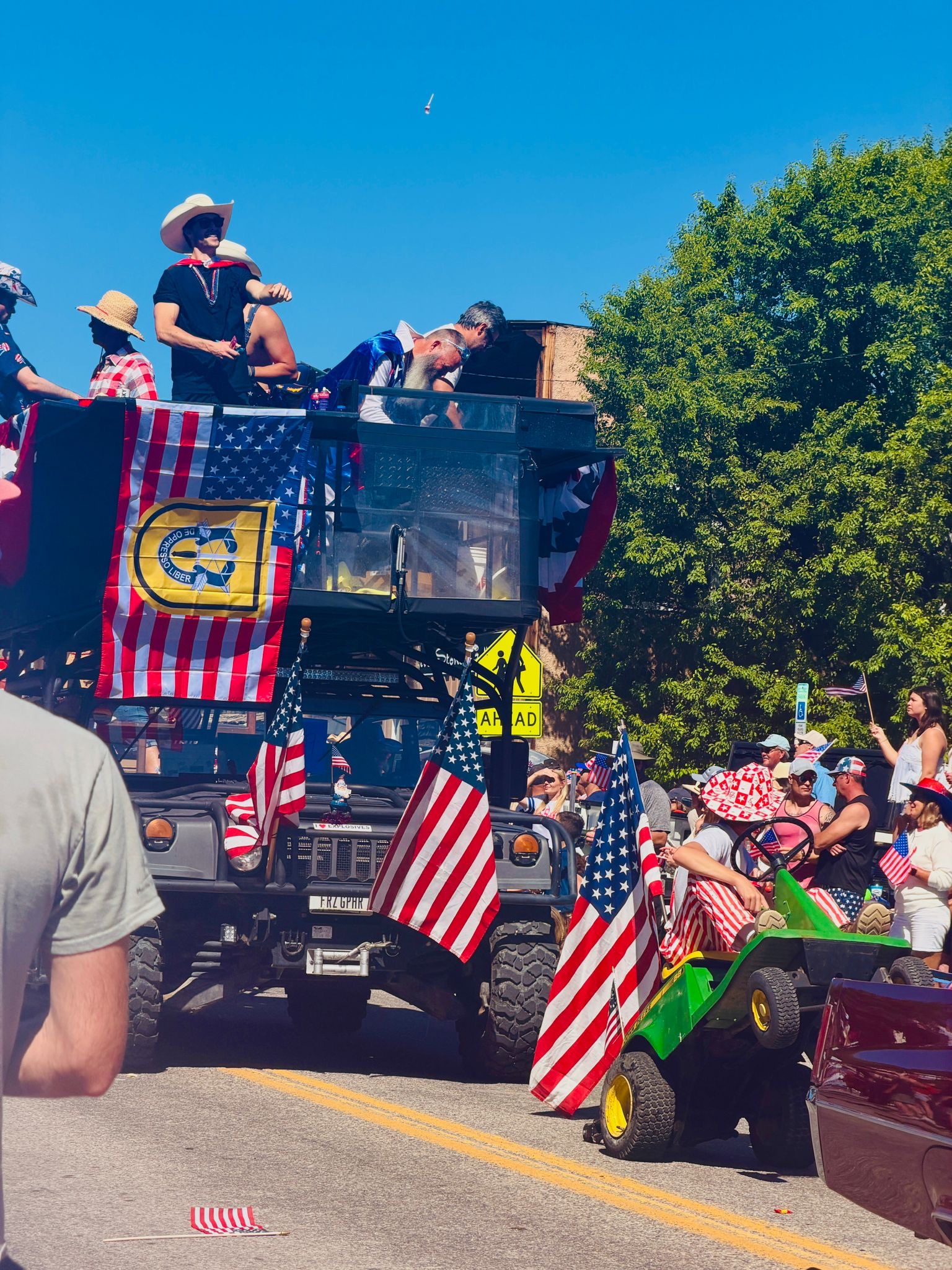
By the time we reached the main street, the temperature had begun to climb. There was no wind. The sky was clear and still, the kind of Montana morning that moves quietly from warm to hot without appearing to change at all. We found a narrow place along the curb between two pickups and squeezed ourselves into it. Even arriving a full hour before the parade, we had only just secured a view.

The trucks had been nosed close to the curb with their tailgates lowered into the street. Deckchairs sat in the trays. Coolers were open. Families had built small camps around their vehicles, with food spread out, drinks passing from hand to hand and children moving between one group and the next. Some had arrived early enough to claim large sections of the roadside. Others, like us, fitted themselves into whatever gaps remained.

We did not dare leave to find food. None of us wanted to surrender the spot, and once the crowd thickened there would have been no easy way back through it anyway. We had water and that was enough. Over the next hour the heat rose until I could feel sweat gathering beneath my shirt and running between my shoulder blades. Still we held our place.

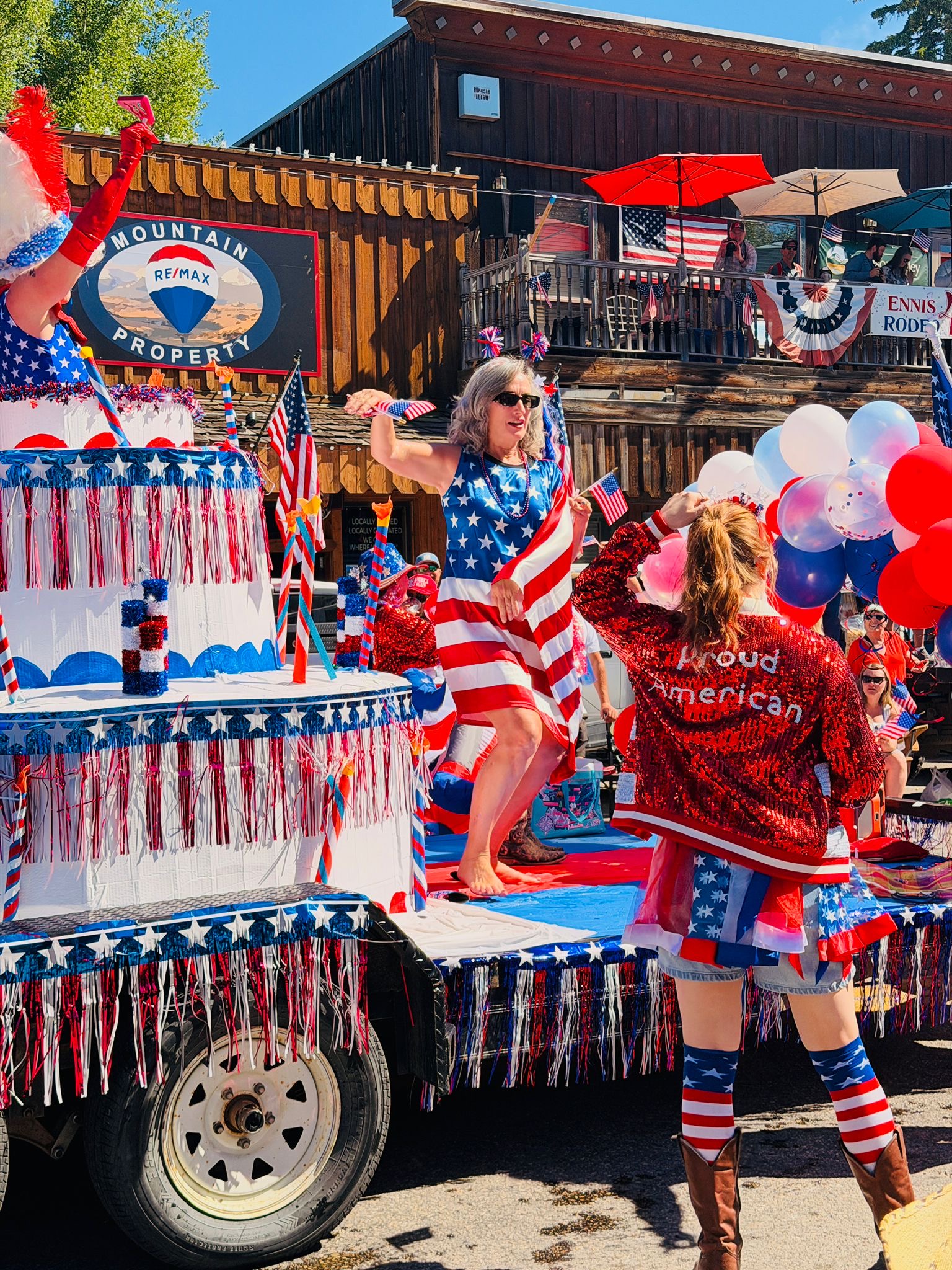
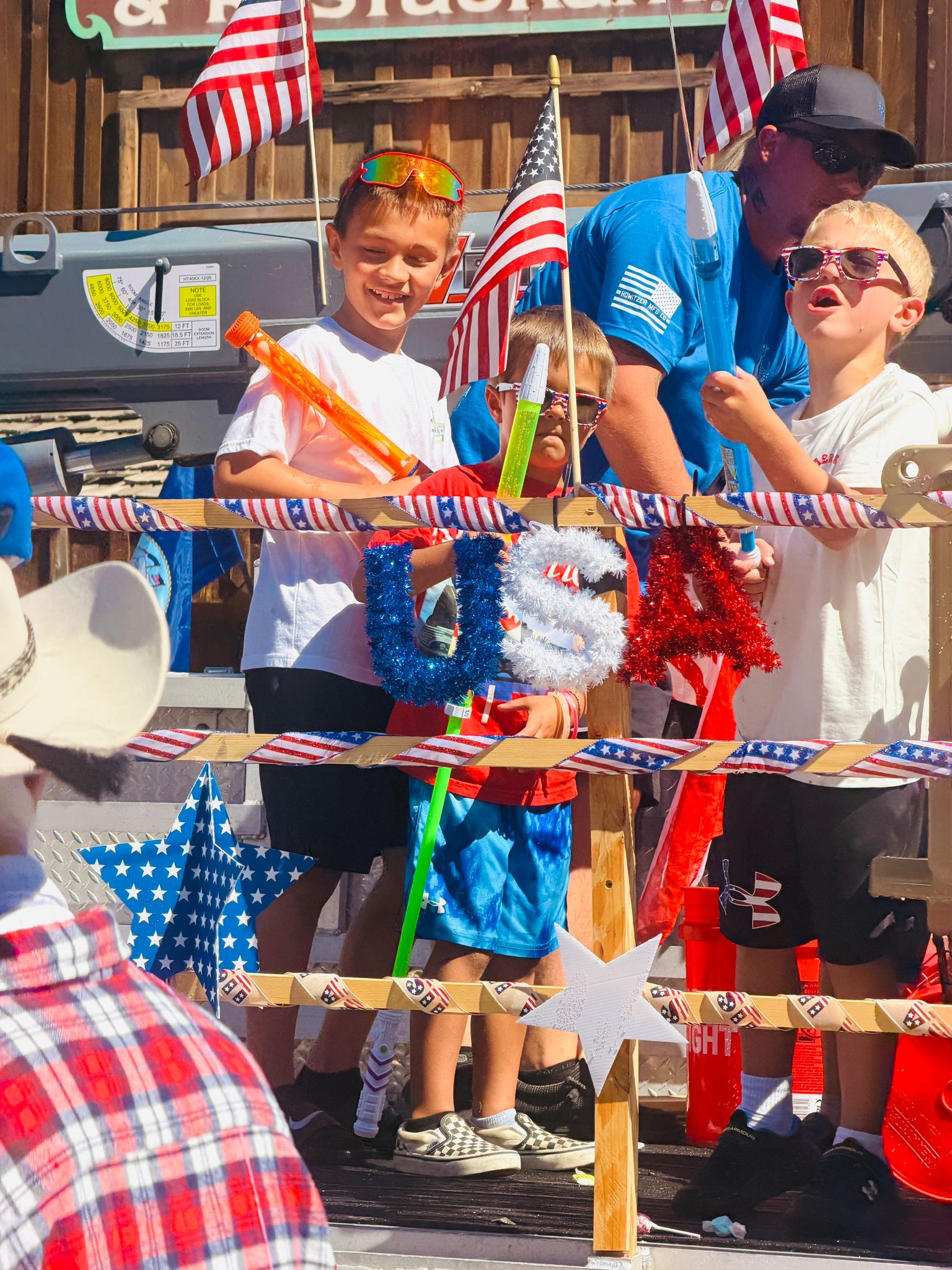
The children were the first thing I really noticed. Some wore entire outfits in the colours of the flag. Others had only a hat, a pair of shorts, a dress or a ribbon. There were stars on shirts, stripes on socks and flags painted across cheeks. Little girls in red and white dresses stood beside boys wearing oversized trucker caps. Old men wore shirts they had probably owned for twenty years. Teenagers who might ordinarily have regarded public enthusiasm as beneath them carried flags without embarrassment. Everyone seemed willing to take part.
There were people around us in fly-fishing shirts and caps, which in Ennis is hardly unusual. The Madison River runs through the town, and the whole place carries the identity of a fishing community. More than once someone heard us speaking and turned to ask where we were from. Most could not place the accent. Australia was guessed occasionally, though just as often we were placed in England, New Zealand or somewhere vaguely European.

Conversation came easily. No one seemed in a hurry to return to their own group. People asked where we were staying, what had brought us to Montana and whether we had fished the Madison. Anglers wanted to discuss what had been working, where the water was warming and whether the river had been crowded. Once they discovered I guided in Australia and New Zealand, the questions shifted. Had I fished the Mataura? Was it really as difficult as people said? How much did a trip cost? What was the best month to go?

The familiarity of those conversations steadied me. I had arrived as a foreigner, but fly fishing offered another kind of citizenship. You could recognise it in the shirts, the caps, the way people talked about flows and hatches before they asked what you did for a living. Nationality mattered less once the conversation reached rivers.

Before the parade began, there were speeches. Local figures spoke about the anniversary, the town and the country. I listened politely, still carrying my Australian resistance. Then came the national anthem.

I have always found the American anthem almost unbearably over the top. Bombs bursting in air. Rockets and proof through the night that the flag was still there. To an Australian ear, the language feels theatrical, even excessive. We would sooner mumble through our own anthem before a football match than turn war and survival into poetry.

But context changes things.

The singer that morning did not perform it casually. Whatever the words meant to her, she believed them. The anniversary, the speeches and the crowd had gathered around the song until it carried more than melody. People removed their hats. Veterans stood as straight as age allowed. Parents drew children closer. The main street fell quiet in a way it had not been quiet all morning.

Then the singer reached the lines I had always dismissed as too much, and despite myself, I felt goosebumps rise along my arms. It annoyed me slightly.

I had arrived prepared to observe the whole thing with fond amusement, to enjoy the colour while remaining safely outside its emotional reach. Instead, before the parade had even begun, the day had found a way through.
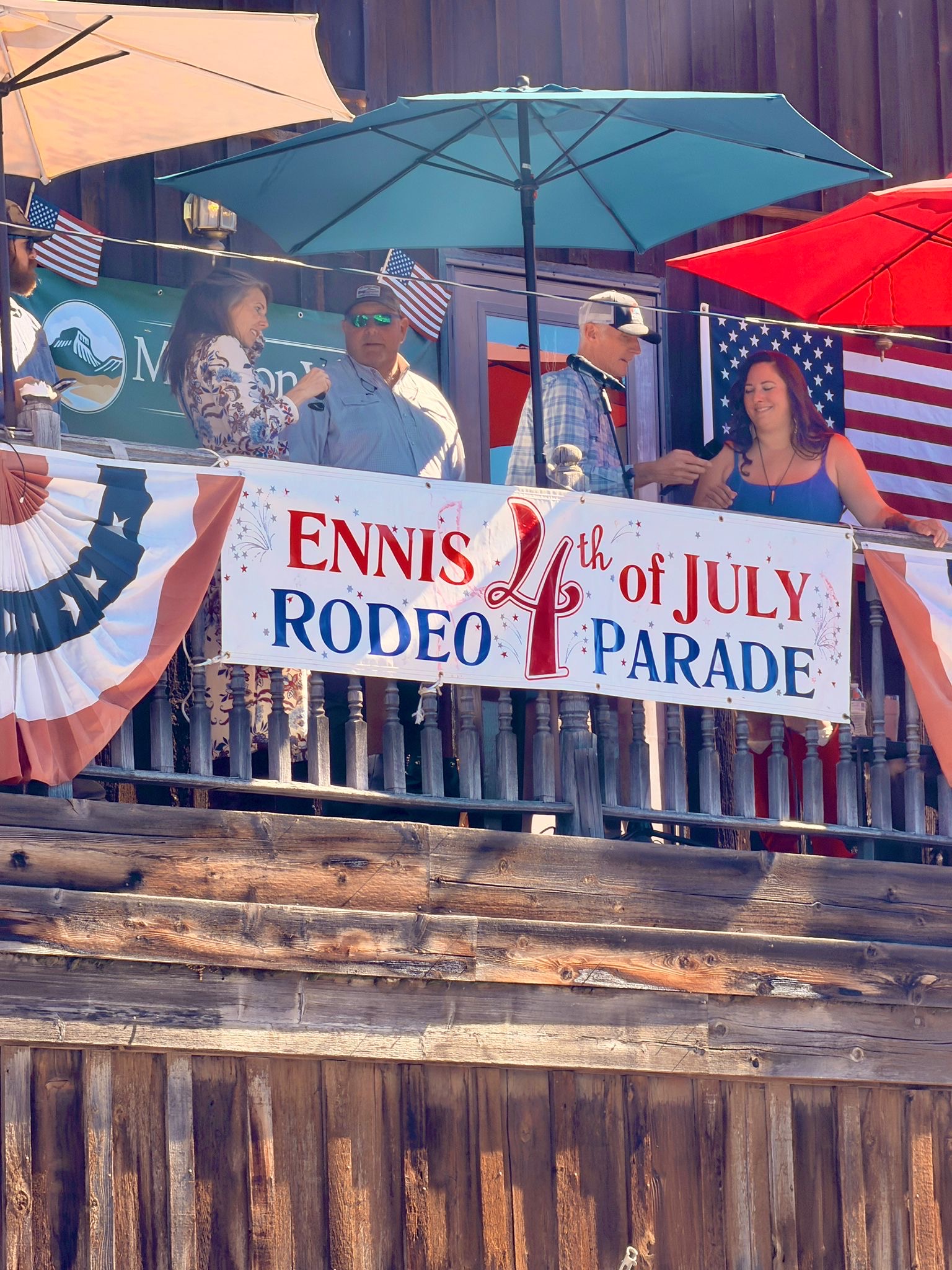
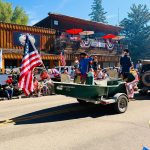
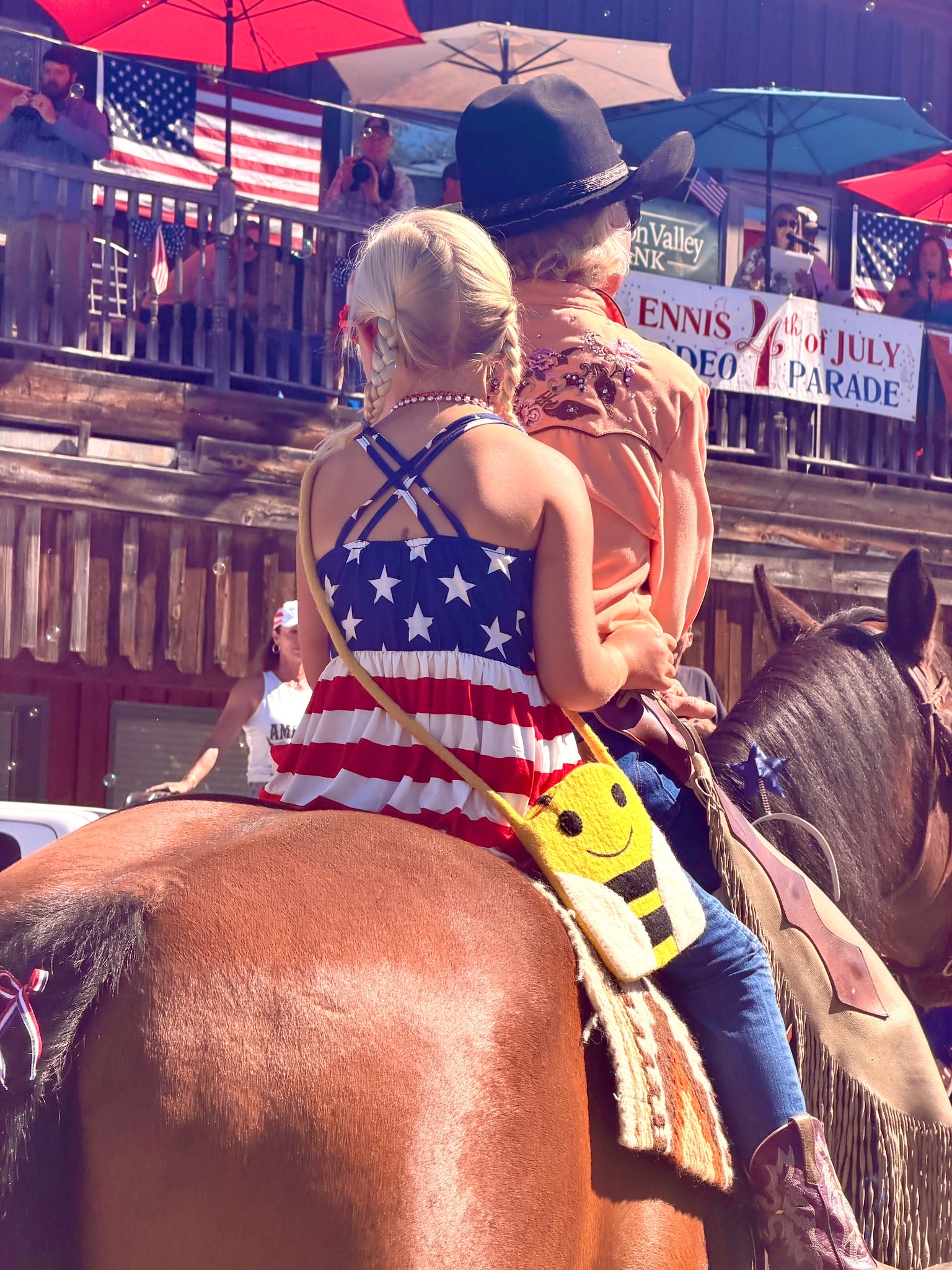
The first floats came slowly, pulled by pickups and tractors. There were local businesses, mechanics, tourism operators and families from ranches whose names seemed to carry their own history. Cowboys and cowgirls rode through on horseback. There were rodeo representatives, perhaps Miss Ennis Rodeo or Miss Montana Rodeo, sitting upright in decorated saddles and waving with the practised confidence of people accustomed to crowds. Horses clattered along the bitumen while children pressed forward for a better view.

The parade did not feel professionally staged. That was part of its charm. It was homemade in the best sense, assembled from whatever the town had available: trucks, trailers, bunting, horses, uniforms and volunteers. Nothing was polished enough to feel distant. The people passing were the same people who fixed engines, treated patients, raised cattle, ran shops and coached children.

One float honoured a local doctor who had been named physician of the year, or something close to it. The precise title mattered less than the scale of the affection. The float celebrated not merely an award but everything she had done for the community. In a small town, a doctor is rarely only a doctor. She is the person who has seen families through illness, births, accidents and the ordinary emergencies of life. The enthusiasm around her suggested that people were not applauding a profession. They were applauding someone who had shown up.

Another group of floats carried local women holding black placards. Each sign displayed a figure or fact: money raised, people helped, families supported, some record of work done quietly through the year. One sign alone might have seemed modest. Seen one after another, they formed an account of the labour that keeps a community functioning. Meals delivered. Funds collected. People assisted. Hours volunteered. The parade became not only a celebration but a public ledger of kindness.
There were veterans too, most of them older. I had expected to see younger men and women from Iraq or Afghanistan, but the majority appeared to be from Vietnam, with perhaps one or two who might have been old enough to have served in the Second World War. One rode in an old military Jeep with a Browning machine gun mounted in the back. The weapon looked less like a threat than a relic, part of the machinery of memory the town had rolled into the sunlight for the day. They passed to sustained applause.

The fire department followed, lightly spraying water into the air so that it fell as mist across the street. In the growing heat, people leaned towards it. Children shrieked and reached up while firefighters threw sweets into the crowd. For a moment the main street smelled of hot asphalt, dust and water.

There were quad bikes and small motorcycles. Riders lifted their front wheels and performed tricks as they moved through town, to the delight of the children and the mild concern of everyone old enough to imagine the consequences. A giant yeti danced on top of a truck, swaying absurdly to the music. It was impossible to know what business or organisation the creature represented, but that hardly mattered. The parade had room for veterans, doctors, charity groups, rodeo queens and an abominable snowman dancing above a pickup.

Then came the drift boat.

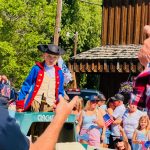
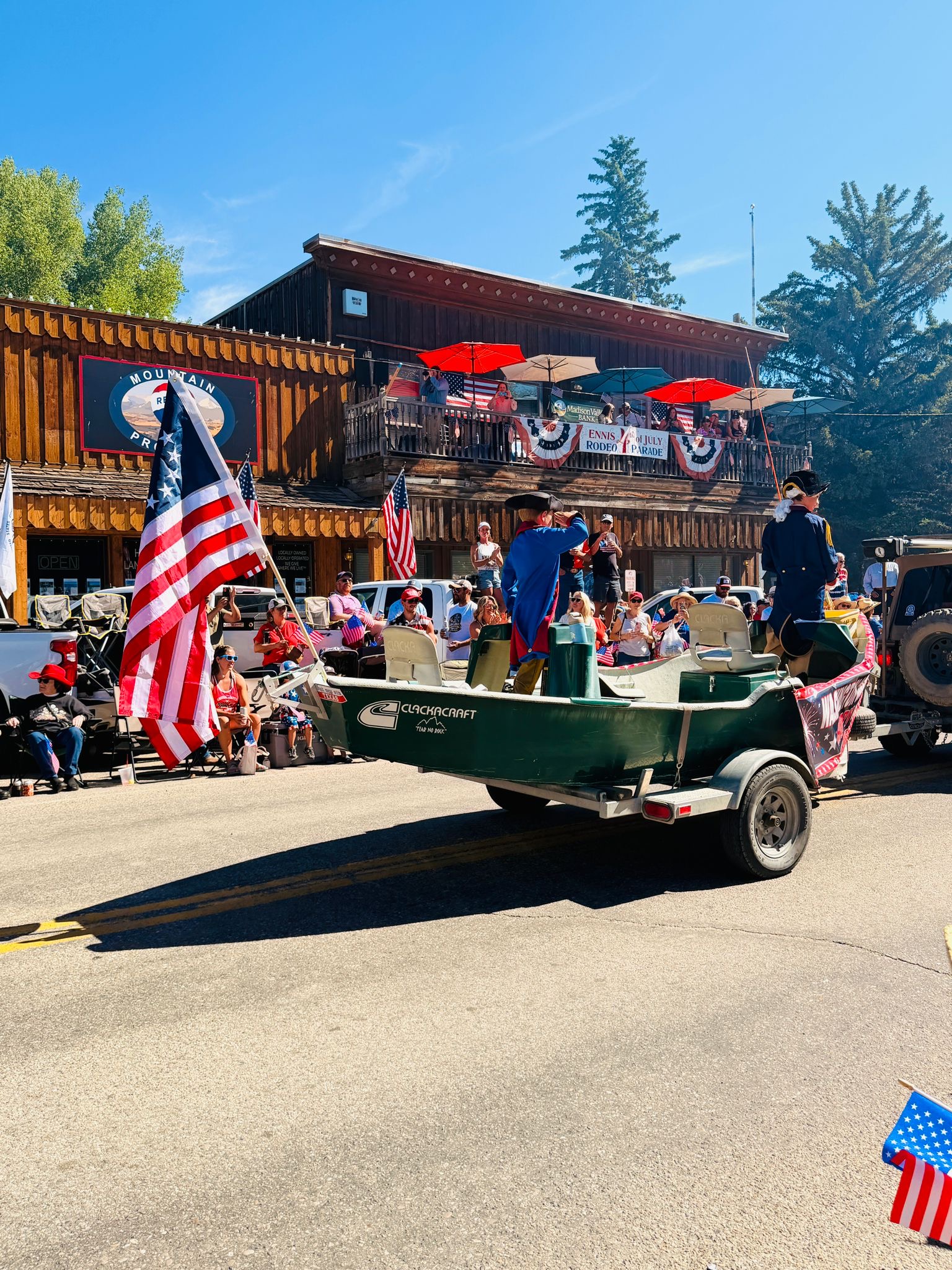
It was being towed on a trailer behind a truck. In the boat were two boys, perhaps twelve years old, dressed as George Washington in blue War of Independence uniforms. One stood in the bow holding a fly rod. The other sat nearer the rower’s seat. They were crossing not the Delaware but the Madison.
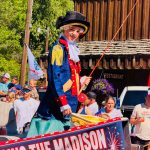
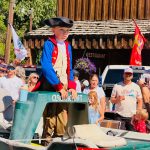
The whole thing was absurdly cute, but it also said something genuine about Ennis. In another town, George Washington might have crossed in a wagon or ridden behind a marching band. Here he crossed in a drift boat with a fly rod. The mythology of the nation had been adapted to the local river.

Fly fishing was not presented as a pastime brought in for tourists. It was part of the town’s identity. The guides, boats, shops and anglers belonged to the place as surely as the ranches and rodeos did. The river ran through Ennis not only geographically but culturally. It fed businesses, shaped routines and gave the town a language of its own.

A Coca-Cola truck came through with people running alongside it, handing out ice-cold cans. By then the temperature had climbed enough that the sight of condensation on aluminium looked almost miraculous. Children surged forward. Adults who had spent the morning pretending not to be thirsty reached out as eagerly as anyone.

All along the street, people cheered for neighbours. They applauded the doctor, the veterans, the fire crews, the ranch families and local businesses. Differences seemed to disappear, or at least to be suspended for a few hours. Montana is not a place without division, but in a small town those divisions may be less visible to an outsider. On that morning, whatever private disagreements existed had been pushed aside. Everyone appeared to have accepted the same temporary role: participant.

After the parade, the crowd loosened slowly. People folded chairs, closed coolers and returned to conversations interrupted by the procession. We stayed a while longer, partly because moving was difficult and partly because there was no urgency to leave. Several fly fishers stopped to talk. Some wanted to compare notes on the Madison. Others asked about New Zealand, and soon phones were out and details were being exchanged.

There was a collegiate quality to it. No one seemed to be guarding information or trying to establish authority. We were simply fishermen talking to other fishermen in a town where that was an ordinary way to meet.

By the time we walked back to the car, the day was properly hot. The road out of Ennis carried a long stream of vehicles, and once traffic began moving, it moved quickly. We joined a line of cars and pickups crossing the landscape at close to eighty miles an hour, the open country passing in broad sweeps of grass, road and distant mountains.
When we reached the lower Madison, the river had transformed. Thousands of people were either already on the water or preparing to enter it. Pullouts were crowded with vehicles. Trailers backed towards the river. Inner tubes were stacked in piles. Rafts, kayaks, canoes and drift boats waited at the banks while people carried coolers, speakers and children towards the current.

We slowed and pulled into a couple of overlooks. From above, the river looked less like a fishery than a moving festival. Groups had tied tubes together into floating islands. People hung from the sides of rafts with their bodies in the water. Others drifted beside coolers or held onto whatever would keep them moving downstream. Some of the clusters reminded me of old paintings of survivors clinging to lifeboats after the Titanic, except here there was no fear. Everyone was laughing.

Music carried across the water. Dogs stood at the bows of rafts. Drinks were passed between boats. People called to strangers on the bank. The guides I had watched leaving that morning were somewhere among them, no longer responsible for clients, timing or fish. Their working river had become a place to surrender control.

We sounded the horn as we passed. People in the water yelled back and held their beers in the air.

There was something generous in the scale of it. No one seemed to own the river for the day. Anglers, guides, families, teenagers and tourists all entered the same current. The water that on other mornings might be divided into runs, seams and holding lies had become a social road carrying everyone in the same direction.

Australia has a national day, of course, but I have never seen anything at home quite like it. Ours is more uncertain, more contested and often more subdued. We may gather around beaches, barbecues and sport, but there is usually some reserve in the celebration, some sense that enthusiasm should be kept within reasonable limits. Nothing about this day was reasonable.

That evening we drove to the northern outskirts of Bozeman and parked near the Gallatin County Fairgrounds. Thousands of people had gathered. Cars filled the surrounding lots, and families walked from every direction towards open ground beside the fairgrounds. The grandstand was packed. We found a place with a clear view and waited in the warm dark.

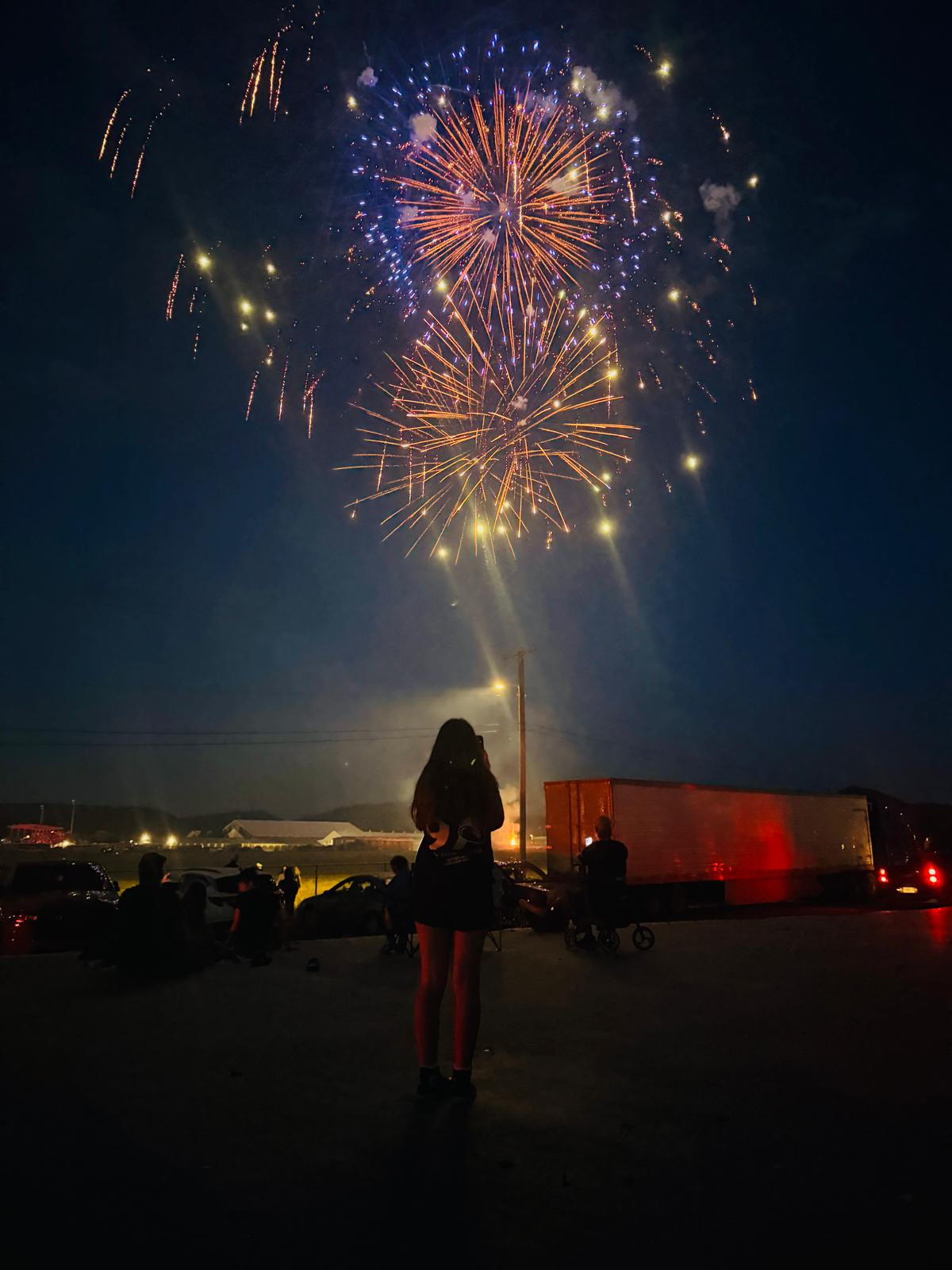
The fireworks lasted a full half an hour.

They began impressively and then kept building. Bursts opened above the fairgrounds, white, red, gold and blue falling through their own smoke. The air gradually filled with the sharp smell of cordite. Smoke drifted across the crowd, softening the lights and catching each new explosion. Children shouted before the sound reached them. Car alarms went off. People cheered between volleys.
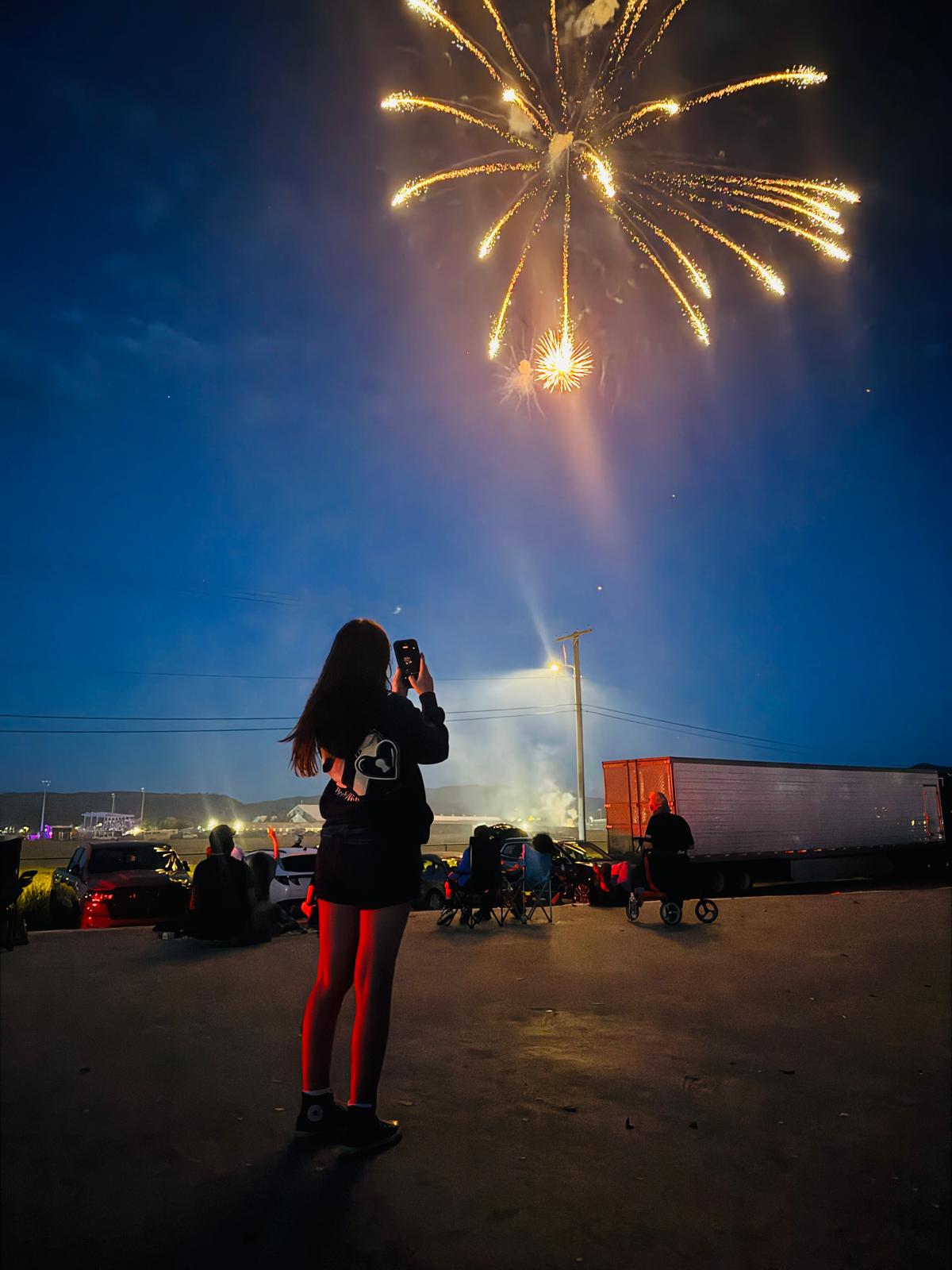
The finale seemed determined to use every firework left in Montana. The sky became a continuous glare. Explosions overlapped until there was no silence between them, only light, sound and smoke. When the last barrage faded, horns began sounding across the car park. Then came the chants.

“USA! USA!”

Written down, it sounds almost unbearably excessive.

Perhaps it was.

But by then I understood it differently. The display was not subtle because subtlety was not the point. No one was asking us to adopt their politics, declare allegiance or prove that we belonged. We had simply been allowed to join a town and a river valley celebrating themselves.

Strip away the flags and noise, and much of what remained was familiar: families gathering, friends sharing food, children waiting for sweets, volunteers displaying what they had done for others, guides setting work aside, fishermen talking to strangers and a community making public the fact that it was glad to exist. The patriotism was real, but so was the fellowship beneath it.

I had arrived prepared to be sceptical. Parts of the day still seemed impossibly over the top to an Australian sensibility. The uniforms, chants, flags and language of national destiny did not suddenly become natural to me. I did not leave converted into someone who wanted more ceremony in his life.

But resistance had become more difficult.

The anthem had given me goosebumps. The women holding signs had shown what the town did for its own. Two boys dressed as George Washington had crossed the Madison with a fly rod. Thousands of people had floated a river together, and strangers had raised beers when we sounded the horn.

Perhaps enthusiasm is not always naïveté. Perhaps public pride is not always exclusion. Sometimes it is simply a community giving itself permission to be seen.

By the time the smoke drifted away and the traffic began inching out of the fairgrounds, I was no less Australian and no less suspicious of patriotism as performance. But I had entered into the day despite myself.

And for once, I was glad I had.


Before we left Australia, I wrote that for most of my adult life the rivers had dictated the journey.

They decided where I stayed, when I travelled, which roads I followed and how long I remained in any one place. Towns became useful because they sat beside water. Lodgings were judged by their proximity to boat ramps. Weather mattered because of what it might do to a hatch. Much of the American West entered my life through rivers first and everything else second.

This trip was different.

For the first time in sixteen years, my wife travelled with me. Our children came too. There were still rods in the vehicle and familiar stretches of water waiting to be revisited, but the rivers were no longer responsible for every decision. We began on the California coast, crossed the deserts of Nevada and Utah and gradually worked towards Idaho, Wyoming and Montana.

What surprised me, though, was how little I minded the days when we did not fish.

Without the usual urgency of clients, guides and trout, I had time to notice the places between the rivers. The diner where the coffee arrived before we had properly sat down. The service station attendant who wanted to know why four Australians were driving north through his town. The grain elevator standing above a Main Street that had outlived several versions of America. The old motel signs, the faded shopfronts and the roads that seemed to continue long after there was any obvious reason for them to do so.

These were not the destinations around which the journey had been planned. They were the spaces between them. Yet, looking back, they became much of what I remember most.

Manhattan Beach, before the road turned inland.


The first part of the trip belonged to the coast and the desert. After two nights in Santa Monica, the landscape began to open. Los Angeles receded into freeway, heat and distance, and the country changed in stages. The Pacific disappeared behind us. Palms gave way to scrub. The horizon widened. By the time we reached Nevada, the distances and dimensions of the West had started to reveal themselves again.

One of the first things the family noticed was the vehicle.

My wife had expressed some doubts before we left about the need for something quite so enormous. She had never done one of these long American road trips with me before, and from Australia the insistence on a Suburban or Denali-sized vehicle probably seemed excessive. I was equally insistent that anything smaller would be a mistake.

Within the first few hours, the argument was settled.

Everyone had their own large, deeply comfortable seat, their own air-conditioning and enough space around them to avoid feeling as though four people were living on top of one another for several weeks. The seats were closer to the sofas and recliners we have at home than anything most Australians would associate with a car. Bags, suitcases, food, jackets, fishing gear and the assorted debris of family travel disappeared into the back without compromising anyone’s comfort.

The sheer size of the vehicle suited the landscape. You sat higher above the road and felt more secure, but also more a part of the American road trip itself. A small vehicle might have been easier to park, but it would have felt entirely wrong on those long western highways.

It was also considerably cheaper to run than expected. Fuel was an eye-watering $5.50 a gallon in California, but by the time we reached Utah and continued north it had dropped towards four dollars, then closer to $3.50 in Montana. The Denali we ended up with was more fuel-efficient than my Ford Ranger at home, despite having twice the space, three times the power and an abundance of comfort. After several thousand kilometres, none of us wanted anything smaller.

Las Vegas is often described as a city in the desert, but that hardly captures the strangeness of it. It feels less like a city than a concentrated act of defiance. Glass, neon, air-conditioning, fountains and spectacle push up against a landscape that does not appear particularly interested in supporting any of it.

For three days we moved through that contradiction.

The children saw it with the kind of enthusiasm adults sometimes lose. The sheer scale of the hotels, the absurdity of the themed buildings, the crowds, the noise, the constant invitation to look at something else. It was a long way from home and a long way from the rivers that usually explain my presence in America.

From there, Utah arrived. The colour of the country changed first. Then its shape.

Crossing from Nevada into southern Utah.


The walls of Zion rose around us with an authority that photographs never quite manage to convey. The roads narrowed. The rock closed in. Light moved slowly across the canyon walls and every change in angle produced another version of the same place. Even after years of travelling through the West, it was difficult not to feel overwhelmed by it.

In Springdale, we hired electric bikes and rode all the way into the canyon to the end of the road. The weather was slightly overcast, holding the temperature somewhere in the high twenties or low thirties, rather than the oppressive heat we had expected. It turned what might have been an endurance exercise into one of the great days of the journey.

There were moments while riding when I looked up and the canyon walls appeared to rise hundreds, perhaps thousands, of feet directly above us. In places they seemed vertical. In others they appeared to lean beyond vertical and hang over the road. The scale was difficult to process from the seat of a bicycle. Deer scattered from the roadside as we passed, the air moved through the canyon and the walls changed colour whenever the light shifted or the road altered our angle of view.

Of everything we did, that ride through Zion may have been the highlight of the trip for me. There was no windscreen between us and the landscape, no searching for a parking space and no pressure to hurry. We simply rode beneath those walls and allowed the canyon to reveal itself gradually.

Riding the canyon road into Zion from Springdale.

Further east, the landscape opened again around Moab. Red cliffs, arches, distant mesas and heat that seemed to settle over everything. There were days when the temperature climbed well beyond forty degrees and the only sensible response was to retreat to a swimming pool and wait for the evening. The wildlife appeared only when the light faded and the day began to lose its sting.

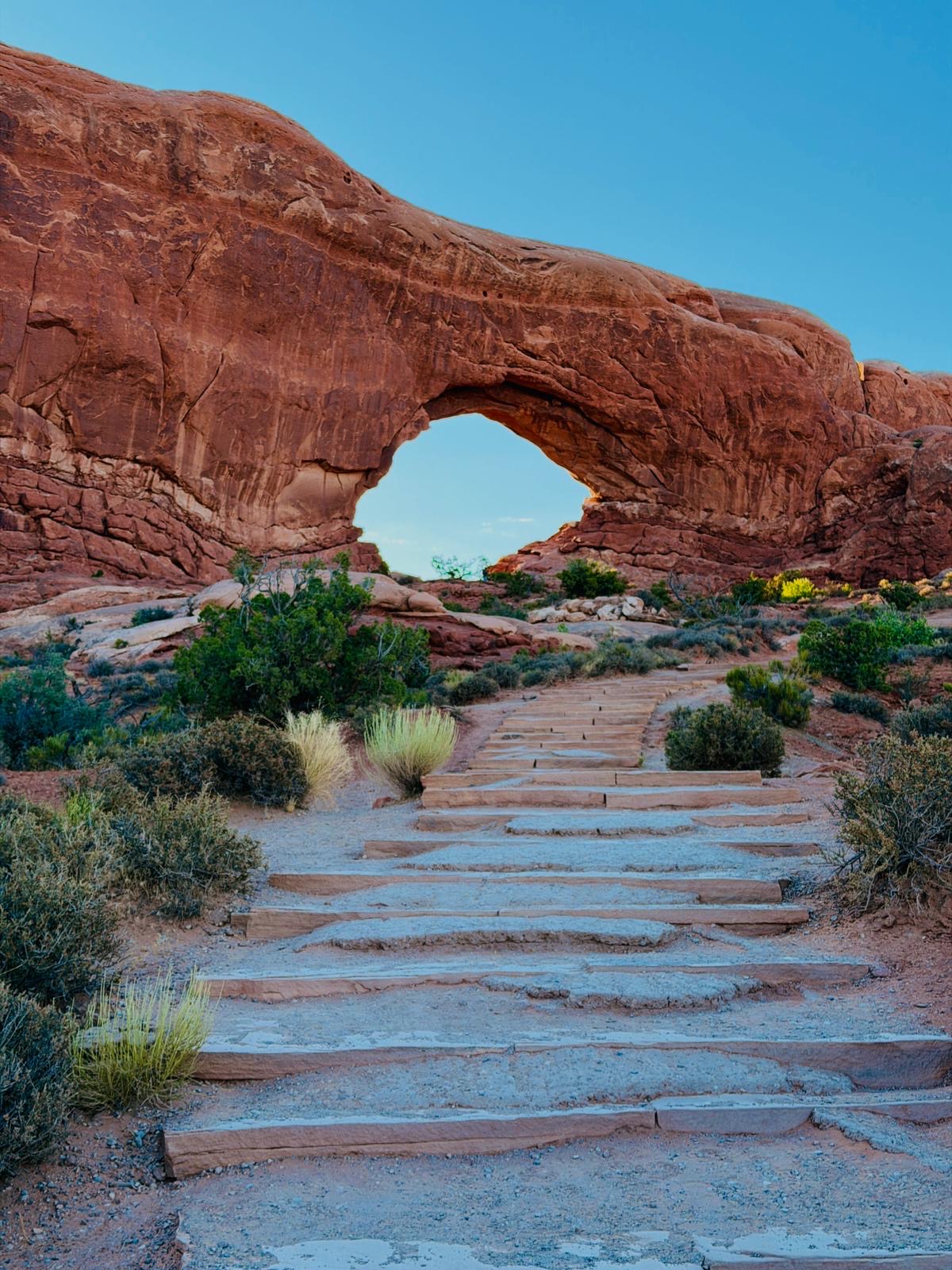
Moab itself and much of the immediate surrounding country can appear surprisingly drab beside the landscapes people have travelled there to see. Once you climb onto the plateau and enter Arches National Park, however, the country changes completely. The view as you crest that final rise is worth the price of admission alone.

The park is relatively compact, but every section seems to offer a different arrangement of stone. Arches, fins, balanced rocks and formations that appear too improbable to have survived rise from the plateau. As the hours pass, the light moves across them and the same landscape takes on an entirely different character. A formation that appears flat and colourless at midday can glow red and orange by evening, while another almost disappears into shadow.

Early light across Arches National Park.


The desert around Moab also offers a different kind of exploration. We took a float trip down the Colorado River, moving through a landscape that felt more remote from the water than it had from the road. Cliffs rose from the river, the heat settled across the canyon and the immensity of the country became apparent in a way it had not from the overlooks.

It was not trout country, but it was flowing water, and the pools, seams and eddies carried a language I understood.

The desert teaches a totally different form of patience. Rivers encourage movement. You walk, cast, drift, mend, adjust and search. The desert asks you to stand still. It works on a larger scale and over a slower timeframe. Nothing appears hurried, yet everything is changing. Wind reshapes sand just as water cuts stone. Shadows redraw the same wall over the course of an afternoon.

It is difficult to move through that country without becoming aware of your own smallness. That may be part of its appeal.

Most of us spend our lives surrounded by objects built to human proportions. Houses, roads, offices, cars, shops. In canyon country, scale becomes less reassuring. The land is older, larger and entirely indifferent to the fact that you have arrived with a camera and an itinerary. You feel that indifference the moment you step away from the roadway and into the landscape.

There were moments when the kids were bored. Moments when they were tired. Moments when the heat had stripped the novelty from the day. Then we would turn a corner, walk out onto another overlook or catch the last light on a distant cliff and everything would reset.

Travel often works that way. It is not one uninterrupted sequence of wonder. It is heat, traffic, wrong turns, hunger, fatigue and argument, interrupted by moments so complete they justify everything around them.

From Utah we headed north.

The country began to soften gradually. The red rock thinned. The air cooled. Trees returned in greater numbers. Somewhere beyond Salt Lake City, water began to appear more frequently beside the road.

That transition has always mattered to me and is a large part of why I tend to fly into Salt Lake City rather than taking the easier route directly into Bozeman. You can feel when you are entering trout country before you see the first river. The valleys change shape. Cottonwoods gather along drainage lines. Meadows become greener. Bridges begin to suggest water worth stopping for.

The South Fork of the Snake. The Henry’s Fork. The Teton. The Green. Names that have occupied my imagination for much of my adult life. Normally I would have begun organising the trip around them immediately. There would have been calls to friends, weather checks, hatch reports, river levels and quiet attempts to extract another day from the schedule.

This time I found myself looking elsewhere. At the Tetons from the Wyoming side. At the long roads between small towns. At Jackson with its wooden boardwalks, antler arches and summer crowds. At the children trying to understand why certain places mattered more to us than others.

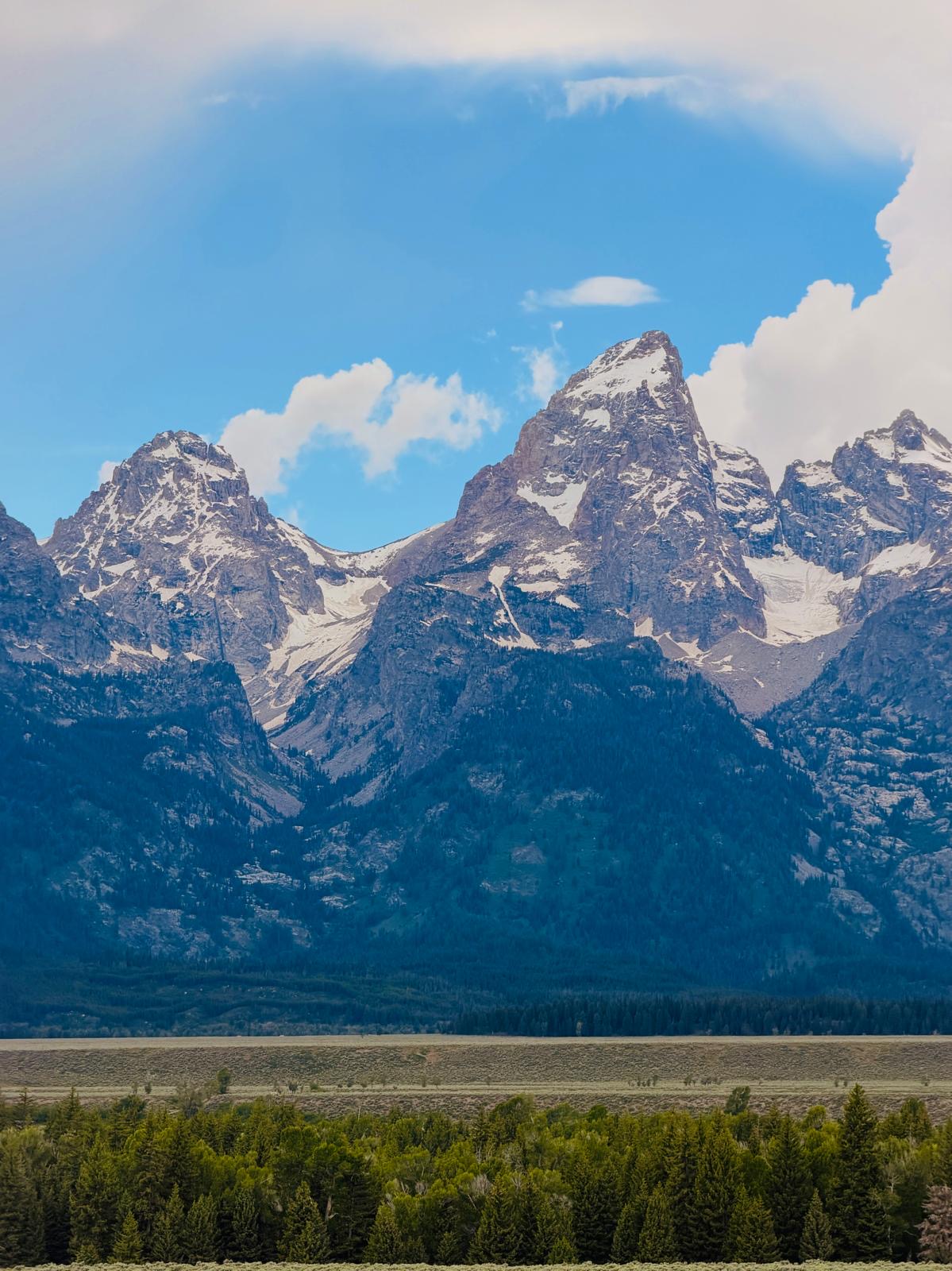
Sixteen years earlier, Maree and I had stood beneath the Tetons and been married with four witnesses, rising trout and a grizzly bear that had chosen the wrong morning for a walk. Returning with our children changed the meaning of the place.

Returning to the Tetons sixteen years after we were married beneath them.

The mountains were the same. The roads were familiar. The view from Schwabacher Landing had lost none of its power. Yet the experience was no longer anchored only to memory. It had become something shared.

That was the quiet change running through the entire trip.

For years, I had returned to the American West as a guide, host, angler or photographer. This time I was seeing familiar places reflected back through three other people. Their interests were not always mine. One child wanted shops, music and wildlife. The other wanted World Cup matches, activities and anything involving speed. My wife wanted us to slow down, walk the trails and make the most of whatever each day offered.

All of that altered the rhythm.

Island Park became our base for exploring Yellowstone and the surrounding country. It was also where we hired UTVs and travelled along mountain tracks through the forest towards Mesa Falls.

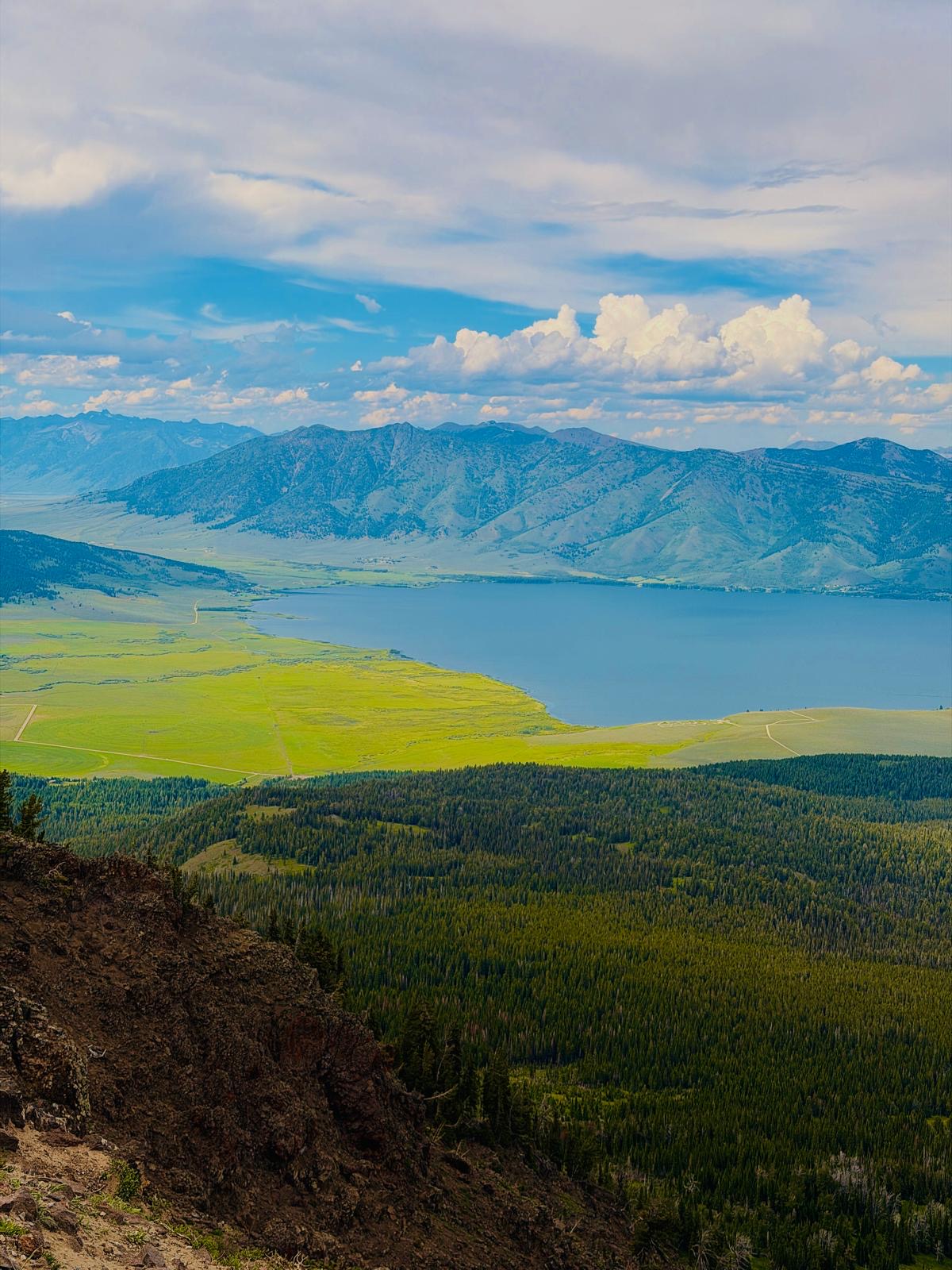
We drove to the top of Sawtelle Peak on a road that became narrower and steeper with every turn. By the time we reached the upper sections, I caught myself wondering whether I would be able to drive the UTV back down. The track clung to the mountain, the drop beside us became increasingly difficult to ignore and the summit seemed to move further away each time the road doubled back.

The view from the top justified the climb. Mountains, forests and distant valleys spread out in every direction. On the tracks below, we spooked moose and deer from the timber, although no bears appeared. Depending on which member of the family you asked, this was either a disappointment or a considerable relief.

There was less fishing. There was also more noticing. Yellowstone made that impossible to avoid.

No matter how many times you visit, the park resists familiarity. Steam rises from the ground. Bison stop traffic as though roads are a temporary inconvenience. Elk stand in meadows with the ease of animals that understand the landscape belongs to them. A moose steps into a river and suddenly an entire group of strangers becomes silent.

It is easy to become cynical about famous places. Crowds, queues, traffic and cameras can make even extraordinary landscapes feel processed. Yellowstone survives that pressure because something unexpected is always waiting beyond the next bend.

It might be a herd of bison crossing a valley. Or a wolf disappearing into timber. It could be a thermal basin half-hidden beneath the morning vapour. Or a moose feeding in water so calm that the reflection appears almost too perfect.


The park restores perspective in much the same way the desert does, but by different means. The desert does it through emptiness. Yellowstone does it through abundance, with wildlife, water, weather, geology and distance all competing for attention at once.

The children responded immediately. Not always with quiet reverence. Sometimes with shouting, arguing over binoculars or trying to take photographs through a moving window. But the excitement was real.

I think that matters. Adults often pretend the natural world is best appreciated silently. Children are less restrained. They react before deciding how they are supposed to react. There is an honesty in that, one that allows us to be less serious and to enjoy the moment before deciding what it is supposed to mean. Through them, I was seeing again with fresh eyes an experience I had repeated through many Australian winters.

The Fourth of July introduced another kind of spectacle. Australians tend to be suspicious of too much public enthusiasm. We are trained early to keep emotion within acceptable limits and to mock anything that appears overly earnest. Americans do not always share that instinct.

Small towns celebrate themselves with remarkable confidence. Flags appear everywhere. Streets close. Horses, old vehicles, tractors, marching bands and homemade floats move through town while entire families line the footpaths.

There is no embarrassment in it. No apology. No effort to appear detached.

Washington Crossing the Madison. Somewhere between history, parody and fly fishing. Only in Ennis could one of America’s most iconic images be reimagined on a Clackacraft drift boat and make perfect sense. It was clever, completely tongue-in-cheek, and one of those wonderfully local moments that reminded me why I enjoy small-town Montana so much.

The parade we watched was loud, colourful, occasionally absurd and completely sincere. People dressed in red, white and blue from head to toe. Children collected sweets thrown from passing floats. Veterans moved slowly along the parade route. Families occupied the same patch of footpath they had probably used for years. Some brought lawn chairs and settled onto the verge. Others watched from the backs of pickup trucks, tailgates down and coolers filled with ice-cold drinks.

It would be easy to reduce the Fourth of July to politics or patriotism, but in small towns it often feels more personal than that. It is partly about memory. Partly about community. Partly about the right to make noise in public and assume everyone else will join in. For visitors, it offers a glimpse of America at its least self-conscious.

That became another recurring feature of the trip: the willingness to participate.

In Australia, people often watch first and decide later whether an experience deserves enthusiasm. In America, particularly in smaller towns, people are more likely to step forward, wave, shout, clap, ask where you are from and offer an opinion before you have had time to introduce yourself.

That openness can be exhausting. But it can also be generous in a way not easily found here at home.

Some of the conversations I remember most happened in places where we had not intended to stop. At a fuel station. In a diner. Outside a general store. Beside a road sign while trying to decide whether to keep driving further before the darkness crept back in.

While the famous destinations gave the journey structure, it was the incidental encounters that gave it texture. By the time we reached Montana, we had entered another version of the West entirely, and even the children could feel the difference.

The working landscape of Ashton, Idaho.

The towns grew smaller. Grain elevators and storage towers rose above the plains, marking settlements long before the streets themselves came into view. Old bars and shops sat beside roads carrying traffic towards somewhere else. Mountains rose and fell in the distance. Rivers moved through valleys with the confidence of water that has shaped the place for longer than anyone remembers.

Montana has always been easy to romanticise. The name itself does half the work. Big sky, long roads, trout rivers, mountain towns and the lingering mythology of the West. But the version I have come to value most is not the postcard version. It is the working landscape. The trucks parked outside a bar at midday. The rail sidings and storage sheds. The service stations. The taco buses parked in dusty lots beside the highway. The small stores that appear to sell groceries, fishing tackle, ammunition and local gossip from the same counter.

The towns where people live ordinary lives inside scenery that visitors have travelled thousands of kilometres to see.

That contrast interests me more each year. The extraordinary and the everyday occupying the same place.

For someone passing through, the mountains dominate everything. For someone who lives there, they are simply the view on the way to work.

Eventually the rivers reclaimed their place. They always do. We saw water through cottonwoods. Riffles appeared beside the road. Bridges invited closer inspection. Familiar names returned on signs and maps.

There is a deep familiarity in returning to places that, over the years, have become another kind of home.

Of course, there were rods in the vehicle and even a few opportunities to fish.

On the South Fork of the Snake, a few large stoneflies were still around, but perhaps more importantly, the memory of those big insects remained fresh in the trout’s minds. Getting the fly tight to the bank and close to structure was absolutely imperative.

Large rubber-legged flies teased along the edges, or pulled slightly away from them, produced violent takes. Once the fly had travelled five or six feet from the bank, there was little point continuing the drift. You recast and placed it within an inch of the edge again. Some of the rises were spectacular, and some large trout were brought to the net.

The Teton River was far below its normal level, but the evening hatches remained strong. Caddis and mayflies appeared in enormous numbers, and as the light softened the river became dimpled with rising fish from one bank to the other.

The water was crystal clear. From the road bridges, fish could be seen holding in surprising numbers, and whenever we looked back into the low evening sun we saw dorsal fins, tails and snouts breaking the surface as trout mopped up the last of the insects from the hatch.

Around Island Park, we found spring creeks full of large rising fish. These trout demanded considerably more precision. Accuracy mattered. Fly selection mattered. Leader length and diameter mattered. The rewards, when everything came together, were worth the additional care.

Yet even then, the urgency was missing. I no longer felt compelled to turn every encounter with water into a session. Some rivers were enough to look at. Some were enough to remember. Some could wait. I borrowed a boat from friends when I felt like it. At other times, we wet-waded for a few hours and called it a day.

That may have been the most surprising change of all.

For years, my travel had been measured by what I managed to fit into it. Rivers fished. Images taken. Places reached. Opportunities used. This time the journey felt complete without being maximised.

Perhaps that is one of the quieter lessons of age. Or perhaps I am selectively remembering the journey to suit a narrative I have already begun to believe. Most likely it is a little of both. Wherever the truth lies, I do not think ambition disappears. Selection simply becomes more important. You learn that doing everything is impossible and that trying often diminishes what is already in front of you.

A day spent moving slowly through Yellowstone does not need to end with fishing. A road through Montana does not need to be justified by where it leads. A town does not need to be famous to be worth stopping in.

The places between rivers are not empty spaces. They are part of the journey.

That breathing room, and the freedom from feeling that every fish had to be wrung from every day, also changed the way I thought about the Montana trips we will host again next year. It allowed me to notice far more of what lies between the fishing locations, particularly on the travel days. I came home with a much clearer sense of how that time can become part of the experience rather than simply the distance that has to be covered. There are towns, landscapes, short detours and places worth stopping that will give the journey more shape without taking anything away from the fishing.

Back home, with winter settled over Victoria and the familiar work of another season waiting, I find myself thinking less about the places we reached than about the way we moved between them. The distance was never simply empty road. It gave us time to talk, to look, to change our minds and to stop when something unexpected caught our attention. In a journey measured across thousands of kilometres, those pauses became as important as the destinations themselves.

Looking back through the photographs, the pattern is obvious. There are rivers, mountains and wildlife, but also roadside signs, diners, old buildings, parades, shopfronts, service stations and people standing in landscapes they are seeing for the first time.

There are fewer fish than usual. And I don’t mind that. Not one little bit.

For most of my adult life, the rivers have dictated the journey. This time they were simply part of it. They waited while we crossed deserts, stopped in small towns, watched bison block roads and stood beneath mountains that had already witnessed one important moment in our lives.

The rivers were still there when we arrived. The hatches continued without us. The trout rose whether we were watching or not. What changed was the attention we gave to everything around them.

Perhaps that is what the trip ultimately became. Not a journey away from rivers, but a reminder that they do not exist apart from the country through which they flow, or the lives that unfold beside them. Next year, when I return with another group of anglers, the rivers will still give the journey its shape. But I suspect we will travel a little more slowly between them.

There will still be hatches to chase, boats to launch and fish worth staying late for. There will also be towns worth entering, roads worth following and reasons to stop that have nothing to do with trout.

The places between rivers are not simply what we pass through on the way to somewhere else.

They are part of what brings us back.