
We knew the day would be different when the fishing guides began leaving before breakfast with rafts instead of drift boats.
From our accommodation outside Bozeman, I watched them pulling onto the road one after another, coolers strapped down, paddles laid across trailers, friends already crowded into vehicles. These were men I was used to seeing leave early with rods rigged, lunches packed and a working day ahead of them. That morning there was none of the usual purpose. No one was studying the weather or worrying about where the fish might be holding. The rafts were not being taken out to earn a living. They were being taken out to drink beer, float the river and spend the day with friends and family. Work had been put aside. The water belonged to everyone.
By the time we left for Ennis, the sun was already clear and bright, though the morning still carried a little of the coolness that lingers in the valleys before the heat settles in. The drive across from Bozeman gave us the usual wide Montana distances, the road unspooling through open country with mountains rising beyond it. Gradually the traffic thickened. More pickups appeared, then flags, then families packed into cars with folding chairs, coolers and children dressed in red, white and blue. Long before we reached town, it was obvious that subtlety had not been invited.
It was the Fourth of July in America’s two-hundred-and-fiftieth year, and the anniversary was everywhere. The number 250 appeared on shirts, hats, stickers and shop displays. Walmart had entire racks devoted to it. Cars carried decals. Families wore matching slogans. What might ordinarily have been a national celebration had taken on the atmosphere of a milestone people had been waiting for all their lives.
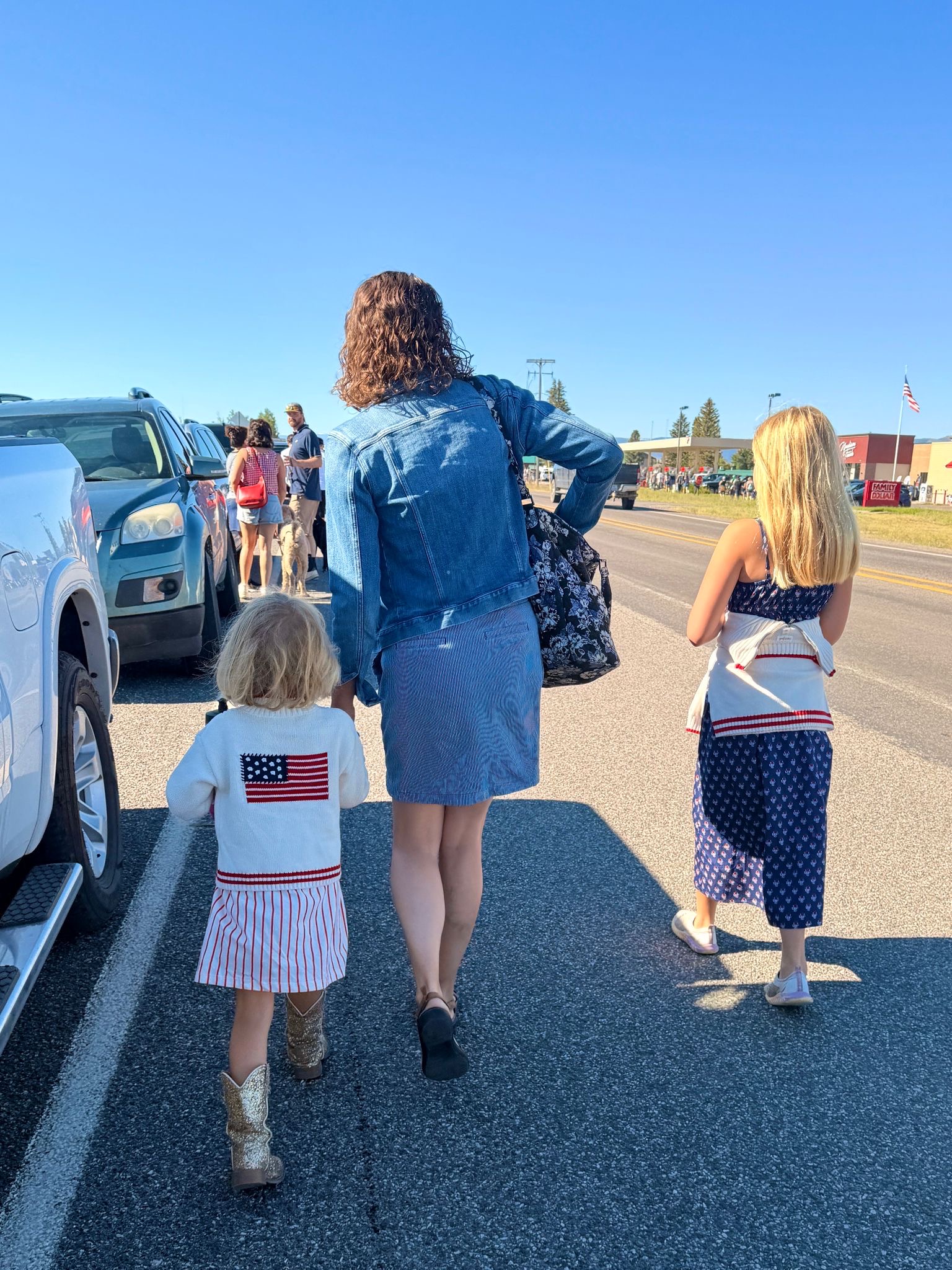
We arrived early and still had to park almost a kilometre out of town. Hundreds of people were walking in from every direction, carrying chairs, dragging small wagons and balancing drinks and children. Dogs trotted beside them. Families called to one another across the road. Strangers fell into step and started talking as though they had arranged to meet.
My wife and children simply entered into it. They had none of my reservations. To them it was colourful, loud and fun. They were happy to be swept along with the crowd. I was more cautious.
Australians are not especially comfortable with overt patriotism. We tend to prefer ours disguised as sport, complaint or a barbecue. Too much enthusiasm makes us suspicious. Public declarations of national greatness can feel faintly embarrassing, and anything involving flags, anthems and solemn speeches risks setting off an instinct to retreat into irony. We are more comfortable making fun of ourselves than standing still while someone tells us what the nation means. Ennis gave me little room to hide.
By the time we reached the main street, the temperature had begun to climb. There was no wind. The sky was clear and still, the kind of Montana morning that moves quietly from warm to hot without appearing to change at all. We found a narrow place along the curb between two pickups and squeezed ourselves into it. Even arriving a full hour before the parade, we had only just secured a view.
The trucks had been nosed close to the curb with their tailgates lowered into the street. Deckchairs sat in the trays. Coolers were open. Families had built small camps around their vehicles, with food spread out, drinks passing from hand to hand and children moving between one group and the next. Some had arrived early enough to claim large sections of the roadside. Others, like us, fitted themselves into whatever gaps remained.
We did not dare leave to find food. None of us wanted to surrender the spot, and once the crowd thickened there would have been no easy way back through it anyway. We had water and that was enough. Over the next hour the heat rose until I could feel sweat gathering beneath my shirt and running between my shoulder blades. Still we held our place.
The children were the first thing I really noticed. Some wore entire outfits in the colours of the flag. Others had only a hat, a pair of shorts, a dress or a ribbon. There were stars on shirts, stripes on socks and flags painted across cheeks. Little girls in red and white dresses stood beside boys wearing oversized trucker caps. Old men wore shirts they had probably owned for twenty years. Teenagers who might ordinarily have regarded public enthusiasm as beneath them carried flags without embarrassment. Everyone seemed willing to take part.
There were people around us in fly-fishing shirts and caps, which in Ennis is hardly unusual. The Madison River runs through the town, and the whole place carries the identity of a fishing community. More than once someone heard us speaking and turned to ask where we were from. Most could not place the accent. Australia was guessed occasionally, though just as often we were placed in England, New Zealand or somewhere vaguely European.
Conversation came easily. No one seemed in a hurry to return to their own group. People asked where we were staying, what had brought us to Montana and whether we had fished the Madison. Anglers wanted to discuss what had been working, where the water was warming and whether the river had been crowded. Once they discovered I guided in Australia and New Zealand, the questions shifted. Had I fished the Mataura? Was it really as difficult as people said? How much did a trip cost? What was the best month to go?
The familiarity of those conversations steadied me. I had arrived as a foreigner, but fly fishing offered another kind of citizenship. You could recognise it in the shirts, the caps, the way people talked about flows and hatches before they asked what you did for a living. Nationality mattered less once the conversation reached rivers.
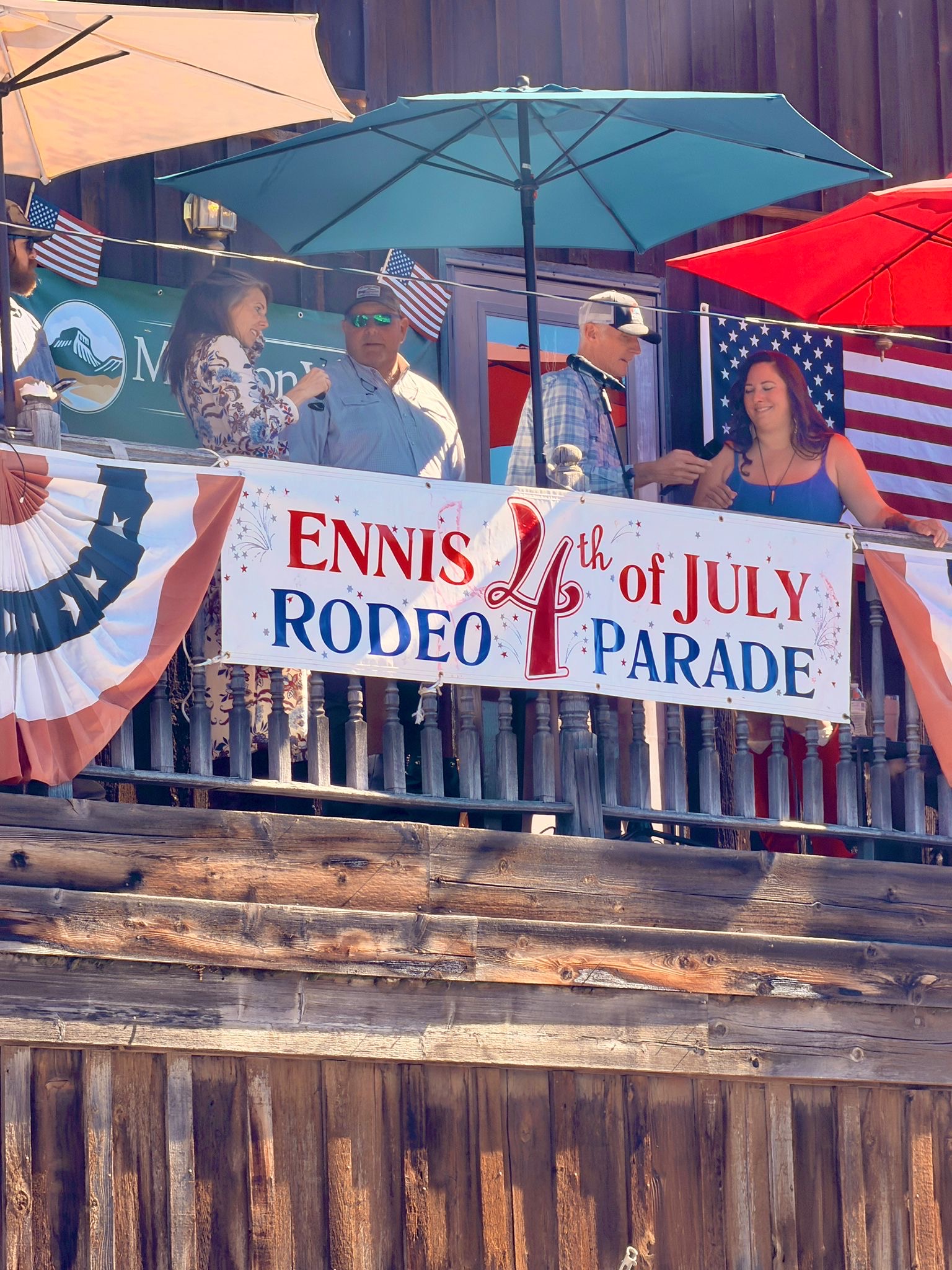
Before the parade began, there were speeches. Local figures spoke about the anniversary, the town and the country. I listened politely, still carrying my Australian resistance. Then came the national anthem.
I have always found the American anthem almost unbearably over the top. Bombs bursting in air. Rockets and proof through the night that the flag was still there. To an Australian ear, the language feels theatrical, even excessive. We would sooner mumble through our own anthem before a football match than turn war and survival into poetry.
But context changes things.
The singer that morning did not perform it casually. Whatever the words meant to her, she believed them. The anniversary, the speeches and the crowd had gathered around the song until it carried more than melody. People removed their hats. Veterans stood as straight as age allowed. Parents drew children closer. The main street fell quiet in a way it had not been quiet all morning.
Then the singer reached the lines I had always dismissed as too much, and despite myself, I felt goosebumps rise along my arms. It annoyed me slightly.
I had arrived prepared to observe the whole thing with fond amusement, to enjoy the colour while remaining safely outside its emotional reach. Instead, before the parade had even begun, the day had found a way through.
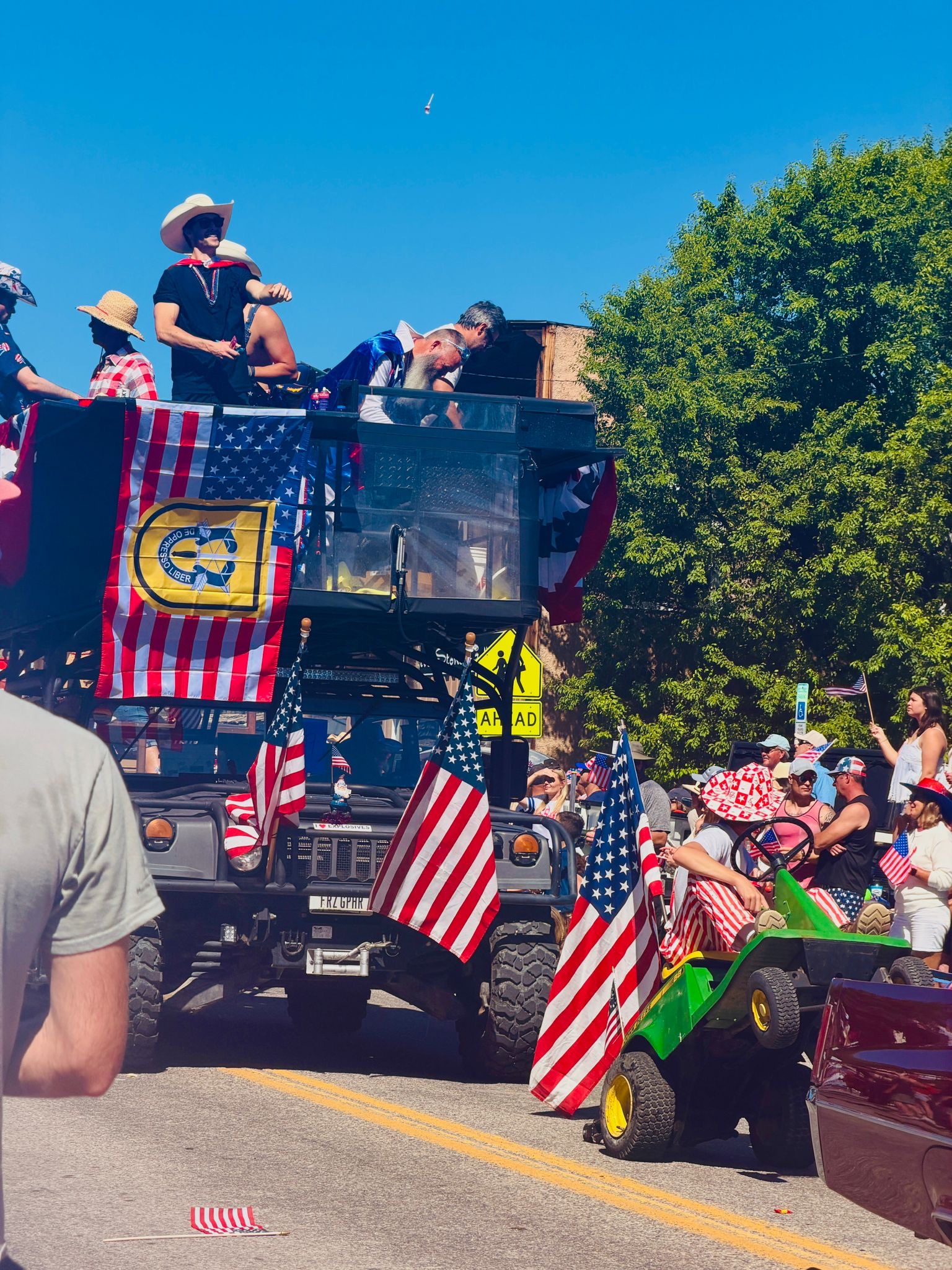
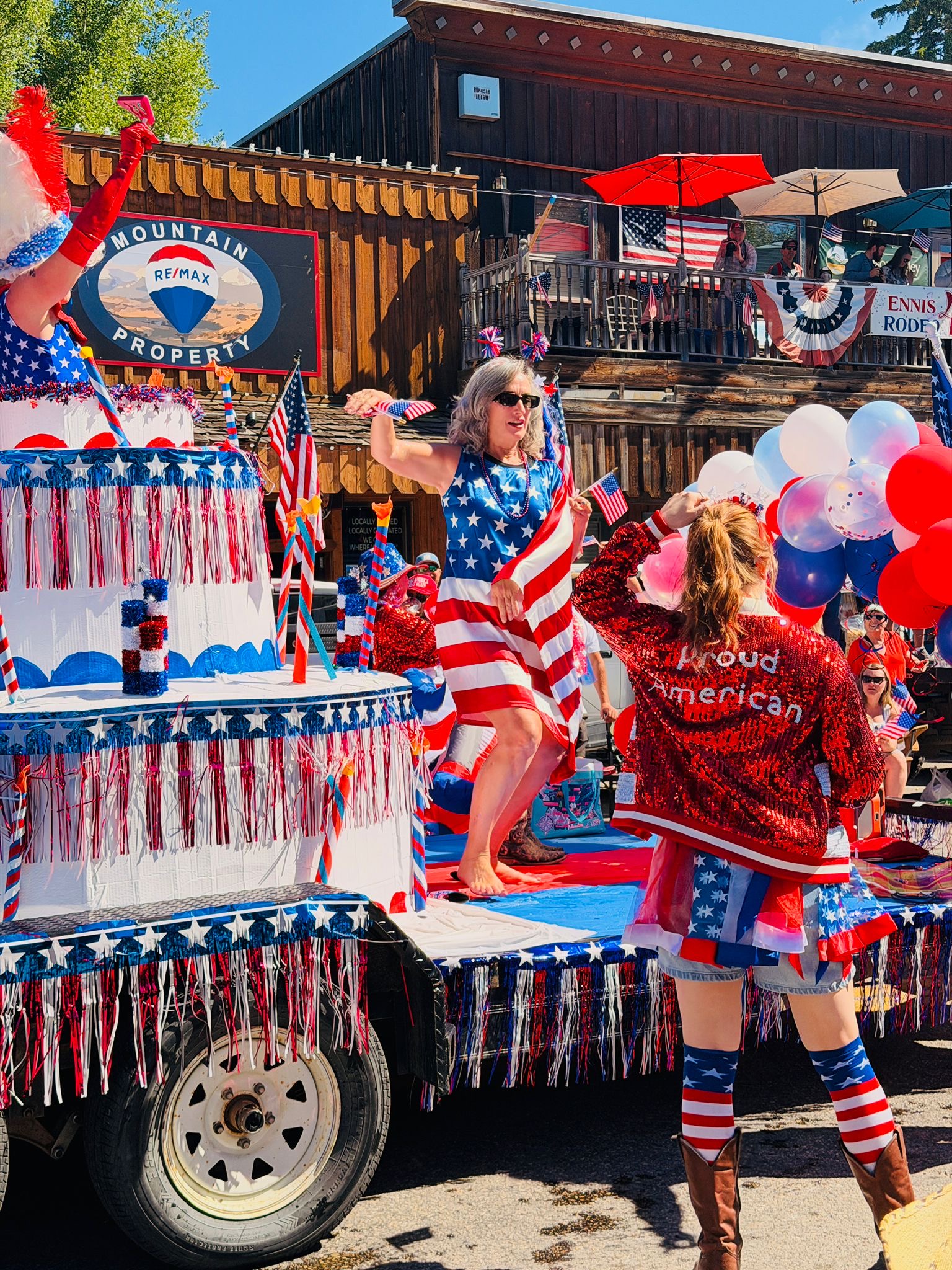
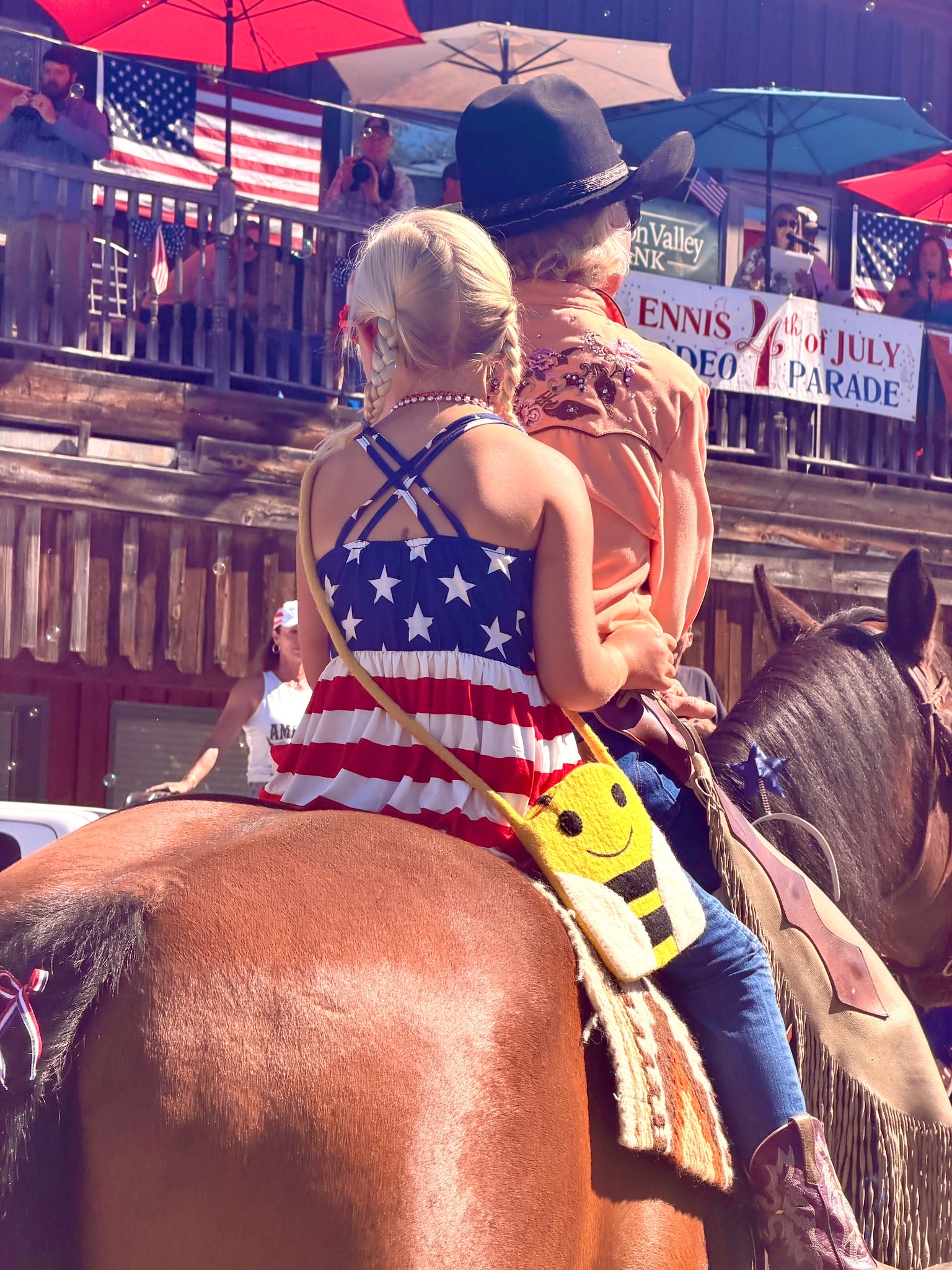
The first floats came slowly, pulled by pickups and tractors. There were local businesses, mechanics, tourism operators and families from ranches whose names seemed to carry their own history. Cowboys and cowgirls rode through on horseback. There were rodeo representatives, perhaps Miss Ennis Rodeo or Miss Montana Rodeo, sitting upright in decorated saddles and waving with the practised confidence of people accustomed to crowds. Horses clattered along the bitumen while children pressed forward for a better view.
The parade did not feel professionally staged. That was part of its charm. It was homemade in the best sense, assembled from whatever the town had available: trucks, trailers, bunting, horses, uniforms and volunteers. Nothing was polished enough to feel distant. The people passing were the same people who fixed engines, treated patients, raised cattle, ran shops and coached children.
One float honoured a local doctor who had been named physician of the year, or something close to it. The precise title mattered less than the scale of the affection. The float celebrated not merely an award but everything she had done for the community. In a small town, a doctor is rarely only a doctor. She is the person who has seen families through illness, births, accidents and the ordinary emergencies of life. The enthusiasm around her suggested that people were not applauding a profession. They were applauding someone who had shown up.
Another group of floats carried local women holding black placards. Each sign displayed a figure or fact: money raised, people helped, families supported, some record of work done quietly through the year. One sign alone might have seemed modest. Seen one after another, they formed an account of the labour that keeps a community functioning. Meals delivered. Funds collected. People assisted. Hours volunteered. The parade became not only a celebration but a public ledger of kindness.
There were veterans too, most of them older. I had expected to see younger men and women from Iraq or Afghanistan, but the majority appeared to be from Vietnam, with perhaps one or two who might have been old enough to have served in the Second World War. One rode in an old military Jeep with a Browning machine gun mounted in the back. The weapon looked less like a threat than a relic, part of the machinery of memory the town had rolled into the sunlight for the day. They passed to sustained applause.
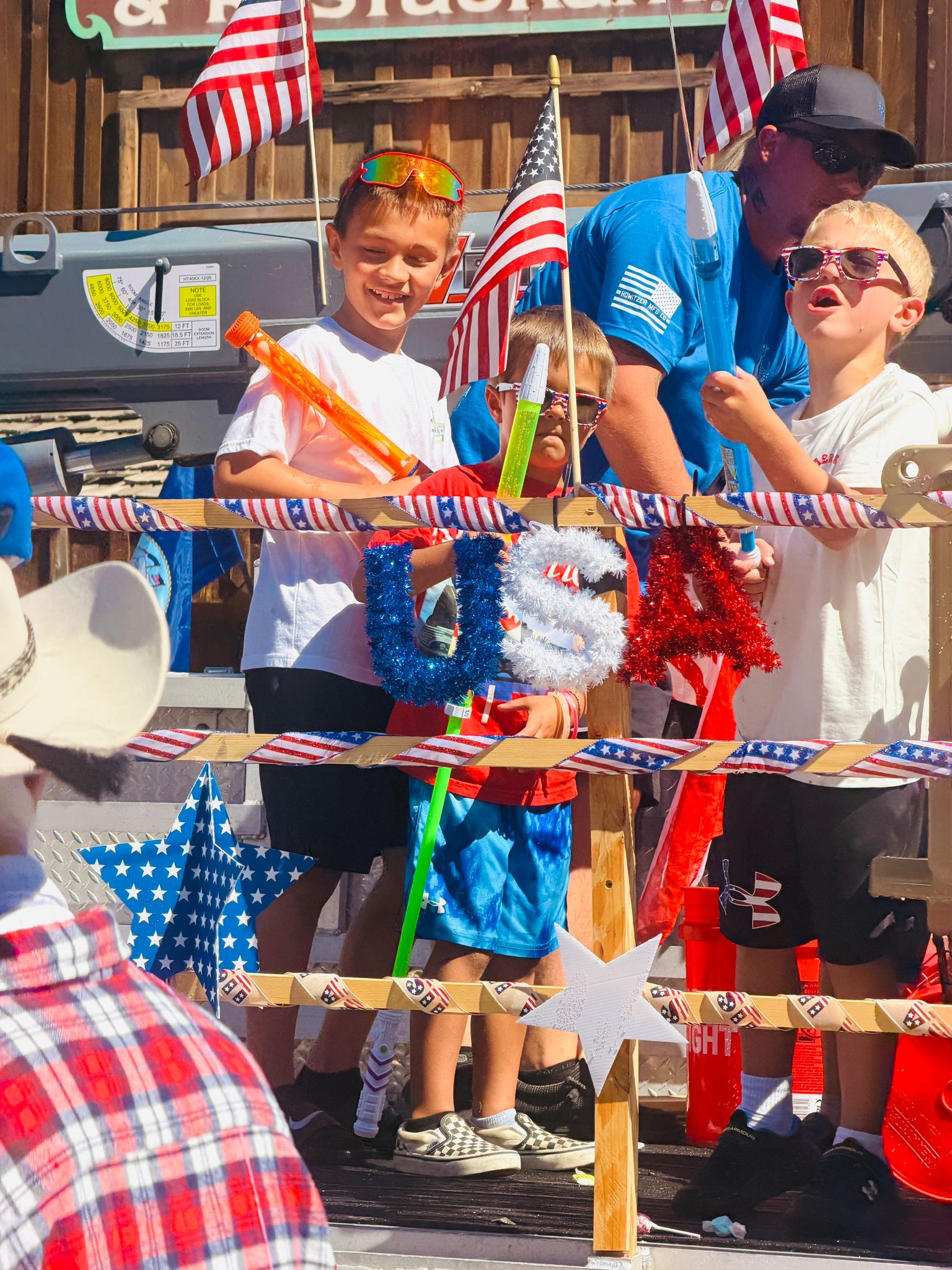
The fire department followed, lightly spraying water into the air so that it fell as mist across the street. In the growing heat, people leaned towards it. Children shrieked and reached up while firefighters threw sweets into the crowd. For a moment the main street smelled of hot asphalt, dust and water.
There were quad bikes and small motorcycles. Riders lifted their front wheels and performed tricks as they moved through town, to the delight of the children and the mild concern of everyone old enough to imagine the consequences. A giant yeti danced on top of a truck, swaying absurdly to the music. It was impossible to know what business or organisation the creature represented, but that hardly mattered. The parade had room for veterans, doctors, charity groups, rodeo queens and an abominable snowman dancing above a pickup.
Then came the drift boat.
It was being towed on a trailer behind a truck. In the boat were two boys, perhaps twelve years old, dressed as George Washington in blue War of Independence uniforms. One stood in the bow holding a fly rod. The other sat nearer the rower’s seat. They were crossing not the Delaware but the Madison.
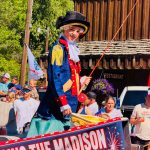
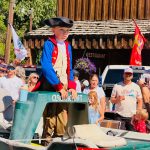
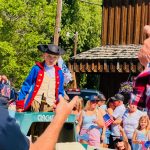
The whole thing was absurdly cute, but it also said something genuine about Ennis. In another town, George Washington might have crossed in a wagon or ridden behind a marching band. Here he crossed in a drift boat with a fly rod. The mythology of the nation had been adapted to the local river.
Fly fishing was not presented as a pastime brought in for tourists. It was part of the town’s identity. The guides, boats, shops and anglers belonged to the place as surely as the ranches and rodeos did. The river ran through Ennis not only geographically but culturally. It fed businesses, shaped routines and gave the town a language of its own.
A Coca-Cola truck came through with people running alongside it, handing out ice-cold cans. By then the temperature had climbed enough that the sight of condensation on aluminium looked almost miraculous. Children surged forward. Adults who had spent the morning pretending not to be thirsty reached out as eagerly as anyone.
All along the street, people cheered for neighbours. They applauded the doctor, the veterans, the fire crews, the ranch families and local businesses. Differences seemed to disappear, or at least to be suspended for a few hours. Montana is not a place without division, but in a small town those divisions may be less visible to an outsider. On that morning, whatever private disagreements existed had been pushed aside. Everyone appeared to have accepted the same temporary role: participant.
After the parade, the crowd loosened slowly. People folded chairs, closed coolers and returned to conversations interrupted by the procession. We stayed a while longer, partly because moving was difficult and partly because there was no urgency to leave. Several fly fishers stopped to talk. Some wanted to compare notes on the Madison. Others asked about New Zealand, and soon phones were out and details were being exchanged.
There was a collegiate quality to it. No one seemed to be guarding information or trying to establish authority. We were simply fishermen talking to other fishermen in a town where that was an ordinary way to meet.
By the time we walked back to the car, the day was properly hot. The road out of Ennis carried a long stream of vehicles, and once traffic began moving, it moved quickly. We joined a line of cars and pickups crossing the landscape at close to eighty miles an hour, the open country passing in broad sweeps of grass, road and distant mountains.
When we reached the lower Madison, the river had transformed. Thousands of people were either already on the water or preparing to enter it. Pullouts were crowded with vehicles. Trailers backed towards the river. Inner tubes were stacked in piles. Rafts, kayaks, canoes and drift boats waited at the banks while people carried coolers, speakers and children towards the current.
We slowed and pulled into a couple of overlooks. From above, the river looked less like a fishery than a moving festival. Groups had tied tubes together into floating islands. People hung from the sides of rafts with their bodies in the water. Others drifted beside coolers or held onto whatever would keep them moving downstream. Some of the clusters reminded me of old paintings of survivors clinging to lifeboats after the Titanic, except here there was no fear. Everyone was laughing.
Music carried across the water. Dogs stood at the bows of rafts. Drinks were passed between boats. People called to strangers on the bank. The guides I had watched leaving that morning were somewhere among them, no longer responsible for clients, timing or fish. Their working river had become a place to surrender control.
We sounded the horn as we passed. People in the water yelled back and held their beers in the air.
There was something generous in the scale of it. No one seemed to own the river for the day. Anglers, guides, families, teenagers and tourists all entered the same current. The water that on other mornings might be divided into runs, seams and holding lies had become a social road carrying everyone in the same direction.
Australia has a national day, of course, but I have never seen anything at home quite like it. Ours is more uncertain, more contested and often more subdued. We may gather around beaches, barbecues and sport, but there is usually some reserve in the celebration, some sense that enthusiasm should be kept within reasonable limits. Nothing about this day was reasonable.
That evening we drove to the northern outskirts of Bozeman and parked near the Gallatin County Fairgrounds. Thousands of people had gathered. Cars filled the surrounding lots, and families walked from every direction towards open ground beside the fairgrounds. The grandstand was packed. We found a place with a clear view and waited in the warm dark.
The fireworks lasted a full half an hour.
They began impressively and then kept building. Bursts opened above the fairgrounds, white, red, gold and blue falling through their own smoke. The air gradually filled with the sharp smell of cordite. Smoke drifted across the crowd, softening the lights and catching each new explosion. Children shouted before the sound reached them. Car alarms went off. People cheered between volleys.
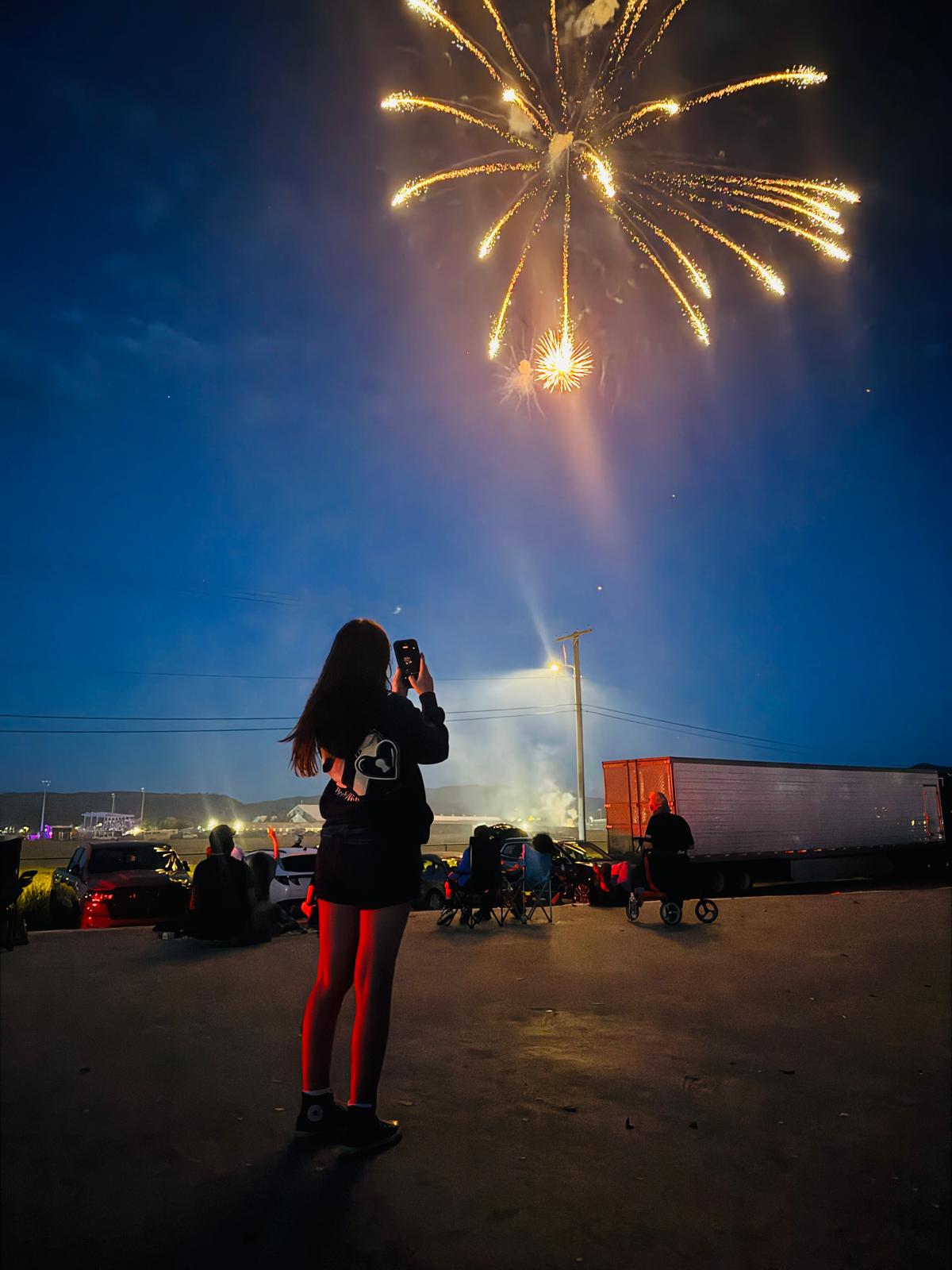
The finale seemed determined to use every firework left in Montana. The sky became a continuous glare. Explosions overlapped until there was no silence between them, only light, sound and smoke. When the last barrage faded, horns began sounding across the car park. Then came the chants.
“USA! USA!”
Written down, it sounds almost unbearably excessive.
Perhaps it was.
But by then I understood it differently. The display was not subtle because subtlety was not the point. No one was asking us to adopt their politics, declare allegiance or prove that we belonged. We had simply been allowed to join a town and a river valley celebrating themselves.
Strip away the flags and noise, and much of what remained was familiar: families gathering, friends sharing food, children waiting for sweets, volunteers displaying what they had done for others, guides setting work aside, fishermen talking to strangers and a community making public the fact that it was glad to exist. The patriotism was real, but so was the fellowship beneath it.
I had arrived prepared to be sceptical. Parts of the day still seemed impossibly over the top to an Australian sensibility. The uniforms, chants, flags and language of national destiny did not suddenly become natural to me. I did not leave converted into someone who wanted more ceremony in his life.
But resistance had become more difficult.
The anthem had given me goosebumps. The women holding signs had shown what the town did for its own. Two boys dressed as George Washington had crossed the Madison with a fly rod. Thousands of people had floated a river together, and strangers had raised beers when we sounded the horn.
Perhaps enthusiasm is not always naïveté. Perhaps public pride is not always exclusion. Sometimes it is simply a community giving itself permission to be seen.
By the time the smoke drifted away and the traffic began inching out of the fairgrounds, I was no less Australian and no less suspicious of patriotism as performance. But I had entered into the day despite myself.
And for once, I was glad I had.