Tag: River Life

By the time we crossed the Tasman again, New Zealand had started to feel almost mythical.

Not because the rivers had changed, or because the mountains had somehow become grander during the years we were locked away, but because absence has a way of sharpening memory. The last full season we completed before the world closed down was 2019–2020. Back then, news reports played quietly in the background while we guided. Every few days another border tightened somewhere. Another flight route vanished. Another country introduced restrictions that seemed unimaginable only weeks earlier.

The no-name creeks in New Zealand are out of this world - New Zealand Season Review

We finished that season with the uneasy feeling that something larger was approaching.

Then suddenly the world stopped moving.

Like most people, we assumed normality would return far sooner than it did. Instead, seasons passed. Summers disappeared. Rivers we had walked for decades became inaccessible. Clients postponed trips repeatedly, unsure whether international travel would ever truly feel straightforward again. For many anglers, New Zealand slowly drifted from being a destination on next year’s calendar into something that felt more like a memory.

When the opportunity finally arrived to return for the 2022–2023 season, it felt significant in ways that had very little to do with fishing alone.

Back home, much of Victoria was dealing with floods. Familiar stretches of the Goulburn sat beneath heavy discoloured water. Roads were closed. Riverbanks had disappeared. Uncertainty lingered over much of the region. At the same time, reports filtering across from Southland spoke of stable weather, clear rivers and an unusually warm start to summer.

Eventually the decision became obvious.

We loaded the gear, pointed ourselves toward New Zealand and left.

Officially it was a fishing trip before the main hosted season began. Unofficially, I suspect most of us understood it was something else as well.

A reset.

A chance to breathe again.

There is something psychologically restorative about arriving in New Zealand after a long absence. The scale of the country immediately alters your thinking. The valleys seem wider. The rivers colder. The distances between places somehow larger. Even the quality of the light feels different.

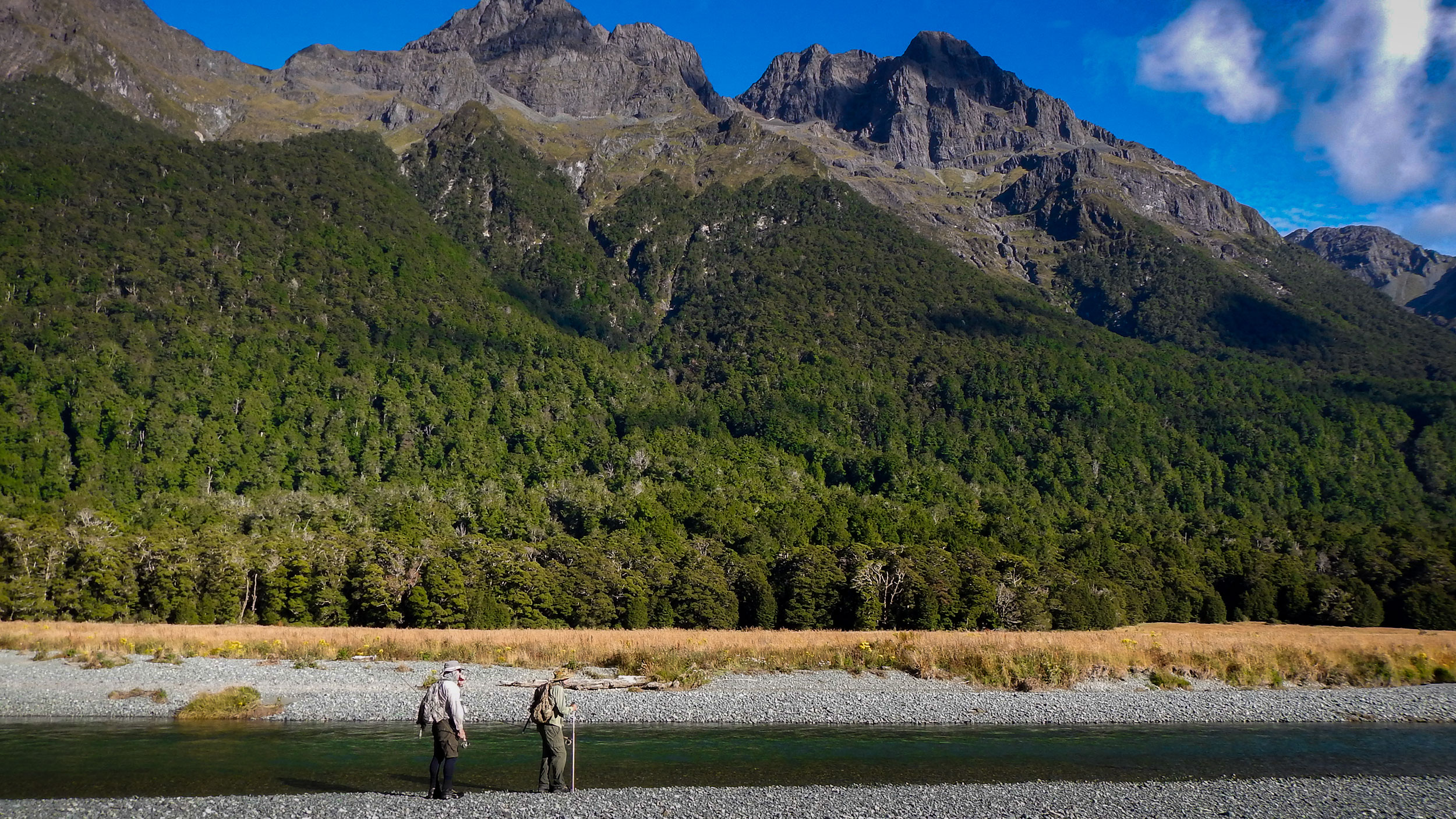
For the first few days we based ourselves in Te Anau while our usual accommodation at Dunrobin continued undergoing renovations. It hardly mattered. We were simply happy to be back. The Eglinton, Waiau and Whitestone greeted us with excellent conditions. Dry flies drifted through clear currents once again. Brown trout slid from undercut banks to inspect presentations. Familiar routines, dormant for years, returned almost immediately.

That was perhaps the strangest part of all.

How quickly it came back.

The feel of cold water pressing against your legs. The crunch of gravel beneath wading boots. The instinctive scanning of seams and current lines. The quiet concentration required to stalk visible trout properly. After years dominated by restrictions, uncertainty and cancelled plans, standing in clear New Zealand water again felt deeply restorative.

Not triumphant.

Just quietly right.

One afternoon in the Eglinton Valley we encountered a wounded deer attempting to cross the river. Its pelvis appeared badly broken and we assumed the current would sweep it away almost immediately. Instead, against all logic, it fought through the flow and somehow reached the far bank.

I still remember all of us standing there silently watching it disappear into the grass.

Out there, moments like that tend to linger longer than fish.

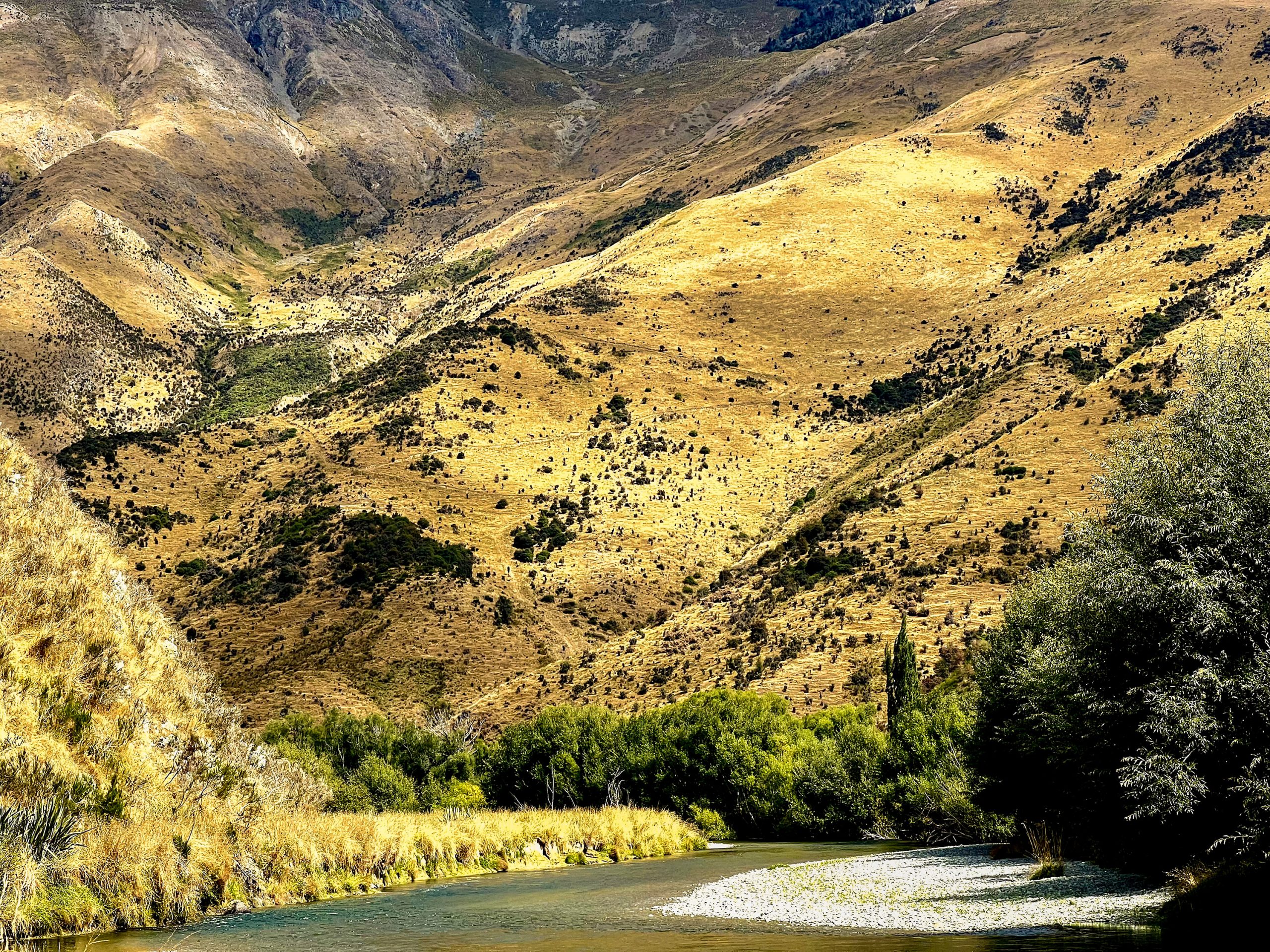
Eventually we returned south toward Dunrobin, the farm that has become our seasonal home in New Zealand over so many years. There is always a particular feeling driving back into that valley after time away. Familiar fences. Familiar hills. The Aparima winding quietly through the flats below the house. Some places slowly become woven into your life whether you realise it at the time or not.

I first began guiding in New Zealand more than two decades ago. Over the years we’ve watched clients become friends, friends become regulars, and regulars become part of the extended family that forms around any long-running operation. The fishing remains important, of course, but after enough seasons the rivers become connected to something larger than trout.

They become connected to people.

The fishing itself reflected the conditions of the year. Southland was dry. Water levels dropped steadily as summer progressed and by late season many rivers had become exceptionally clear and technical. On famous systems such as the Mataura and Oreti, angling pressure concentrated around the sections still producing consistently.

That is the nature of modern New Zealand.

Information travels quickly. Social media accelerates everything. Rivers once considered remote no longer remain hidden for long.

Yet Southland still rewards anglers willing to move differently.

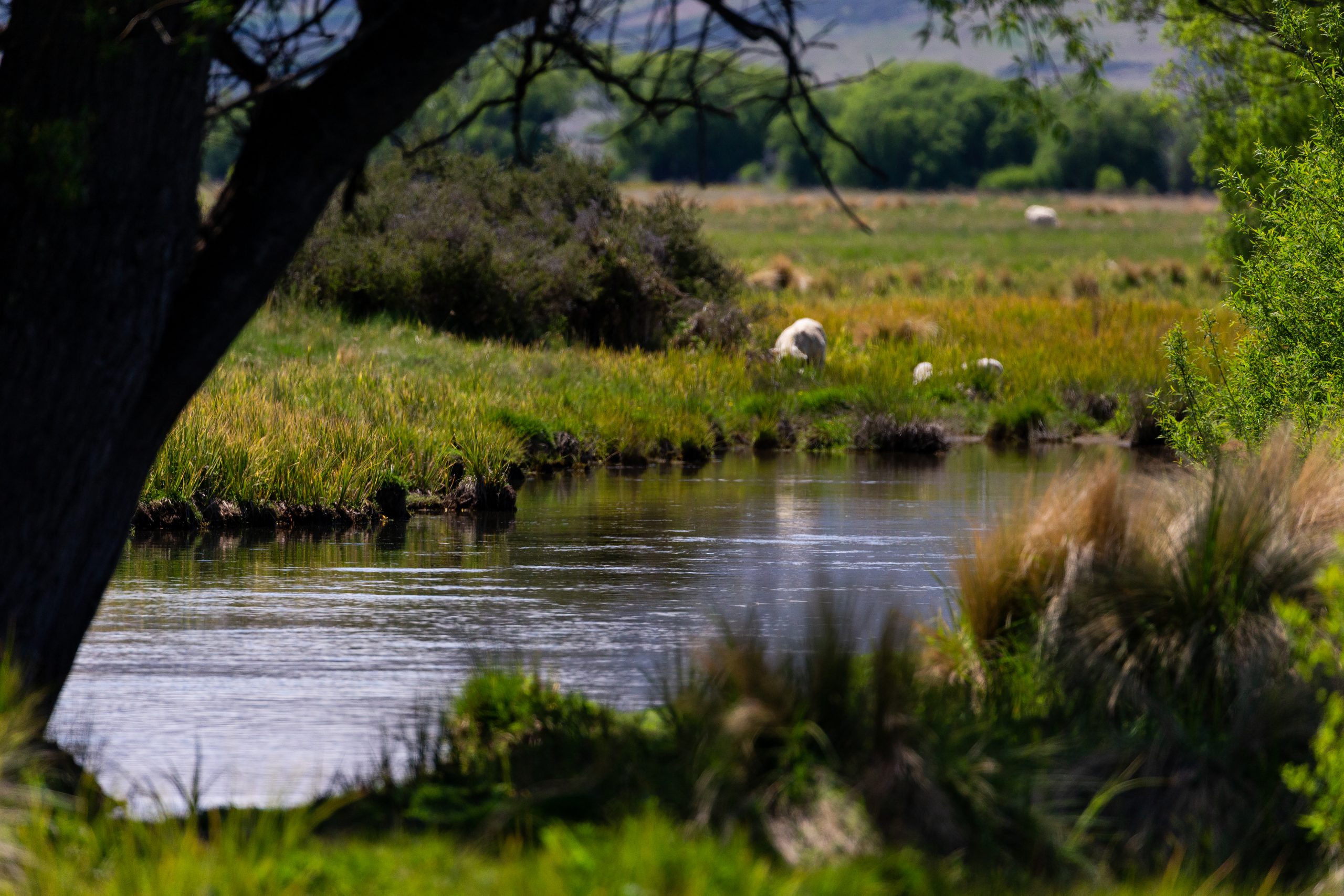
Again and again during that season, it was the smaller rivers and anonymous creeks that produced the most memorable fishing. Narrow streams winding quietly through farmland. Water too insignificant-looking for most travelling anglers to notice while driving past. Those rivers suited the season perfectly.

The fish were spaced carefully through long shallow glides, often occupying only the best pieces of structure in miles of water. Success demanded patience. Presentation mattered enormously. Rushing achieved very little. By late summer many trout required near-perfect drifts before moving confidently to a fly.

That challenge remains one of the great attractions of New Zealand fishing.

At its best, New Zealand rewards thoughtfulness. Observation. Restraint. The fish are not difficult because they are unusually intelligent. They are difficult because the environment is so honest. Clear water exposes every careless movement and every rushed decision. There is nowhere to hide from poor presentation in Southland.

Some evenings we fished the Waiau until darkness beneath heavy caddis and mayfly hatches. Those sessions became a highlight for many clients. Early dinners in Te Anau followed by twilight fishing beneath fading light while trout rose steadily through long slick currents. Not everybody chose those late evenings. Some preferred a whisky beside the fire back at the farmhouse, which is understandable too. But those who stayed often spoke about those sessions long after individual fish had blurred together.

That is something I have noticed repeatedly over the years.

People rarely remember trips purely because of fish.

They remember atmosphere.

They remember fatigue.

They remember weather, conversation, shared meals and unexpected moments.

Looking back now, what stays with me most strongly about that season is not any individual trout or river.

It is the feeling of movement returning.

Vehicles loaded before daylight. Clients arriving excited at Queenstown Airport. Guides discussing weather and river levels over breakfast. Wet waders hanging outside the farmhouse at dusk. The simple rhythm of travelling, fishing and sharing rivers together after several years when none of it seemed guaranteed.

Perhaps that is why the season carried such emotional weight.

The pandemic reminded us that experiences we assume permanent can disappear remarkably quickly. Travel. Friendship. Gathering together. Standing beside rivers in distant countries. None of it should be taken entirely for granted.

As the final weeks approached, autumn began edging slowly into the valleys. The season had come full circle.

And once again, the South Island reminded us why we continue returning year after year.

Not simply because the fishing remains exceptional, though it certainly does.

But because certain places eventually become intertwined with memory, friendship and identity itself.

After enough seasons, New Zealand stops feeling like somewhere you visit.

It starts feeling like somewhere that quietly becomes part of your life.

Ant

Most guided fly fishing trips go very smoothly.

Clients arrive excited, the coffee is still hot, the river looks good and by mid-morning everybody has settled into the natural rhythm that good fishing days tend to find eventually.

But after thirty years in drift boats and on rivers across Australia, New Zealand and Montana, guides do begin noticing certain recurring patterns.

None of these things are particularly serious. In fact, many are quietly amusing once you’ve spent enough years around anglers. Still, there are a few small observations that can make a guided trip noticeably more enjoyable for both client and guide alike.

So in the interests of preserving morale, fly boxes and mutual sanity, here are a few gentle observations from the front seat of the drift boat.


Arriving Late

Most guides are awake long before clients arrive.

Boats have already been launched or prepared. Lunches packed. Gear organised. Weather checked repeatedly. Coffee consumed in industrial quantities.

Turning up thirty minutes late without warning usually means missing the best part of the morning hatch while beginning the day slightly flustered.

If you are running behind, simply send a message. Your guide will probably forgive you instantly, particularly if it gives them time for another coffee.


Trust the Guide

One successful afternoon fishing hoppers in 2009 does not necessarily override twenty years of local river experience.

Guides spend enormous amounts of time observing current conditions. Water levels, insect activity, temperature changes, fish positioning and weather all influence daily decisions. Sometimes clients understandably arrive with confidence in a favourite fly or technique, but part of the value in hiring a guide lies in trusting somebody who has likely spent the previous hundred days on that same river.

Occasionally the guide may still be wrong of course.

But statistically, they’re probably your best bet.


“I Know”

This is one guides hear often.

“Yep, I know.”

Usually moments before the exact same mistake happens again.

Good guides are not trying to lecture people. Most genuinely want clients to improve and enjoy themselves more. Small adjustments in casting angle, line control or presentation often make enormous differences.

If a guide repeats something several times during the day, there is generally a reason.


The Quiet Economy of Flies

Every guide eventually develops a slightly haunted look after watching clients donate half a fly box to submerged timber.

Good flies take time to source, organise or tie. Some patterns become difficult to replace entirely. Others represent years of small refinements and experimentation.

Losing flies occasionally is simply part of fishing. Repeatedly throwing the same rig directly into obvious overhanging branches begins drifting into another category altogether.

At a certain point, even the trout start feeling embarrassed.


Other Guides

Talking constantly about another guide while floating downriver with your current one is a little like discussing your ex-partner on a first date.

Most guides know each other.
Some are close friends.
Some are fierce rivals.
Some actively avoid each other at boat ramps.

You may not necessarily know which category your stories fall into.

A little awareness goes a long way.


Politics

There are few places left in modern life that still feel genuinely quiet.

Rivers are one of them.

Most people come fishing to escape noise, pressure and argument for a while. The fish do not care about elections, tax reform or social media outrage, and truthfully, the river is usually improved by following their example.

There is nothing wrong with thoughtful discussion outdoors. Some of the best conversations I’ve ever had happened in drift boats. But endless aggressive political debate tends to drain the atmosphere remarkably quickly.

Particularly before lunch.


GPS Pins and “Secret Spots”

Every experienced guide eventually develops a sixth sense for clients quietly reaching into pockets near productive water.

Guides understand the temptation. Beautiful water invites curiosity. But good river sections are often the product of decades spent exploring, learning flows, understanding access and gradually piecing together patterns over many years.

Dropping GPS pins on somebody else’s hard-earned water without permission is generally considered poor form in fishing culture almost everywhere on earth.

Besides, most truly good rivers change constantly anyway. Learning why fish hold somewhere matters far more than simply marking a coordinate.


Phones

One loud ringtone cutting through a quiet river valley can undo twenty minutes of carefully rebuilt serenity.

Enough said.


Significant Others Who “Might Enjoy the Drift”

This one occasionally requires delicate handling.

A drift boat looks peaceful from the outside. And often it is. But eight hours exposed to weather, casting, tangles, sun, cold, repetitive drifting and long periods without shade can feel surprisingly long for somebody with absolutely no interest in fishing.

If your partner genuinely enjoys rivers and the outdoors, wonderful.

If they merely “might like coming along,” proceed carefully.


Criticism

Good guides correct people constantly.

Not because they enjoy criticising clients, but because small adjustments matter enormously in fly fishing. A slightly altered drift angle or timing change may completely transform results.

Most experienced anglers eventually realise something important:
the best guides are rarely the ones endlessly telling you how well you’re doing.

They are the ones quietly helping you improve.

Even when it bruises the ego slightly.


Weather

Guides control many things.

Weather is not one of them.

Guide not God is a common phrase and bumper sticker in Montana. Most fly Fishing guide peeves relate to a breakdown in client common sense.

Neither are floods, cold fronts, bushfires, hydro releases, thunderstorms or unexpected wind changes.

Despite this, guides across the world continue receiving apologetic looks from clients whenever conditions deteriorate, as though they personally arranged the low-pressure system several days earlier.

Sometimes difficult conditions produce the best fishing anyway.

And sometimes rivers simply humble everybody equally.

That too is part of the sport.


The Handshake

One final observation.

Most drift boat guides have hands resembling old cricket gloves by the end of the season. Years of rowing, anchors, ropes and cold water tend to do that.

There is no need to test your full grip strength upon introduction.

Your guide still needs those hands functional enough to untangle your leader later in the day.


The truth is, most clients are excellent.

They are thoughtful, enthusiastic and genuinely appreciative of the experience. Many become long-term friends. Some return year after year until certain stretches of river become part of a shared history between guide and angler.

And really, that is one of the more rewarding parts of this profession.

Because at its best, guided fly fishing has never simply been about catching trout.

It is about shared days outdoors.
Conversation.
Weather.
Learning.
Patience.
Stories retold over dinner afterwards.
And occasionally laughing at the small absurdities that naturally emerge whenever human beings spend long enough together in moving water.

The river usually sorts the rest out eventually.

Tight lines.

Choosing a fly fishing guide is a little different from choosing most other services.

If you’re spending a full day in a drift boat, or travelling overseas on an extended hosted trip, you’re not simply hiring technical knowledge. You’re placing yourself in close company with another person for long hours, often in changing weather, unfamiliar water, difficult conditions and situations that require patience, communication and trust. That relationship matters more than many people initially realise.

Over the last thirty years I’ve guided thousands of days on rivers, most of them from the oars of a drift boat on the Goulburn. During that time I’ve met anglers from almost every imaginable background. Surgeons. Farmers. Builders. Lawyers. Retired couples. Fathers and sons. Complete beginners who had never held a fly rod, and experienced anglers who had travelled the world chasing trout.

One thing becomes very clear after enough seasons: people rarely remember only the fish. They remember how the day felt. They remember the atmosphere in the boat, the conversation, the patience, the encouragement, the lunch beside the river, the calmness of the guide when conditions became difficult, and the feeling of being looked after properly.

When I first started guiding in the 1990s, I probably measured success too narrowly. Like most younger guides, I wanted every client to have the best fishing day of their life. Bigger fish. More fish. Better numbers. Experience gradually taught me otherwise. The fishing remains enormously important, of course. Nobody hires a guide hoping for a poor day on the water. But after enough years you begin to realise that memorable guiding runs much deeper than simply rowing clients toward rising trout.

A guide’s role is far more layered than many anglers initially understand. At different moments throughout the day, a guide may become a teacher, coach, boatman, weather observer, local historian, storyteller or simply quiet company. The best guides understand when each role matters, and that judgement develops slowly.

Modern fly fishing can sometimes create the impression that guiding is primarily about dramatic photographs and social media highlights. After enough seasons on rivers, however, you begin to understand that the real work often happens in quieter moments. It happens when a guide recognises a client is becoming frustrated and subtly changes the pace of the day. It happens when deteriorating weather demands a different section of river. It happens when somebody who has struggled with casting suddenly lands a difficult drift correctly for the first time. It happens when an older angler quietly admits they may not have too many more seasons left travelling to places they’ve always dreamed about.

The best guides learn to read people almost as carefully as they read water.

That human side of guiding becomes even more important on extended trips. When people join us in New Zealand or Montana, they are often travelling a long way from home, investing significant time and money, and placing considerable trust in the people hosting the experience. In many cases they are also stepping temporarily outside their normal lives and responsibilities.

A guide or host who creates unnecessary tension, ego or pressure can profoundly affect a trip. Likewise, a calm and thoughtful guide can elevate even difficult fishing conditions into a deeply enjoyable experience.

Some of the most successful days I’ve experienced as a guide involved remarkably few fish. A mayfly hatch that never quite developed. A difficult wind. Changing weather. And yet clients still left smiling because the broader experience remained rich and memorable.

Perhaps that is one of the biggest misconceptions about guided fly fishing: that success can be measured purely by numbers.

Of course we all love good fishing. We pursue trout because the challenge remains endlessly fascinating. But the longer I spend around rivers, the more convinced I become that most anglers are searching for something slightly deeper than fish alone. Space. Perspective. Connection. Relief from pressure. Time outdoors with people they enjoy. The river simply becomes the setting where those things occur.

That understanding changes the way experienced guides approach their work. Clients do not necessarily need perfection. They need confidence, honesty, patience and somebody who remains composed when conditions become difficult. They need somebody capable of adapting without drama.

That calmness is not accidental. It emerges from accumulated seasons on the water. A river behaves differently across droughts, floods, heatwaves, cold fronts, irrigation changes, insect cycles, bushfire years, high angling pressure and changing seasonal flows. A guide who has lived through enough of those cycles gradually develops perspective that simply cannot be rushed.

The same applies to safety.

Any experienced guide understands that safety on rivers involves far more than life jackets and first-aid kits, though those things are obviously essential. Good guides constantly think ahead. They monitor changing conditions, weather, river flows, client fatigue and countless small variables throughout the day.

The drift boat teaches this particularly well. When rowing technical water, you’re always observing currents before you reach them. You learn to read subtle seams and pressure lines instinctively. You begin anticipating problems before they fully develop. Over time, that habit extends beyond rowing itself. It influences how you guide people, structure days and manage difficult situations.

Interestingly, many of the qualities that make somebody enjoyable company on a river are difficult to advertise online. Patience rarely photographs dramatically. Neither does judgement. Or humility. Or emotional steadiness. Yet those qualities often define the difference between a merely competent guide and a truly memorable one.

Personality matters enormously as well. If you’re spending eight or ten hours in a drift boat with somebody, or travelling together for a week through Montana or New Zealand, basic human chemistry becomes important. Some guides naturally create relaxed atmospheres. Others operate with more intensity. Neither is necessarily wrong, but different anglers are drawn to different personalities.

That is why I often encourage people to trust instinct as much as marketing. Speak with guides before booking. Pay attention to how they communicate. Do they sound patient? Do they seem genuinely interested in helping you? Do they answer questions thoughtfully? Do they make the experience feel welcoming?

A good guide should leave you feeling calmer and more confident before you’ve even stepped onto the river.

Enthusiasm matters greatly too. The best guides retain genuine curiosity despite years on the water. They still notice changing insect activity. They still become excited by subtle improvements in conditions. They still care deeply about rivers, fish and client experiences.

That enthusiasm tends to be contagious. Clients feel it.

Importantly, mature guides usually carry that enthusiasm quietly. After enough years, most experienced operators realise the river does not reward ego for very long. Fish have a way of humbling everybody eventually. Rivers change constantly. Conditions shift. Days that look perfect sometimes fish terribly. Difficult days occasionally become unforgettable.

That unpredictability is part of why fly fishing remains so endlessly compelling. And perhaps it is also why good guiding becomes more thoughtful over time.

These days I find the most rewarding part of guiding is often watching somebody settle into the rhythm of a river properly for the first time. The moment their casting slows down. The moment they stop rushing. The moment they begin noticing currents, birds, light, insects and weather rather than simply chasing fish.

That shift usually means they are beginning to understand fly fishing more deeply.

At its best, guided fly fishing is not about somebody showing off expertise or proving how much they know. It is about helping another person experience a river more fully and confidently than they could have alone.

The right guide does not simply help you catch fish. They help shape the memory of the day itself.

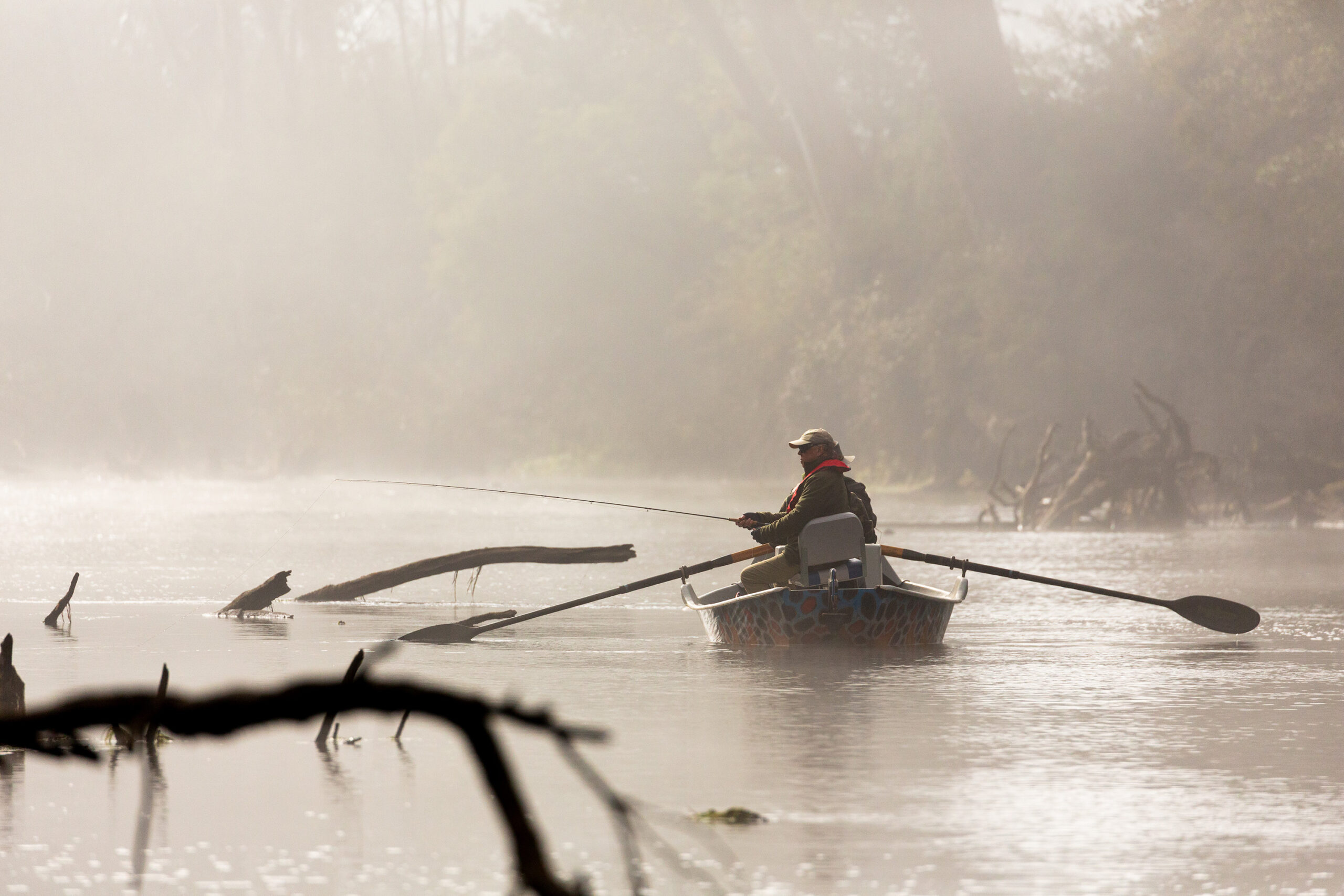
Years later, most anglers won’t remember every fish they caught. They’ll remember the fog lifting off the river at dawn. The conversation over lunch. The trout that refused at the last second. The guide who remained calm when conditions became difficult. The feeling of being completely immersed in a river for a day.

Good guides understand that.

They’re not simply helping people catch trout.

They’re helping create memories that often last far longer than the fish themselves.

Ant

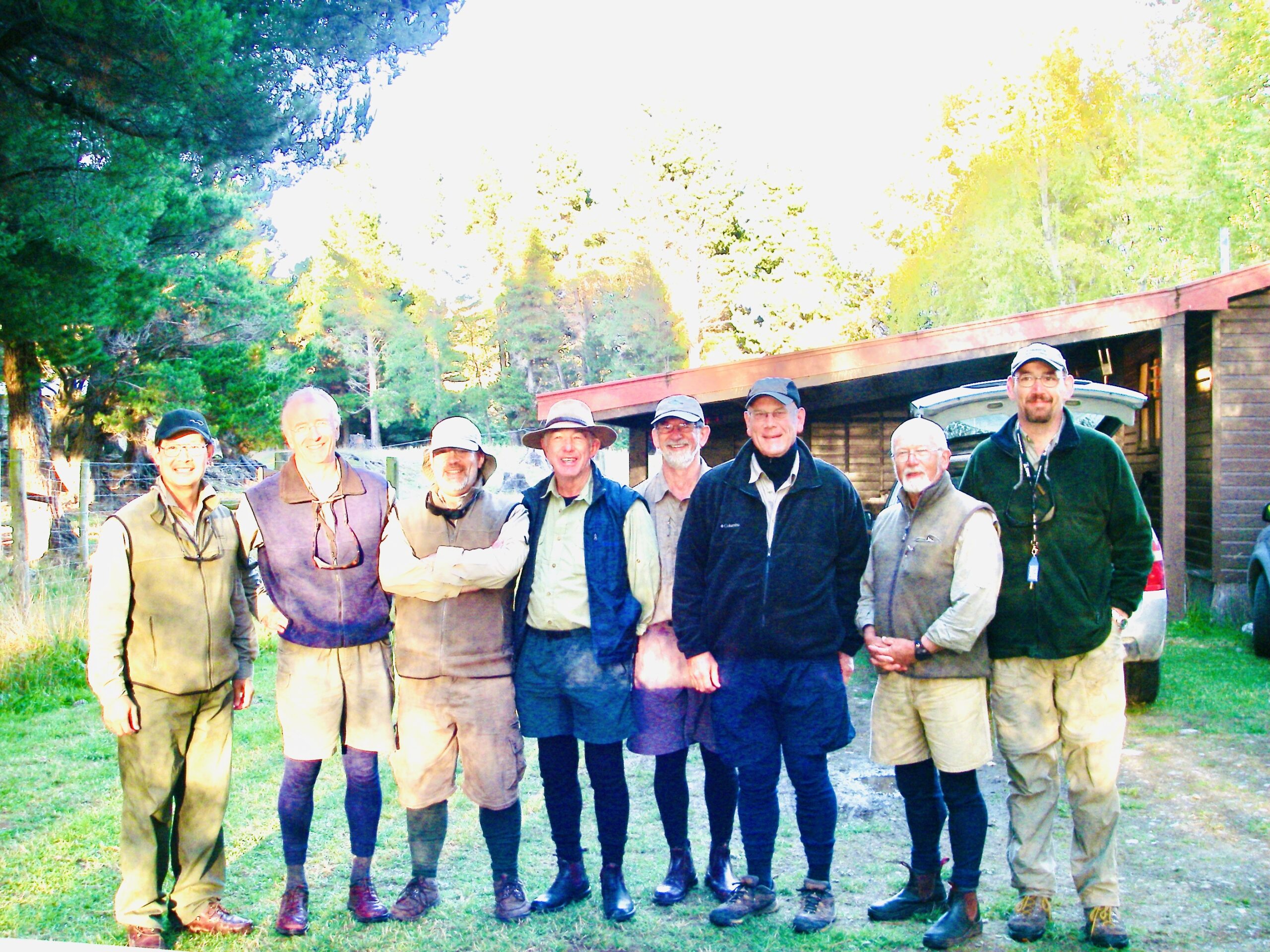
Anthony, David, and Geoff Circa 2005


Most people assume fly fishing is about trout.

At first glance, that seems reasonable enough. Rods, flies, currents and rising fish are the visible parts of the sport. If somebody unfamiliar with fly fishing watches a drift boat slide quietly down a river at dusk, they naturally assume the entire exercise revolves around catching fish.

And of course, the fish matter enormously.

Even after thirty years on rivers, I still feel that small lift of anticipation before a cast into a difficult lie. There are mornings when the river seems alive with possibility and evenings when fading light, drifting insects and the quiet confidence of rising trout create moments that remain deeply satisfying no matter how many seasons pass. The challenge never completely disappears.

Yet the longer I spend around rivers, the more convinced I become that many anglers are searching for something slightly harder to describe. If catching fish alone were the entire story, most people would eventually move on to easier pursuits. There are certainly easier ways to catch fish. You can troll lakes, soak bait or cast lures. Modern electronics can reveal structure, depth and fish locations with astonishing precision. Yet countless people continue choosing a method that often involves standing in cold water, learning difficult skills and spending long periods observing insects and currents before making a single cast.

Something else is happening there.

That thought has stayed with me more and more as I’ve grown older.

I still remember the first trout I caught on fly quite clearly, though not because it was particularly large. What stayed with me was the feeling of entering a different world for the first time. The concentration required. The movement of current around my legs. The strange silence that settles over a river late in the day. The growing awareness that water is never truly still, even when it appears calm from a distance.

Looking back, I think that was the moment the river itself became important. The fish simply opened the door.

Fly fishing teaches observation slowly. At first, beginners understandably focus on mechanics. Casting. Knots. Fly selection. Line control. Like learning any new skill, there is a tendency to become consumed by technique. Over time, however, attention begins shifting outward. You start noticing weather patterns more carefully. The direction of wind. Tiny insects gathering beneath overhanging branches. Shadows moving across riffles. The subtle difference between water that merely looks good and water that actually holds fish.

Eventually the river begins teaching lessons that have very little to do with trout.

Patience, for one.

Modern life encourages speed, immediate outcomes and constant stimulation. Rivers tend to resist all of that. Some days they humble you completely. Conditions that appear perfect may fish terribly, while difficult days occasionally transform without warning during the final hour of light. There is no controlling that uncertainty. Only learning to work within it.

Perhaps that is one reason rivers remain so valuable. They remind us that not everything can be hurried.

Over the years I have watched countless people arrive at rivers carrying far more than fly rods and waders. Some are exhausted from work. Some are quietly grieving. Some are recently retired and trying to rediscover rhythm in their lives after decades of responsibility. Some are navigating illness. Some are processing family difficulties. Some simply need space away from phones, meetings, traffic and noise.

The river rarely solves any of those problems directly. But it changes the pace at which people think.

That matters.

One of the great misconceptions about fly fishing is that it is an elitist or overly technical pursuit. Certainly, there are technical aspects to the sport. Fly casting takes practice. Reading water takes time. Rivers reward accumulated experience. Yet at its heart, fly fishing remains surprisingly simple.

You stand in moving water and pay attention.

That is really where it begins.

Somewhere along the way, many anglers realise the river itself has become just as important as the fish living within it. The places start mattering deeply. Certain bends become tied to memory. Particular stretches of water become inseparable from people, seasons and moments in life.

I can still drift sections of the Goulburn and remember conversations from twenty years ago almost exactly where they occurred. An older client speaking quietly about retirement while rain moved across the hills upstream. A father watching his son row a drift boat for the first time. A mayfly hatch appearing unexpectedly during difficult conditions. The shared silence that sometimes settles over a boat late in the afternoon when everybody realises they are exactly where they want to be.

Those moments become part of the river too.

The river remembers in its own way. Or perhaps we simply leave small pieces of ourselves behind.

I have experienced the same feeling elsewhere. There are sections of the Waiau River in Southland where I can still picture clients from years ago stalking trout along particular banks. Certain bends on the Missouri River in Montana instantly bring back conversations, laughter and shared experiences from previous seasons. I can drive through Paradise Valley or cross the Henry’s Fork and immediately feel old memories resurfacing.

The fish are part of those memories.

But only part.

What stays longest are usually the people.

Perhaps that is why many anglers become increasingly reflective as they get older. The obsession with proving oneself softens slightly. Fish numbers matter a little less than they once did. Atmosphere matters more.

You begin noticing things younger anglers often rush past: steam lifting from cold water at dawn, the sound of current against the hull of a drift boat, the smell of eucalyptus after rain along the Goulburn, a wedge-tailed eagle circling above a valley, and light changing on distant hills during the final hour of the day.

These details quietly accumulate over years until they become inseparable from the fishing itself.

Travel deepens the feeling even further. Some of my strongest memories from Montana and New Zealand are not individual fish at all. They are moments between the fishing. Crossing Wyoming at sunrise beneath enormous skies. Coffee before daylight in a small Montana town. Snow appearing unexpectedly on distant mountains during summer. Watching clients see Yellowstone National Park for the first time. Wind moving through Paradise Valley late in the evening.

Those places carry emotional weight because they become connected to experience, memory and friendship.

And perhaps that is another reason people keep returning to rivers. Fly fishing rarely remains a solitary pursuit for very long. Over the decades I have watched lifelong friendships emerge through rivers. Complete strangers sharing a drift boat in New Zealand later travelling together overseas. Fathers bringing sons. Grandparents introducing grandchildren to fly rods. Clients who initially came to learn how to cast eventually returning year after year simply because they love the atmosphere surrounding the experience.

Fishing creates its own strange little communities. Not loud ones. Usually quiet ones. People connected by weather, water and accumulated time outdoors.

The older I get, the more grateful I become for that continuity. For familiar rivers. For old clients. For guides and friends scattered across different parts of the world. For the privilege of making a life outdoors. And for the understanding that fly fishing has always been about far more than trout alone.

The fish draw us in initially. But they are rarely the only reason we stay.

What keeps people returning to rivers, I suspect, is something much harder to market neatly. A search for stillness. Perspective. Meaning. Connection to landscape. Connection to memory. Connection to earlier versions of ourselves.

Or perhaps simply the growing realisation that time spent outdoors—properly outdoors, immersed in weather, current and changing light—remains one of the few experiences in modern life that still feels genuinely restorative.

Rivers ask very little from us in the end.

Mostly attention.

And perhaps that is why, despite all the changes in the world around us, people continue returning to them generation after generation.

Because somewhere beside moving water, many of us become slightly more aware of what actually matters.

Ant