Fly anglers love discussing flies.
Open any old fly box and there is usually a story attached to half the patterns inside it. Certain flies become connected to rivers, seasons, people and moments in ways that are difficult to explain to non-anglers. Some patterns arrive with great fanfare before disappearing quietly a year later. Others somehow survive decades of changing fashions and continue catching trout long after newer creations have come and gone.
When I was younger, my fly boxes were packed with experimentation.
Every new magazine article seemed to promise a breakthrough. Every overseas catalogue contained flies I was convinced I needed. Every visiting angler appeared to have discovered some secret pattern capable of transforming an ordinary day into an extraordinary one.
There is nothing wrong with experimentation. In many ways it is part of the fun. New ideas drive fly fishing forward and occasionally genuine innovations emerge.
But after thirty years guiding on rivers across Victoria, New Zealand and beyond, my approach has become much simpler.
I still enjoy new flies. I still tie them. I still test them.
Yet increasingly I find myself reaching for the same handful of patterns that have repeatedly proven themselves across different rivers, seasons and conditions.
Experience has made my fly boxes smaller rather than larger.
One lesson keeps resurfacing. Anglers often spend enormous amounts of energy debating fly patterns, colours and materials, while trout continue feeding happily on the same sensible, well-presented flies they have always eaten. Confidence, presentation and understanding current generally matter far more than possessing the latest “must-have” pattern from the internet.
That said, certain flies genuinely earn permanent places in a guide’s fly box.
Not because they are fashionable.
Because they consistently work.
The flies below are not necessarily the only patterns worth carrying, nor are they arranged in strict order of importance. They are simply flies that, over many years across Australia and New Zealand, have repeatedly proven themselves in real conditions.
Some are subtle. Some are attractors. Some imitate insects closely. Others merely suggest life convincingly enough to trigger a response.
But all of them have earned their place honestly.
The Royal Wulff
There are more technically realistic dry flies available these days.
Many of them are excellent.
Yet the Royal Wulff continues catching trout with remarkable consistency, particularly in rougher water where visibility and floatation matter more than precise imitation.
It is an old-fashioned fly in the best possible sense.
The white wings remain easy to track through broken current and the fly floats stubbornly even after prolonged punishment. In fast pocket water, high-country streams or heavier riffled runs, it still performs beautifully.
I have watched clients overcomplicate fly choice countless times while some slightly chewed-up Royal Wulff quietly continues producing fish in the background.
That says something.
The Royal Wulff is especially useful as a searching pattern when no obvious hatch is occurring. Fish it confidently. Let it drift naturally. Or suspend a small nymph beneath it when deeper fish are involved.
It remains one of those flies every experienced guide seems to carry, even if they occasionally pretend otherwise.
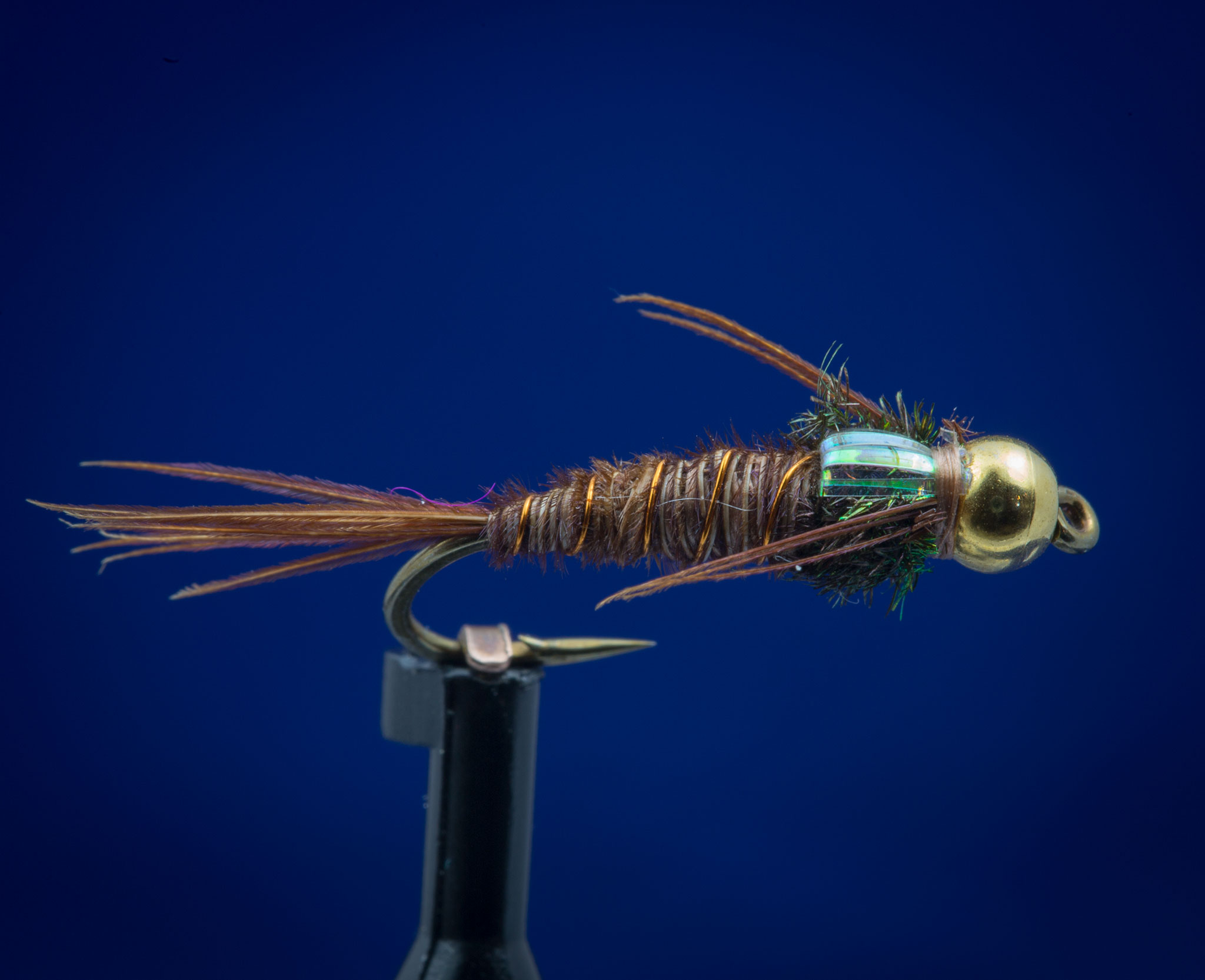
Beadhead Flashback Pheasant Tail
If somebody forced me to reduce all nymph fishing to a single pattern, this would come very close.
Simple. Versatile. Effective.
The pheasant tail imitates an enormous range of mayfly nymphs while the bead and flashback help attract attention without becoming excessively gaudy. It sinks quickly, fishes naturally and works across an enormous range of rivers.
There is nothing particularly glamorous about the pattern, which is perhaps part of its strength.
It simply catches fish.
Most importantly, it fishes well under indicators, tightline presentations, dry-dropper rigs or dead-drifted beneath larger attractor dries.
Some flies become confidence flies because of marketing. Others earn confidence gradually through repeated reliability.
The beadhead flashback pheasant tail belongs firmly in the second category.
Chernobyl Ant
No fly causes more confusion among beginners.
“It doesn’t really look like anything.”
Exactly.
The Chernobyl Ant succeeds because trout are opportunistic creatures. Particularly in summer, large terrestrial patterns crashing onto the surface often trigger reactions far more aggressive than delicate imitations.
This fly excels in places where realism becomes secondary to impact.
Undercut banks. Tight structure. Foam lines. Windy afternoons. Fast bankside water beneath overhanging vegetation.
It is also one of the great teaching flies because clients can see it clearly and fish tend to eat it decisively.
Some of my favourite guiding memories involve throwing large foam patterns into ugly-looking structure where clients are convinced nothing could possibly live.
Then the river erupts.
The Chernobyl Ant may not be elegant, but elegance was never its purpose.
Parachute Adams
If there is a universal dry fly, this is probably it.
Few patterns adapt themselves so effectively across so many situations.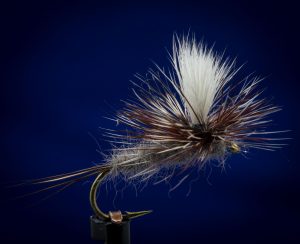
At various sizes, the Parachute Adams can suggest midges, mayflies and countless small unidentified insects drifting naturally in the film. More importantly, it lands correctly, remains visible and fishes naturally in a wide variety of conditions.
Its simplicity is deceptive.
Good parachute patterns sit beautifully in the surface film, which is often where trout expect vulnerable insects to appear. That subtle low-riding posture frequently matters more than exact imitation.
Guides quietly rely on flies like this constantly.
Not because they are exciting.
Because they continue working when many trendier patterns do not.
Bubbleback Pupa
Rene Harrop understood trout and insects at an extraordinarily deep level.
The Bubbleback Pupa reflects that understanding beautifully.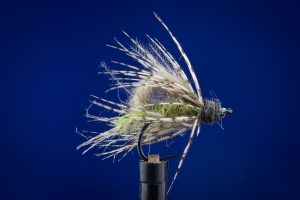
At first glance it appears relatively understated, but underwater the pattern possesses remarkable realism. The reflective bubbleback imitates the trapped gases forming around emerging caddis pupae as they ascend toward the surface.
Trout often feed heavily on these ascending insects.
Particularly selective trout.
Fished correctly beneath the surface during caddis activity, this fly can produce some extraordinarily technical fish. Its strength lies less in aggression and more in quiet persuasion.
Like much of the best fishing, it rewards patience.
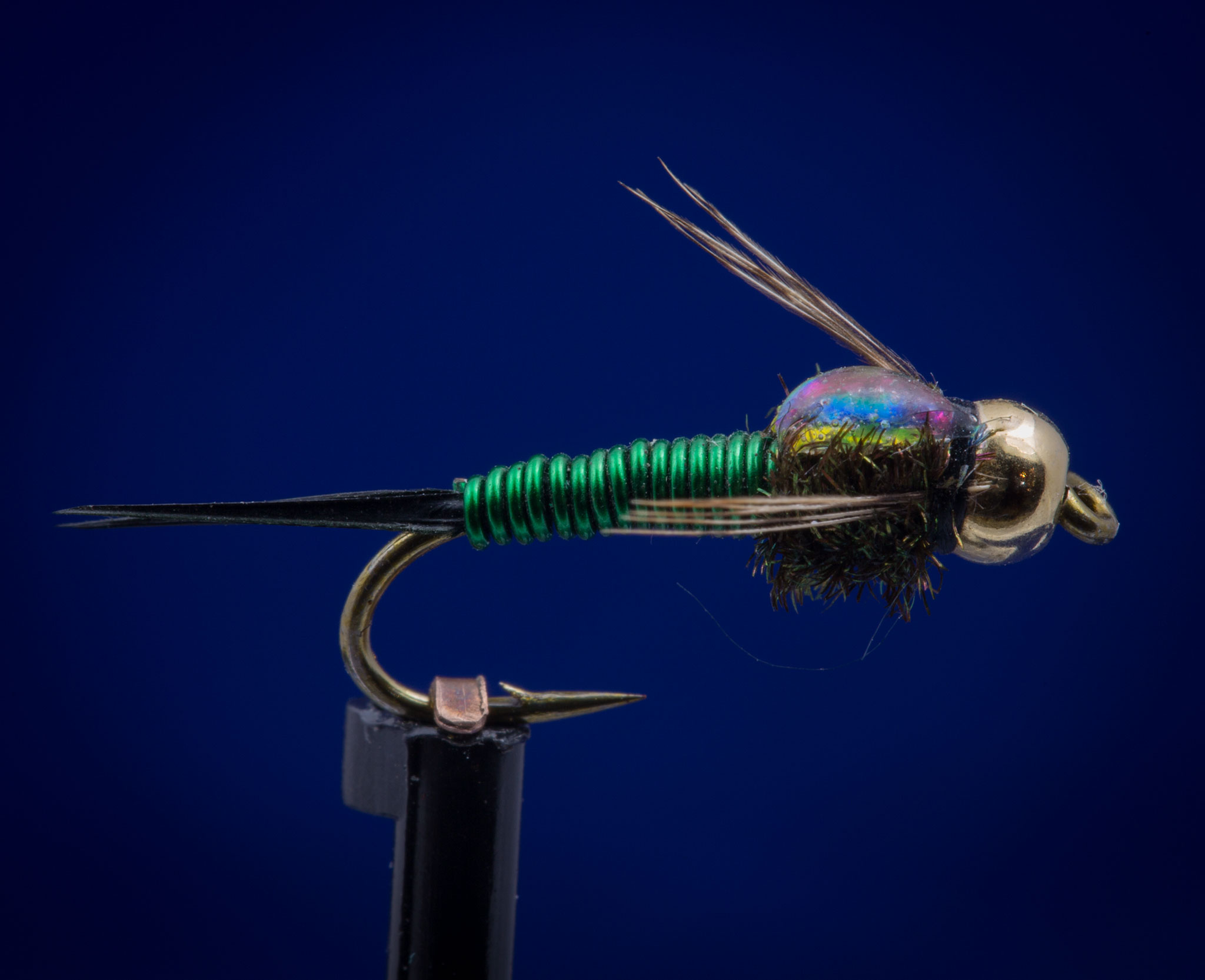
Copper John
Some flies are designed primarily around elegance.
The Copper John was not.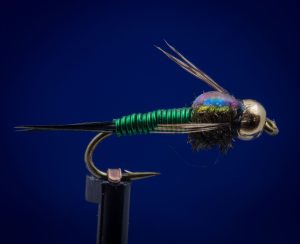
John Barr designed a practical fish-catching tool built to sink rapidly and attract attention. In fast rivers, deep runs and heavier current seams, that practicality becomes enormously useful.
Its copper body gets the fly down quickly while still maintaining a slim enough profile to resemble natural nymphs convincingly.
More importantly, it catches fish in difficult conditions.
Cold water. Fast current. Deep slots. Heavy pocket water.
It is one of those patterns guides often reach for when clients simply need to begin feeling fish again after a difficult session.
There is comfort in dependable flies.
Klinkhammer
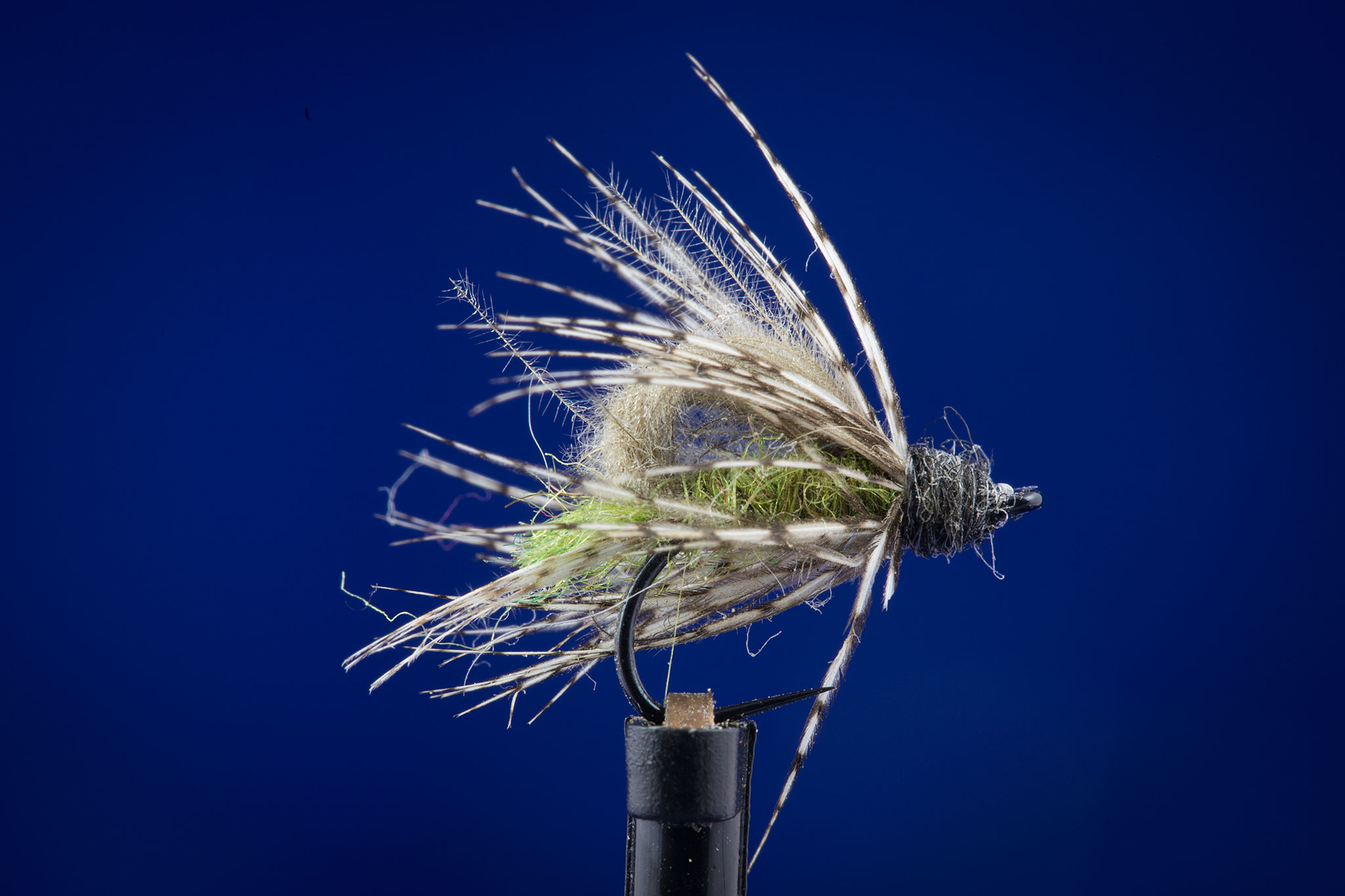
The Klinkhammer changed modern dry-fly fishing because it solved an important problem.
Trout often feed on insects trapped during emergence rather than fully formed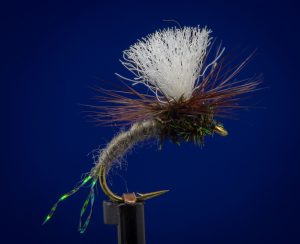 adults floating cleanly on the surface.
That vulnerable transition stage matters enormously.
The curved hook and partially submerged body imitate exactly that moment when an insect struggles between water and air.
Once anglers begin understanding emerger fishing properly, they usually start viewing rises differently as well.
Not all rises are true dry-fly eats.
Many fish are feeding just beneath the surface.
The Klinkhammer bridges that gap beautifully.
Royal Stimulator
The Royal Stimulator sits somewhere between attractor pattern, stonefly imitation and pure optimism.
It is large. Visible. Buoyant. And wonderfully effective.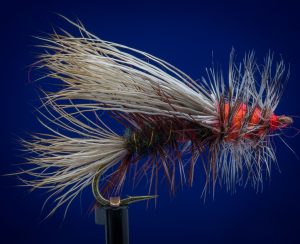
I particularly like it in fast freestone water or smaller mountain streams where fish have less time to inspect flies critically.
Its greatest strength may actually be as the top fly in a dry-dropper rig. The buoyancy supports heavier nymphs while remaining highly visible in turbulent current.
And occasionally, despite the nymph hanging beneath it, the dry itself gets eaten violently by a fish charging several feet through broken water.
Those moments never really become boring.
Bushy’s Emerger
Kaj Busch understood difficult trout exceptionally well.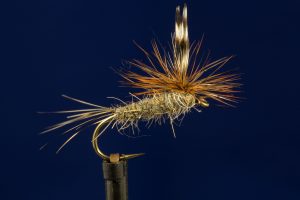
Bushy’s Emerger reflects a very Australian understanding of selective fish feeding calmly in clear water.
Unlike highly visible attractor dries, this fly relies on subtlety. Muted tones. Soft silhouette. Natural posture.
In difficult mayfly hatches, particularly under overcast skies, Bushy’s Emerger often outfishes brighter or more heavily hackled patterns because it simply looks alive in the film.
This is not a fly for impatient anglers.
It rewards careful presentation, fine leaders and restraint.
But when conditions align properly, it can become one of the most effective dry flies on the river.
Final Thoughts
As anglers gain experience, many gradually simplify their fly boxes.
Not because they stop enjoying flies, but because certain patterns repeatedly prove themselves over enough seasons that confidence naturally settles around them.
That confidence matters more than many people realise.
A well-presented fly fished with belief generally performs better than constant anxious changing. Rivers reward calm observation more than panic.
There will always be new patterns arriving. New materials. New trends. New debates. Some will genuinely advance fly design. Others will disappear almost immediately.
The flies that truly endure usually share similar qualities. Simplicity. Function. Versatility. The ability to suggest life convincingly without unnecessary complication.
Those are the flies guides continue carrying long after fashion has moved elsewhere.
Not because they are nostalgic.
Because they still work.
Ant